Science & TechnologyS


Bug

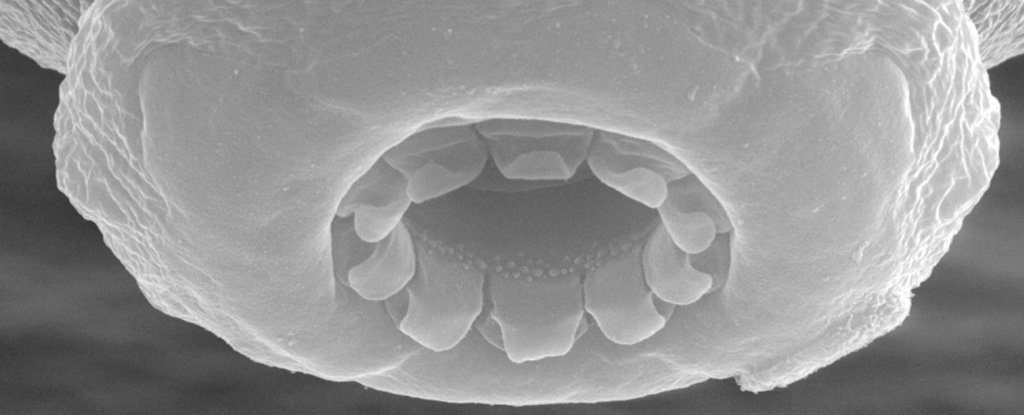
Totally new species of Tardigrade discovered in Japanese carpark (PHOTOS)

New species of Tardigrade discovered in a Japanese carpark
© (Daniel Stec et al.)
They're the weirdest organisms known to science: unkillable critters that can turn into glass and survive the cold vacuum of space.

But sometimes tardigrades just want to take a breather, you know? Chill for a bit in more comfortable surroundings. Which is how scientists discovered a whole new species of them living in moss on the concrete surface of a Japanese carpark. Bioscientist Kazuharu Arakawa from Keio University was renting an apartment in the city of Tsuruoka when he scooped up a sample of moss from the building's parking lot for later analysis.

It's not as crazy as it sounds.

Tardigrades - aka water bears and moss piglets - commonly dwell in mosses, lichens, and leaf litter, so there was a chance he could get lucky.

And he did, with examination in the lab revealing 10 of the microscopic metazoans living in the sample, who were extracted and transferred into culture in five separate pairs.

Comment: Also See:


Fireball

Bus-sized asteroid to pass Earth on 2nd March

Asteroid
© NASA/JPL-Caltech
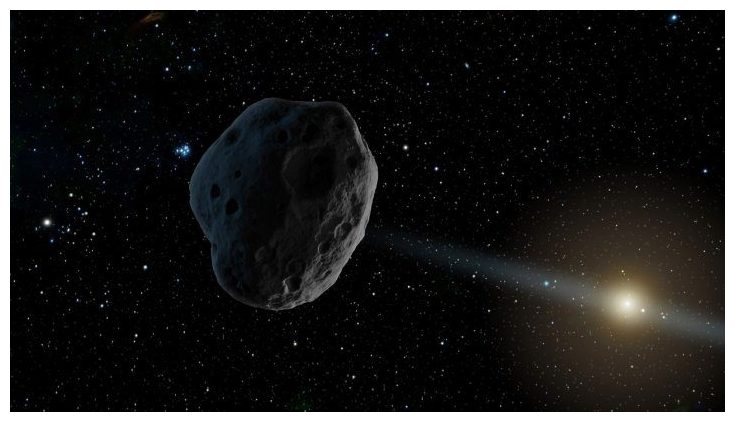
This coming Friday, March 2, an near-Earth asteroid will be sweeping within 70,000 miles (113,000 kilometers) of our planet's surface.

While there's no danger of any collision, asteroid 2018 DV1 will be coming closer to Earth than the Moon, which is nearly always enough to grab the attention of asteroid-hunters. And on top of that, 2018 DV1 is about 23 feet (7 meters) wide, which NASA's official Asteroid Watch declared was about the size of a bus.

And it should make for an impressive sight if you have the necessary tools to see it. Assuming that you don't have access to powerful telescopes, you can watch a live stream of the asteroid passing through the night sky from the Virtual Telescope Project and Tenegra Observatories in Arizona, who will be showing the video on their website.


Horse

Quantum wishes can turn into horses: New thought experiment on non-events causing causal effects

quantum state
© Varsha
The quote is quite fitting "If wishes were horses, beggars would ride." If you want to grasp the uniqueness of quantum mechanics, this cynical saying provides the most profound illustration by being sometimes disproved by this theory.

True, quantum mechanics (QM) is unique also due to the uncertainty principle which challenges classical determinism; to Schrödinger's cat paradox which makes the conflict with classical physics even more acute; to the notorious wave-particle duality as demonstrated by the double-slit experiment; and to the Einstein-Podolsky-Rosen paradox which seems to run in the face of special relativity. Yet the above "if" captures something no less essential to QM, little considered so far.

But why should "If wishes were horses, beggars would ride" matter if wishes, as everyone knows, are not horses? Here is QM's answer. Suffices for the beggar's wishes that they could be horses, then, even if they are not, the theory sometimes enables beggars to ride them. This is what quantum philosophers refer to as "counterfactual," namely, an event that could have happened but eventually didn't. Amazingly, by the very potential of this possibility's occurrence, it leaves an unequivocal physical effect.

Pyramid

Egyptians could have used autumnal equinox to achieve perfect alignment of Giza's pyramids

Pyramids Giza
For centuries, the pyramids of Giza have puzzled researchers - not just their mysterious voids and hidden chambers, but exactly how ancient Egyptians built such impressive structures without modern technology.

One of the most confounding issues is how the structures became so perfectly aligned.

Although it's slightly lopsided, overall the square sides of the 138.8 metre (455 foot) Great Pyramid of Giza - also known as the Great Pyramid of Khufu - are pretty damn straight, and aligned almost perfectly along the cardinal points, north-south-east-west.

"The builders of the Great Pyramid of Khufu aligned the great monument to the cardinal points with an accuracy of better than four minutes of arc, or one-fifteenth of one degree," writes archaeologist and engineer Glen Dash in a new paper in The Journal of Ancient Egyptian Architecture.

In fact, all three of the largest Egyptian pyramids - two at Giza and one at Dahshur - are remarkably aligned, in a way you wouldn't expect to see from an era without drones, blueprints and computers.

Info

Cyclic Catastrophism vs Big Bang

Early Universe
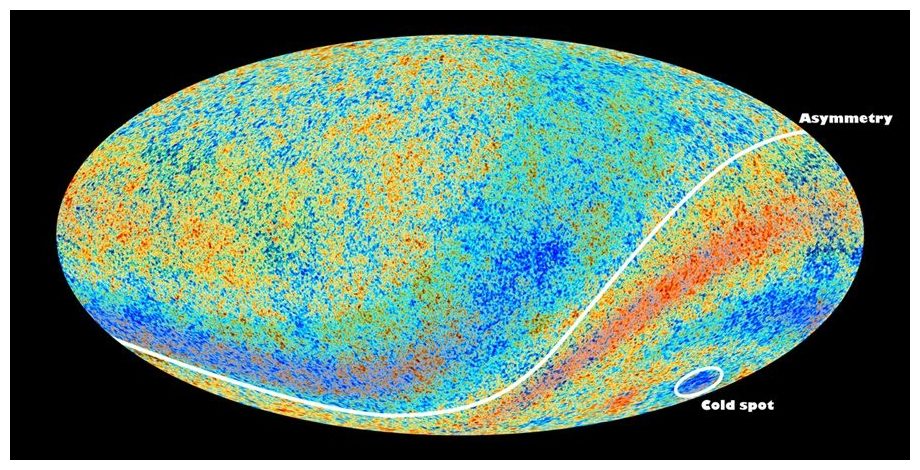
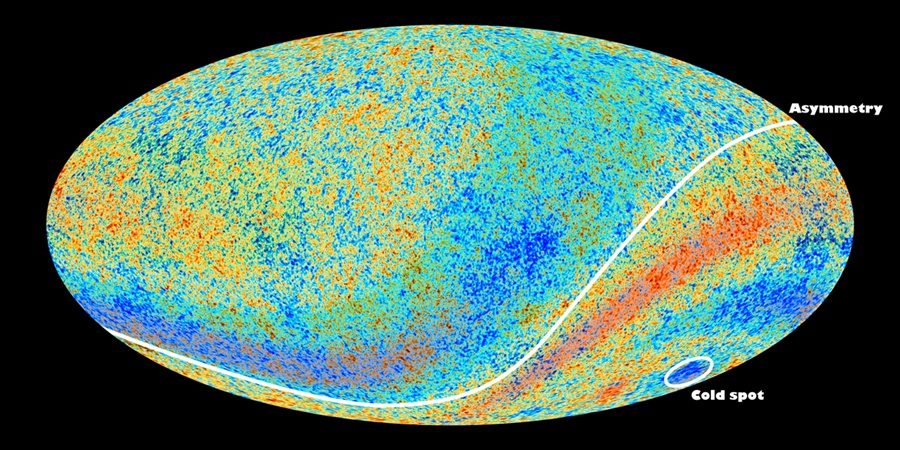
© ESA and the Planck CollaborationFig. 1 CMB ‘temperature anisotropies’ structures just above and below the ecliptic.
Big Bang advocates act as if their pet theory of the creation of the universe is proven. Do not be deceived by the genius bravado in popular, scientific publications or even the Nobel prize. Cyclic Catastrophism provides an easily understandable explanation of the cosmic microwave background or cmb (small letters are appropriate), which explains the creation of our solar system, not of the universe.

Cmb in a nutshell

The CMB data, collected by two precise satellites, of the microwave radiation imagined to be from 380,000-years after the big bang, over the entire sky, is shown in Figure 1. The tiny splotches across the entire sky were then measured and their diameters and amplitudes were plotted as a 'power spectrum' show n in Figure 2. Assuming a knowledge of physics at that time, the resulting hills and valleys in Fig. 2 (see image below) were then magically interpreted as physical properties of the entire universe - its age, 'shape', composition - even the amounts of (undefined) dark matter at its inception.

The big bang hypothesis predicts that all hydrogen, deuterium and helium in the universe was created within a few minutes after the big bang, but after searching for the last twenty years, astronomers have failed to observe these quantities. It also claims that no hydrogen, deuterium or helium has been created or destroyed since that time (premises refuted in the latest CC papers on Jupiter where 3He is being created and on Venus where deuterium was created 6,000 years BP). In order to explain the cmb microwave radiation being received on Earth from all directions, an impossible sudden inflation of the universe supposedly occurred between 10−36 and 10−33 seconds after the big bang, but this is pure speculation with no physical basis. Another serious problem with the cmb, which hypothetically originated 14 billion years ago, are the three ways it is aligned with our solar system, dubbed "the axis of evil" by non-believers.

As discussed previously, the probabilities that all of the alignments with the solar system could occur is estimated at 0.008% ! Perhaps the most damming attribute of the measured cmb has resulted from the European Planck satellite survey, intended to provide more accurate data than the decade old WMAP (Wilkinson Microwave Anisotropy Survey). The Planck survey confirmed all the questionable alignments with the solar system, BUT the power of all the Plank measurements was 2% less than those of WMAP, a fact confirmed only after exhaustive analysis. As a result of this finding, an even more exhaustive study, the final analysis stated on page 11 of which was "This indicates that the two experiments [WMAP and Planck] infer significantly different sets of lcdm parameters." where lcdm is Lambda Cold Dark Matter, is the name for the hypothesis on which the parameters of the early universe are interpreted from the power spectrum. This conclusion is based on the fact that most anisotropies have actually changed angular size, which is impossible since a one-degree anisotropy in the true cmg would be hundreds of light-years in diameter.

Cell Phone

Vodafone planning to install 4G mobile phone network on the moon!

4G on the Moon
© NASA
There are no payphones on the Moon, but you knew that already. But what are you to do if you find yourself wandering around the landing site for the original Apollo 11 mission, and you want to call (or text) home to tell your family how cool it is?

Thankfully, the moon isn't going to be technologically isolated for much longer. Communications mega-company Vodafone has announced plans to install cell phone towers across the Moon, so that it'll be easier to chat with friends, coworkers, and business clients back on Earth.

The move is being made specifically by Vodafone's German arm, and will be built in conjunction with Nokia, who'll be providing the actual hardware necessary to get phone signal to our largest (but not our only) natural satellite. According to the company's Chief Executive Hannes Ametsreiter:
"This project involves a radically innovative approach to the development of mobile network infrastructure."
Yeah, no kidding. It is pretty radical to try installing cell phone towers on a giant rock in space with no atmosphere, and no people living on its surface.

Info

Neutron star that defies all the rules discovered

Ultra-bright neutron star
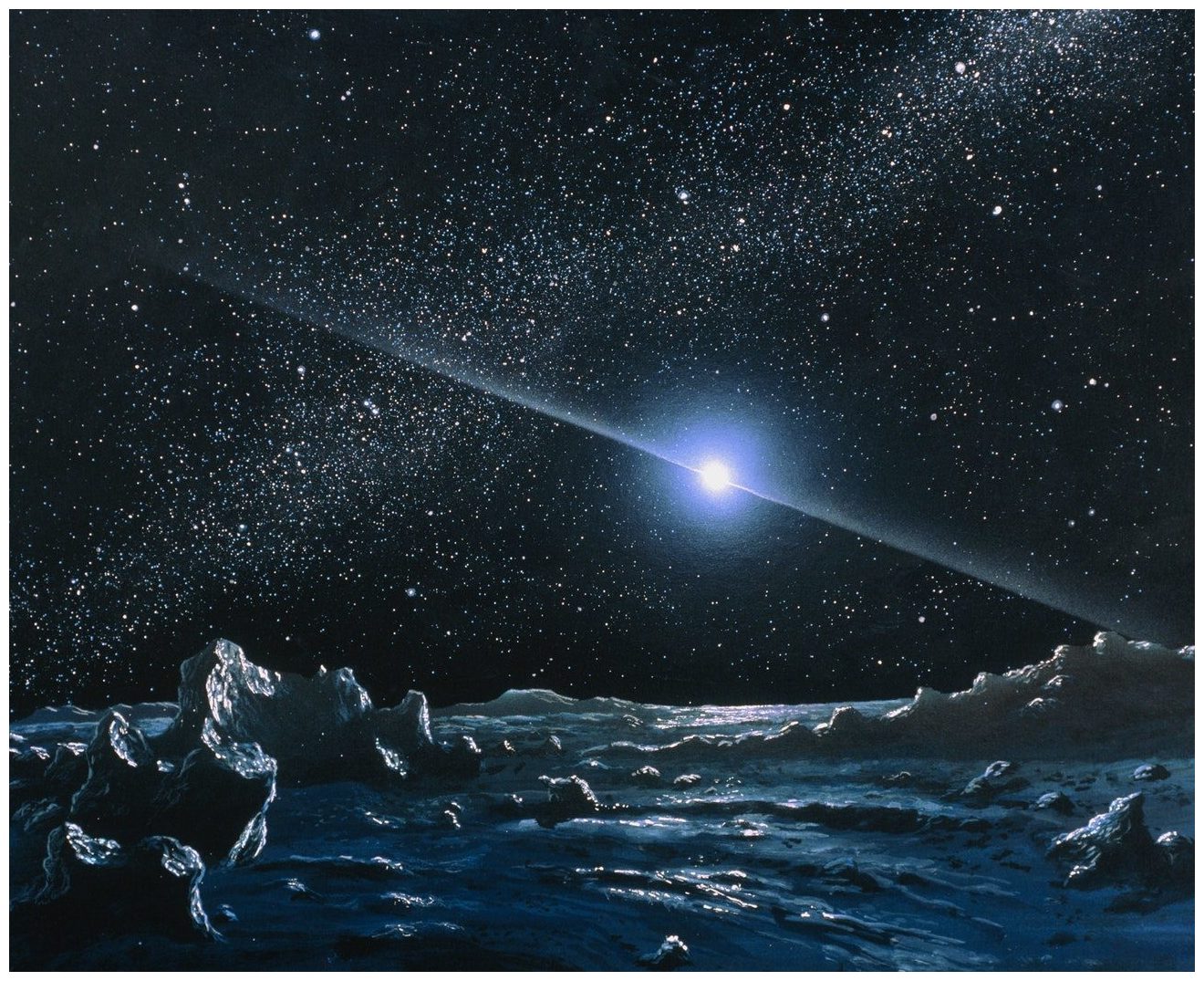
© Chris Butler/Science Photo Library/Getty ImagesAn artists impression of an ultra-luminous pulsar, seen from a nearby planet.
Ultra-bright neutron stars are somehow breaking what was thought to be a hard-and-fast law of physics, by collecting matter at a rate that should be impossible.

So far, four of the unfeasibly hungry stars have been detected, with the latest described in a paper published in the journal Nature Astronomy. The small number is not necessarily an indication of rarity; the first was only discovered, by NASA's Nuclear Spectroscopic Telescope Array (NuStar), in 2014.

Or, perhaps more correctly, it was only in 2014 that a neutron star was definitively identified as the cause of a phenomenon, known as ULX, that had been initially observed in the 1980s. ULX stands for "ultra-luminous X-ray source", and characterises an astronomical X-ray source that is less bright than a galactic nucleus but brighter than pretty much everything else.

A ULX is brighter than any known star. Most galaxies seem to sport one, although some have several. The Milky Way, curiously enough, has none.

They key characteristic that makes ULXs fascinating is that they routinely exceed what is known as the Eddington limit for neutron stars and black holes.

The Eddington limit defines the point at which the outward pressure of a star's radiation matches the inward pull of its gravity. Going beyond this limit would be, in theory, immensely destructive, with the luminosity - the outwards radiation - forcefully disintegrating the star's outermost layers until the limit is once more met and equilibrium restored.

Because of this curious quality, debate has raged about what exactly the source of ULXs might be. A study in 2001 cautiously suggested that individual ULXs may contain extremely massive black holes.

Info

Powerful flare detected from Proxima Centauri

Proxima Centauri
© NRAO/AUI/NSF; D. Berry
At its peak, the newly recognized flare was 10 times brighter than our sun's largest flares, when observed at similar wavelengths. Stellar flares have not been well studied at the millimeter and submillimeter wavelengths detected by ALMA, especially around stars of Proxima Centauri's type, called M dwarfs, which are the most common in our galaxy.

"March 24, 2017, was no ordinary day for Proxima Cen," said Meredith MacGregor, an astronomer at the Carnegie Institution for Science, Department of Terrestrial Magnetism in Washington, D.C., who led the research with fellow Carnegie astronomer Alycia Weinberger. Along with colleagues from the Harvard-Smithsonian Center for Astrophysics, David Wilner and Adam Kowalski, and Steven Cranmer of the University of Colorado Boulder - they discovered the enormous flare when they reanalyzed ALMA observations taken last year.

The flare increased Proxima Centauri's brightness by 1,000 times over 10 seconds. This was preceded by a smaller flare; taken together, the whole event lasted fewer than two minutes of the 10 hours that ALMA observed the star between January and March of last year.

Stellar flares happen when a shift in the star's magnetic field accelerates electrons to speeds approaching that of light. The accelerated electrons interact with the highly charged plasma that makes up most of the star, causing an eruption that produces emission across the entire electromagnetic spectrum.

"It's likely that Proxima b was blasted by high energy radiation during this flare," MacGregor explained, adding that it was already known that Proxima Centauri experienced regular, although smaller, X-ray flares. "Over the billions of years since Proxima b formed, flares like this one could have evaporated any atmosphere or ocean and sterilized the surface, suggesting that habitability may involve more than just being the right distance from the host star to have liquid water."

Gem

World's first recorded opalised pearls discovered in Australia

opalised pearls australia
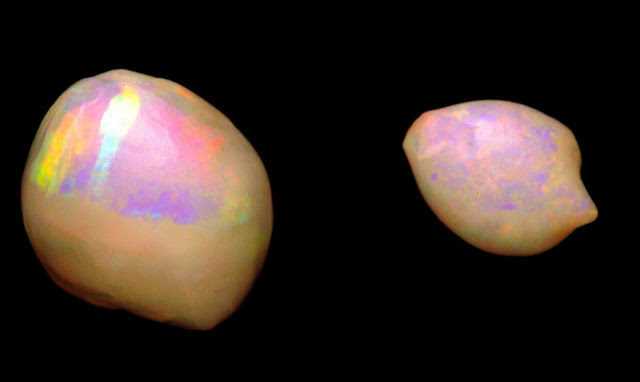
Two of the opalised pearls.
The world's first recorded opalised pearls, relics of creatures in an ancient inland sea dating back 65 million years, have been unearthed by two miners in the South Australian outback.

The "priceless" four-millimetre specimens were found in the Coober Pedy opal fields, an area famed for the colourful gems. Dr Ben Grguric from the SA Museum, where the pearls have gone on display, said opal miners Dale Price and Tanja Burk were sorting through a spoil heap when they made the discovery.

"The miners pick out anything that glows with ultraviolet light, because even a small chip of opal might be worth something if it's high quality with a high range of colours," Dr Grguric. "It turns out these resembled pearls."

Rose

Ultraviolet: The invisible glow of flowers (PHOTOS)

UV flower
© Craig BurrowsPlains coreopsis
Take a look at some of the flowers photographed by Craig Burrows and you might feel as if you've suddenly been transported into the alien world of Pandora from James Cameron's Avatar. Brightly pigmented petals starkly contrast a black background as specks of light, like glitter or fireflies, scatter across the blossoms.

It's hard to believe, but Burrow's work isn't fiction-it's science.

To capture these otherworldly images he uses a technique called ultraviolet-induced visible fluorescence photography, or UVIVF for short. The process uses ultraviolet light to cause substances to fluoresce, so the light being imaged is actually radiating from the subject itself. Think: the way your white t-shirt glows while cosmic golfing.