Science & TechnologyS


Info

Here be monsters: Deep sea Java expedition uncovers over 800 bizarre new species

Crab
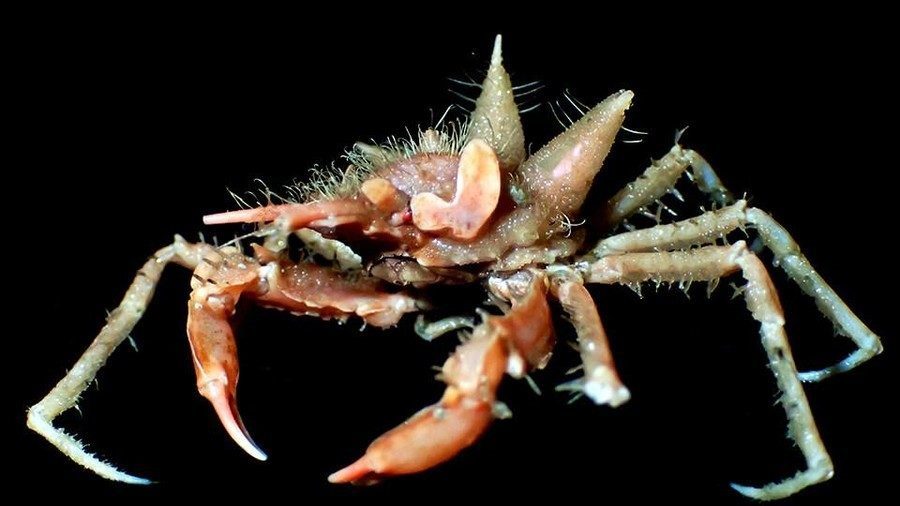
© South Java Deep Sea Expedition/National University of SingaporeNew crab species dubbed “Big Ears”
A deep sea expedition to unexplored depths of the Indian Ocean has revealed a sea rich with peculiar inhabitants from over 800 species, including at least a dozen entirely new to science.

Among the extraordinary treasure trove of new creatures is a spider crab with fuzzy spines and blood-red eyes, a small wood-dwelling sea star, and a giant cockroach almost a foot (30 centimeters) long.

The monstrous-looking ocean dwellers were identified during the first such scientific expedition to the southern coast of West Java, Indonesia.

Around 12,000 specimens belonging to 800 species were collected during the two-week mission, while over a dozen new breeds of hermit crabs, prawns, lobsters, and crabs were discovered.

Health

700-year-old Banyan tree put on life saving drip in India

700 year old banyan tree
The world's second largest Banyan tree in Pillalamarri of Mahabubnagar district in Telangana is on 'saline drip' now as part of the rejuvenation of the tree that is almost dying. The 700-year-old ficus tree is now given treatment by injecting a diluted chemical to kill termite population that infested the tree.

As pumping of chemical into the stem failed, forest officials are infusing the chemical solution drop by drop using saline bottles similar to a saline drip given to patients in the hospital. Termites had affected almost entire tree due to which parts of it are fallen, and it closed for tourists in December 2017.

Forest officials are infusing the chemical solution drop by drop using saline bottles similar to a saline drip given to patients in the hospital.

Officials have put the saline drip of diluted chemical Chloropyrifos bottles numbering few hundreds for every two metres of the giant banyan tree.

Comment: It seems that the tree has just reached that age, but it's admirable that people are trying to help all the same:
Wikipedia: Banyan -The banyan tree is the national tree of India. It is also called Indian or Bengal fig. This tree is considered sacred in India and can be seen near a temple or religious center. In Hinduism, the leaf of the banyan tree is said to be the resting place for the god Krishna.


Compass

It's all in the spleen: Indonesian tribe members can hold their breath for 13 minutes

Indonesian diver
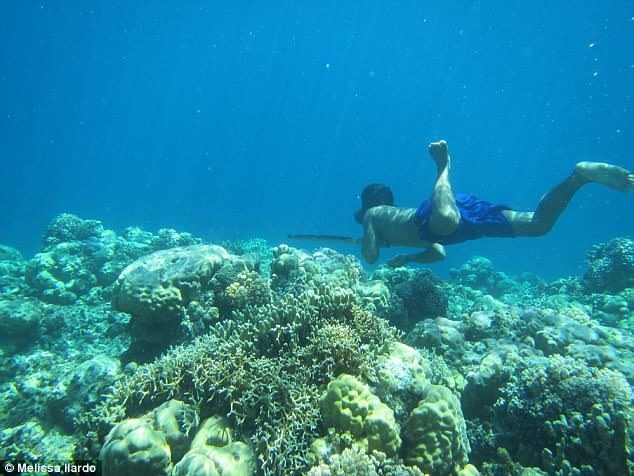
A population of Indonesian 'fish people' have evolved spleens are 50 per cent larger than normal people, enabling them to free dive to depths of more than 200 feet (61 metres).

The genetic change discovered in the Bajau tribe - who can hold their breath for 13 minutes - is the first known example of a human adaptation to deep diving, researchers found.

For more than 1,000 years, the Bajau - known as 'Sea Nomads' - have wandered the seas of southern Asia in house boats, catching fish by free diving with spears.

Now settled around the islands of Indonesia, they are famous for their extraordinary breath-holding ability.

Rocket

Post-apocalyptic setting: Abandoned Soviet-era spacecraft captured in stunning photos

Spacecraft
© Ruptly
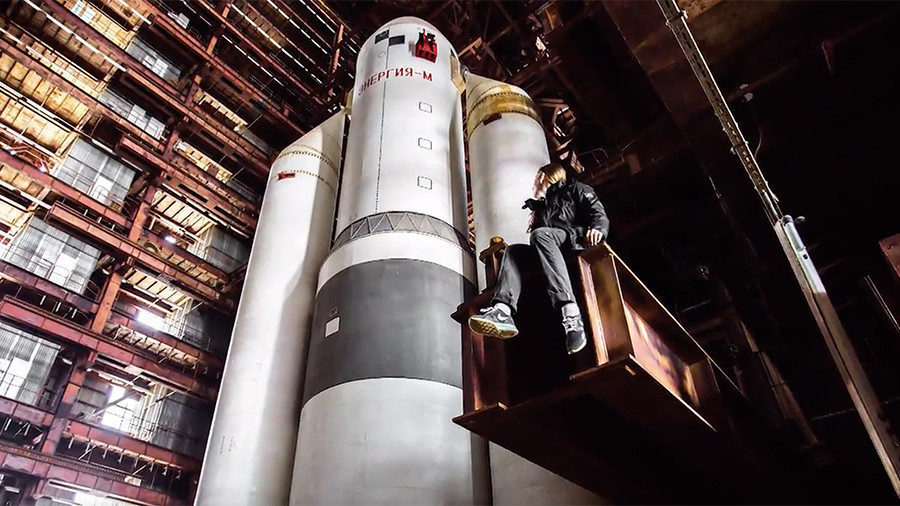
Soviet-era spacecraft hidden in the Baikonur desert have been revealed in a series of stunning pictures. Stored in what looks like a post-apocalyptic setting, they give a rare insight into relics of the USSR's space program.

Sitting inside abandoned hangars, the rusty spacecraft now gather dust, attracting enthusiasts and thrill-seekers from across the globe. Some such enthusiasts snuck onto a busy launching site in April 2017 to watch the once-magnificent aircraft that never actually made it to launch.

After reaching the cosmodrome, the young adventurers ditched their car and moved on foot before managing to venture into a steppe unnoticed. Their resulting photo compilation - included in a Ruptly video - shows two shuttles and rocket from the Energia-Buran space project, now covered in dust and bird droppings. One of the vehicles is a prototype of a shuttle that conducted its only orbital flight in 1988.

Cow

Soon the largest creature on Earth will be a cow!

Cows
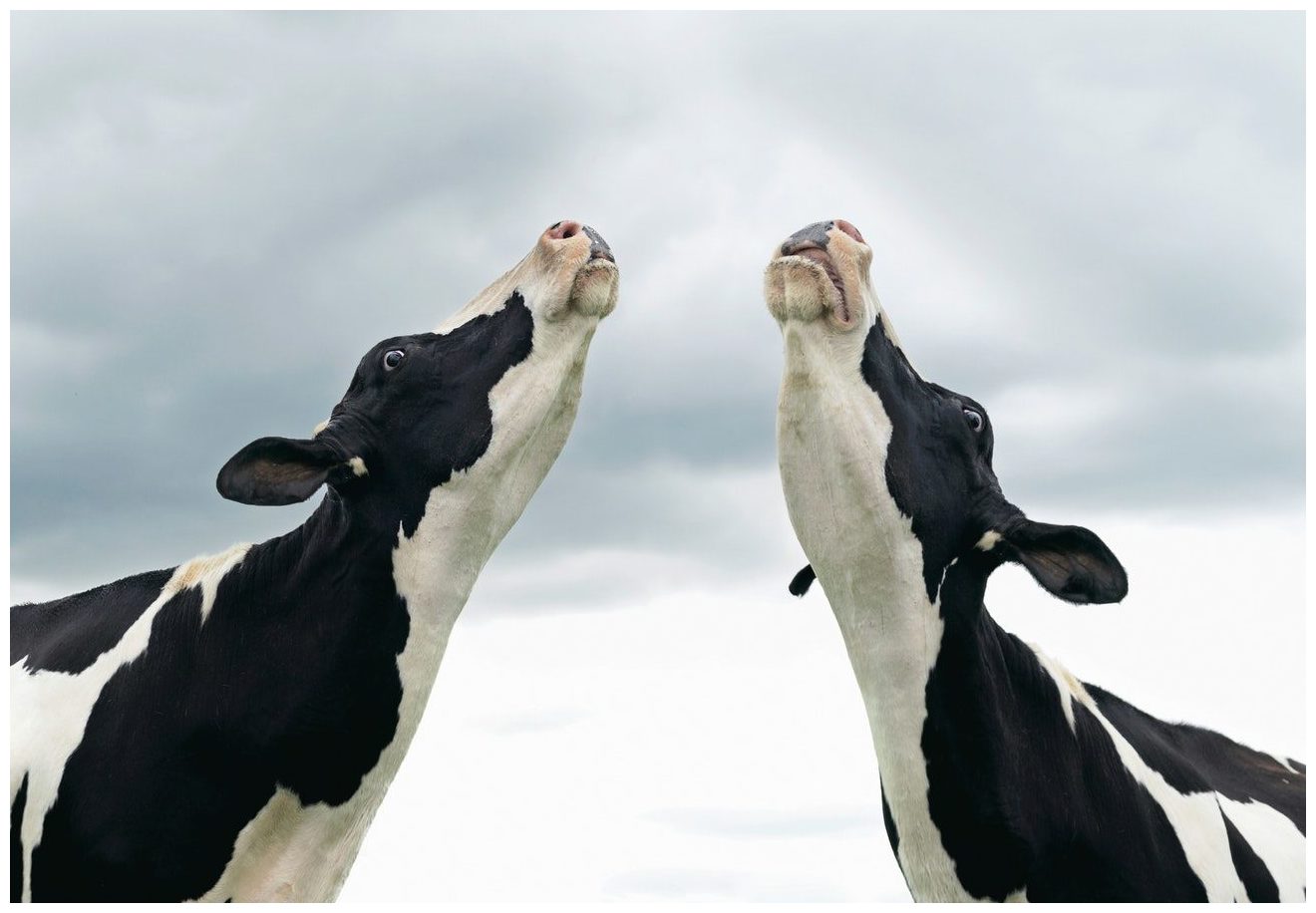
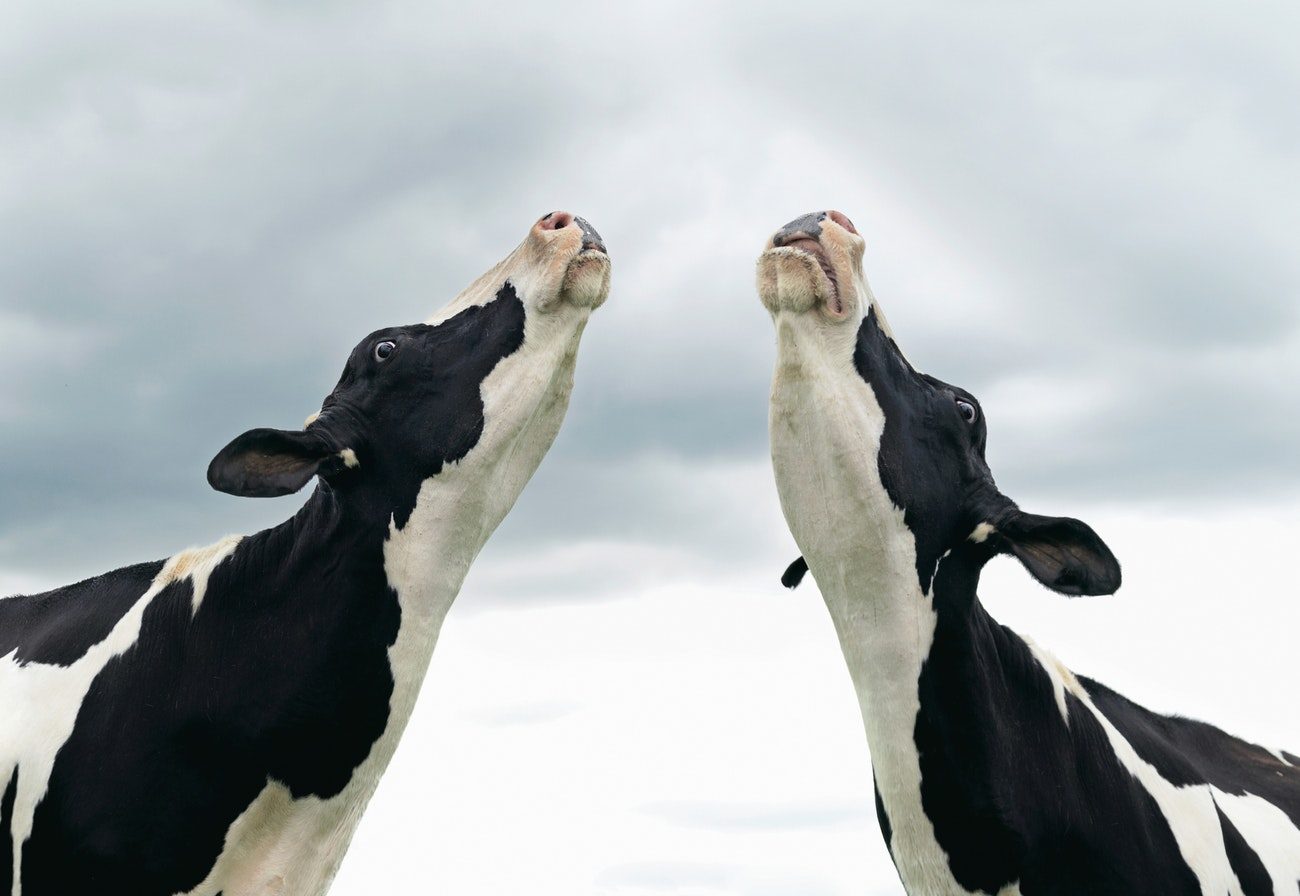
© Tony Hutchings/Getty ImagesLand of the giants. For your great, great grandchildren, cows might be the biggest megafauna around.
In a couple of hundred years the largest animal walking on land may well be a cow, new modelling predicts.

A paper published in the journal Science uncovers for the first time a startling correlation between human migration and the extinction of large animals.

The link between the loss of big creatures and the spread of Homo sapiens and other hominin species was well established by the time humans left Africa around 125,000 years ago, researchers led by biologist Felisa Smith of the University of New Mexico, US, found.

With no indication that the trend is abating, the team predicts that all currently endangered large terrestrial species will pass within the next couple of centuries, leaving cows, at an average weight of 900 kilograms, the biggest things left.

To make their finding, the scientists used two data sets. The first was a global record of all terrestrial species known, and classified according to body mass and diet, for the late Quaternary period, which started around a million years ago. The second was a similar record for all known species in the Cenozoic period, which started 66 million years ago and is known colloquially as the Age of Mammals.

Gem

Scientists develop method to bend diamonds in surprising breakthrough for ultra-strong nanomaterials

daimond break test
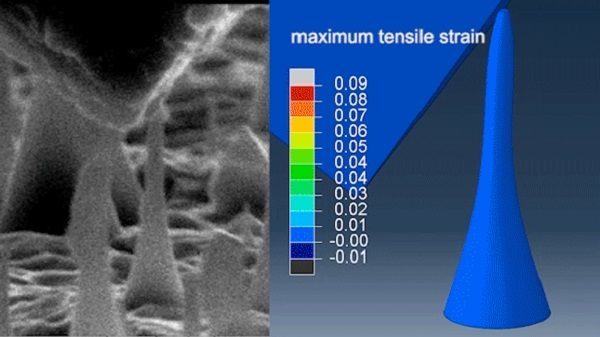
Scientists have developed a way to make diamond bend like rubber. The study used extremely small, nanoscale diamond needles. According to the researchers, the nanoscale diamond was capable of withstanding as much as 9 percent tensile strain, as shown above
Scientists have developed a way to make diamond bend like rubber.

The breakthrough, albeit seen on an extremely small scale, could pave the way for devices made from ultra-strong and flexible diamond-based materials.

In the study, an international team of researchers found that tiny diamond needles measuring just a few micrometers tall could bend by as much as 9 percent without snapping - and, they reverted to their original shape afterward.

Researchers from MIT, Hong Kong, Singapore, and Korea collaborated on the groundbreaking new study to bend the strongest of all natural materials.

Satellite

Satellite surveillance startup aims to monitor entire Earth and stream video in real-time

Satellite communications company
© Andrew WinningSatellite communications company
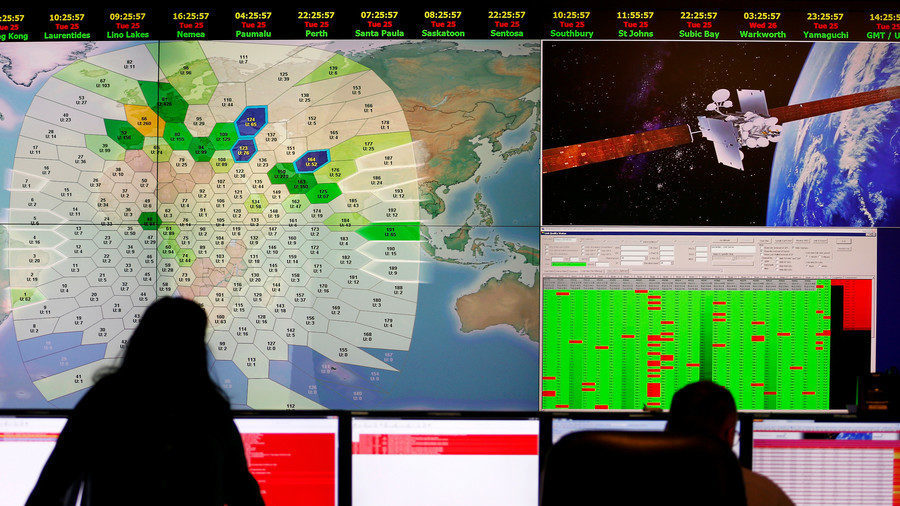
US-based startup EarthNow, which plans to deploy a constellation of hi-tech satellites to monitor the entire surface of Earth and stream HD footage 24/7, has secured backing from many notable investors, like Bill Gates and Airbus.

Though the contribution made by Microsoft's founder is not disclosed, Gates is just one of many investors who are helping EarthNow reach for the stars. Other investors, including Airbus, the SoftBank Group, and tech entrepreneur Greg Wyler also support the initiative, to deploy a large network of state of the art imaging satellites that will deliver "real-time, continuous video of almost anywhere on Earth."

"We created the world's first low-cost, high-performance satellites for mass-production to bridge the digital divide. These very same satellite features will enable EarthNow to help humanity understand and manage its impact on Earth," Wyler said.

Comment: See also: DARPA's New Spy Satellite Could Provide Real-Time Video from Anywhere on Earth


Alarm Clock

'Quantum time' may hold the key to the flow of existence

quantum light dance1
© Henrik Sorensen/Getty
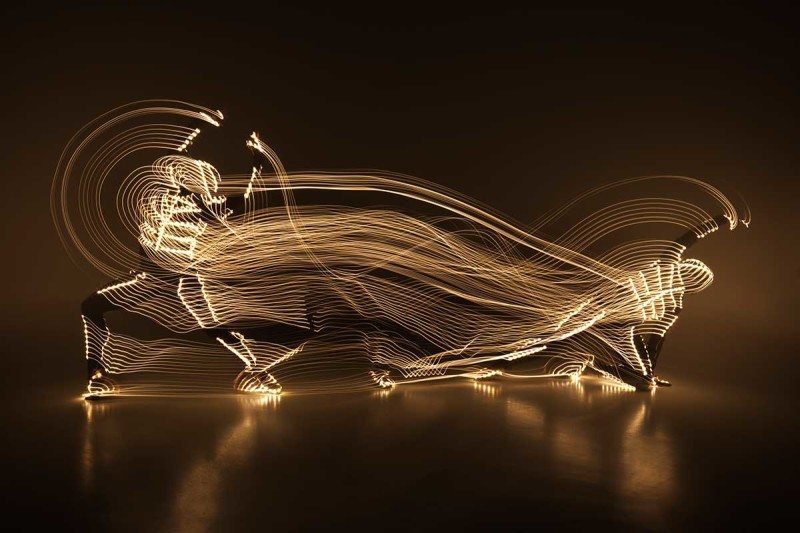
THE philosopher Augustine of Hippo once wrote that he felt he knew what time was, so long as no one asked him. Fast forward 16 centuries and the picture has hardly changed, says physicist Carlo Rovelli. Time is "perhaps the greatest mystery", he says. "At the most fundamental level we currently know of, there is little that resembles time as we experience it."

The passage of time - a uniform, universal flow that transports us inexorably from a past we cannot revisit to a future we cannot know - is perhaps the most fundamental experience of our existence. Yet our best theories suggest that it is not real. Time doesn't flow, and past, present and future cannot sensibly be defined. There isn't even one single time that governs the order of events.

Rovelli, who works at Aix-Marseille University in France, is just one of many physicists hunting for a better answer. As they do, a new generation of experiments is giving hope that we can probe the nature of time more searchingly than ever before. In all this, a strange realisation is crystallising, one that perhaps brings us a little closer to the heart of the mystery. Maybe we shouldn't be so worried about our ignorance of time. Perhaps, at some level, time is just that - ignorance.

A century ago, Albert Einstein revolutionised our ideas of time. His theories of relativity gave time a physical identity as part of space-time, a malleable fabric on which reality's events play out (see "Why now doesn't exist, and other strange facts about time").

Comment: See also:


Robot

What can go wrong? Drones will soon use artificial intelligence to decide who to kill

Air Force drone
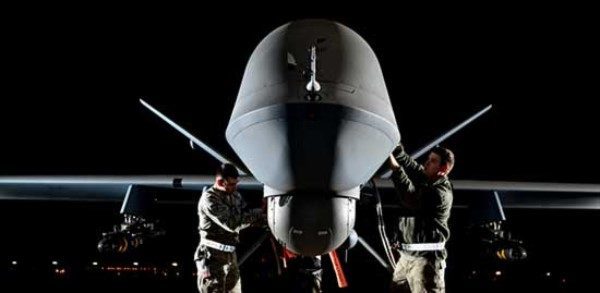
© U.S. Air ForceAn Air Force RPA reconnaissance drone is retrofitted for use in attack squadron.
Once complete, these drones will represent the ultimate militarisation of AI and trigger vast legal and ethical implications for wider society.

The US Army recently announced that it is developing the first drones that can spot and target vehicles and people using artificial intelligence (AI). This is a big step forward.

Whereas current military drones are still controlled by people, this new technology will decide who to kill with almost no human involvement.

Once complete, these drones will represent the ultimate militarization of AI and trigger vast legal and ethical implications for wider society.

There is a chance that warfare will move from fighting to extermination, losing any semblance of humanity in the process.

At the same time, it could widen the sphere of warfare so that the companies, engineers and scientists building AI become valid military targets.

Existing lethal military drones like the MQ-9 Reaper are carefully controlled and piloted via satellite. If a pilot drops a bomb or fires a missile, a human sensor operator actively guides it onto the chosen target using a laser.

Comment: Killings by drones operated by humans already cause enough civilian casualties and suffering. Imagine if the task is handed over to computers with nothing remotely resembling conscience and with a very primitive set of algorithms that cannot really pass for actual intelligence.


Holly

Flowers for Armageddon: 'Rip Van Winkle' plants can lie dormant for up to 20 years

rip van winkle plant 20 years
Researchers from Sussex University and Tokyo University found the plant that can lie dormant for longest is an orchid common in British woodland called the Epipactis helleborine, which can last for 20 years in the soil without emerging
Scores of plant species are capable of living dormant under the soil for up to 20 years, enabling them to survive through difficult times, a new study has found.

An international team of academics has found that at least 114 plant species from 24 different plant families, from widespread locations and ecological communities around the world, are capable of prolonged dormancy as adult plants, remaining alive in the soil but not emerging from the ground every spring. This behaviour enables them not only to survive through difficult times, but to make the best of adversity.

The extraordinary behaviour is seen in many species of orchid, and is reminiscent of the fictional character Rip Van Winkle, who sleeps for 20 years and misses the American Revolution. It also occurs in many other types of plant.

In an article published in Ecology Letters, scientists reveal that dormancy is often a "bet hedging" strategy for the plants, with the short-term disadvantages of missing growth and reproduction in one or more seasons being outweighed by the longer-term benefits of avoiding immediate risks and thereby extending their lives.

Comment: We're learning a lot about the life of plants and how their world is governed by much more than just light and heat: