Science & TechnologyS


2 + 2 = 4

Amateur mathematician makes 'first progress' on decades-old graph problem

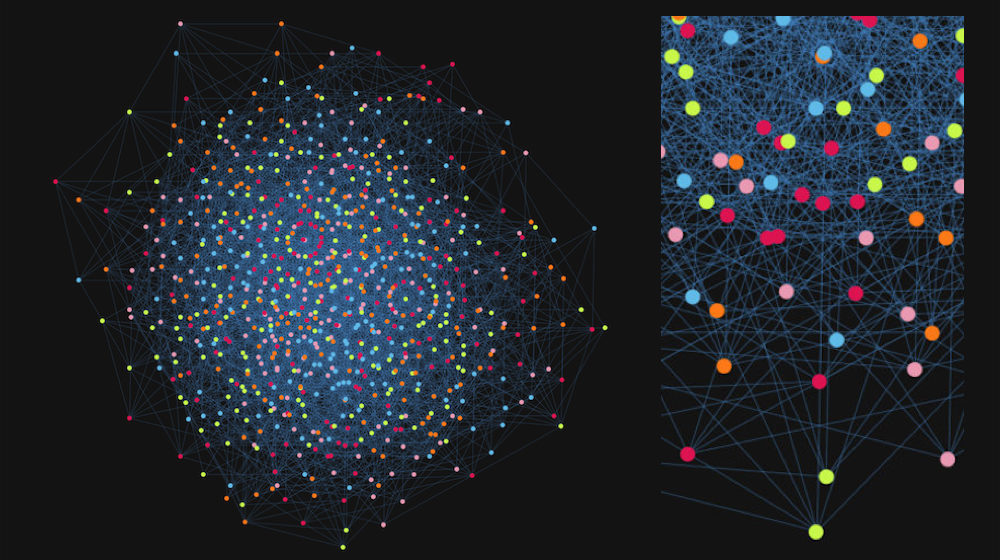
vertex graph
© UnknownThis 826-vertex graph requires at least five colors to ensure that no two connected vertices are the same shade.
In 1950 Edward Nelson, then a student at the University of Chicago, asked the kind of deceptively simple question that can give mathematicians fits for decades. Imagine, he said, a graph - a collection of points connected by lines. Ensure that all of the lines are exactly the same length, and that everything lies on the plane. Now color all the points, ensuring that no two connected points have the same color. Nelson asked: What is the smallest number of colors that you'd need to color any such graph, even one formed by linking an infinite number of vertices?

The problem, now known as the Hadwiger-Nelson problem or the problem of finding the chromatic number of the plane, has piqued the interest of many mathematicians, including the famously prolific Paul Erdős. Researchers quickly narrowed the possibilities down, finding that the infinite graph can be colored by no fewer than four and no more than seven colors. Other researchers went on to prove a few partial results in the decades that followed, but no one was able to change these bounds.

Then last week, Aubrey de Grey, a biologist known for his claims that people alive today will live to the age of 1,000, posted a paper to the scientific preprint site arxiv.org with the title "The Chromatic Number of the Plane Is at Least 5." In it, he describes the construction of a unit-distance graph that can't be colored with only four colors. The finding represents the first major advance in solving the problem since shortly after it was introduced. "I got extraordinarily lucky," de Grey said. "It's not every day that somebody comes up with the solution to a 60-year-old problem."

Galaxy

NASA: Alcubierre Drive Initiative faster than the speed of light

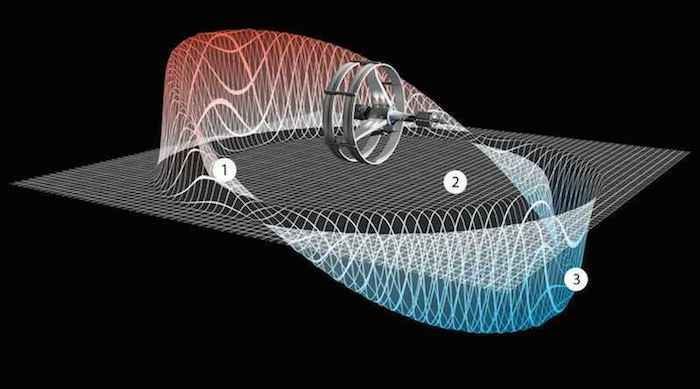
Alcubierre drive1
© Science Vibe
Before we jump into this, you should know that a number of scientists are currently researching the feasibility of warp drive (and EMdrive and a number of other modes of faster than light travel); however, most think that such forms of space travel simply aren't viable, thanks to the fundamental physics of our universe.

So although part of this article is simply, "Oh my gosh, look at this amazing design," that's not the entire point. To that end, let's take a moment to break this all down a bit so we have an understanding of what exactly is being proposed in relation to warp drive, and why it is met with such skepticism, before we get a bit too carried away...

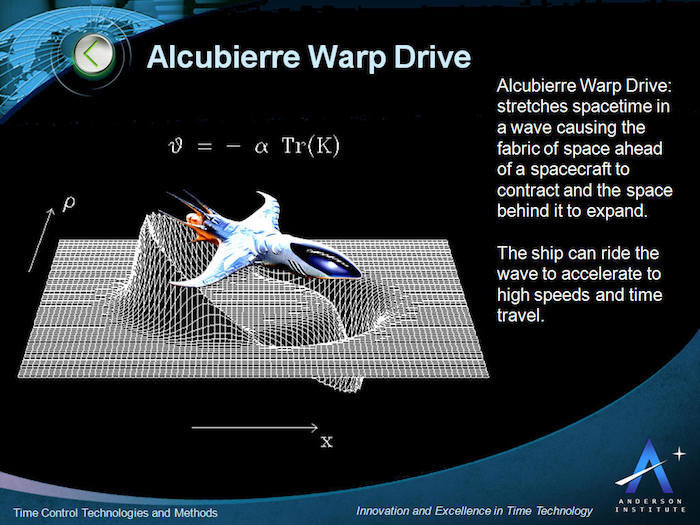
In 1994, physicist Miguel Alcubierre proposed a new kind of technology that would allow us to travel 10 times faster than the speed of light without actually breaking the speed of light. That seems a little contradictory, doesn't it? After all, we've been told time and again that light is the universal speed limit - nothing in the cosmos can travel faster than it (much less 10 times faster) and herein lies the key to the Alcubierre drive: When you use it, you aren't actually moving through space.
Alcubierre Warpdrive overview
© Anderson Institute

Airplane

Buckle up: Your next pilot could be drone software

pilots cockpit
© unknownWould you be or feel safer if one of these people were a robot?
Would you get on a plane that didn't have a human pilot in the cockpit? Half of air travelers surveyed in 2017 said they would not, even if the ticket was cheaper. Modern pilots do such a good job that almost any air accident is big news, such as the Southwest engine disintegration on April 17.

But stories of pilot drunkenness, rants, fights and distraction, however rare, are reminders that pilots are only human. Not every plane can be flown by a disaster-averting pilot, like Southwest Capt. Tammie Jo Shults or Capt. Chesley "Sully" Sullenberger. But software could change that, equipping every plane with an extremely experienced guidance system that is always learning more.

In fact, on many flights, autopilot systems already control the plane for basically all of the flight. And software handles the most harrowing landings - when there is no visibility and the pilot can't see anything to even know where he or she is. But human pilots are still on hand as backups.

A new generation of software pilots, developed for self-flying vehicles, or drones, will soon have logged more flying hours than all humans have - ever. By combining their enormous amounts of flight data and experience, drone-control software applications are poised to quickly become the world's most experienced pilots.

Cell Phone

iPhone X is dead as consumers turn their backs on overpriced smartphones - analyst

iPhone
© Toru Hanai / Reuters
Apple is likely to stop producing iPhone X smartphones, according to Mirabaud analyst Neil Campling. The oversupply of chips and high prices are the reason, he says.

Taiwan Semiconductor Manufacturing, or TSMC, the world's largest semiconductor foundry company, is facing a problem with an oversupply of chips, and the company's stock was down 6.3 percent on Friday.

This "has never been higher," Campling says, as quoted by CNBC. His company has tracked inventory data at TSMC for more than 10 years. The problems at TSMC will raise concerns about AMS, Apple's key supplier for the iPhone X's Face ID feature which unlocks the smartphone when you look at it.

Comment: See also: How smart phones make today's teens unhappy & cause dramatic shifts in behavior


Fireball

Cosmic fender-bender: NASA's asteroid-hunting probe develops mysterious divet

Artist rendering of the OSIRIS-REx asteroid probe
© NASA/Handout / ReutersAn undated NASA artist rendering of the OSIRIS-REx asteroid probe.
A conspicuous and worrying black dent in the heat shield of NASA's asteroid-bound probe has been spotted in an image the space agency shared of its OSIRIS-REx Sample Return Capsule (SRC).

After over a year of studying the March 2, 2017 snap to determine whether the mark was a smudge on the lens or something more sinister, NASA scientists determined that it's actually a poppy-seed sized impact crater from some form of cosmic debris. The divet will not, they say, disrupt the spacecraft's mission to the carbonaceous asteroid Bennu.

The photo was taken by the craft's StowCam imager as part of a routine status check conducted six months after the initial launch. The indentation measures 0.08 inches (2mm) across and appeared on the craft's ablative heat shield, a critical component for ensuring mission success.

Comment: See also: Report says NASA preparing spacecraft to nuke dangerous asteroids


Sheeple

Do trees have 'sleep cycles'?

winter solstice celebration
© uulc.org
High-precision three-dimensional surveying of 21 different species of trees has revealed a yet unknown cycle of subtle canopy movement during the night. The 'sleep cycles' differed from one species to another. Detection of anomalies in overnight movement could become a future diagnostic tool to reveal stress or disease in crops.

One of the most important processes sustaining life on Earth is the transport of water from the ground and into the leaves where the photosynthesis and capture of the sun's energy take place. The process has fascinated scientists for centuries and is still debated in plant physiology. Scientists generally agree that water transport is driven by light and consequently occurs in 24 hours cycles.

Comment:


Ladybug

Growing strips of wildflowers in farm fields reduces need for pesticides

wildflower stripe farm
© Matthias Tschumi/AgroscopeTailored flower strips allow pest-eating insects to reach throughout crop fields, rather than be limited to flower borders at the perimeter.
Long strips of bright wildflowers are being planted through crop fields to boost the natural predators of pests and potentially cut pesticide spraying.

The strips were planted on 15 large arable farms in central and eastern England last autumn and will be monitored for five years, as part of a trial run by the Centre for Ecology and Hydrology (CEH).

Concern over the environmental damage caused by pesticides has grown rapidly in recent years. Using wildflower margins to support insects including hoverflies, parasitic wasps and ground beetles has been shown to slash pest numbers in crops and even increase yields.

But until now wildflower strips were only planted around fields, meaning the natural predators are unable to reach the centre of large crop fields. "If you imagine the size of a [ground beetle], it's a bloody long walk to the middle of a field," said Prof Richard Pywell, at CEH.

Comment: From one study:
High effectiveness of tailored flower strips in reducing pests and crop plant damage

Abstract

Providing key resources to animals may enhance both their biodiversity and the ecosystem services they provide. We examined the performance of annual flower strips targeted at the promotion of natural pest control in winter wheat. Flower strips were experimentally sown along 10 winter wheat fields across a gradient of landscape complexity (i.e. proportion non-crop area within 750 m around focal fields) and compared with 15 fields with wheat control strips. We found strong reductions in cereal leaf beetle (CLB) density (larvae: 40%; adults of the second generation: 53%) and plant damage caused by CLB (61%) in fields with flower strips compared with control fields. Natural enemies of CLB were strongly increased in flower strips and in part also in adjacent wheat fields. Flower strip effects on natural enemies, pests and crop damage were largely independent of landscape complexity (8-75% non-crop area). Our study demonstrates a high effectiveness of annual flower strips in promoting pest control, reducing CLB pest levels below the economic threshold. Hence, the studied flower strip offers a viable alternative to insecticides. This highlights the high potential of tailored agri-environment schemes to contribute to ecological intensification and may encourage more farmers to adopt such schemes.
The necessity of pesticides and herbicides are proving that our mono-cultural, mass production, GMO attempts at cheating nature are not working, and most of these industrial methods are actually hazardous to our health. Eventually we will be forced to return to more traditional, local, smaller agricultural practises - or at least apply the best of them to how we farm in the future:


Rocket

US to develop hypersonic missiles to compete with Russia and China

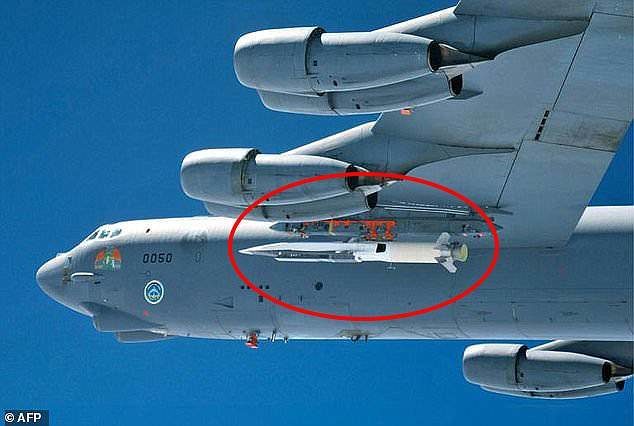
supersonic missile
This 2010 file photo shows rival Boeing's X-51A WaveRider hypersonic vehicle under a B-52 bomber.
Hypersonic missiles that can fly at many times the speed of sound have received a near $1 billion (£710 million) funding boost in the US to compete with rival nations' efforts.

The Pentagon has pushed through development of the highly manoeuvrable weapons, which are designed to outpace detection and defensive capabilities.

It follows repeated warnings from senior officials about rapid advances by China and Russia, who have unveiled their own versions in recent months.

Arsenals of the ultra-fast intercontinental weapons could also be equipped with nuclear warheads with the capability of delivering devastating strikes across the planet.

Comment: New arms race: US, Russia and China compete to revolutionize warfare with hypersonic weapons


Fireball 4

Threat assessment: NASA's asteroid hunter charted scariest, Earth-bound objects

Outer space
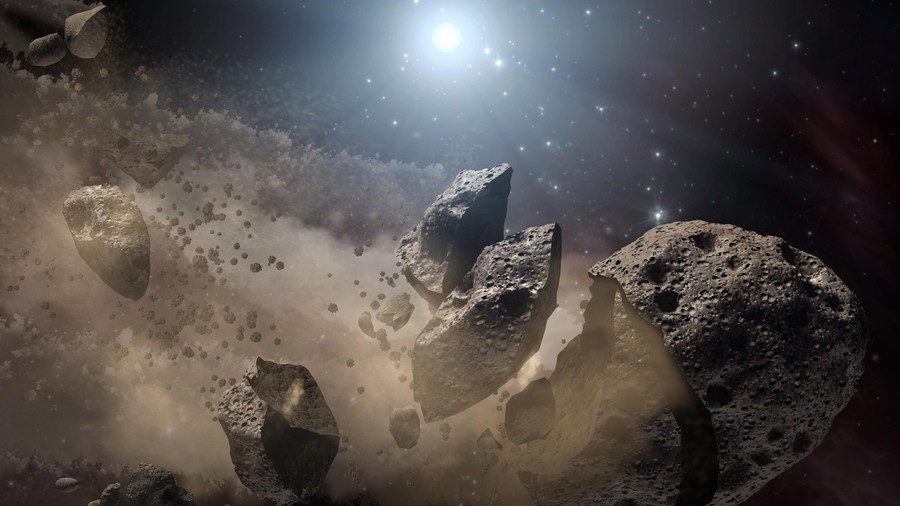
© REUTERS/NASA/JPL-Caltech/Handout / ReutersFile NASA image shows an artist's concept of an asteroid breaking up as it travels in space.
Hundreds of cosmic objects swarming unnervingly close to Earth come to life in an intimidating new NASA visualization, based on the latest data from its asteroid-hunting mission.

NEOWISE has charted almost 30,000 objects since it resumed its work in 2013, including 788 near-Earth objects and 136 comets. Ten of the objects discovered by NEOWISE in the past year alone have been classified as potentially hazardous asteroids (PHAs).

NASA's latest animation is based on detections made by the telescope over its last four years of surveying the solar system. The green dots represent near-Earth asteroids while the yellow dots stand for comets.

Frog

Using mushrooms to create leather, wood and brick

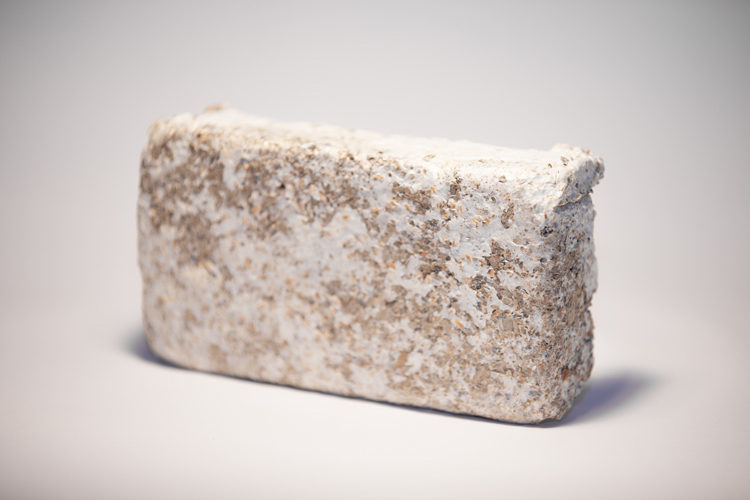
mushroom brick building
In a world where the average person consumes more resources than could possibly be regenerated in their lifetime, it's no surprise to hear that our quickening resource consumption is resulting in a slow-motion collapse of the environment and all life on the planet.

However, researchers at a San Francisco Bay startup company have discovered a way to counteract this degradation. MycoWorks, a company which creates products out of fungi, believes that the answer may lie in replacing just some of the many products we consume with this entirely sustainable and renewable source material.
"They can take our greatest resource, which is human waste, and turn that into something that's really valuable to us. They have the ability to give us everything that we want" ~Philip Ross, Chief technology officer at MycoWorks
The company currently has the ability to create material which is similar to animal skin, but even sturdier than leather. They were able to create products which are more durable than deer skin in only a matter of months, but what is perhaps most encouraging about the project is that the material only takes two weeks to create, whereas real leather takes about two years for animal to be ready, without considering the costs of feed and housing.

Comment: Partly due to monopolies on certain products, like cotton, wood and stone, and partly because society is so detached from it's past that we seem to have forgotten the uses of a wealth of things in the natural world. For example hemp can be used for clothing and as a construction material as hempcrete, stinging nettles can be used for fabric and as a powerful fertilizer.

It seems we're in the process of rediscovering the secrets of the natural world: