Science & TechnologyS


Fireball 2

Study suggests an interstellar visitor may have changed the course of 4 solar system planets

Jupiter
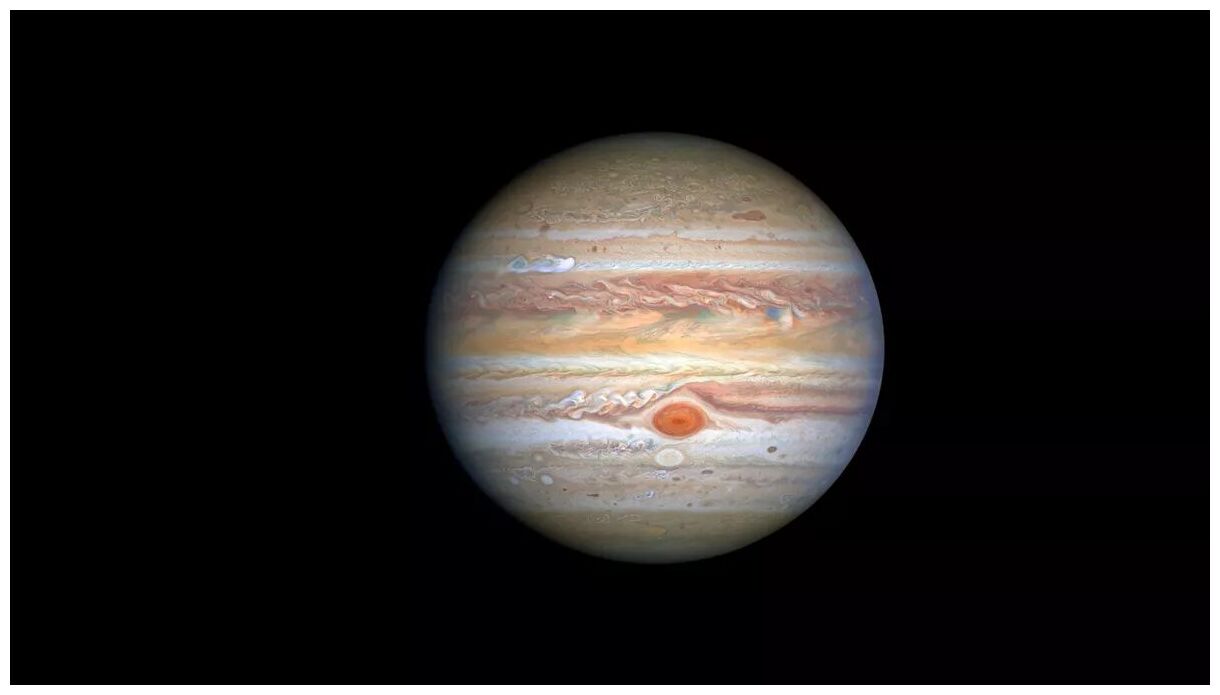
© NASAThe visiting object was probably eight times as heavy as Jupiter, according to the new study.
An object eight times the mass of Jupiter may have swooped around the sun, coming superclose to Mars' present-day orbit before shoving four of the solar system's planets onto a different course.

A planet-size object that possibly once visited the solar system may have permanently changed our cosmic neighborhood by warping the orbits of the four outer planets, a new study suggests. The findings may shed light on why these planets' paths have certain peculiar features.

For decades, astronomers have debated how the solar system's planets formed. However, most hypotheses agree on the type of orbit the planets should have: circles that are arranged concentrically around the sun and lie on the same plane. (If you viewed them edge-on, you would see only a line.) However, none of the eight planets, including Earth, have perfectly circular orbits. Plus, the planets' paths don't lie precisely on the same plane.

Comment: Time to read up Victor Clube and William Napier, proponents of the 'disintegrating mega-comet" theory.


Satellite

The ancient technology keeping space missions alive

voyager
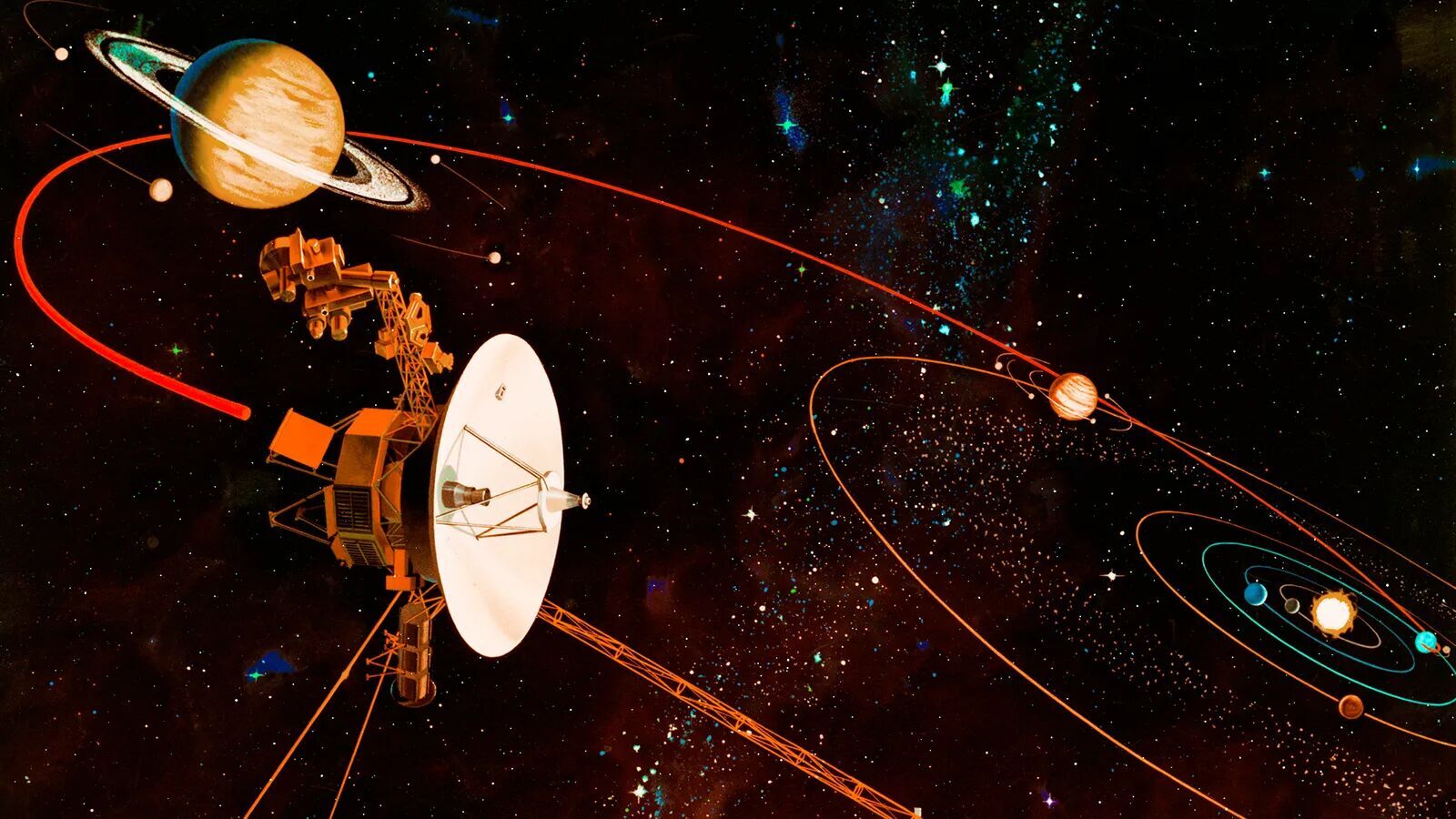
© Nasa/Getty ImagesArtist impression of the Voyager space mission
Some of the most famous space missions, including the two Voyager probes, have been exploring our Solar System for decades. But he technology helping keep them aloft is not what you'd expect.

4 June 1996, European space port, French Guiana...

It took more than 10 years to design and build Europe's four identical Cluster satellites for launch; and just 39 seconds to lose them all in an enormous fireball.

Their remains rained down over the South American jungle as the Ariane 5 rocket veered off course and exploded. VIPs who had been sipping champagne on the outdoor viewing gallery moments earlier were ushered back inside to avoid being injured by the falling debris.

The disaster was one of the European Space Agency's (Esa) most visible and spectacular failures. But within months, work had begun on a replacement mission, Cluster II.

Info

Dinosaurs roamed the northern hemisphere millions of years earlier than previously thought

Ancient Dinosaur
© Illustration by Gabriel UguetoAn artist’s rendering shows how Ahvaytum bahndooiveche may have appeared in a habitat dating to around 230 million years ago.
How and when did dinosaurs first emerge and spread across the planet more than 200 million years ago? That question has for decades been a source of debate among paleontologists faced with fragmented fossil records. The mainstream view has held that the reptiles emerged on the southern portion of the ancient supercontinent Pangea called Gondwana millions of years before spreading to the northern half named Laurasia.

But now, a newly described dinosaur whose fossils were uncovered by University of Wisconsin-Madison paleontologists is challenging that narrative, with evidence that the reptiles were present in the northern hemisphere millions of years earlier than previously known.

The UW-Madison team has been analyzing the fossil remains since they were first discovered in 2013 in present-day Wyoming, an area that was near the equator on Laurasia. The creature, named Ahvaytum bahndooiveche, is now the oldest known Laurasian dinosaur, and with fossils estimated to be around 230 million years old, it's comparable in age to the earliest known Gondwanan dinosaurs.

UW-Madison scientists and their research partners detail their discovery Jan. 8, 2025, in the Zoological Journal of the Linnean Society.

"We have, with these fossils, the oldest equatorial dinosaur in the world — it's also North America's oldest dinosaur," says Dave Lovelace, a research scientist at the University of Wisconsin Geology Museum who co-led the work with graduate student Aaron Kufner.

Beaker

US company wants to 'resurrect' mammoth, dodo bird and Tasmanian tiger

mammoth
© Getty Images / leonello
Texas-based Colossal Biosciences aims to bring back from extinction the woolly mammoth, the Tasmanian tiger and the dodo bird, and has just raised another $200 million for the projects.

The startup is headed by AI entrepreneur Ben Lamm, who told Bloomberg that Colossal is on track to have a mammoth calf by 2028.

"We're not going to do anything until we get the genomes right," Lamm said in an interview with Bloomberg Technology on Wednesday.

The company is currently in the "editing phase" of the project, with the Tasmanian tiger, or thylacine, "actually ahead of schedule," Lamm said.

A team of 17 is working on artificial wombs, the first of which ought to be ready within two years, he added.

Microscope 1

Gut bacteria found to help worms brave harsh Antarctic cold

antarctica worm microbiome survive cold climate
© Michael Tangherlini and Marco Lo MartireMarine worms in Antarctica rely on their microbiome to help them adapt to the extreme cold conditions. Operators dive into the sea through holes in the ice to sample the worms.
The microbiome of Antarctic worms helps them cope with extremely cold conditions, providing insights into the role of the microbiome in host health and adaptation.

In the coldest, most isolated place on Earth, a group of scientists braves the icy winds in search of answers. Clad in thick, red gear that contrasts with the blue and white landscape, researchers retrieve worms from the frigid waters of the Southern Ocean circling Antarctica. They will bring these squirming creatures back to their labs to study how they manage to survive sub-zero temperatures without any protective gear.

"Antarctica has one of the most extreme environments on the planet," said Cinzia Corinaldesi, a marine ecologist at Marche Polytechnic University. "And in marine ecosystems we have temperatures that can be very close to minus two degree [Celsius]."

Volcano

Experts on high alert as 100 volcanoes in Antarctica edge closer to erupting

antarctica volcanoes
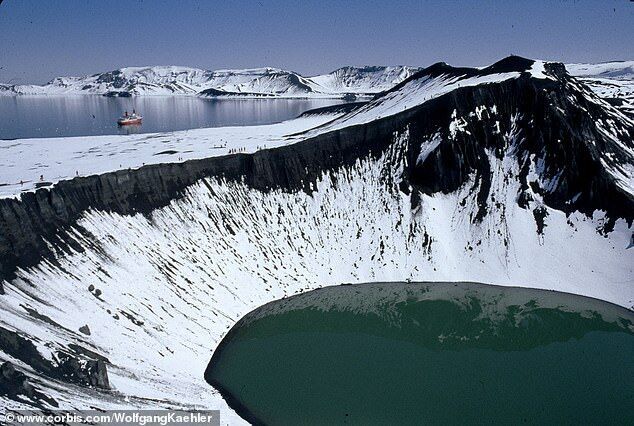
© corbis.com/WofgangKaehlerMore than 100 volcanoes lie beneath the surface of the West Antarctic Ice Sheet. In fact, what appears to be a frozen wasteland is actually the largest volcanically active region on Earth
Experts are on red alert after uncovering a ticking time bomb in Antarctica that would reshape the continent and dramatically increase sea levels worldwide.

More than 100 volcanoes lie beneath the surface of the West Antarctic Ice Sheet, which is 'particularly vulnerable to collapse, yet its position atop an active volcanic rift is seldom considered,' the study noted.

Scientists have warned that as climate change causes the ice sheet to melt, this drives increased volcanic activity that speeds up melting at the surface, creating a 'positive feedback loop.'

As the ice sheet melts, the amount of mass pushing down on the surface decreases, which creates an uplifting effect in the subsurface.

Microscope 2

Discovery of fat-filled cartilage cells explains why noses are springy

fat cartilage cells flexible tissue nose
© Maksim Plikus, University of California, IrvineResearchers have discovered a new type of cartilage cell called lipo-chondrocyte, that is filled with large fat droplets (shown here in green) and is found in many mammalian species.
A newly identified cartilage cell generates fat vacuoles and makes the surrounding tissues pliable. This helps keep the ear and nose tips bouncy.

The smooth functioning of the body's joints, the flexibility of the ears and nose, and the shaping of bones are all made possible by the skeletal tissue known as cartilage.1 According to popular medical textbooks, cartilage is made up of only one type of specialized cell called a chondrocyte, which is small and secretes large quantities of extracellular matrix, giving cartilage its biomechanical properties.2 But now, new research makes these textbooks outdated.

More than a decade ago, while studying fat cells in the mouse ear skin, Maksim Plikus and his colleagues observed a puzzling pattern in dye uptake. "There were some fat cells that stained, which were the true adipocytes," said Plikus, a developmental biologist at the University of California, Irvine. "Then there was another group of fat cells that didn't [stain], no matter which marker." Initially, he thought these odd adipocytes could simply be a type that stubbornly resisted dyes. However, upon digging deeper, Plikus realized that they were a completely new type of fat-laden cartilage cells that formed the pliable lipo-cartilage in body parts like the nose, ear and throat. "At first we really had to pinch ourselves because it made no sense," Plikus exclaimed.

Satellite

BepiColombo spacecraft's 6th and final flyby returns stunning images of Mercury

BepiColombo flyby mercury probe
© ESA/BepiColombo/MTMThree images acquired by the ESA/JAXA BepiColombo spacecraft during its sixth Mercury flyby on Jan. 8, as selected by the ESA.
The BepiColombo spacecraft has made its sixth and final flyby of the closest planet to the sun, Mercury, capturing some incredible images of the tiny world. The photos offer tantalizing hints about some of the mysteries BepiColombo will investigate when it moves into orbit around the planet next year.

The joint European Space Agency (ESA) and Japan Aerospace Exploration Agency (JAXA) mission made its latest passage of Mercury on Wednesday (Jan. 8) at 00: 59 EDT (0259 GMT).

Comment: There's a lo more to Mercury than amazing photos, as other probe have revealed:


Ice Cube

Massive recovery in Antarctica Sea ice unreported by Net Zero-obsessed mainstream media

Antarctica
© UnknownAntarctica
Remember all that alarmist guff about Antarctica sea ice recording lower levels in winter a couple of years ago? Georgina Rannard of the BBC wrote a story headed 'Antarctic sea ice at "mind-blowing" low alarms experts', while Clive Cookson at the Financial Times gave us his suggestion that the area "faces a catastrophic cascade of extreme environmental events... that will affect the climate around the world".

The scare story caravan has moved on to pastures new these days, not unrelated to the fact that at the end of 2024 the extent of sea ice in Antarctica was roughly the same as the 1981 to 2010 average. According to the U.S.-based National Snow and Ice Data Centre (NSIDC), "this provides a sharp illustration of the high variability of Antarctica sea ice extent".

It does indeed, and it also provides us with a classic case study of how a short-term natural variation, well understood by many scientists, is weaponised by activists in science, politics and journalism to induce mass climate psychosis with the aim of promoting the political Net Zero lunacy.

Comment: See also:


Archaeology

166 million-year-old dinosaur 'highway' discovered in UK quarry - used by some of Jurassic's biggest dinosaurs

dinosaur tracks quarry england
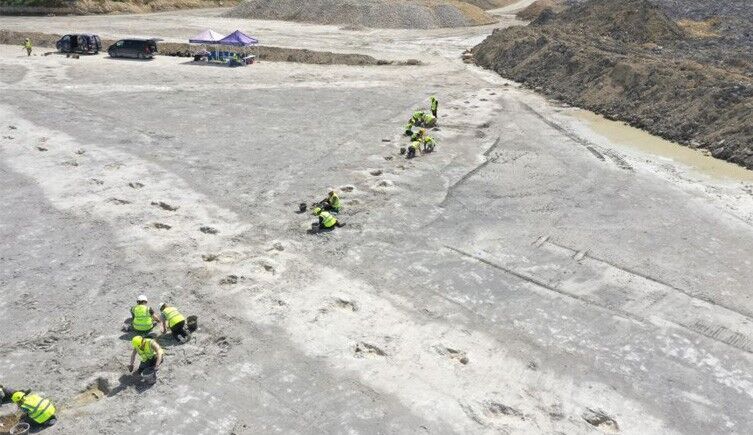
© University of BirminghamThe team uncovered five separate trackways, the longest stretched for more than 150 metres
Researchers have excavated the largest dinosaur footprint site in the U.K. after a quarry worker found tracks left by two of Britain's biggest Jurassic dinosaur

Researchers and quarry workers have uncovered a massive dinosaur "highway," which includes hundreds of footprints left by some of U.K.'s biggest dinosaurs.

The tracks were uncovered at Dewars Farm Quarry in Oxfordshire and date back to the middle of the Jurassic Period (201.3 million to 145 million years ago). It is the largest dinosaur footprint site in the U.K., researchers said.

A quarry worker named Gary Johnson discovered the first footprints after he felt strange bumps on the quarry floor last year. In June, researchers worked with quarry staff to excavate the dinosaur "highway," according to a statement released on Jan. 2.