Science & TechnologyS


Meteor

Neptune 'dead zones' hold more rocks than asteroid belt

Image
© NASANeptune's Trojan asteroids, which share the planet's orbit, may outnumber those in the solar system's main asteroid belt
An asteroid that is trapped in a 'dead zone' behind Neptune has been found for the first time. The finding suggests that the blue planet's rock collection may outnumber objects in the main asteroid belt and may provide clues to the origin of comets.

Objects can become trapped in two gravitational dead zones around Neptune, where the forces of the sun and the planet balance out. In the last decade, astronomers have identified six asteroids - called Trojans - in the zone that moves in front of the planet along its orbit. But finding Trojans in the region trailing the planet has proved more difficult, because the faint light reflected off of objects there is washed out by brighter starlight from the plane of the Milky Way.

Meteor

Asteroid Found In Gravitational Dead Zone

Image
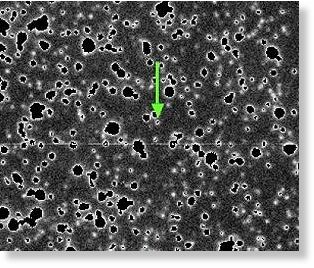
© Scott SheppardThe green arrow shows the asteroid. The other bright objects are stars in the Milky Way.
There are places in space where the gravitational tug between a planet and the Sun balance out, allowing other smaller bodies to remain stable. These places are called Lagrangian points. So-called Trojan asteroids have been found in some of these stable spots near Jupiter and Neptune.

Trojans share their planet's orbit and help astronomers understand how the planets formed and how the solar system evolved. Now Scott Sheppard at the Carnegie Institution's Department of Terrestrial Magnetism and Chad Trujillo* have discovered the first Trojan asteroid, 2008 LC18, in a difficult-to-detect stability region at Neptune, called the Lagrangian L5 point.

They used the discovery to estimate the asteroid population there and find that it is similar to the asteroid population at Neptune's L4 point. The research is published in the August 12, 2010, online issue of Science Express.

Better Earth

Ancient Hawaiian Glaciers Reveal Clues To Global Climate Impacts

Image
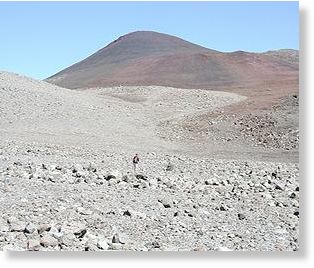
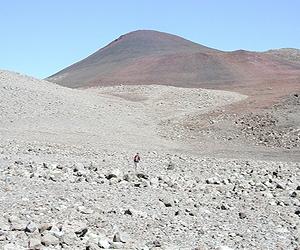
© Oregon State UniversityGray rubble on the flanks of Mauna Kea on the island of Hawaii lie in contrast to the red volcanic rock behind them, and were deposited by a glacier that disappeared thousands of years ago.
Boulders deposited by an ancient glacier that once covered the summit of Mauna Kea on the island of Hawaii have provided more evidence of the extraordinary power and reach of global change, particularly the slowdown of a North Atlantic Ocean current system that could happen again and continues to be a concern to climate scientists.

A new study has found geochemical clues near the summit of Mauna Kea that tell a story of ancient glacier formation, the influence of the most recent ice age, more frequent major storms in Hawaii, and the impact of a distant climatic event that changed much of the world.

The research was published in Earth and Planetary Science Letters by scientists from Oregon State University, the Woods Hole Oceanographic Institution, University of British Columbia and U.S. Geological Survey. The work was supported by the National Science Foundation.

"Mauna Kea had a large glacial ice cap of about 70 square kilometers until 14,500 years ago, which has now all disappeared," said Peter Clark, a professor of geosciences at OSU. "We've been able to use new data to determine specifically when, where and most likely why the glacier existed and then disappeared."


Sherlock

Reading The Zip Codes Of 3,500-Year-Old Letters

Image
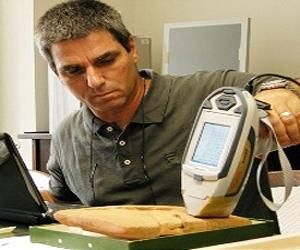
© UnknownProf. Yuval Goren demonstrates the portable x-ray device on an ancient tablet
Unfortunately, when ancient kings sent letters to each other, their post offices didn't record the sender' return address. It takes quite a bit of super-sleuthing by today's archaeologists to determine the geographical origin of this correspondence - which can reveal a great deal about ancient rulers and civilizations.

Now, by adapting an off-the-shelf portable x-ray lab tool that analyzes the composition of chemicals, Prof. Yuval Goren of Tel Aviv University's Department of Archaeology and Ancient Near Eastern Civilizations can reveal hidden information about a tablet's composition without damaging the precious ancient find itself.

These x-rays reveal the soil and clay composition of a tablet or artefact, to help determine its precise origin.

But Prof. Goren's process, based on x-ray fluorescence (XRF) spectrometry, can go much further. Over the years, he has collected extensive data through physical "destructive" sampling of artefacts.

Better Earth

An Ancient Earth Like Ours

Image
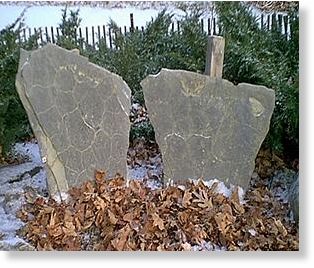
© UnknownMud Cracks, Ordovician Period, Manlius formation (limestone), town of New Salem, (eastern) New York. More evidence of warm shallow sea conditions from 400 million years ago, long before the rocks of the Connecticut Valley formed.
An international team of scientists including Mark Williams and Jan Zalasiewicz of the Geology Department of the University of Leicester, and led by Dr. Thijs Vandenbroucke, formerly of Leicester and now at the University of Lille 1 (France), has reconstructed the Earth's climate belts of the late Ordovician Period, between 460 and 445 million years ago.

The findings have been published online in the Proceedings of the National Academy of Sciences of the USA - and show that these ancient climate belts were surprisingly like those of the present.

The researchers state: "The world of the ancient past had been thought by scientists to differ from ours in many respects, including having carbon dioxide levels much higher - over twenty times as high - than those of the present.

Sherlock

Oldest Earth Mantle Reservoir Discovered

Image
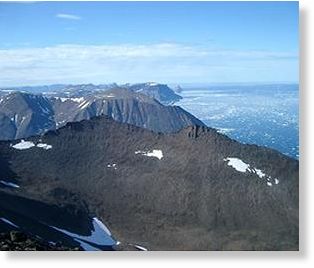
© Don Francis, McGill UniversityView of the basalts along the northeastern coast of Baffin Island.
Researchers have found a primitive Earth mantle reservoir on Baffin Island in the Canadian Arctic. Geologist Matthew Jackson and his colleagues from a multi-institution collaboration report the finding--the first discovery of what may be a primitive Earth mantle--this week in the journal Nature.

The Earth's mantle is a rocky, solid shell that is between the Earth's crust and the outer core, and makes up about 84 percent of the Earth's volume. The mantle is made up of many distinct portions or reservoirs that have different chemical compositions.

Scientists had previously concluded that the Earth was slightly older than 4.5 billion years old, but had not found a piece of the Earth's primitive mantle.

Until recently, researchers generally thought that the Earth and the other planets of the solar system were chondritic, meaning that the mantle's chemistry was thought to be similar to that of chondrites--some of the oldest, most primitive objects in the solar system.

Telescope

Perseids Meteor Shower Lights Up Night Sky

Image
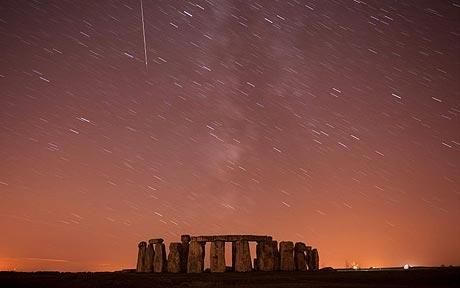
© ReutersThe Perseid meteor shower is sparked every August when the Earth passes through a stream of space debris left by comet Swift-Tuttle
Star-gazers witnessed the climax of one of the year's most spectacular meteor showers last night as a new moon and cloud-free night in some areas produced perfect conditions for seeing the Perseids.

The display of shooting stars is created by debris from the Swift-Tuttle comet burning up in the Earth's atmosphere.

While most of the meteors are no bigger than a grain of sand, they create tremendous amounts of heat when they hit the atmosphere at 135,000 miles per hour (216,000 kph).

The northern hemisphere offers the best views of the annual event, because of the tilt in the Earth's axis. Some of the meteors - named after the Perseus constellation which provides their backdrop - are so bright they can outshine the light-pollution in big cities, although country-dwellers always get the best views.

Blackbox

Google, Boffins Crack Rubik's Cube Mystery

The ultimate answer - or is it?

Has Google finally cracked it? Revealed today, courtesy of the massed ranks of Google computing, the answer to the ultimate question - not the old one about Life the Universe and Everything - is 20!

We're talking God's Number here, or more prosaically the maximum number of moves required to solve the Rubik's Cube no matter what the start position. This result, if no one comes up with a position that demands 21 moves or more, is the end of a 30 year quest that began in July 1981 with a claim by mathematician Morwen B Thistlethwaite that 52 was the answer.

Igloo

'Climategate' university to open up data

The University of East Anglia is to receive JISC funding for a project to open up its research on global warming to scrutiny and re-use.

The university, which was at the centre of a scandal revealed by leaked emails from its Climatic Research Unit, will examine how best to expose climate data for re-use, make it easier for researchers to find the data and to understand its validity.

Sun

One month ago today on Easter Island

Image
© Billy Mallery
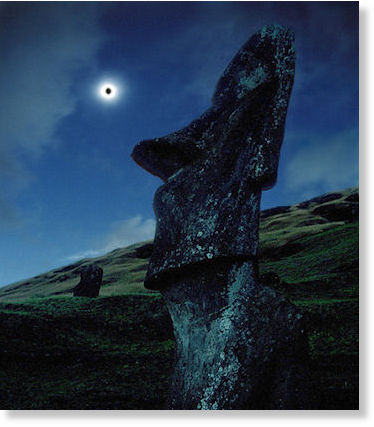
On July 11, 2010, the Moon passed directly in front of the sun, producing a total eclipse over the South Pacific. "It was one of the most beautiful sights I have ever seen," says Billy Mallery who witnessed the event from Easter Island.

"I spent much time trying to find just the right place on the island for totality, and this was it... with the Moai 'looking' straight at the sun's corona," says Mallery.

Easter island was one of the few places the Moon's shadow made landfall. Mostly, the path of totality sprawled across open, uninhabited ocean. That didn't stop the eclipse-chasers, though, who crowded upon every boat, cruise ship, and atoll they could find to watch the show.