Science & TechnologyS


Sherlock

UK: Archaeologists Discover 200-Year-Old Skeleton of London's "Moby Dick" Washed Up on Banks of the Thames

Image
© The Daily MailThe gigantic skeleton of the whale which was left on the banks of the Thames near Greenwich and would have been used for its oil
Scientists have discovered the bones of a gigantic whale that was the size of the legendary Moby Dick and which was abandoned on the banks of the Thames more than 200 years ago.

The headless skeleton of the rare North Atlantic right whale weighs around half a tonne, is 52 feet long and around 13 feet wide. The huge skeleton is believed to date back to the 17th or 18th Century and remained in such good condition because the river mud preserved it.

Scientists believe that when it died at Greenwich it was between 50 and 100 years old and that it either became stranded on the beach or was harpooned by whalers at sea and towed along the Thames.

However, the whale's position is not consistent with a natural beaching, say experts.

Bad Guys

Winston Churchill "Caused Death of One Million in Indian Famine"

Image
© Press AssociationWinston Churchill said Britain could not spare the ships to transport emergency supplies
Sir Winston Churchill may be one of Britain's greatest wartime leaders, but in India he has been blamed for allowing more than a million people to die of starvation.

According to a new book on the famine, Sir Winston ignored pleas for emergency food aid for millions in Bengal left to starve as their rice paddies were turned over to jute for sandbag production and supplies of rice from Burma stopped after Japanese occupation.

Between one and three million died of hunger in 1943.

The wartime leader said Britain could not spare the ships to transport emergency supplies as the streets of Calcutta filled with emaciated villagers from the surrounding countryside, but author Madhusree Mukerjee has unearthed new documents which challenge his claim.

In her book, Churchill's Secret War, she cites ministry records and personal papers which reveal ships carrying cereals from Australia were bypassed India on their way to the Mediterranean where supplies were already abundant.

Igloo

New Clue to How Last Ice Age Ended

Image
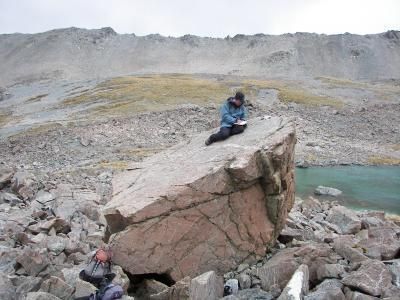
© Aaron Putnam, University of MaineThick ice once filled New Zealand's Irishman Basin.
As the last ice age was ending, about 13,000 years ago, a final blast of cold hit Europe, and for a thousand years or more, it felt like the ice age had returned. But oddly, despite bitter cold winters in the north, Antarctica was heating up. For the two decades since ice core records revealed that Europe was cooling at the same time Antarctica was warming over this thousand-year period, scientists have looked for an explanation.

A new study in Nature brings them a step closer by establishing that New Zealand was also warming, indicating that the deep freeze up north, called the Younger Dryas for the white flower that grows near glaciers, bypassed much of the southern hemisphere.

Family

Westerners vs. the World: We are the WEIRD ones

Joseph Heinrich
© Joseph HeinrichJoseph Heinrich conducts behavioural economics experiments in the countryside of southern Chile
The Ultimatum Game works like this: You are given $100 and asked to share it with someone else. You can offer that person any amount and if he accepts the offer, you each get to keep your share. If he rejects your offer, you both walk away empty-handed.

How much would you offer? If it's close to half the loot, you're a typical North American. Studies show educated Americans will make an average offer of $48, whether in the interest of fairness or in the knowledge that too low an offer to their counterpart could be rejected as unfair. If you're on the other side of the table, you're likely to reject offers right up to $40.

It seems most of humanity would play the game differently. Joseph Henrich of the University of British Columbia took the Ultimatum Game into the Peruvian Amazon as part of his work on understanding human co-operation in the mid-1990s and found that the Machiguenga considered the idea of offering half your money downright weird - and rejecting an insultingly low offer even weirder.

"I was inclined to believe that rejection in the Ultimatum Game would be widespread. With the Machiguenga, they felt rejecting was absurd, which is really what economists think about rejection," Dr. Henrich says. "It's completely irrational to turn down free money. Why would you do that?"

Satellite

Two-lane Bridge Found on Far Side of the Moon!

MoonBridge
© The RegisterNot so good for playing pooh-sticks.
In blockbusting news, a NASA spacecraft has discovered a bridge wide enough to carry a two-lane road on the far side of the Moon.

Images sent back by the Lunar Reconnaissance Orbiter (LRO) as it sailed above the King Crater caused excitement among investigating boffins on Earth as the bridge was revealed.

According to Mark Robinson, Principal Investigator of the LRO Camera team:
Who would have thought? Natural bridges on the Earth are typically the result of wind and water erosion - not a likely scenario on the Moon.
The LROC boffins also specify that "the bridge is approximately 7 meters wide on top and perhaps 9 meters on the bottom side, and is a 20 meter walk for an astronaut to cross from one side to the other". It spans a lunar pit or canyon two to four stories deep.

Info

Egyptian papyrus found in ancient Irish bog

Irish scientists have found fragments of Egyptian papyrus in the leather cover of an ancient book of psalms that was unearthed from a peat bog, Ireland's National Museum said on Monday.

The papyrus in the lining of the Egyptian-style leather cover of the 1,200-year-old manuscript, "potentially represents the first tangible connection between early Irish Christianity and the Middle Eastern Coptic Church", the Museum said.

War Whore

Russia's Cold War raygun air fleet back in operation

russian ray plane
© The RegisterHa ha, imperialists - it is not only you who can build expensive crazy rayguns in giant aeroplanes!
Monster laser-planes ready to blind US satellites?

Reports suggest that Russia has re-started work on a Cold War project intended to produce a laser cannon mounted on an enormous military transport aircraft in the style of the USA's Airborne Laser Testbed 747.

Erratic Muscovite journal Pravda reports the development, saying that the Russian military raygun programme was started in 1980 but then mothballed in the '90s when funds became tight. Now, however, it is said to have been restarted.

Though Pravda doesn't specify the name of the programme, it does state that the weapon system is carried aboard a modified Ilyushin-76 heavy transport: this suggests that the report refers to the Beriev A-60 programme of the 1980s and 90s. The A-60 supposedly mounted a one-megawatt gas laser.

Info

UGA Researchers Compare Neanderthals to Humans

Scientists have long tried to tease out the secrets of what makes us human by comparing human behavior to how other species behave, such as chimpanzees.

But now a research team hopes to get at the question another way - by studying the DNA of Neanderthals, early hominids that were similar to humans, said Richard "Ed" Green, a computational biologist at the University of California at Santa Cruz.

"What is clear is that our closest extinct relative is the Neanderthal," Green told an overflow crowd of University of Georgia professors and students in a Coverdell Hall lecture room Tuesday. "They are way more similar to humans than anything else."

Green is part of the research team, led by Svante Paabo of Germany's Max Planck Institute for Evolutionary Anthropology, that partially sequenced the genome of Neanderthals using DNA from bones buried in a Croatian cave nearly 40,000 years ago.

Sherlock

Prehistoric Bone Hats Found in Inner Mongolia

Recently, archaeologists found prehistoric hats of human beings who lived 4,600 years ago from an ancient tomb site at Tongliao City of Inner Mongolia.

Experts said it was the first time this kind of hats, which were made from bones, have been found in the same period of prehistoric culture.

As of now, archaeologists have found and cleared near 400 ancient tombs dating back 4,500 years ago around the site, and more than 1,500 objects of pottery, jade stone, horn and clam shell were excavated.

The newly-found bone hats were tightly cramped on dead bodies' heads and had the obvious shape of hats. After inspection, every such hat was made from 15 or 16 animal bones, and the length and radian of those are all very delicate.

Telescope

Hubble Revisits Supernova 1987A

Image
© David Malin, Ray Sharples, and the Anglo-Australian Observatory.The supernova that was spotted in the Large Magellanic Cloud in 1987 reached 3rd magnitude and was the brightest to grace our skies in 383 years
It's been more than two decades since we Earthlings got word that a star in the Large Magellanic Cloud had blown itself to smithereens.

Supernova 1987A peaked at 3rd magnitude, making it a snap to spot by eye. But, with its declination of -69°, the blast was invisible to virtually everyone north of the equator. I'm jealous of my southern astro-friends because I never got to see it. (In fact, I wonder how the popular perception of and appreciation for astronomy might be different had this event been in view from northern skies - a topic for another day!)