Science & TechnologyS


Sherlock

First Sighting of Halley's Comet Pushed Back Two Centuries

Image
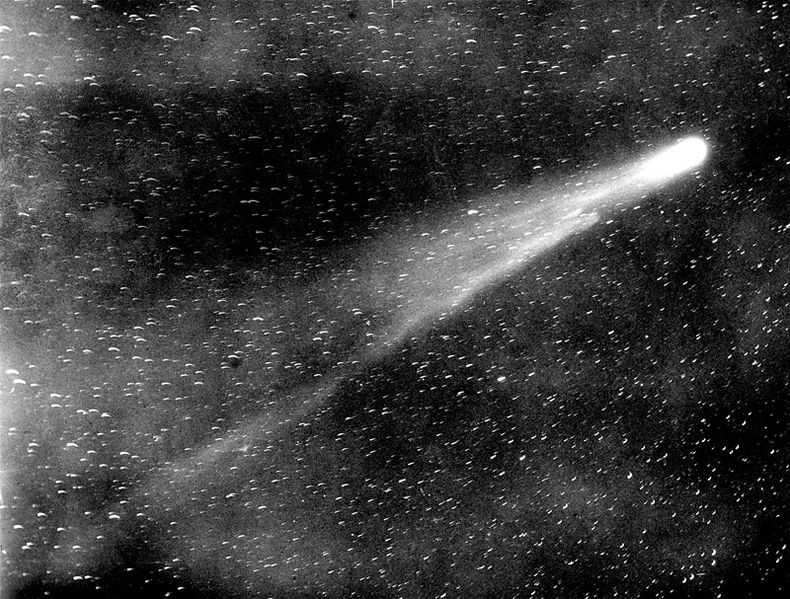
© The Yerkes Observatory/Wikipedia CommonsA photograph of Halley's Comet taken during its 1910 approach.
Researchers have modeled the likely path taken by Halley's comet in the 5th century BC and compared their findings to ancient Greek texts from the period. They now suggest the ancient Greeks saw the comet, which would make the sightings over two centuries earlier than previous known observations.

Chinese astronomers first described the comet in 240 BC, but in ancient Greece in 466-467 BC Greek authors described a meteor the size of a wagon that crashed into the Hellespont region of northern Greece during daylight hours, frightening the population and creating a tourist attraction that lasted five centuries. The ancient authors describe a comet in the sky at the time.

Researchers Daniel Graham, a philosopher, and Eric Hintz, an astronomer, from Brigham Young University at Provo in Utah, compared their model of the comet's likely path with the texts describing the meteor crash. Halley's comet would have been visible for 82 days maximum, depending on atmospheric conditions at the time, while the ancient texts say the comet was visible for 75 days.

Bizarro Earth

Best of the Web: Say Goodbye to Sunspots? The Ice Age Cometh!

Sunspots
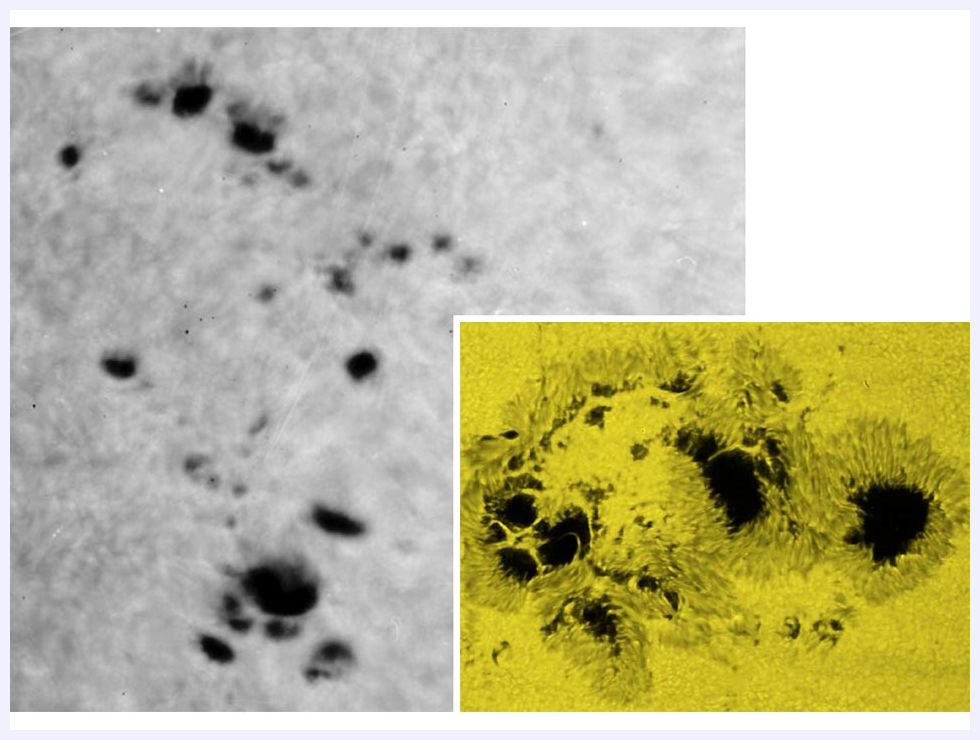
© William Livingston/NSOWeaklings. Without penumbrae, which can be seen in the yellow image, today's sunspots are weakening magnetically.
Scientists studying sunspots for the past 2 decades have concluded that the magnetic field that triggers their formation has been steadily declining. If the current trend continues, by 2016 the sun's face may become spotless and remain that way for decades - a phenomenon that in the 17th century coincided with a prolonged period of cooling on Earth.

Sunspots appear when upwellings of the sun's magnetic field trap ionized plasma - or electrically charged, superheated gas - on the surface. Normally, the gas would release its heat and sink back below the surface, but the magnetic field inhibits this process. From Earth, the relatively cool surface gas looks like a dark blemish on the sun.

Astronomers have been observing and counting sunspots since Galileo began the practice in the early 17th century. From those studies, scientists have long known that the sun goes through an 11-year cycle, in which the number of sunspots spikes during a period called the solar maximum and drops - sometimes to zero - during a time of inactivity called the solar minimum.

Info

Tsunamis Leave Ionosphere All Shook Up

Tsunami Damage
© Marcelo Hernandez/dpa/CorbisResearchers hope measuring atmospheric waves will improve early warning of big tsunamis such as the one generated by a February earthquake in Chile.

The signals of GPS satellites could be used to monitor tsunamis as they sweep across the ocean. In the most detailed study to date of the effect, scientists have shown that even though open ocean tsunami waves are only a few centimetres high, they are powerful enough to create atmospheric vibrations extending all the way to the ionosphere, 300 kilometres up in the atmosphere.

The finding, the researchers hope, could hugely improve tsunami early-warning systems.

In a study published online on 1 September in Geophysical Research Letters1, a team of French geophysicists was able to use these ionospheric effects to trace the progress of three recent tsunamis, including the one triggered by the 27 February earthquake in Chile, which had a magnitude of 8.8. The researchers showed that the strength of the ionospheric effects increased with the height of the wave.

The maximum height of that tsunami, which swept across the Pacific, was only 10 centimetres in mid-ocean, but low-lying tsunami waves can be more than 100 kilometres long. During a tsunami, hundreds of square kilometres of ocean rise and fall, nearly in unison. This produces a rhythmic movement in the atmosphere, generating a vertically propagating wave known as an internal gravity wave. The thinning air causes the wave to spread out vertically and the air movements become larger.

"At around 300 - 350 kilometres of altitude, the atmospheric wave has been amplified by a factor of 10,000 or more," says Lucie Rolland, a graduate student at the Paris Institute of Geophysics, whose PhD work spearheaded the study. "This means that a 10-centimetre tsunami wave at ocean level will induce atmospheric displacement reaching 1 kilometre."

Bandaid

Engineers Make Artificial Skin Out of Nanowires

Image
© Ali Javey and Kuniharu TakeiAn optical image of a fully fabricated e-skin device with nanowire active matrix circuitry. Each dark square represents a single pixel.
Engineers at UC Berkeley have developed a pressure-sensitive electronic material from semiconductor nanowires that could one day give new meaning to the term "thin-skinned."

"The idea is to have a material that functions like the human skin, which means incorporating the ability to feel and touch objects," said Ali Javey, associate professor of electrical engineering and computer sciences and head of the UC Berkeley research team developing the artificial skin.

The artificial skin, dubbed "e-skin" by the UC Berkeley researchers, is described in a Sept. 12 paper in the advanced online publication of the journal Nature Materials. It is the first such material made out of inorganic single crystalline semiconductors.

A touch-sensitive artificial skin would help overcome a key challenge in robotics: adapting the amount of force needed to hold and manipulate a wide range of objects.

"Humans generally know how to hold a fragile egg without breaking it," said Javey, who is also a member of the Berkeley Sensor and Actuator Center and a faculty scientist at the Lawrence Berkeley National Laboratory Materials Sciences Division. "If we ever wanted a robot that could unload the dishes, for instance, we'd want to make sure it doesn't break the wine glasses in the process. But we'd also want the robot to be able to grip a stock pot without dropping it."

Telescope

Phoenix Mars Lander finds surprises about red planet's watery past

Image
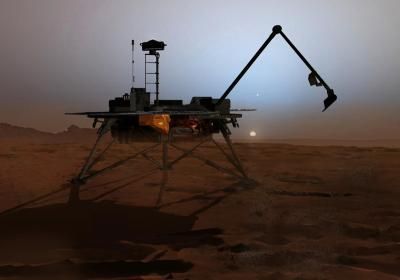
© NASAThe University of Arizona conceived of and ran the Phoenix mission, which landed near the north pole of Mars in May of 2008; it is the first Mars mission ever led by a university.
An instrument designed and built at the University of Arizona measured the isotopic composition of the Mars atmosphere, providing information about water on the planet.

Liquid water has interacted with the Martian surface throughout Mars' history, measurements by NASA's Phoenix Mars Lander suggest.

The findings, published in the Sept. 10 issue of the journal Science, also suggest that liquid water has primarily existed at temperatures near freezing, implying hydrothermal systems similar to Yellowstone's hot springs on Earth have been rare on Mars throughout its history.

HAL9000

Robots Capable of "Deceiving Humans" Built by Crazed Boffins

'We do understand there's a downside to this'

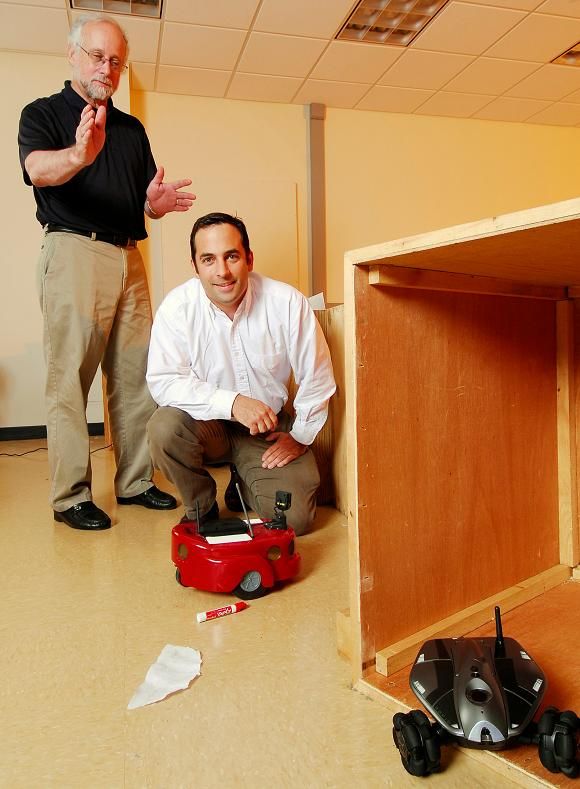
Worrying news from Georgia, America, where boffins report that they have developed robots which are able to "deceive a human".

"We have been concerned from the very beginning with the ethical implications related to the creation of robots capable of deception and we understand that there are beneficial and deleterious aspects," says Ronald Arkin, interactive-computing prof at the Georgia Institute of Technology.

RobotsDecieve
© The RegisterOld Red, the Roscoe P Coltrane of the robot world

Network

'Hyperbolic map' of the internet will save it from COLLAPSE

Ark boffins say 'black hole' net events already common

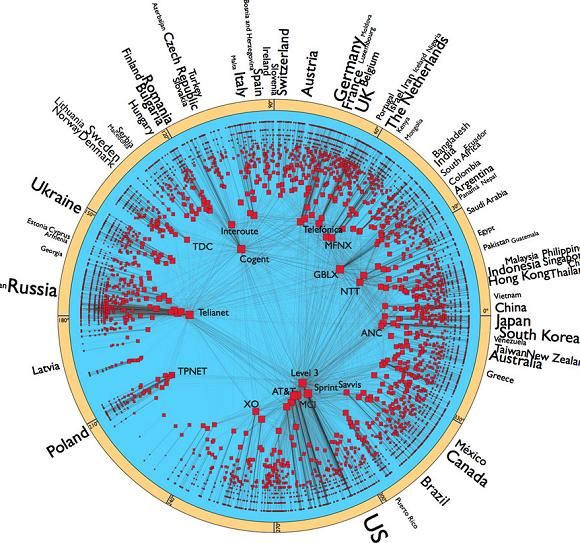
International computer boffins are warning that the internet may "collapse" at some point within the next decade. They propose the use of a new routing method based on hyperbolic geometry, and have devised what they call a "hyperbolic atlas" of the entire net to aid in this plan.

hyperbolicmap
© The RegisterThere. Simple

Info

Nanodiamonds Discovered in Greenland Ice Sheet

Nanodiamonds
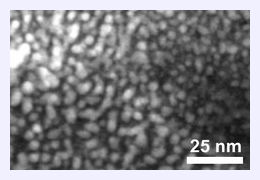
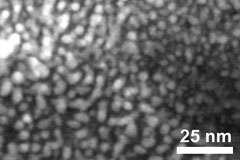
© Nanotechnology NowScanning transmission electron microscope image of nanodiamonds from the Greenland ice sheet.
"There is a layer in the ice with a great abundance of diamonds," said co-author James Kennett, professor emeritus in the Department of Earth Science at UC Santa Barbara. "Most exciting to us is that this is the first such discrete layer of diamonds ever found in glacial ice anywhere on Earth, including the huge polar ice sheets and the alpine glaciers. The diamonds are so tiny that they can only be observed with special, highly magnifying microscopes. They number in the trillions."

This discovery supports earlier published evidence for a cosmic impact event about 12,900 years ago, Kennett explained. He said that the available evidence in the Greenland ice is consistent with this layer being at or close to this age, although further study is needed.

Researchers from the University of Maine led the expedition to Greenland in 2008. Co-authors on the study, besides Kennett and the team from Maine, include scientists from many universities and research entities. James Kennett's son, Douglas J. Kennett, of the University of Oregon, is one of the 21 scientists who contributed to the report.

Last year, the Kennetts reported the discovery of nanosize diamonds in a layer of sediment exposed on Santa Rosa Island, off the coast of Santa Barbara. They published this information with numerous co-authors in two papers last year in the Proceedings of the National Academy of Sciences and Science magazine.

According to James Kennett, the Greenland results also contradict a recent study questioning the presence of nanodiamonds in a layer of this age.

Kennett explained that the layer containing nanodiamonds on Santa Rosa Island, as well as those in the Greenland ice sheet - both supporting a cosmic impact event - appear to closely correspond to the time of the disappearance of the Clovis culture, the earliest well-established and well-accepted human culture living across North America. The event also corresponds with the time of extinction of many large animals across North America, including mammoths, camels, horses and the saber tooth cat.

Info

Comet Shockwaves Helped Stimulate Life on Earth

Comet With Glycine
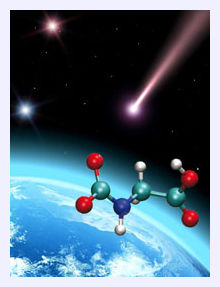
© RSC.orgComet strikes could have delivered the necessary ingredients and conditions to stimulate life on Earth.

The shock waves caused as comets hit the early Earth could have helped promote the formation of amino acids and the early building blocks of life, say US researchers.

It is thought that amino acids and short peptides played a significant role in the chemical evolution that resulted in life on Earth, but researchers have historically disagreed on how these chemicals got here in the first place.

Researchers at the Lawrence Livermore National Laboratory and Stanford University have now run theoretical simulations of shock compressions that mimic the conditions created when a comet hits the Earth, which suggest that the ingredients for life on Earth could have been delivered from space.

Comets are made of dust, ice and compressed gases. The ice is predominantly water, but is also known to contain small molecules that promote bacterial growth - prebiotic molecules - such as carbon dioxide, ammonia and methanol.

Magnify

Study Finds: Commercial Organic Farms Have Better Fruit and Soil, Lower Environmental Impact

Image
© iStockphoto/Margarita BorodinaA new study found that organic farms produced more flavorful and nutritious berries while leaving the soil healthier and more genetically diverse.
Side-by-side comparisons of organic and conventional strawberry farms and their fruit found the organic farms produced more flavorful and nutritious berries while leaving the soil healthier and more genetically diverse.

"Our findings have global implications and advance what we know about the sustainability benefits of organic farming systems," said John Reganold, Washington State University Regents professor of soil science and lead author of a paper published in the peer-reviewed online journal, PLoS ONE.
"We also show you can have high quality, healthy produce without resorting to an arsenal of pesticides."