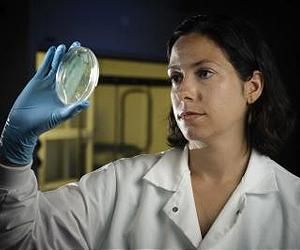
© Virginia Tech PhotoVirginia Tech associate professor of civil and environmental engineering Amy Pruden explained that reducing the spread of antibiotic resistance is a critical measure needed to prolong the effectiveness of currently available antibiotics.
In the case of agricultural areas, excreted antibiotics
can then enter stream and river environments through a variety of ways, including discharges from animal feeding operations, fish hatcheries, and nonpoint sources such as the flow from fields where manure or biosolids have been applied. Water filtered through wastewater treatment plants may also contain used antibiotics.
Consequently, these discharges become "potential sources of antibiotic resistance genes," says Amy Pruden, a National Science Foundation CAREER Award recipient, and an assistant professor of civil and environmental engineering at Virginia Tech.