Science & TechnologyS


Pharoah

Wonder in Israel as Ancient Roman Statue Buried for Centuries is Uncovered by Powerful Winter Storm

roman statue 2
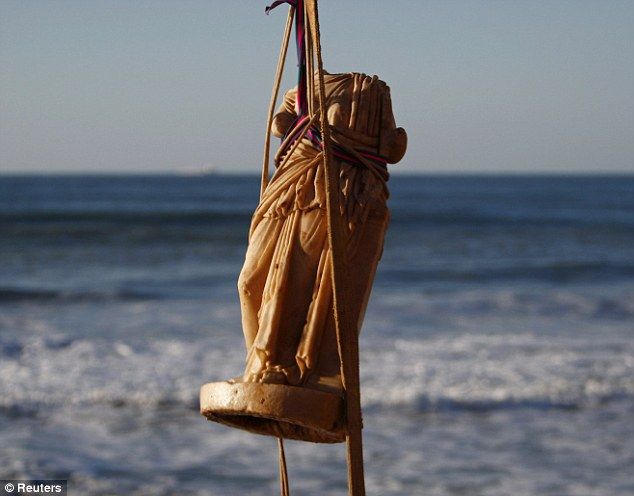
© ReutersWelcome back: A Roman statue buried for centuries is removed from the shore of the Mediterranean sea in the southern Israeli city of Ashkelon on Tuesday

A long-lost Roman statue buried for thousands of years has been unearthed by massive winter storms that have lashed the coast of Israel this week.

The mysterious white-marble figure of a woman in toga and 'beautifully detailed' sandals was found in the remains of a cliff that crumbled under the force of 60mph winds and enormous 40ft waves.

The statue, which lacks a head and arms, is about 4ft tall and weighs 440lbs. It was found at the ancient port of Ashkelon, around 20 miles south of Tel Aviv.

It dates back to the Roman occupation of what was western Judea, between 1,800 and 2,000 years ago.

The incredible find, which was discovered by a passer-by, will now be put on display in a museum.

'The sea gave us this amazing statue', researcher Yigal Israeli said. 'The statue fell into the sea when the ancient maritime cliff collapsed'.

But the find has been tinged with heartbreak for researchers after the storms destroyed the breakers protecting the Roman-era port of Caesarea, threatening to wash away one of the world's most important historic sites.

Wolf

Evidence Suggests Ancient Wolf-Dog Crossbreeding

Teotihuacan pyramid
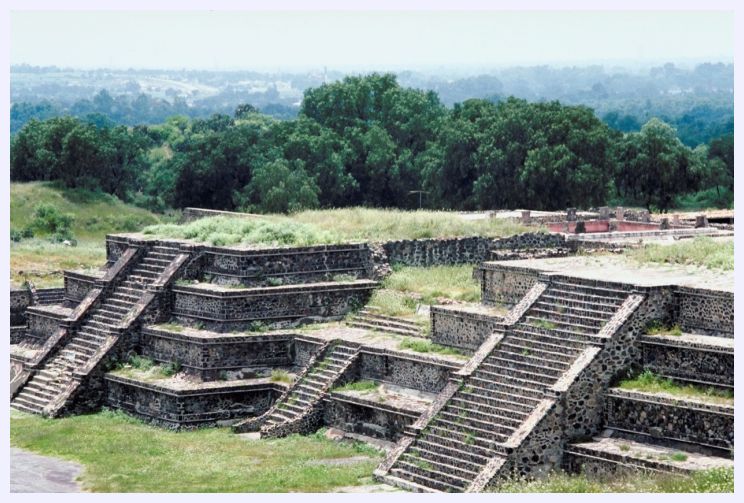
© RedOrbitTeotihuacan pyramid
Jaw bones discovered in pre-Hispanic ruins are the first evidence that wolves and dogs were intentionally cross-bred by ancient Mexicans, the Associated Press (AP) reported on Thursday.

The remains, which were discovered by archaeologists at a Teotihuacan pyramid burial chamber, are the first physical proof that wolf-dogs were intentionally crossbred "as a symbol of the city's warriors," the AP reported. The bones were found by the National Institute of Anthropology and History (INAH) in 2004 and analyzed that the National Autonomous University (UNAM).

"In oral traditions and old chronicles, dog-like animals appear with symbols of power or divinity," INAH spokesman Francisco De Anda told the AP. "But we did not have skeletal evidence ... this is the first time we have proof."

"Several jaw bones were made into a sort of decorative garment found on the warrior's skeleton at the 2,000-year-old site north of Mexico City," the news agency reported. "The wolf-dog apparently served as a symbol of strength and power."

Meteor

Sudan's Nubian desert meteorite just one piece of an unknown celestial body

Image
© Unknown
Scientists from all over the world are taking a second, more expansive, look at the car-sized asteroid that exploded over Sudan's Nubian Desert in 2008. Initial research was focused on classifying the meteorite fragments that were collected two to five months after they were strewn across the desert and tracked by NASA's Near Earth Object astronomical network. Now in a series of 20 papers for a special double issue of the journal Meteoritics and Planetary Science, published on December 15, researchers have expanded their work to demonstrate the diversity of these fragments, with major implications for the meteorite's origin.

In the first round of research, Carnegie Geophysical scientist Doug Rumble, in collaboration with Muawia Shaddad of the University of Khartoum, examined one fragment of the asteroid, called 2008 TC3, and determined that it fell into a very rare category of meteorite called ureilites. Ureilites have a very different composition from most other meteorites. It has been suggested that all members of this meteoric family might have originated from the same source, called the ureilite parent body, which could have been a proto-planet.

Now Rumble has expanded his work to examine 11 meteorite fragments, focusing on the presence of oxygen isotopes. Isotopes are atoms of the same element that have extra neutrons in their nuclei.

Info

What's Hiding the Universe's Brightest Explosions?

Gamma Ray Burst
© ESOHidden. Artist's impression of a gamma-ray burst in a dusty environment.

Some of the most powerful explosions in the universe are all but invisible to even the largest telescopes on Earth. Astronomers have long wondered why they can't see these so-called dark-bursts. The answer, it turns out, is surprisingly simple.

When massive, rapidly rotating stars collapse into black holes at the end of their lives, they produce a seething fireball and brief explosions of extremely energetic radiation known as gamma-ray bursts. As the fireball cools, it emits a full spectrum of all kinds of radiation, from energetic x-rays to low-energy radio waves. But only about half of these burst afterglows give off visible light. The rest remain hidden to optical telescopes.

Astronomers have proposed two possible explanations for these dark bursts. Intervening dust might block the afterglow's optical light, whereas dust is transparent to x-rays, infrared radiation, and radio waves. Alternatively, hydrogen atoms might be the culprit. Neutral hydrogen absorbs certain wavelengths of ultraviolet light, so burst radiation passing through a hydrogen cloud would wind up with a gap in the ultraviolet part of its spectrum. But if a burst is extremely remote, its radiation travels through the expanding universe for billions of years.

As a result, the full spectrum, including the gap, gets stretched to longer and longer wavelengths, a phenomenon known as the "red shift." Eventually, the absorption gap may end up at optical wavelengths by the time the radiation reaches Earth.

Cow Skull

Gassy volcanoes tied to mass extinction

volcano
© C.G. Newhall/U.S. Geol. Survey

Chemicals from Siberian eruption may have triggered history's greatest catastrophe

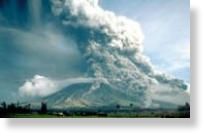
San Francisco, California - The greatest extinction in the history of life may have been caused, in part, by ozone-depleting gases spewed in a massive volcanic eruption, a new study suggests. Geologists have found surprisingly high amounts of the elements fluorine and chlorine in Siberian lavas dating back 250 million years - when about 90 percent of marine species and 70 percent of terrestrial species went extinct.

Benjamin Black, a graduate student at MIT, and his colleagues described their theory December 13 in a poster presentation at a meeting of the American Geophysical Union.

Researchers have long struggled to explain the "Great Dying" that occurred at the end of the Permian period. Some think that the extinction was a long, drawn-out affair caused by multiple factors - perhaps gradual changes in oceanic or atmospheric chemistry (SN: 5/28/05, p. 339). Others have blamed a single catastrophic event such as a belch of methane from the seafloor or an asteroid impact (SN: 2/24/01, p. 116) like the one thought to have wiped out the dinosaurs and other species 65 million years ago.

Beaker

Science of Man-Made Life Can Proceed: White House

DNA graphic
© iStock
The White House on Thursday said the controversial field of synthetic biology, or manipulating the DNA of organisms to forge new life forms, poses limited risks and should be allowed to proceed.

An expert panel convened by President Barack Obama advised vigilance and self-regulation as scientists seeks ways to create new organisms that could spark useful innovations in clean energy, pollution control and medicine.

The Presidential Commission for the Study of Bioethical Issues "concluded that synthetic biology is capable of significant but limited achievements posing limited risks," it said in its first report.

"Future developments may raise further objections, but the Commission found no reason to endorse additional federal regulations or a moratorium on work in this field at this time."

The panel was created by Obama last year. Its first order of business was to consider the issue of synthetic biology after the J. Craig Venter Institute announced in May it had developed the first self-replicating bacteria cell controlled by a synthetic genome.

Critics said the discovery was tantamount to "playing God," creating organisms without adequate understanding the ramifications, and upsetting the natural order.

Saturn

First evidence of other universes that exist alongside our own after scientists spot 'cosmic bruises'

Scientists say that they have found evidence that our universe was 'jostled' by other parallel universes in the distant past.

The incredible claim emerged after they studied patterns in the cosmic microwave background radiation (CMB) - the after-effects of the Big Bang.

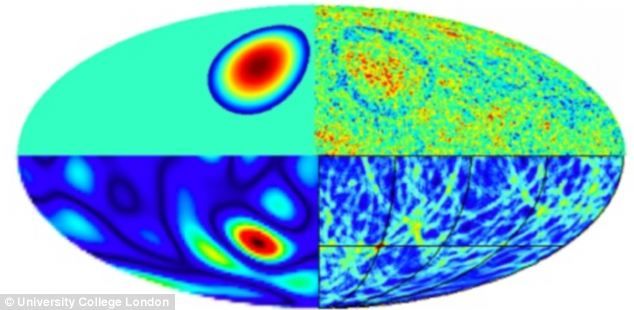
They say they may have found evidence that four circular patterns found in the CMB are 'cosmic bruises' where our universe has crashed into other universes at least four times.
bubble collisiion
© University College London

The different signatures of a bubble collision. A collision (top left) induces a temperature change in the CMB temperature map (top right). The 'blob' associated with the collision is identified by a large needlet response (bottom left), and the presence of an edge is determined by a large response from the edge detection algorithm (bottom right)

Blackbox

Geologist's Discoveries Resolve Debate About Oxygen In Earth's Mantle

Image
© UnknownAccording to Kelley, some scientists have argued that the availability of oxygen to the mantle hasn't changed since the Earth was formed.
While there continues to be considerable debate among geologists about the availability of oxygen in the Earth's mantle, recent discoveries by a University of Rhode Island scientist are bringing resolution to the question.

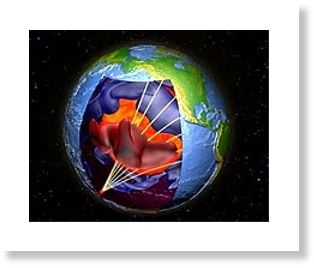
Analysis of erupted rock from Agrigan volcano in the western Pacific near Guam found it to be highly oxidized as a result of its exposure to oxygen when it formed in the Earth's mantle. When, over millions of years, seafloor rocks are transported back into the Earth's mantle at subduction zones - sites on the seafloor where tectonic plates have collided, forcing one plate beneath the other - they deliver more oxygen into the mantle.

The results of the research was presented at a meeting of the American Geophysical Union in San Francisco.

"The cycling of oxygen at the Earth's surface is central to the life and activity that takes place at the surface, but it is equally essential in the Earth's mantle," said URI Assistant Professor Katherine Kelley. "The availability of oxygen to the mantle is in part controlled by the oxygen at the surface."

Chalkboard

10 Elements On Periodic Table About To Make An Historic Change

Image
© Unknown
For the first time in history, a change will be made to the atomic weights of some elements listed on the Periodic table of the chemical elements posted on walls of chemistry classrooms and on the inside covers of chemistry textbooks worldwide.

The new table, outlined in a report released this month, will express atomic weights of 10 elements - hydrogen, lithium, boron, carbon, nitrogen, oxygen, silicon, sulfur, chlorine and thallium - in a new manner that will reflect more accurately how these elements are found in nature.

"For more than a century and a half, many were taught to use standard atomic weights - a single value - found on the inside cover of chemistry textbooks and on the periodic table of the elements. As technology improved, we have discovered that the numbers on our chart are not as static as we have previously believed," says Dr. Michael Wieser, an associate professor at the University of Calgary, who serves as secretary of the International Union of Pure and Applied Chemistry's (IUPAC) Commission on Isotopic Abundances and Atomic Weights. This organization oversees the evaluation and dissemination of atomic-weight values.

Sherlock

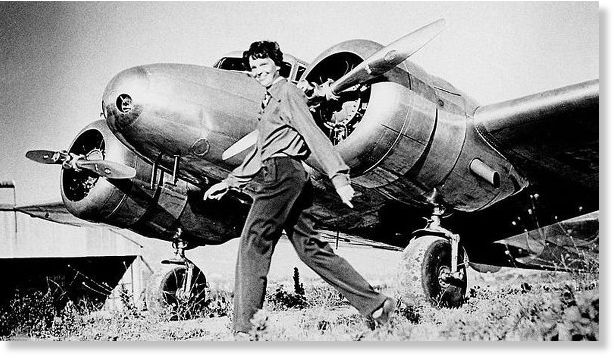
Amelia Earhart's mystery may have been solved - paper

Image
© UnknownAmelia Earhart
Researchers have found evidence that could shed light on the fate of Amelia Earhart, the pioneering pilot who vanished 73 years ago while attempting to circumnavigate the world, The Daily Telegraph said.

The British newspaper said on Tuesday that an expedition launched by The International Group for Historic Aircraft Recovery (TIGHAR) had searched an area "on the uninhabited island of Nikumaroro, a former British colony that is today part of the republic of Kiribati."

The researchers found "a human bone, a broken pocket knife of the same brand that was listed in an inventory of Earhart's aircraft," and the remains of other objects dated back to the1930s, which may have belonged to Earhart.