Science & TechnologyS


Info

Dinosaur footprint found in NASA's Maryland campus

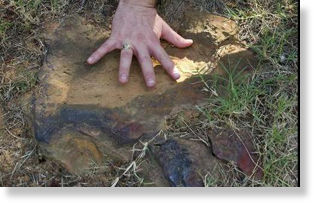
Dinosaur footprint
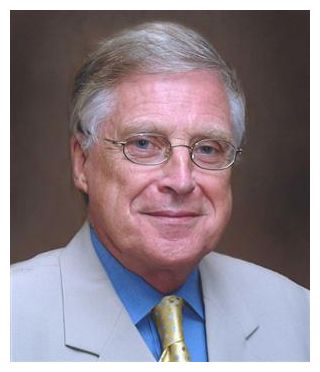
Researcher of things psychic and UFO Ray Stanford found what appears to be a 30cm wide dinosaur footprint on the Goddard Space Flight Center campus. NASA officials did not wish to make public the exact location where the print was found.

The precise whereabouts of the fossilized track are kept secret for the moment as officials fear someone could try to destroy or remove it from the site.

Stanford is a self-taught fossil hunter. During his lifetime he found more than 1400 dinosaur tracks. He is well known for his special visual talent that allows him to see things other people don't see. The finding happened after Stanford picked up a slice of what appeared to be a brown rock. He immediately realized he found the mark of a toe.

The wide footprint most likely belongs to tank-like plant-eating dinosaur that lived on hearth 100 million years ago. Fossil footprints preserved in these conditions are very rare. The marks of four dino toes are clearly visible. The heel is not clearly visible but this can suggest that the dinosaur moved quickly and its heel did not sink too deep in the Cretaceous mud.

2 + 2 = 4

New Theory: The Universe was not started by a Big Bang, but with a Big Freeze

Big freeze
© pixelparticle/Shutterstock.com
A group of theoretical physicists at the University of Melbourne and RMIT University have proposed a new theory on the origin of the universe that could overturn the Big Bang model. This new idea, which piggybacks off the nascent field of quantum graphity, suggests that the early universe went through a dramatic transformation, or phase shift, in a manner similar to how a liquid turns to a solid. To prove their theory, however, the researchers will have to find the crack in the ice.

According to lead researcher James Quach, the early universe can be compared to a liquid - a state of matter that has no definable form. As it cools, it "crystallizes" into the three spatial and one time dimension that characterizes our universe today. It's the cooling of the universe, says Quach, that gives it its structure. Consequently, Quach and his team are making the case that the start of the universe should not be modeled as a Big Bang, but rather like a Big Freeze - akin to water transforming into ice.

Cell Phone

AT&T Violates Net Neutrality, Forces Customers to Subscribe to More Expensive Plans

Image
From electricity to earmuffs, once you buy a product or service from a company, it shouldn't be any of their business how you choose to use it.

The power company doesn't say you can't use the energy-saving features on your new refrigerator unless you buy more electricity; and your grocer doesn't make you buy an extra loaf of bread if you stop purchasing potato chips.

Then there's the upside-down world of AT&T -- where Ma Bell's spawn sees nothing wrong with making you buy more of what you don't want just to use something you like.

AT&T's latest proposal is a clear violation of Net Neutrality -- the fundamental principle that keeps the open Internet free from discrimination -- and a serious test of whether the Federal Communications Commission will protect mobile users.

AT&T just announced that unless its iPhone customers subscribe to a more expensive "mobile share" unlimited text-and-voice plan, the company will cripple the device's built-in FaceTime app so users can't make mobile video calls.

Telescope

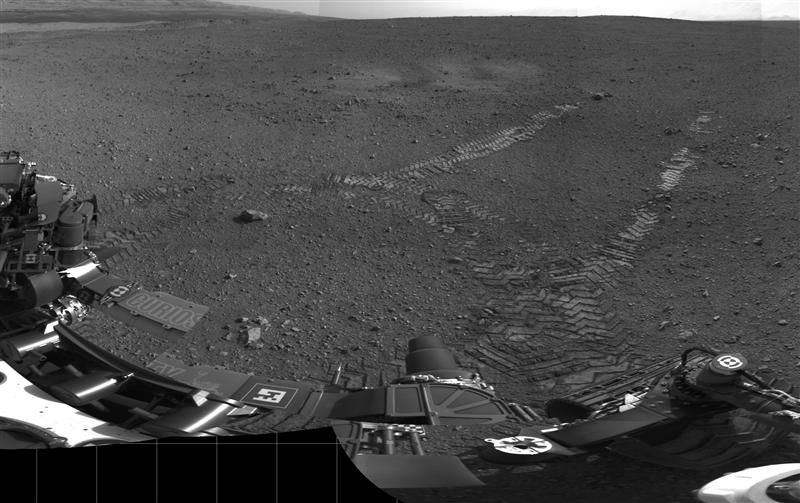
Mars rover Curiosity aces first test drive

Image
© Reuters/JPL/HandoutHandout image courtesy of NASA shows tracks left by the Curiosity rover on Mars August 22, 2012. The rover made its first move, going forward about 15 feet (4.5 meters), rotating 120 degrees and then reversing about 8 feet (2.5 meters). Curiosity is about 20 feet (6 meters) from its landing site, now named Bradbury Landing.
NASA's Mars rover Curiosity took a 16-minute drive on Wednesday, its first since reaching the Red Planet to search for habitats that could have supported microbial life.

The $2.5-billion, two-year mission, NASA's first astrobiology initiative since the 1970s-era Viking probes, kicked off on August 6, with a risky, but successful landing on at a site NASA has named "Bradbury Landing," a nod to the late science fiction author and space aficionado Ray Bradbury.

Aside from a quick steering test earlier in the week, the one-ton rover had stood firmly on its six wheels since touching down inside an ancient impact basin called Gale Crater, located in the planet's southern hemisphere near the equator.

At 10:17 a.m. EDT on Wednesday, Curiosity became a rover, trudging out a total of 15 feet, turning 120 degrees and then backing up 8 feet to position itself beside its first science target -- a scour mark left behind by the rover's descent engine.

Most of Curiosity's drive time was spent taking pictures, including the first images of the rover's tread marks in the Martian soil.

Magnify

Elusive Metal Discovered: Nickel Oxide Turned Into an Electricity-Conducting Metal

Image
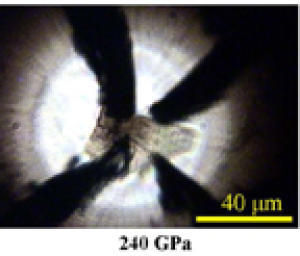
© Carnegie InstitutionScientists have discovered the conditions under which nickel oxide can turn into an electricity-conducting metal.
Carnegie scientists are the first to discover the conditions under which nickel oxide can turn into an electricity-conducting metal. Nickel oxide is one of the first compounds to be studied for its electronic properties, but until now scientists have not been able to induce a metallic state. The compound becomes metallic at enormous pressures of 2.4 million times the atmospheric pressure (240 gigapascals).

The finding is published in Physical Review Letters.

"Physicists have predicted for decades that the nickel oxide would transition from an insulator -- a compound that does not conduct electricity -- to a metal under compression, but their predictions have not previously been confirmed," remarked team leader Viktor Struzhkin of Carnegie's Geophysical Laboratory. "This new discovery has been a goal in physics that ranks as high as achieving metallic hydrogen, but for metal oxides."

The outer shells of atoms contain what are called valence electrons, which play a large role in electrical and chemical behavior. Metals generally have one to three of these valence electrons, while non-metals have between five and seven. Metals are good conductors of electricity because the valence electrons are loosely bound, so the electrons are free to flow through the material.

Chalkboard

Sun's Plasma Loops Recreated in the Lab to Help Understand Solar Physics

Image
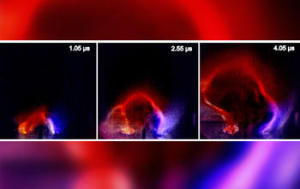
© Eve Stenson / CaltechPlasma loops created in the lab were recorded using high-speed cameras.
In orbit around Earth is a wide range of satellites that we rely on for everything from television and radio feeds to GPS navigation. Although these spacecraft soar high above storms on Earth, they are still vulnerable to weather -- only it's weather from the sun. Large solar flares -- or plasma that erupts from the sun's surface -- can cause widespread damage, both in space and on Earth, which is why researchers at the California Institute of Technology (Caltech) are working to learn more about the possible precursors to solar flares called plasma loops. Now, they have recreated these loops in the lab.

"We're studying how these solar loops work, which contributes to the knowledge of space weather," says Paul Bellan, professor of applied physics at Caltech, who compares the research to studying hurricanes. For example, you can't predict a hurricane unless you know more about the events that precede it, like high-pressure and low-pressure fronts. The same is true for solar flares. "It takes some time for the plasma to get to Earth from the sun, so it's possible that with more research, we could have up to a two-day warning period for massive solar flares."

The laboratory plasma loop studies were conducted by graduate student Eve Stenson together with Bellan and are reported in the August 13 issue of the journal Physical Review Letters.

Chalkboard

Researchers Return Blood Cells to Stem Cell State

Johns Hopkins scientists have developed a reliable method to turn the clock back on blood cells, restoring them to a primitive stem cell state from which they can then develop into any other type of cell in the body.

The work, described in the Aug. 8 issue of the journal Public Library of Science One (PLoS One), is "Chapter Two" in an ongoing effort to efficiently and consistently convert adult blood cells into stem cells that are highly qualified for clinical and research use in place of human embryonic stem cells, says Elias Zambidis, M.D., Ph.D., assistant professor of oncology and pediatrics at the Johns Hopkins Institute for Cell Engineering and the Kimmel Cancer Center.

"Taking a cell from an adult and converting it all the way back to the way it was when that person was a 6-day-old embryo creates a completely new biology toward our understanding of how cells age and what happens when things go wrong, as in cancer development," Zambidis says.

"Chapter One," Zambidis says, was work described last spring in PLoS One in which Zambidis and colleagues recounted the use of this successful method of safely transforming adult blood cells into heart cells. In the latest experiments, he and his colleagues now describe methods for coaxing adult blood cells to become so-called induced-pluripotent stem cells (iPS) -- adult cells reprogrammed to an embryonic like state, and with unprecedented efficiencies.

Eye 1

Sensitive data in human brain successfully extracted by Hackers

hack
© unknown
It is now possible to hack the human brain ? YES ! This was explained researchers at the Usenix Conference on Security, held from 8 to 10 August in Washington State. Using a commercial off-the-shelf brain-computer interface, the researchers have shown that it's possible to hack your brain, forcing you to reveal information that you'd rather keep secret.

In a study of 28 subjects wearing brain-machine interface devices built by companies like Neurosky and Emotiv and marketed to consumers for gaming and attention exercises, the researchers found they were able to extract hints directly from the electrical signals of the test subjects' brains that partially revealed private information like the location of their homes, faces they recognized and even their credit card PINs.

Brain-computer interface or BCIs are generally used in a medical setting with very expensive equipment, but in the last few years cheaper, commercial offerings have emerged. For $200-300, you can buy an Emotive or Neurosky BCI, go through a short training process, and begin mind controlling your computer.

Rocket

Curiosity: Did NASA discover life on Mars... 36 years ago?

Image
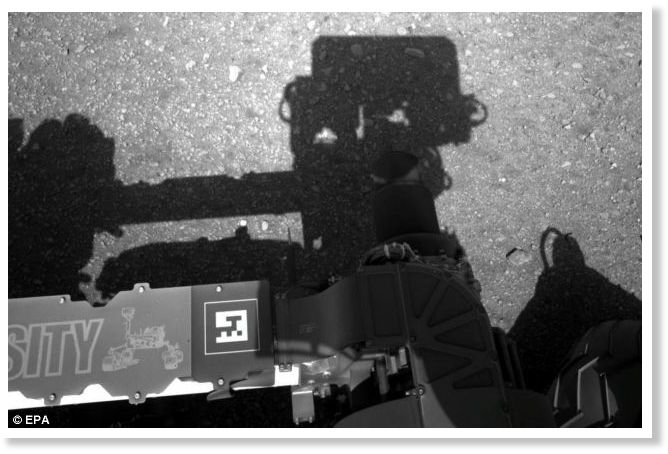
© EPAFirst images: Curiosity is not equipped with the sort of laboratory kit that could identify forms of life
Trebles all round at JPL (well it would be, but this being the US alcohol is strictly banned at NASA's planetary exploration facility in Pasadena) after the successful arrival on the planet Mars of the mega-rover Curiosity.

When I first heard how they were planning to get more than a tonne of nuclear- powered kit down on to the Martian surface in one piece I thought they were joking.

'You're going to use parachutes?'

Yup.

'Then retro-rockets?'

You betcha.

'Fine, but then you are going to dangle the thing on four steel cables, lower it gently to the ground from a hovering rocket-powered mothership, those cables are going to automatically detach then the mothership is going to scoot off and crash out of harm's way. And all this with absolutely no control from Earth?'

You have understood correctly.

Info

Professor's Breakthrough on Human Combustion Theory

Prof Brian J Ford
© Cambridge News, UKProf Brian J Ford
A Cambridge professor has tackled the issue of spontaneous combustion - using belly pork.

Prof Brian J Ford is a research biologist and author of more than 30 books, most about cell biology and microscopy but he has turned his attention to the mechanisms behind why people 'explode'.

He said in an article in New Scientist: "One minute they may be relaxing in a chair, the next they erupt into a fireball.

"Jets of blue fire shoot from their bodies like flames from a blowtorch, and within half an hour they are reduced to a pile of ash.

"Typically, the legs remain unscathed sticking out grotesquely from the smoking cinders. Nearby objects - a pile of newspapers on the armrest, for example - are untouched."

The first record of spontaneous combustion dates back to 1641 when Danish doctor and mathematician Thomas Bartholin described the death of Polonus Vorstius - who drank wine at home in Milan, Italy, one evening in 1470 before bursting into flames.

Since then more reports of spontaneous combustion have been filed and linked to alcoholism - though the link was later disproved.