Science & TechnologyS


Cow

SOTT Focus: The Cs Hit List 09: DNA, Rational Design and the Origins of Life

Image
A controversial paper questioning the 'Out of Africa' theory of human origins was recently published in the journal Advances in Anthropology. There are quite a lot of references to the origins of humanity in the Cs transcripts, so that's what I want to discuss in this installment of the Hit List series. I'll get to the paper in question a bit further on, but before I do, there's a bunch of background material to cover. The references from the Cs are given in a certain context and concern ideas and possibilities that probably won't make much sense without covering certain ground first. That said, there's way too much material to cover in one article, so I suggest checking out the books I'll be referencing and reading them in full if anything here strikes the reader's interest.

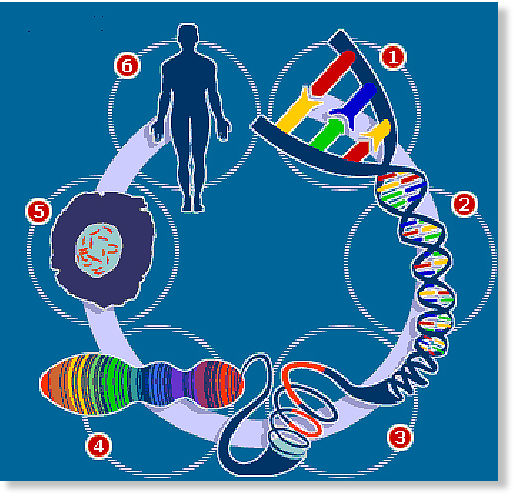
Pop culture has conveniently provided a starting point from which to take off on these topics. In June, Ridley Scott released the much-anticipated prequel of sorts to his blockbuster film, Alien, titled Prometheus. Leaving aside any discussion of the artistic merits of the film, it does cover some themes relevant to the subject at hand. The plot revolves around the idea that life on planet earth, and presumably other planets in the galaxy, was not a chance happening. In the film, a race of pale-skinned, muscular and hairless humanoids 'seeds' life on planets through acts of sacrifice. An 'engineer', as they're called in the film, gives his body to be broken down into its constituent parts, providing the source DNA from which life will take root. The human characters in the film fund a space mission to 'meet their makers' at a location indicated in ancient artwork found all over the world.

The film leaves the question of the ultimate origins of life open, allowing conventional evolutionary theories (i.e., neo-Darwinism) and so-called 'intelligent design' (or biogenetic engineering) to coexist as compatible options. In other words, the engineers 'intelligently' seeded life on earth, after which evolution took its natural course (with a possible 'tweak' here and there over the course of history), resulting in the wealth of DNA-based life forms that characterize our planet. The origin of the engineers is left untouched - a further mystery to be pondered.

Back in the real world, the fact of the matter is that no one knows how life actually started on planet earth. Let me repeat that: no one knows. All we have are various theories, none of which has been scientifically demonstrated to have actually occurred. At best, most scientists will say it must have occurred a certain way, simply because they have excluded other options as not worth considering. In fact, we may have a pretty good idea of some of the evolutionary mechanisms that have been in effect since the hypothetical first single-celled organism, but how that organism got there in the first place is a mystery, and open to speculation. Historically, there have been five or so categories under which various theories have been proposed. First, of course, there's creationism: the idea that 'God' created all the forms of life in one way or another. Then there are the various theories of 'spontaneous abiogenesis'. This is the idea that somehow ordinary chemistry spontaneously resulted in the formation of primitive biological materials, which somehow acquired the ability to self-replicate and evolve all on their own, whether on crystals, or by some other mathematically improbable and as-yet-unobserved natural process. Panspermia, popularized by scientists Sir Fred Hoyle and Chandra Wickramasinghe, is another option whereby organic materials are said to exist throughout the universe and are carried by cosmic wanderers like asteroids and meteoroids, to then be deposited on some lucky planet, et voila! The fourth option, directed panspermia, promoted by Francis Crick (co-discoverer of the DNA molecule), posits that life was deliberately seeded by an already existing intelligent race somewhere in the galaxy. As in Prometheus, that leaves open the question as to their own origin.

Sherlock

New DNA Test Can Now Determine Hair, Eye Color Of A Possible Suspect

Eye
© Vaaka/Shutterstock
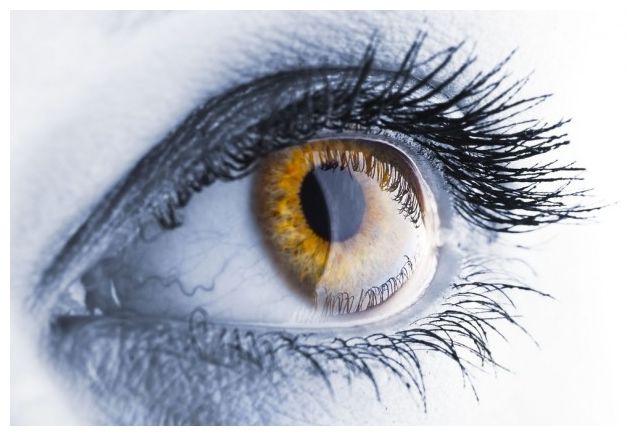
The next time you leave your DNA behind be forewarned that you are now not only leaving your biological fingerprint behind for prying eyes, but also leaving evidence of what color your hair and eyes are. Until the mid-1980s, DNA at a crime scene went largely unchecked due to lack of technology to search it out. And for the last two decades, in order for a crime scene detective to match DNA to a suspect, samples had to be taken from possible matches.

But now, according to a team of researchers, led by professor Manfred Kayser of Erasmus University Medical Center in Rotterdam, the Netherlands, a new forensic test can predict both the hair and eye color of a possible suspect using DNA at a crime scene. The team said it could provide valuable leads in cases where suspects cannot be identified through DNA profiling.

The test, called the Hirisplex system, could allow crime scene investigators to narrow down a large group of possible suspects, making it easier to pinpoint the perpetrator. Details of the research appear in the journal Forensic Science International: Genetics.

Predicting phenotypes is quickly becoming an emerging field in forensics. The current approach, genetic profiling, involves comparing crime scene DNA to possible suspects or to a database of stored profiles. Genetic profiling relies on the person either being among a pool of suspects identified by police or having their profile previously stored.

The Hirisplex approach could be very useful in cases where a perpetrator is completely unknown to the authorities, said Kayser.

Star

Mysterious origins of brightest star explosions revealed

Image
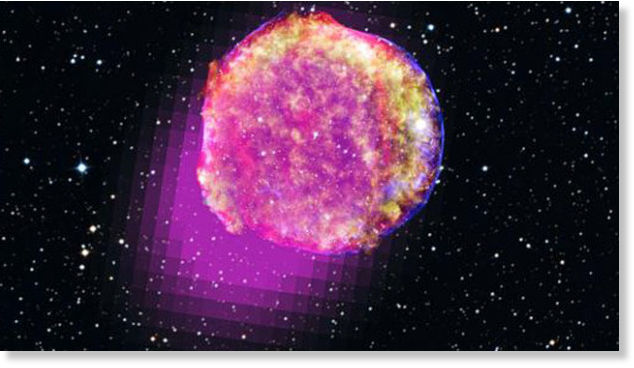
© Space.comGamma ray image of the Tycho supernova
The most powerful exploding stars in the universe are still cloaked in mystery, but some are now yielding the secrets of their origins, scientists say.

Research is also shedding light on gamma-ray bursts, the most powerful explosions in the universe, up to a million times brighter than a supernova,scientists added.

The most powerful star explosions are supernovas, which are bright enough to briefly outshine all the stars in their galaxies. There are two known ways supernovas occur -- a Type Ia supernova arises when one star piles fuel onto a dying star known as a white dwarf, and a Type II supernova happens when the core of a massive star runs out of fuel, collapses to an extraordinarily dense nugget in a fraction of a second and then bounces and blasts its material outward.

In the past 12 years, scientists have detected a new class of supernovas, ones about two to 100 times brighter than all the others. These so-called super-luminous supernovas apparently come in three different flavors, only one of which is well-understood.

The rarest but seemingly best-understood of these super-luminous, or super-bright, supernovas are the radioactively powered SLSN-R. These supernovas seem to arise from the collapses of stellar cores, and apparently also each involve huge amounts of a radioactive isotope of nickel in those dying stars, enough to equal several times the mass of the sun. As this radioactive material decays, it releases energy in the form of gamma rays and antimatter that makes the expanding material from the supernova glow.

Laptop

New Computer Memory Material Goes Easy on the Juice

Memory Device
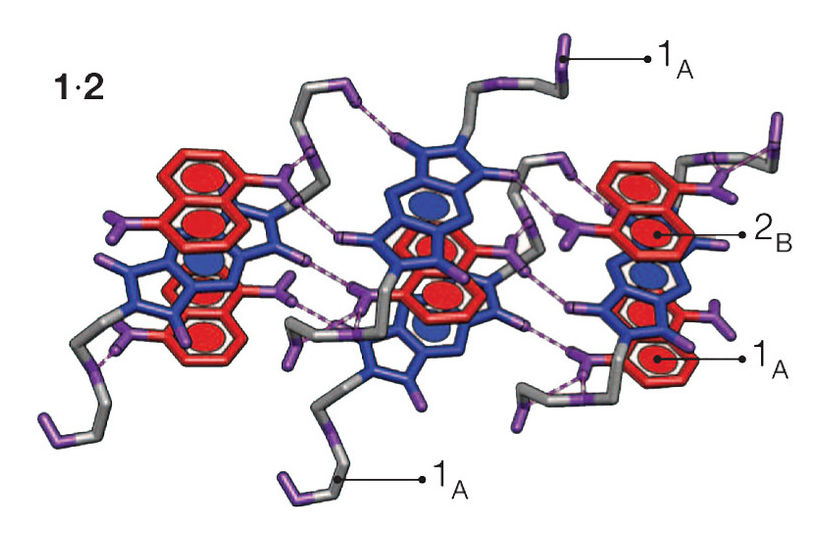
© A. S. Tayi et. al., Nature, 488 (23 August)Assembly required. Electron-rich compounds (blue) nestle very close to electron-hungry compounds (red) but maintain weak links to neighboring pairs, creating long chains that may form the basis for novel computer memory devices.
Multitasking has a price: Your computer is sucking up a lot of electricity keeping track of work you haven't yet saved to the hard drive. Americans spend $6 billion a year on electricity to keep that data stored in a computer's memory during operation. But that figure could drop sharply, scientists report this week, thanks to a new type of material than can permanently store such data - without needing a continuous trickle of electricity to do it.

Standard desktop computers rely on two types of memory technology to store streams of 1s and 0s that make up binary data. The computer's hard disk stores data as strips of magnetic orientation recorded on a magnetic disk: Imagine billions of patches of compass needles pointing either north or south, each representing a 1 or a 0. Because this magnetic orientation endures until it's deliberately switched, this type of memory is stable - it doesn't require any added electricity to maintain it.

The second type of memory, however, does. This is Random Access Memory (RAM), or working memory, which the computer uses to perform tasks. Conventional RAM is made by linking several transistors together in a circuit; this type of memory is "volatile," meaning that it needs to be fed electricity continually to retain each bit of information. Turn off your computer without saving your data to your hard disk and you've lost that information forever.

Computers suck up billions of dollars worth of power every year to ensure that doesn't happen. Alternatives to conventional RAM do exist, some of which are nonvolatile memories. But these have drawbacks: They may be more expensive, heavier, or simply take up too much computer-chip real estate.

Radar

Seeing Through Walls With a Wireless Router

wifi spy
© Kevin HandWi-Spy
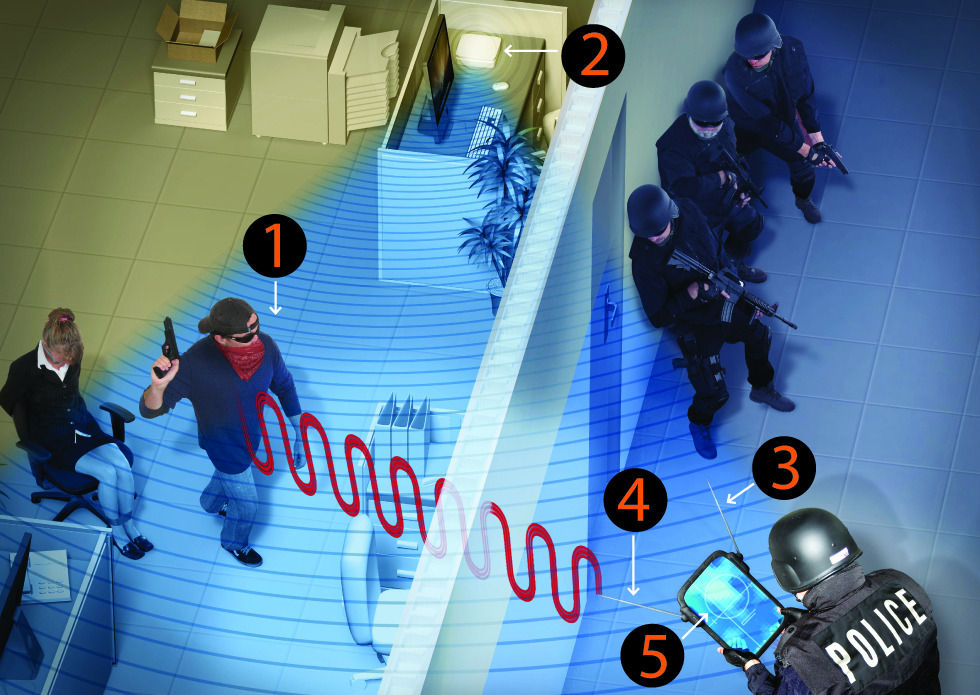
In the 1930s, U.S. Navy researchers stumbled upon the concept of radar when they noticed that a plane flying past a radio tower reflected radio waves. Scientists have now applied that same principle to make the first device that tracks existing Wi-Fi signals to spy on people through walls.


Commentaire : The article is a little odd on this point. As early as 1886 the German Heinrich Hertz showed that radio waves could be reflected from solid objects (Wikipedia).


Wi-Fi radio signals are found in 61 percent of homes in the U.S. and 25 percent worldwide, so Karl Woodbridge and Kevin Chetty, researchers at University College London, designed their detector to use these ubiquitous signals. When a radio wave reflects off a moving object, its frequency changes - a phenomenon called the Doppler effect. Their radar prototype identifies frequency changes to detect moving objects. It's about the size of a suitcase and contains a radio receiver composed of two antennas ­and a signal-processing unit. In tests, they have used it to determine a person's location, speed and direction - even through a one-foot-thick brick wall. Because the device itself doesn't emit any radio waves, it can't be detected.

Wi-Fi radar could have domestic applications ranging from spotting intruders to unobtrusively monitoring children or the elderly. It could also have military uses: The U.K. Ministry of Defence has funded a study to determine whether it could be used to scan buildings during urban warfare. With improvements, Woodbridge says, the device could become sensitive enough to pick up on subtle motions the ribcage makes during breathing, which would allow the radar to detect people who are standing or sitting still.

Info

Most Neanderthals Were Right-Handed Like Us

Mandible
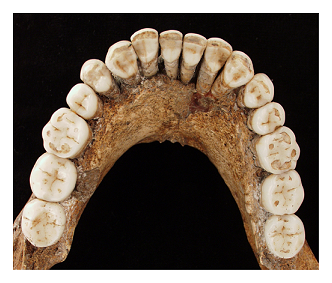
© P Sémal, Royal Belgian Institute of Natural Sciences, BrusselsView of Regourdou's mandible.

Right-handed humans vastly outnumber lefties by a ratio of about nine to one, and the same may have been true for Neanderthals. Researchers say right-hand dominance in the extinct species suggests that, like humans, they also had the capacity for language.

A new analysis of the skeleton of a 20-something Neanderthal man confirms that he was a righty like most of his European caveman cousins whose remains have been studied by scientists (16 of 18 specimens). Dubbed "Regourdou," the skeleton was discovered in 1957 in France, not far from the famous network of caves at Lascaux.

Scientists previously had argued that Regourdou was right-handed based on the muscularity of his right arm versus his left arm. Now an international team of researchers say they have confirmed that assumption by conducting a more sophisticated analysis of his arms and shoulders and then linking that data with the scratch marks on Regourdou's teeth.

Neanderthals used their mouths like a "third hand" for manipulating objects like food, resulting in significant wear and tear on their front teeth, University of Kansas researcher David Frayer, who was involved in the study, explained in a statement from the school. And the angles of the scratch marks on the teeth can indicate which hand was gripping the food and which hand was cutting. They found that right-angled scratches were the most common and left ones the least for all the teeth.

Roses

Researchers find first hardy Irish plant that beat Ice Age

Image
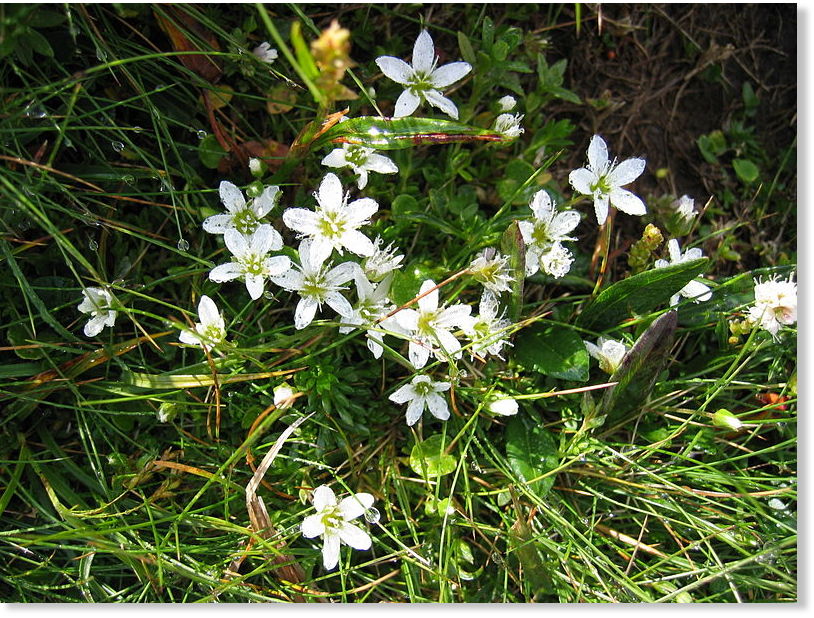
© TigerenteArenaria ciliata (Fringed Sandwort)
The history books will have to be rewritten after researchers uncovered a super resilient plant which survived the Ice Age in Ireland.

Up to now most scientists agreed that Ireland's flora and fauna emerged or came here after the end of the Ice Age, some 15,000 years ago.

However, this latest discovery by a research team from NUI Maynooth, pushes back this date to a much earlier time.

The team, led by ecologist Dr Conor Meade, developed a new DNA analysis method to unravel the complex history of the Fringed Sandwort, a rare cold-loving herb that only grows on the high slopes of Ben Bulben in Co Sligo.

Researchers collected the plant on mountain peaks all over Europe, from Spain and Italy up to Svalbard in the Arctic Circle, and then completed detailed genetic analyses.

The new analysis method, based on a process called DNA melting, greatly improves the accuracy of existing DNA analysis and helped to reveal previously unknown levels of genetic diversity in the Irish populations.

Magic Wand

Video shows the traffic inside a brain cell

New imaging technique reveals the brain's continuous renovation.

Using bioluminescent proteins from a jellyfish, a team of scientists has lit up the inside of a neuron, capturing spectacular video footage that shows the movement of proteins throughout the cell.


The video offers a rare peek at how proteins, the brain's building blocks, are directed through neurons to renew its structure. It can be viewed online here.

"Your brain is being disassembled and reassembled every day," said Don Arnold, associate professor of molecular and computational biology at the USC Dornsife College of Letters, Arts and Sciences, and corresponding author of an article about the research that appeared in Cell Reports on July 26.

"One week from today, your brain will be made up of completely different proteins than it is today," Arnold said. "This video shows the process. We've known that it was happening, but now we can watch it happen."

The new imaging technique was used to cast new light on how proteins are directed to one of the two types of compartments inside the neuron: the axon or the dendrites.

The axon is the region of the cell responsible for transmitting electrical signals to other cells, while the dendrites receive signals from other cells.

"It's been known for many decades that proteins are specifically targeted to one compartment or the other. However, we couldn't understand how the targeting occurs until we could actually watch the proteins traveling to one compartment or to the other," said Sarmad Al-Bassam, USC Ph.D. student and lead author of the Cell Reports article.

Info

Mother of Many Modern Languages Traced to Ancient Turkey

Child
© olly | shutterstock
English is one member of a large family, the Indo-European languages, that are now spoken by a huge swath of the world. But where they originated is the subject of controversy, with experts undecided between two areas of western Asia.

Borrowing a technique used to reconstruct family trees for viruses, an international research team has come down squarely on one side of the debate: Indo-European languages originated in Anatolia, a southwestern Asian peninsula that is now part of Turkey, between 8,000 and 9,500 years ago, and were carried, at least in part, by the spread of agriculture.

Other researchers maintain that Indo-European languages originated in the steppes north of the Caspian and Black seas 6,000 years ago and were spread by the semi-nomadic Kurgan people.

"These two theories have two different ages and homelands, and by tracing back in time using these methods to study viral outbreaks, we are able to test between the theories," Quentin Atkinson of the University of Auckland in New Zealand said in an audio interview released by the journal Science, in which the new research appears.

Instead of constructing a family tree by comparing the DNA of viruses, Atkinson and colleagues compared what are known as cognates, or words in different languages with the same origin. For instance, the English "mother" and the Spanish "madre" are cognates.

Igloo

After 32,000 Years, an Ice Age Flower Blooms Again


Image
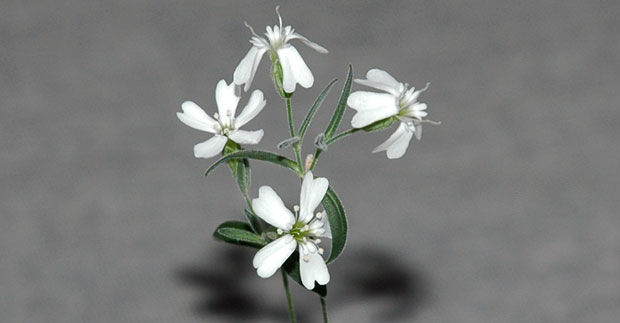
© AP/Institute of Biophysics of the Russian Academy of SciencesThis campion plant grew from a 32,000-year-old fruit.
Deep in the frozen tundra of northeastern Siberia, a squirrel buried fruits some 32,000 years ago from a plant that bore white flowers. This winter a team of Russian scientists announced that they had unearthed the fruit and brought tissue from it back to life. The fruits are about 30,000 years older than the Israeli date palm seed that previously held the record as the oldest tissue to give life to healthy plants.

The researchers were studying ancient soil composition in an exposed Siberian riverbank in 1995 when they discovered the first of 70 fossilized Ice Age squirrel burrows, some of which stored up to 800,000 seeds and fruits. Permafrost had preserved tissue from one species - a narrow-leafed campion plant - exceptionally well, so researchers at the Russian Academy of Sciences recently decided to culture the cells to see if they would grow. Team leader Svetlana Yashina re-created Siberian conditions in the lab and watched as the refrigerated tissue sprouted buds that developed into 36 flowering plants within weeks.

This summer Yashina's team plans to revisit the tundra to search for even older burrows and seeds.