Science & TechnologyS


Eye 1

Palm scanners adopted in schools, hospitals despite privacy concerns

Palm Scanner
© Jack Gruber, USA TodayCranberry Station cafeteria manager Peggy Vincent runs the computer that links the scan to a student's account.
At schools in Pinellas County, Fla., students aren't paying for lunch with cash or a card, but with a wave of their hand over a palm scanner.

"It's so quick that a child could be standing in line, call mom and say, 'I forgot my lunch money today.' She's by her computer, runs her card, and by the time the child is at the front of the line, it's already recorded," says Art Dunham, director of food services for Pinellas County Schools.

Students take about four seconds to swipe and pay for lunch, Dunham says, and they're doing it with 99% accuracy.

"We just love it. No one wants to go back," Dunham says.

Palm-scanning technology is popping up nationwide as a bona fide biometric tracker of identities, and it appears poised to make the jump from schools and hospitals to other sectors of the economy including ATM usage and retail. It also has applications as a secure identifier for cloud computing.

Info

Direction of time fuzzy for subatomic particles

Time
© Greg Stewart, SLAC National Accelerator LaboratoryIn this illustration, two different B mesons are changing between states (represented as colors); however blue-B changes into red-B more quickly than red-B changes into blue-B (a process running in reverse-time, as shown by the backwards clock dial).
Subatomic particles don't care if time moves forward or backward - it's all the same to them. But now physicists have found proof of one theorized exception to this rule.

Usually, time is symmetrical for particles, meaning events happen the same way if time progresses forward or backward. For example, a video of two particles colliding and scattering off each other can be played forward or backward, and makes sense either way. (That's not the case for macroscopic objects in the real world. You can spill a glass of milk on the floor, but if time were to move backward, the milk can't pick itself up and fall back into the glass.)

However, physicists thought there might be cases where time wasn't symmetrical for particles either - where certain events worked with time flowing in one direction and not the other. Now, for the first time, they've found proof of this phenomenon.

Researchers working on the BaBar experiment, which ran from 1999 to 2008 at the SLAC National Accelerator Laboratory in California, analyzed nearly 10 years of data from billions of particle collisions. They now report that certain types of particles change into one another much more often in one direction than they do in the reverse, confirming that some particle processes have a preferred direction in time.

This is the first solid proof of time asymmetry for subatomic particles.

Bad Guys

Scientist: Many pro-GMO corporate biologists own GMO patents, in bed with Monsanto

gmo patent
© Unknown
The lead researcher behind the monumental study that linked Monsanto's GMOs and best-selling herbicide Roundup to tumor development and early death is now blowing the whistle on many corporate scientists who are not just close to Monsanto and profit-harvesting GMO crops - many of them actually have or are seeking their own GMO patents. These patents, of course, enable them to make bountiful amounts of cash. Other corporate scientists are on (or 'were' at one point) Monsanto's pay roll, including former Monsanto executive turned Deputy Commissioner for Foods at the FDA Michael R. Taylor.

Dr. Gilles-Eric Séralini, a French scientists who has been under assault from Monsanto and pro-GMO scientists, was responsible for perhaps the largest awakening over the dangers of Monsanto's GMO foods that we have ever seen. Not only did the public begin to further recognize the existence and threat of GMOs thanks to his research, but numerous countries like Russia and others actually enacted a suspension on the import of genetically modified maize due to public health concerns.

This, of course, upset the Monsanto-funded corporate scientists who proverbially 'unleashed the dogs' on Dr. Séralini. Even Monsanto released a comment, stating that the lifelong rat study wasn't sufficient to substantiate any real health concerns. The company itself, amazingly, only conducted a 90 day trial period for its GMOs before unleashing them on the public.

Info

Brain, Universe, Internet governed by same fundamental laws, suggests supercomputer simulation

Node Degree K
© Science Agogo
By performing supercomputer simulations of the Universe, researchers have shown that the causal network representing the large-scale structure of space and time is a graph that shows remarkable similarity to other complex networks such as the Internet, as well as social and biological networks.

A paper describing the simulations in the journal Nature's Scientific Reports speculates that some as-yet unknown fundamental laws might be at work.

"By no means do we claim that the Universe is a global brain or a computer," said paper co-author Dmitri Krioukov, at the University of California, San Diego.

"But the discovered equivalence between the growth of the Universe and complex networks strongly suggests that unexpectedly similar laws govern the dynamics of these very different complex systems."

For the simulations, the researchers found a way to downscale the space-time network while preserving its vital properties, by proving mathematically that these properties do not depend on the network size in a certain range of parameters, such as the curvature and age of our Universe.

Robot

Cambridge center to study tech extinction risks

Terminator
© TG Daily
A proposed new center at Cambridge University will examine technologies, from biotechnology to artificial intelligence, that could perhaps threaten the future of our species.

"At some point, this century or next, we may well be facing one of the major shifts in human history - perhaps even cosmic history - when intelligence escapes the constraints of biology," says Huw Price, the Bertrand Russell Professor of Philosophy and one of the Centre for the Study of Existential Risk (CSER)'s three founders.

"Nature didn't anticipate us, and we in our turn shouldn't take [artificial general intelligence] AGI for granted. We need to take seriously the possibility that there might be a 'Pandora's box' moment with AGI that, if missed, could be disastrous."

While there's little doubt that advances in engineering - from longer life to global networks - have brought great benefits to humanity, Price and his colleagues question whether the acceleration of human technologies will increase our chances of long-term survival - or do the opposite.

Comet

Billion-ton comet may have missed Earth by a few hundred kilometers in 1883

Image
A reanalysis of historical observations suggest Earth narrowly avoided an extinction event just over a hundred years ago.

On 12th and 13th August 1883, an astronomer at a small observatory in Zacatecas in Mexico made an extraordinary observation. José Bonilla counted some 450 objects, each surrounded by a kind of mist, passing across the face of the Sun.

Bonilla published his account of this event in a French journal called L'Astronomie in 1886. Unable to account for the phenomenon, the editor of the journal suggested, rather incredulously, that it must have been caused by birds, insects or dust passing front of the Bonilla's telescope. (Since then, others have adopted Bonilla's observations as the first evidence of UFOs.)

Today, Hector Manterola at the National Autonomous University of Mexico in Mexico City, and a couple of pals, give a different interpretation. They think that Bonilla must have been seeing fragments of a comet that had recently broken up. This explains the 'misty' appearance of the pieces and why they were so close together.

Question

Mysterious 'red rain' scientists wonder whether it's extraterrestrial

Red Rain
© The Nation, Sri Lanka
Michael Crichton in his 1969 novel The Andromeda Strain deals with a deadly extraterrestrial microorganism that rapidly and fatally clots human blood. A military satellite designed to capture upper-atmosphere microorganisms upon reentering the Earth wreaks havoc in Piedmont, Arizona, where the satellite lands. This may not seem like the stuff sci-fi anymore, now with some leading scientists claiming that the microorganism found in 'red rain' in Sri Lanka is of extraterrestrial origin.

Red rain which caused fear and panic in four different areas in the country namely, Monaragala, Polonnaruwa, Sewanagala and Manampitiya leaving red frost in the latter two districts, continue to baffle local scientists still studying samples of the freak showers. Similar showers of 'blood rain' were experienced in Kerala, South India during two consecutive months from July to September this year, spawning several scientific and non-scientific theories with regarding to its origin.

So from where exactly does this mysterious rain originate? Is it from the earth whose natural elements we are familiar with having growing in these environments since the day we were born? Or from some extraterrestrial origins we are completely alien to? Was Sri Lanka's best known expatriate resident, Sir Arthur C Clarke was correct when he said that alien life existed wishing that he would live to see proof of this before his death? Are we at the brink of a close encounter with aliens, which has coincided with many other strange happenings occurring both here and in other parts of the world? For example the mysterious allergies in school children, the cause of which scientists are still trying to work out.

Does the red rain have a cosmic ancestry - a hypothesis first trotted out by Godfrey Louis and Santhosh Kumar (of Mahatma Gandhi University in Kottayam) in a paper that won world recognition, which pointed to higher life forms including intelligent life?

In a bid to allegedly prevent 'bio-scientific problems in the future' to quote a leading state paper, the Health Ministry is to dispatch six doctors to the affected areas. The same paper states that further studies by the Industrial Technology Institute and Nano Technology Institute also found the algae was harmless and had no impact on human health.

Jupiter

Solar system-wide 'climate change': Tally of Jupiter's moons goes up and down

Image
More space rocks have evidently been coming into our end of the solar system
As mentioned in my last post, Mars has two moons. Jupiter has... well, it's complicated.

Galileo discovered the four big ones in 1609 - 1610. Today they're known as the Galilean Moons: Io, Europa, Ganymede, and Callisto.

It took 282 years for the next Jovian moon to be spotted, which is remarkable, because a lot was discovered in the meantime (including the moons of Mars). That next-discovered moon was known as "Jupiter V" until 1975, when it got the name Amalthea.

Many Jovian moons were discovered since then; the current count stands at 67. Two were discovered in 2010 and two more in 2011, so others probably remain to be found. The four Galilean moons are much, much bigger than all the others, which is why it took the others so long to be found.


Comment: ...or, the others are relatively recent arrivals.


The fact that moons continue to be discovered isn't the only complicating factor, however. Jupiter can capture asteroids or comets, turning them into moons. Actually, any planet can do that, but Jupiter's large mass makes it very good at capture. Most of Jupiter's small moons are thought to be captured asteroids (or captured asteroids that broke into pieces).

Evil Rays

Judge reprieves student expelled for refusing to wear RFID tracking device badge

rfid
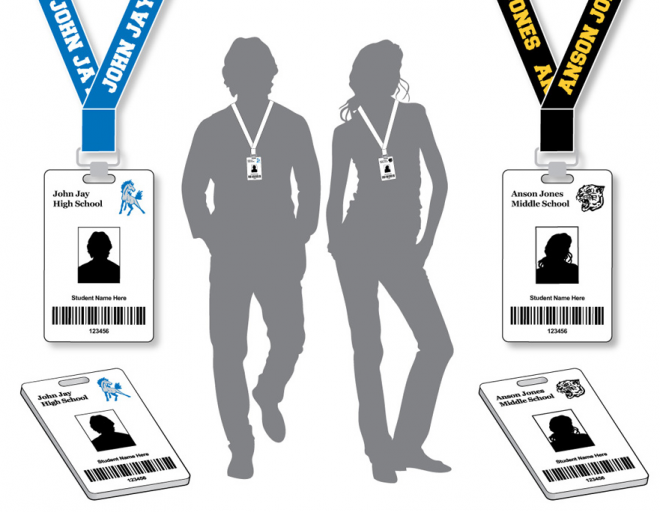
© Northside Independent School DistrictStudent body ID cards with RFID-embedded chips
Andrea Hernandez won't have to leave her high school for refusing to wear a badge designed to track her every move there - yet - her attorneys announced today.

A district court judge for Bexar County, Texas, has granted a temporary restraining order to prevent Northside Independent School District from removing a Hernandez from John Jay High School's Science and Engineering Academy because she refused to wear a name badge designed to use a Radio Frequency Identification (RFID) chip to track students' precise location on school property, the Hernandez's attorneys announced today.

"The court's willingness to grant a temporary restraining order is a good first step, but there is still a long way to go - not just in this case, but dealing with the mindset, in general, that everyone needs to be monitored and controlled," said John W. Whitehead, president of The Rutherford Institute.

Card - VISA

Cashless society: Visa card for children aged 8-16 claims to be 'pocket money for the digital age'

Child visa
© Daily MailAll grown-up: Would you give your child a Visa card to make purchases and withdraw cash?
The cashless society came a step closer today, with the launch of a service that offers a prepaid Visa card for children aged 8-16 and claims to be 'pocket money for the digital age.'

PKTMNY allows parents to deposit money into an account for their children to then use a Visa card linked to it to withdraw money, use contactless payments in shops and buy items on the internet.

But it's improbable that most parents will take up Visa's offer to replace old-fashioned pocket money. There is a raft of fees and charges: a £5 one-off joining fee per family, and then a £1 monthly charge per child. So if you have two children, the first year would cost you £29 in charges.