Science & TechnologyS


Info

Ticked off about a growing allergy to meat

Allergy
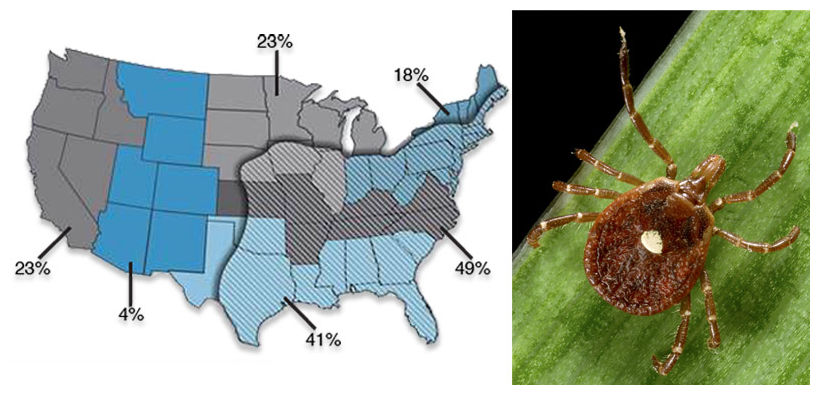
© (Map Graphic and Data) Viracor IBT Laboratories, CDC (Data); (Tick) CDCBitten beware. A comparison of the regional rates of meat allergy (colored states) with populations of the lone star tick (cross-hatched areas, tick shown right).
Tick bites have long been synonymous with bad news, responsible for transmitting diseases such as Lyme disease, Ehrlichiosis, and Rocky Mountain spotted fever, but this must be a carnivore or BBQ lover's worst nightmare. A growing body of research suggests that bites from a particular tick are causing an unusual allergic reaction to meat. At an allergy meeting last week, for example, a diagnostics lab presented evidence that the highest prevalence of the allergy is in the southeastern United States, where the tick primarily thrives. Yet American BBQ lovers and carnivores elsewhere may not rest easy; the allergy mysteriously afflicts people living in parts of the United States, even Hawaii, where the tick does not live.

The meat allergy, known as alpha-gal for a sugar carbohydrate found in beef, lamb, and pork, produces a hivelike rash - and, in some people, a dangerous anaphylactic reaction - roughly 4 hours after consuming meat. But unlike other common food allergies, the alpha-gal allergy has been found only in people who have been bitten by ticks - specifically the lone star tick, previously best known for causing a condition called southern tick-associated rash illness, the symptoms of which include rash, fatigue, headache, fever, and muscle pains. "You have to have a tick bite to then trigger the immune reaction," Stanley Fineman, an allergist and president of American College of Allergy, Asthma and Immunology (ACAAI).

People who are bitten by the ticks develop antibodies against the alpha-gal sugar, and individuals with symptoms can be diagnosed by a blood test that looks for the presence of those antibodies. But Fineman says that too few people are aware of the allergy or don't make the connection between a case of hives and the meal they had much earlier in the day, and so they never get tested. "It takes 4 to 6 hours to see a reaction, so many people don't correlate that to their meat, or hamburger or something. It's easy to miss," Fineman says.

Allergy researcher Thomas Platts-Mills of the University of Virginia (UVA) in Charlottesville has been studying the alpha-gal reaction since 2002, when he began investigating an unusual sensitivity to the cancer drug cetuximab, which contains the same alpha-gal sugar as meat. Cancer patients who demonstrated an allergic reaction to the drug were nearly exclusive to the southeastern United States and were also found to have high levels of alpha-gal antibodies, Platts-Mills explains. Furthermore, some of them, along with other noncancer patients in the same region, also reported having severe allergic reactions after eating meat. Platts-Mills later published the relationship between alpha-gal antibodies and the cetuximab allergy in The New England Journal of Medicine.

Info

Gene may help reveal what time you'll die

Clock
© Medical Daily
You may know the term Circadian rhythm, or the cells' biological clocks that determine peak processes of bodily processes, like blood pressure, heart efficiency, and general alertness. That Circadian rhythm is why some people are night owls and some people cannot stay awake past 8:00 PM. Interestingly, researchers have found that a single gene can determine into which group you fall - and that gene can also help explain what time of day you are likely to die.

"The internal 'biological clock' regulates many aspects of human biology and behavior, such as preferred sleep times, times of peak cognitive performance, and the timing of many physiological processes. It also influences the timing of acute medical events like stroke and heart attack," said Andrew Lim, a study author and a postdoctoral fellow at Beth Israel Deaconess Medical Center at the time of this research.

Researchers had previously been aware of certain rare gene mutations that meant that entire families were on the same Circadian rhythm, in which they stayed awake until the wee hours of the morning and woke up in the early afternoon. However, this study was the first to find a gene that is expressed in every single member of the general population.

The study, published in the Annals of Neurology, began as an attempt to find out whether behaviors could predict the onset of the debilitating Alzheimer's and Parkinson's diseases. The study had intended to examine 1,200 people who were 65 years old at the time of study. Researchers also gave the participants actigraphs, which analyze a person's sleep-wake behaviors and provides an assessment of their activity. All of the participants also agreed to donate their brains after their deaths.

Robot

Embracing your inner robot: A singular vision of the future

CB2
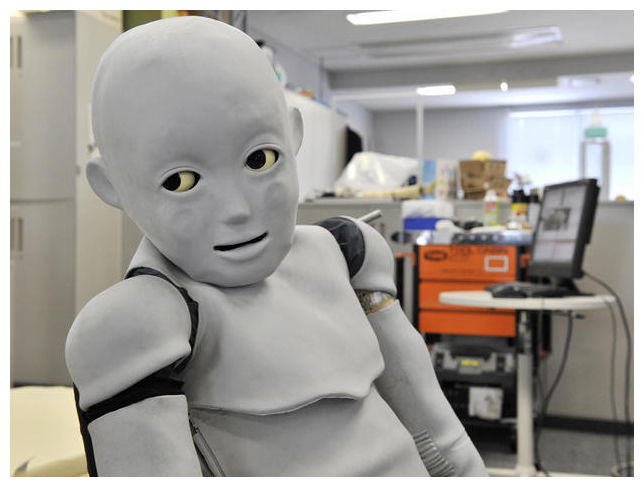
© Yoshikazu Tsuno/AFP/Getty Images"Child-robot with Biomimetic Body" (or CB2) at Osaka University in Japan in 2009, where the android was slowly developing social skills by interacting with humans and watching their facial expressions, mimicking a mother-baby relationship.
Last week I went to a lecture by the inventor and futurist author Ray Kurzweil, who was visiting Dartmouth College for a couple of days. Kurzweil became famous for his music synthesizers and his text-to-speech software, which are of great help to those who can't read or are blind. Stevie Wonder was one of his first customers. His main take, that the exponential advance in information and computer technology will deeply transform society and the meaning of being human, resonates with many people and scares a bunch more.

Using his exponential curve for processing-power-per-dollar increase, Kurzweil estimates that by 2045 we will reach the "Singularity," a point of no return where people and machine will reach a deep level of integration. You can watch Kurzweil walk through his ideas at bigthink.com. Here's a sample posted to YouTube:


For those who can afford it - and that's a whole topic of discussion by itself: what will happen to those who can't? - life will be something very different. Lifespan will be enormously extended, death will become an affliction and not an inevitability. I guess only taxes will remain a certainty!

Are such scenarios sci-fi or the reality of the future?

Info

Researchers discover key gene that makes humans distinct from apes

Apes and Humans
© Photos.com
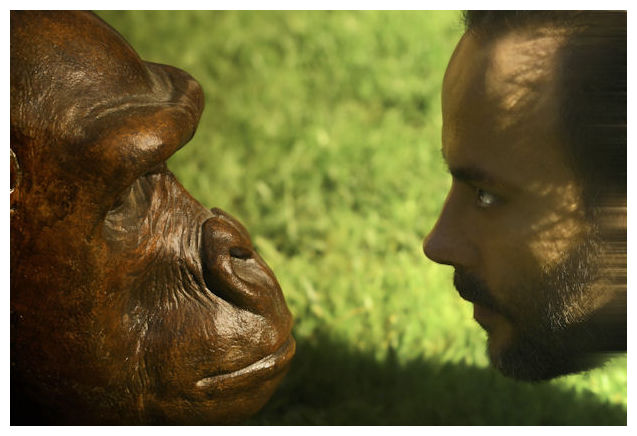
An international team of researchers, led by the University of Edinburgh, has discovered a new gene that helps to solve one of life's greatest mysteries - what makes us human?

The gene - miR-941 - helps to explain how humans evolved from apes. It appears to have played a crucial role in the development of the human brain and may shed light on our use of tools and language.

This is the first time, according to the team, that a new gene carried only by humans and not by apes has been shown to have a specific function within the human body. They compared the human genome to 11 other species of mammals - including chimpanzees, gorillas, mice and rats - to find the differences between them.

The miR-941 gene is unique to humans, the study found. The results, published in Nature Communications, show that it emerged after humans evolved from apes, between six and one million years ago.

The team found that the gene is highly active in the two areas of the brain that control a human's ability to make decisions and our language abilities, suggesting that it could have a role in the advanced brain functions that make us human.

Info

Animals are moral creatures, scientist argues

Rhesus Monkeys
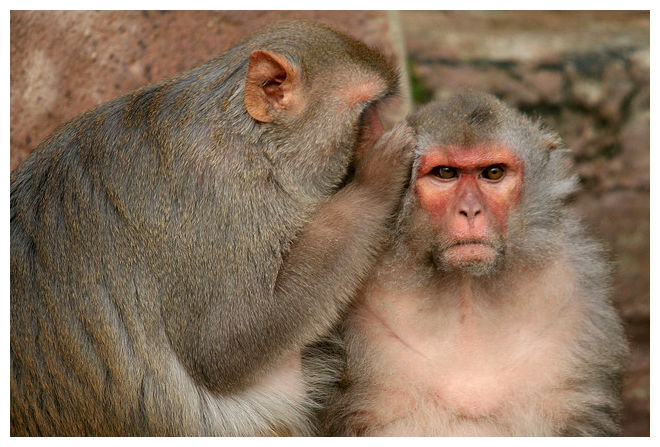
© jinterwas | Flickr.comAnimal behavior research suggests that animals have moral emotions. One study found that rhesus monkeys will forgo food if they had to push a lever that would electrically shock their companions to get it.
Does Mr. Whiskers really love you or is he just angling for treats?

Until recently, scientists would have said your cat was snuggling up to you only as a means to get tasty treats. But many animals have a moral compass, and feel emotions such as love, grief, outrage and empathy, a new book argues.

The book, Can Animals Be Moral? (Oxford University Press, October 2012), suggests social mammals such as rats, dogs and chimpanzees can choose to be good or bad.

And because they have morality, we have moral obligations to them, said author Mark Rowlands, a University of Miami philosopher.

"Animals are owed a certain kind of respect that they wouldn't be owed if they couldn't act morally," Rowlands told LiveScience.

But while some animals have complex emotions, they don't necessarily have true morality, other researchers argue.

Robot

Foxconn receives 10,000 robots to replace factory workers

Image
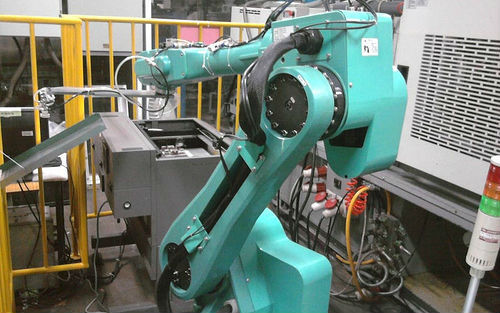
© singularityhub.comOne of Foxconn's new robots.
The electronics manufacturer will receive another 20,000 robots before the end of 2012.

Foxconn plans to replace 1 million of its human factory workers in China with robots, and the first 10,000 have already been installed.

At least one Foxconn factory in China has received 10,000 robots for the purpose of replacing human workers. These robots, which were manufactured in house and are called "Foxbots," are capable of doing simple tasks like lifting, making selections and placing items where they belong. They will act much like assembly line robots.

According to Singularity HUB, each robot costs about $20,000-$25,000.

Last year, Foxconn President Terry Gou said he wanted to replace 1 million factory workers in China with 1 million robots. This was likely due to the number of problems Foxconn has had with human employees over the years.

The company came under fire earlier this year when The New York Times published a massive article on the working conditions of Foxconn factories. Apple was also targeted because the report mentioned Apple's lack of action when receiving reports on these poor working environments and overtime/pay issues.

Foxconn gave employees a pay boost earlier this year and is cleaning its act up slowly but surely to comply with audits.

But it seems Foxconn just doesn't want to deal with human employees at all anymore. While it will take a long time to replace all 1 million workers with 1 million robots, the electronics manufacturer will receive another 20,000 robots before the end of 2012 -- bringing its total to 30,000 for the year. Foxconn hopes to continue increasing this number over the coming years.

Comment: A society without human employment cannot purchase products made by robots.


Info

Did a lost star torque Earth's orbit?

Planetary Orbits
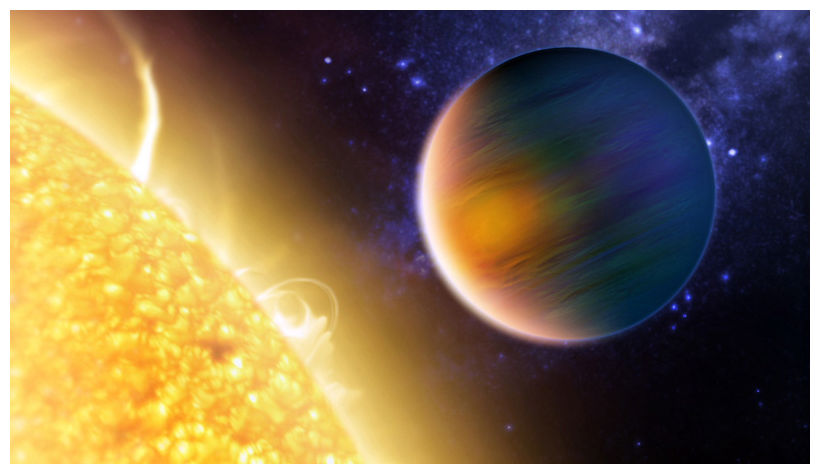
© NASA/HubbleWrong-way world. Some hot Jupiters orbit their stars backward, opposite the direction the stars spin.
One young star may yank another's developing solar system, a new theory suggests, accounting for planets that circle their stars on tilted paths. This idea may also explain a long-standing puzzle close to home: why Earth's orbit is tipped 7° relative to the sun's equator.

In 1995, Swiss astronomers made the shocking discovery of the first "hot Jupiter," a gas giant circling close to its star. To explain the odd find, theorists proposed that the planet formed far from its star but then migrated closer, spiraling through the protoplanetary disk of gas and dust that once swirled around its sun. During this so-called disk migration, the planet remained in the disk, and so the tilt of its orbit matched that of its star.

But the disk migration theory suffered a blow in 2008, when astronomers began finding hot Jupiters on tilted and even backward orbits. Such wayward planets seemed to be victims of violence: The gravitational force of other planets might have kicked them onto their peculiar paths.

Now astronomer Konstantin Batygin of the Harvard-Smithsonian Center for Astrophysics in Cambridge, Massachusetts, says it's time to give peace a chance. "Misaligned orbits are actually a natural outcome of disk migration - once you take into account the fact that planetary systems are usually born in multistellar environments," he says, noting that many stars have stellar companions. In work appearing online today in Nature, Batygin calculates how a young star's protoplanetary disk gets torqued by a second star orbiting the first. When a giant planet spirals inward through this tilted disk, it ends up on a path that's out of whack with its sun's equator.

Telescope

Lone planet found 'free-floating' through space

Free-floating blue planet
© ESOArtist’s impression of the free-floating planet.

Sydney: What looks like a young, lone planet roaming through space with no star to orbit could become a benchmark for uncovering the nature of massive planets outside our Solar System, astronomers report.

It is estimated to be about 100 light-years away from our Solar System, could be either a 'failed' small star or a planet expelled from its system, according to the study published in Astronomy & Astrophysics.

"To me, the best thing is that this object is a really easy-to-study prototype of the 'normal' giant planets we hope to discover and study with the upcoming generation of direct imaging instruments," said lead author Philippe Delorme from Institut de Planétologie et d'Astrophysique de Grenoble, France.

Galaxy

New bright and blue supernova in NGC 1365

Supernova
© Rolf Wahl Olsen. Supernova 2012fr in NGC 1365. It is the bright blue “star” directly below the galaxy core.
A very bright supernova has shown up NGC 1365, the galaxy also known as the Great Barred Spiral Galaxy, visible now for southern hemisphere observers. This already elegant galaxy lies about 56 million light-years away in the constellation Fornax. The supernova, a type Ia, was discovered by Alain Klotz with the TAROT telescope at the La Silla Observatory in Chile on October 27, 2012.

"The supernova is a very nice addition to the already highly photogenic galaxy," said Rolf Wahl Olsen, who took the gorgeous image above. "I'm amazed by how blue it is; it's really intense."

Supernova 2012fr is the bright and intensely blue star directly below the galaxy core. Olsen said that as of November 10, 2012 the supernova appeared to be nearing its peak, with an R magnitude of 11.90.

Bug

"Superbug" methicillin-resistant Staphylococcus aureus (MRSA) is prevalent at several U.S. wastewater treatment plants

Image
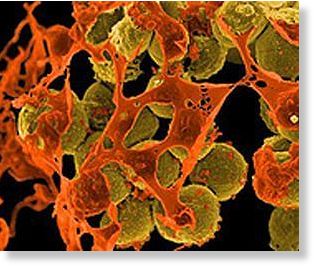
© NIAIDScanning electron micrograph of methicillin-resistant Staphylococcus aureus (MRSA).
A team led by researchers at the University of Maryland School of Public Health has found that the "superbug" methicillin-resistant Staphylococcus aureus (MRSA) is prevalent at several U.S. wastewater treatment plants (WWTPs). MRSA is well known for causing difficult-to-treat and potentially fatal bacterial infections in hospital patients, but since the late 1990s it has also been infecting otherwise healthy people in community settings.

"MRSA infections acquired outside of hospital settings--known as community-acquired MRSA or CA-MRSA--are on the rise and can be just as severe as hospital-acquired MRSA. However, we still do not fully understand the potential environmental sources of MRSA or how people in the community come in contact with this microorganism," says Amy R. Sapkota, assistant professor in the Maryland Institute for Applied Environmental Health and research study leader.

"This was the first study to investigate U.S. wastewater as a potential environmental reservoir of MRSA."