Science & TechnologyS


Evil Rays

New discovery provides unprecedented control of magnetic fields

Image

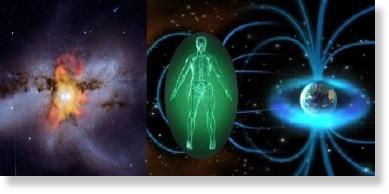
In a new study, physicists have shown that surrounding a magnetic source with a magnetic shell can enhance the magnetic field as it moves away from the source, allowing magnetic energy to be transferred to a distant location through empty space.

[Note: It is best to read the information provide below more than once, it not several times. It may take a little time to digest and understand the depth of its meaning. As I was writing, I soon realized this will take at least two parts to convey this astounding news and its meaning.]

(Part-1) Science Begins to Understand 5th World Transition

New scientific release has me sitting back in my chair babbling words such as: What the ...? Are you kidding me? Is this for real? In short, the release of this information has me stunned as to their (i.e. science team) willingness and ability to go public with their findings.

Yes, I'm probably overreacting - but what this data appears to be saying will push the limit of what would normally be outside the bounds of traditional science and open the doors to an established acceptable understanding in the human process of "transition".


Comment: One suspects that this kind of technology of directing electromagnetic waves has been available to a select few for many years and that it has been used, on more than one occasion, for example, the 9/11 attacks as per Dr. Judy Wood's research.


Blue Planet

China's corals doomed

Image
© Mark_Doh/iStockphotoOverfishing, pollution and unrestrained coastal development have contributed to the decline of 80 per cent of China's coral reefs. Researchers refer to this as a 'wicked problem' given the window of opportunity to save them is closing rapidly.
The first comprehensive survey of the state of corals along mainland China and in the South China Sea reports a grim picture of decline, degradation and destruction resulting from coastal development, pollution and overfishing.

A new study by Professor Terry Hughes and Matthew Young of the Australian Research Council Centre of Excellence for Coral Reef Studies and James Cook University, and Dr Hui Huang of the South China Sea Institute of Oceanology, Chinese Academy of Sciences, published in the prestigious journal Conservation Biology describes the situation as a 'wicked problem' - meaning it has no easy solutions.

"A wicked problem is one that is very hard to solve without having a whole lot of other foreseen and unforeseen consequences to people, industries and to the environment itself," Prof Hughes explains.

"China's ongoing economic expansion has exacerbated many wicked environmental problems, including widespread habitat loss due to coastal development, unsustainable levels of fishing, and pollution," the report states.

Galaxy

Astrophysicists find wide binary stars wreak havoc in planetary systems

Image
© Nathan Kaib
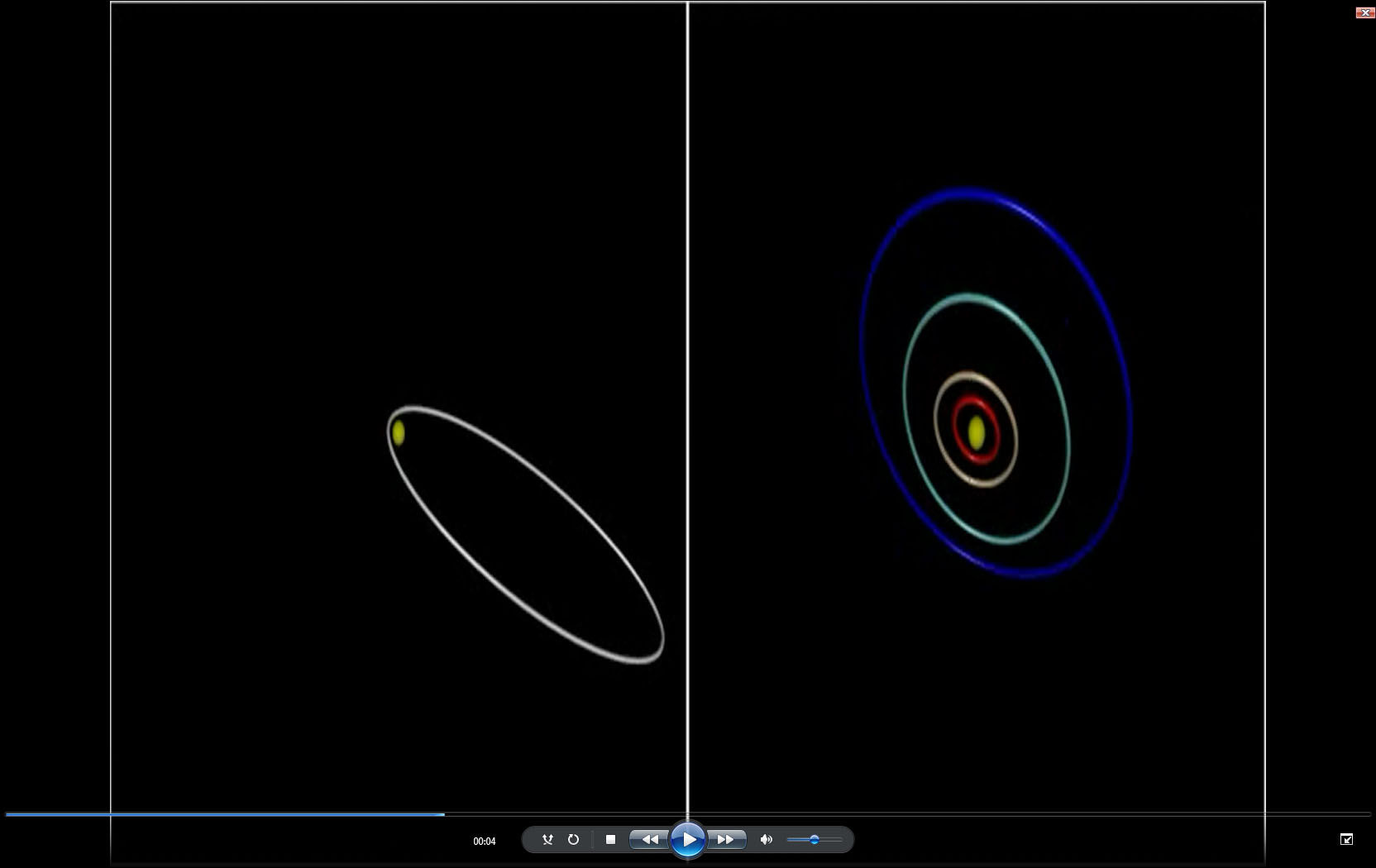
An international team of astrophysicists has shown that planetary systems with very distant binary stars are particularly susceptible to violent disruptions, more so than if they had stellar companions with tighter orbits around them.

Unlike the Sun, many stars are members of binary star systems - where two stars orbit one another - and these stars' planetary systems can be altered by the gravity of their companion stars. The orbits of very distant or wide stellar companions often become very eccentric - ie. less circular - over time, driving the once-distant star into a plunging orbit that passes very close to the planets once per orbital period. The gravity of this close-passing companion can then wreak havoc on planetary systems, triggering planetary scatterings and even ejections.

"The stellar orbits of wide binaries are very sensitive to disturbances from other passing stars as well as the tidal field of the Milky Way," said Nathan Kaib, lead author of a study published today in Nature describing the findings. "This causes their stellar orbits to constantly change their eccentricity - their degree of circularity. If a wide binary lasts long enough, it will eventually find itself with a very high orbital eccentricity at some point in its life."

Question

Mystery of the triple impact craters spotted on the surface of the moon

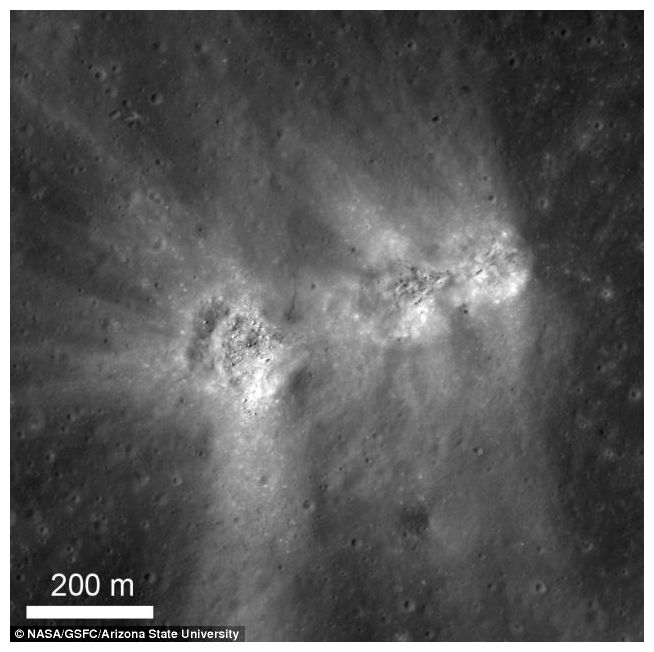
Scientists have revealed a series of three mysterious impact craters on the surface of the Moon.

Dubbed the 'three amigos' by experts operating the Lunar Reconnaissance Orbiter Camera which took the images, experts believe the craters formed within minutes of each other - but have no idea how.

They believe the bizarre arrangement may have been caused by a meteorite or comet breaking up - or three separate impacts occuring in a unique coincidence.

Moon Impact Craters
© NASA/GSFC/Arizona State UniversityThe 'three amigos' spotted on the surface of the moon, with debris sprayed upto 1km away.
'These three craters, located at 9.665°S, 7.646°E, appear to have formed more or less at the same time, certainly within a few minutes of each other,' the researchers say.

'The southwest crater is 180 m diameter; the center crater is 150 m; and the northeast crater is 125m across. 'From the northeast crater center to the southwest crater centers, they cover about 450 m.'

Galaxy

15 potentially habitable planets discovered by amateur astronomers

Image
© Haven GiguereArtist’s impression of the view from a moon around planet PH2b.
Volunteers from the Planethunters website have identified 15 new habitable planet candidates among data collected by NASA's Kepler spacecraft.

One of the 15, a Jupiter-sized planet orbiting the solar-type star KIC 12735740, has been officially confirmed as a planet (with 99.9 percent certainty). Named PH2 b, it is the second confirmed planet to be found by Planethunters.org, part of the Oxford University-led Zooniverse citizen science project that turns raw data over to keen amateur researchers. The remaining 14 planet candidates are at least 90 percent likely to be planets.

Launched in March 2007, Nasa's Kepler spacecraft has been searching for undiscovered exoplanets in the habitable zone of their parent stars using a wavelet-based algorithm called transit planet search, which detects the moment a planet passes in front of its star. While the algorithm will spot the vast majority of planet candidates, a small number will go unnoticed. Since 2010, Planethunters has been searching through the Kepler data NASA released into the public domain, allowing its 200,000-strong army of volunteers to seek out the telltale dip in the brightness of parent stars as planets pass in front of them.

R2-D2

The National Intelligence Council predicts a very Transhuman future by 2030

exoskeleton
© unknownA soldier testing an exoskeleton prototype
The National Intelligence Council is a high-level agency best known for producing National Intelligence Estimates - forecasts predicting future trends and issues of the next fifteen years. These extensive reports are produced every election year and are directly delivered to the incoming President between Election Day and Inauguration Day. The latest NIC report released on December 2012 is called Global Trends 2030: Alternative Worlds (read it here) and discusses several issues such as the decline of the role of the United States as a global policeman and the rise of non-state actors in world politics. It also mentions another key issue: A fast-paced race towards transhumanism.

"Human Augmentation" is indeed considered a key issue in the next 15 years as new technologies will allow all kinds of modifications "ranging from implants and prosthetics to powered exoskeletons, human augmentation enhancing innate human abilities". These augmentations would be used on soldiers, workers and anyone that can afford them, giving them "super-human" powers and capabilities, whether it be on a physical or a mental level.

Fireball

Apophis - a 'potentially hazardous' asteroid - flies by Earth on Wednesday

Image
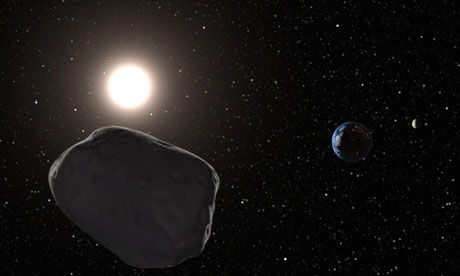
© Photograph: Planetary Resources/EPAA computer-generated image of a near-Earth asteroid. Astronomers will get a close-up view of Apophis on Wednesday.
Asteroid Apophis arrives this week for a close pass of Earth. This isn't the end of the world but a new beginning for research into potentially hazardous asteroids.

Apophis hit the headlines in December 2004. Six months after its discovery, astronomers had accrued enough images to calculate a reasonable orbit for the 300-metre chunk of space rock. What they saw was shocking.

There was a roughly 1 in 300 chance of the asteroid hitting Earth during April 2029. Nasa issued a press release spurring astronomers around the world to take more observations in order to refine the orbit. Far from dropping, however, the chances of an impact on (you've guessed it) Friday 13 April 2029 actually rose.

By Christmas Day 2004, the chance of the 2029 impact was 1 in 45 and things were looking serious. Then, on 27 December astronomers had a stroke of luck.

Looking back through previous images, they found one from March on which the asteroid had been captured but had gone unnoticed. This significantly improved the orbital calculation and the chances of the 2029 impact dropped to essentially zero. However, the small chance of an impact in 2036 opened up and remains open today.

While there is no cause for alarm, similarly there is no room for complacency either. Apophis remains on the list of Potentially Hazardous Asteroids compiled by the International Astronomical Union's Minor Planet Center.

Galaxy

Monster black hole burp surprises scientists

Black Hole Eruption
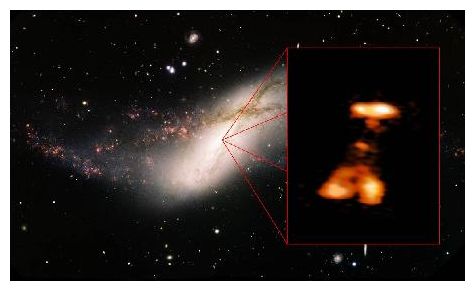
© Minchin et al., NRAO/AUI/NSF (HSA);Travis Rector, Gemini Observatory, AURA (optical)A massive outburst erupts from the giant black hole at the center of the distant galaxy NGC 660, which is 44 million light-years from Earth, in this via captured by ground-based telescopes. Image released Jan. 7, 2013.
Long Beach, California - Astronomers have discovered what appears to be colossal belch from a massive black hole at the heart of a distant galaxy. The outburst was 10 times as bright as the biggest star explosion, scientists say.

The potential super-sized black hole burp find came as astronomers studied the galaxy NGC 660, which is located 44 million light-years away in the constellation Pisces.

"The discovery was entirely serendipitous. Our observations were spread over a few years, and when we looked at them, we found that one galaxy had changed over that time from being placid and quiescent to undergone a hugely energetic outburst at the end," study researcher Robert Minchin of Arecibo Observatory in Puerto Rico said in a statement.

Fish

Mystery over mass death of baby sharks

Image
© FBC
The Great Fiji Shark Count is willing to work with the Ministry of Fisheries to ascertain how 50 baby hammerhead sharks were found dead along the Nukulau beachfront over the weekend.

Nanise Ledua, a member of the GFSC, said they were working on sending a team to Nukulau Island to gather samples of the dead baby sharks and to determine the cause of their deaths.

"We have so many theories surrounding the dead baby sharks, but we cannot prove it right now," she said.

Ms Ledua said the toxic spill theory was not possible as other species of fish and other marine lives were not affected and the other possibility of the cause of their deaths was the change in water temperature, but this could not be confirmed.

Blue Planet

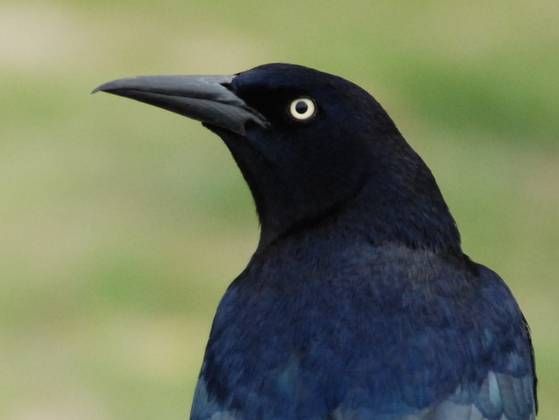
Troublesome great-tailed grackle spreads north, west

Image
© Photo: David J. Ringer, National Audubon SocietyA male great-tailed grackle in Duncanville, Texas
The invasive, noisy birds can damage citrus crops, and their droppings can spread disease..

In Houston, they tried air cannons so loud neighbors called in the SWAT team. In New Mexico, it took a half-dozen men and thousands of explosives. In Austin, technicians go out night after night with heavy-duty lasers. All to battle an 8-ounce, highly adaptive bird that's colonizing the country -- and leaving behind inch-thick layers of droppings as it goes.

The great-tailed grackle, called by some the devil bird, is lovely to look at. Males are jet-black with a violet-blue iridescent sheen to their feathers that made them prized by Aztec kings in their original range in Central America. But while they once were seen only in the most southern tip of Texas, today they're in 23 states, as far north as Montana and as far west as Washington.

That might make them nice for bird watchers. But for residents of areas they colonize, not so much. Grackles tend to congregate in large flocks and like shopping centers and fast-food store parking lots, where there's trash for food and trees or light posts for perching. Their droppings can spread disease, and they can damage citrus crops.