Science & TechnologyS


Comet

Rogue asteroid is 20 percent bigger than previously thought

Image
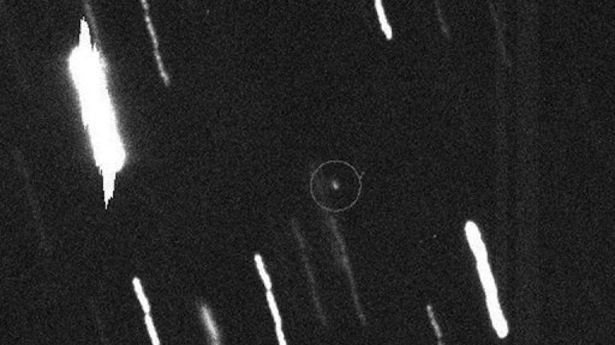
An asteroid believed to pose a remote risk of colliding with Earth this century is 20 percent bigger than previously thought, the European Space Agency (ESA) said on Wednesday.

In a press release, ESA said its Herschel deep-space telescope had scanned a space rock called 99942 Apophis last weekend as it headed towards its closest flyby with our planet in years on Wednesday.

Previous estimates bracketed the asteroid's average diameter at 270 metres (877 feet) give or take 60m (195 feet), representing a mass that would equal the energy release of a 506-megatonne bomb, according to NASA figures.

In a two-hour observation, Herschel returned a diameter of 325m (1,056 feet), with a range of 15m (48.75 feet) either way, ESA said.

"The 20-percent increase in diameter, from 270 to 325m (877 to 1,056 feet), translates into a 75-percent increase in our estimates of the asteroid's volume or mass," said Thomas Mueller of the Max Planck Institute for Extraterrestrial Physics in Garching, Germany, who led the data analysis.


Info

Gonorrhea may become incurable, experts fear

Doctor and Patient
© Shutterstock
Workers at a Canadian clinic have discovered that almost 7 percent of their patients with gonorrhea had a strain of the bacteria against which all oral antibiotics are useless. This alarming report suggests gonorrhea may become an untreatable disease, warn public health experts.

Antibiotic-resistant strains of gonorrhea have been reported in outbreaks throughout Europe and Japan, according to US News, but the Canadian study, published in the Journal of the American Medical Association, marks the first time the strain has been seen in a large North American population.

"We've been very concerned about the threat of potentially untreatable gonorrhea," Dr. Gail Bolan of the Centers for Disease Control and Prevention (CDC) told Fox News. "We feel it's only a matter of time until resistance will occur in the United States.

Dr. Vanessa Allen of Public Health Ontario and colleagues identified 291 patients at the clinic who tested positive for gonorrhea between May 2010 and April 2011. The Canadian patients whose gonorrhea was resistant to cephalosporin - the most commonly used antibiotic for gonorrhea - were eventually cured by a powerful injectable antibiotic, ceftriaxone. But experts fear even that drug has its limits, since doctors are seeing a rise in resistance to ceftriaxone, too.

Radar

Flying aid drones tested in Haiti and Dominican Republic

Image
© Photograph: MatternetField tests of the flying drones took place in the Dominican Republic and Haiti.
Fleet of drones could accelerate humanitarian responses and prove cheaper than roads - but research on safety needed.

A fleet of small flying drones could speed up the delivery of medicines and other supplies to remote areas, and even provide a cheaper alternative to a road network, according to Matternet, a start-up company in the US.

Just as the internet has revolutionised the transport of online data, the company says a network of unmanned aerial vehicles (UAVs) - the "matternet" - could do the same for supplies. The company envisages a network of base stations 10km apart, with flying drones carrying packages of up to 2kg between bases. A drone would take only 15 minutes for each trip without needing to recharge or replace its batteries.

The projected cost for setting up a case study in Lesotho with 50 base stations and 150 drones is $900,000 (£560,000). After that, each trip by a drone would cost only 24 cents. This compares with about $1m for building a 2km, one-lane road, according to the company.

Andreas Raptopoulos, one of Matternet's founders, said there are three key technologies - electric flying vehicles, landing stations and routing software - that make such a network technically feasible. The company tested prototypes in Haiti and the Dominican Republic in August and September last year.

Bizarro Earth

Catastrophes from the past will strike again - we just do not know when

Image
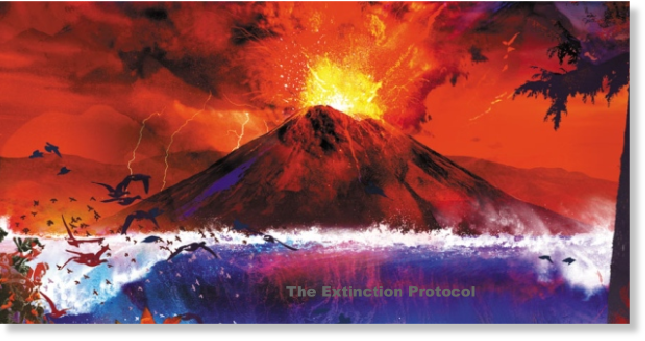
One hundred thousand years ago, a massive chunk of the Mauna Loa volcano cracked away from Hawaii and slid into the sea, launching a wave that rose as high as the Eiffel tower up the slopes of a nearby island. That mega-tsunami was not an isolated incident: the past 40,000 years have seen at least ten gigantic landslides of more than 100 cubic kilometers in the North Atlantic ocean alone, each capable of producing waves tens to hundreds of meters high. Another is bound to happen sometime - although whether it will strike tomorrow or 10,000 years from now is anyone's guess. Earth is now in the middle of a flare-up of supervolcanic activity.

Over the past 13.5 million years, no fewer than 19 giant eruptions have each spewed more than 1,000 cubic kilometers of rock - enough to coat an entire continent in a few centimeters of ash and push the planet into 'nuclear winter'. One of the most recent such eruptions, of Toba in Indonesia 74,000 years ago, was such a catastrophic event that some scientists have blamed it for starting the last ice age and slashing the human population to about 10,000 people. One estimate1 suggests that there is a 1% chance of a super-eruption in the next 460 - 7,200 years.

Fireball 5

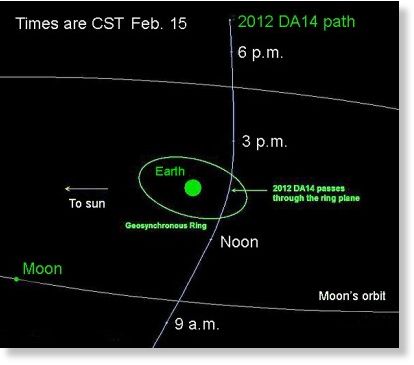
February 15, 2013: Near Earth Asteroid 2012 DA 14 comes close enough to Earth to knock satellites out of orbit

Near Earth Asteroid (NEA) 2012 DA14 has its annual flyby of the earth on February 15, 2013. Its projected orbit, according to NASA, will bring it well within the orbits of geosynchronous satellites currently orbiting our planet. NASA has indicated that there is no danger of this asteroid impacting our planet, however they have not ruled out our gravity changing the asteroids orbital pattern. NEA 2012 DA 14 was discovered on February 23, 2012 by the Observatorio Astronómico de Mallorca (OAM), near the Spanish city of La Sagra. According to NASA's Near Earth Object Program, NEO, the asteroid will pass the earth at a distance of 21,000 miles, putting the asteroid's trajectory in between the earth and the satellites orbiting our planet. Geosynchronous satellites orbiting our planet orbit at a distance of roughly 26,200 miles above the earth.
Image
Geostationary orbiting objects orbit at a distance of roughly 22,236 miles above the Earth's equator. These objects are considered to be in High Earth Orbit (HEO). Any object in space considered to be in a Low Earth Orbit (LEO) is approximately 1250 miles above the equator. The term Medium Earth Orbit (MEO) refers to an orbiting object approximately 12,500 miles above the Earth's equator, in between objects in an LEO and a HEO, geosynchronous orbit.

Robot

Humanoid robot pictured on International Space Station

With his upright posture and shiny gold helmet, this space robot looks more suited to the set of Star Wars than the International Space Station.


But the C3PO lookalike, the first humanoid robot in space, has spent almost two years orbiting the Earth while learning to perform tasks which are more suited to machines than human crew members.

Robonaut 2 - nicknamed R2 in a nod to the Star Wars trilogy - was launched in February 2011 on the last flight of NASA's Discovery space shuttle.

It began work last March, practicing some of the duller or more dangerous jobs which astronauts hope it will carry out on their behalf, and was pictured on Wednesday during another round of testing.

An Earth-based team of programmers remotely controlled the robot as it operated valves on a task board in the space station's Destiny laboratory.

One of the roles R2 was designed to fulfil was monitoring air flow in front of vents on board the ISS - a crucial check to make sure that none of the ventilation apparatus becomes blocked or clogged up.

The task requires a very steady hand and samples can be spoiled by other sources of air flow, such as human breath, making a robot the perfect candidate for the job.

Comet

Comets C/2012 K5 (LINEAR) & C/2012 F6 (Lemmon)

C/2012 K5 (LINEAR) & C/2012 F6 (Lemmon)are the brightest comets currently visible in the sky (together with comet C/2011 L4 PanSTARRS which is unobservable in Northern Hemisphere until 2013 March while is observable very low in the sky in the Southern Hemisphere until mid February).

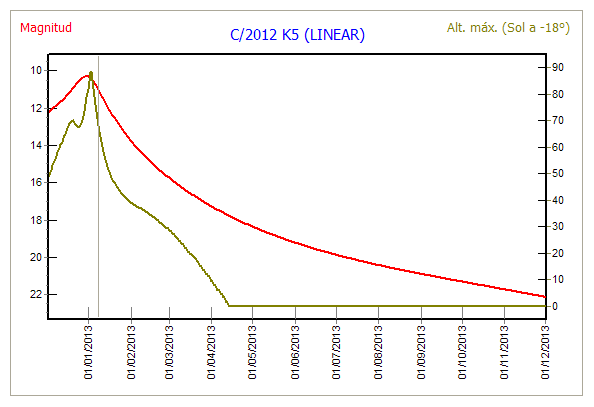
C/2012 K5 (LINEAR) was discovered by the LINEAR survey on CCD images taken with the 1.0-m f/2.15 reflector on May 25.3. For more info about the discovery of this comet see our previous post here. Latest visual estimates indicate a total visual brightness of about m1 ~ 8.5. This comet is very close to the Earth now (~0.369 AU, while it is at ~1.3 AU from the Sun). The visibility condition is good in the Northern Hemisphere. But after mid January, the comet moves away from the earth and fade out rapidly. It will become observable in good condition also in the Southern Hemisphere after January.

Below you can see a graph generated using the software Orbitas and showing the C/2012 K5 predicted magnitude (in red) versus the maximum height (for Northern Hemisphere). Click on the image for a bigger version.
C/2012 K5
© Remanzacco Observatory

Info

Online comments hurt science understanding, study finds

A new obstacle to scientific literacy may be emerging, according to a paper in the journal Science by two University of Wisconsin-Madison researchers.

The new study reports that not only are just 12% of Americans turning to newspaper and magazine websites for science news, but when they do they may be influenced as much by the comments at the end of the story as they are by the report itself.

In an experiment mentioned in the Science paper and soon to be published elsewhere in greater detail, about 2,000 people were asked to read a balanced news report about nanotechnology followed by a group of invented comments. All saw the same report but some read a group of comments that were uncivil, including name-calling. Others saw more civil comments.

"Disturbingly, readers' interpretations of potential risks associated with the technology described in the news article differed significantly depending only on the tone of the manipulated reader comments posted with the story," wrote authors Dominique Brossard and Dietram A. Scheufele.

Magnify

Giant Pandas hold new weapon in fight against superbugs

Image
© GettyScientists have discovered pandas produce a powerful antibiotic that kills bacteria and fungi
Giant Pandas may be a rich source of powerful new antibiotic drugs, scientists have discovered.

Their endangered status and distinctive, cuddly appearance has turned them into the poster-child of wildlife conservation, but now there may be a new reason to save the giant panda from extinction.

Scientists have discovered that the animals, of which there are around 1,600 in the wild, produce a powerful antibiotic in their blood stream that kills bacteria and fungi.

They believe the substance could be used to create potent new treatments against drug resistant superbugs and other diseases.

The antibiotic is thought to be released by the bear's immune system to protect them from infections when they are living in the wild. Researchers discovered the compound, known as cathelicidin-AM, after analysing the panda's DNA.

Fortunately, scientists will not need to depend upon the animal's notoriously unreliable breeding capacity to harvest the new antibiotic as they have been able to synthesise it artificially in the lab by decoding the genes to produce a small molecule known as a peptide.

Cassiopaea

Massive star explosion captured in stunning photo

Supernova Cassiopeia A
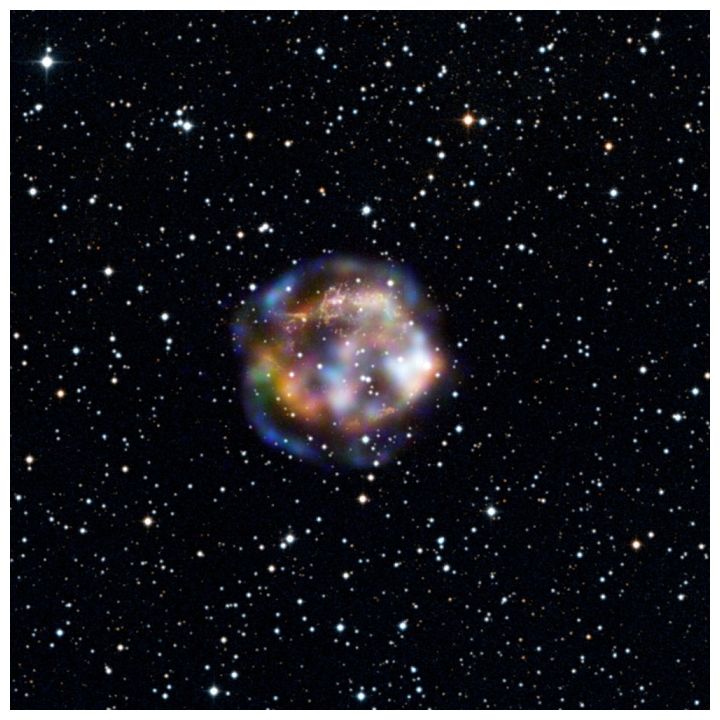
© NASA/JPL-Caltech/DSSThis new view of the historical supernova remnant Cassiopeia A, located 11,000 light-years away, was taken by NASA's Nuclear Spectroscopic Telescope Array, or NuSTAR. Image released Jan. 7, 2013.
Long Beach, California - A beautiful new image snapped by a NASA spacecraft captures the aftermath of a massive star explosion with unprecedented resolution.

The image - taken by NASA's NuSTAR spacecraft (short for Nuclear Spectroscopic Telescope Array) in X-ray light - shows Cassiopeia-A, a supernova remnant located about 11,000 light-years from Earth.

Light from the violent explosion first reached Earth about 300 years ago, researchers said.

The blue ring is made up of high-energy X-ray light. The ring formed when the shock wave from the star's death crashed into nearby particles, accelerating them to nearly the speed of light.

The new image provides an incredibly detailed view of the star's death. With earlier technology, such as that provided by NASA's Chandra X-Ray Observatory, the entire supernova explosion would have appeared as a single dot, said NuSTAR principal investigator Fiona Harrison, an astrophysicist at the California Institute of Technology in Pasadena.

The $165 million NuSTAR spacecraft launched in June 2012 on a two-year mission to probe high-energy regions of the universe, such as black holes and supernova remnants. The spacecraft should help researchers better understand how galaxies form and how black holes grow, Harrison has said.