Science & TechnologyS


Comet 2

New Comet: C/2013 B2 (CATALINA)

Cbet nr. 3390, issued on 2013, January 23, announces the discovery of a new comet (discovery magnitude 18.9) on images taken by J. A. Johnson with the Catalina Sky Survey's 0.68-m Schmidt telescope + CCD on January 16.2. The new comet has been designated C/2013 B2 (CATALINA). The apparently asteroidal object posted on the Minor Planet Center's NEOCP webpage, has been found to show cometary appearance by CCD astrometrists elsewhere.

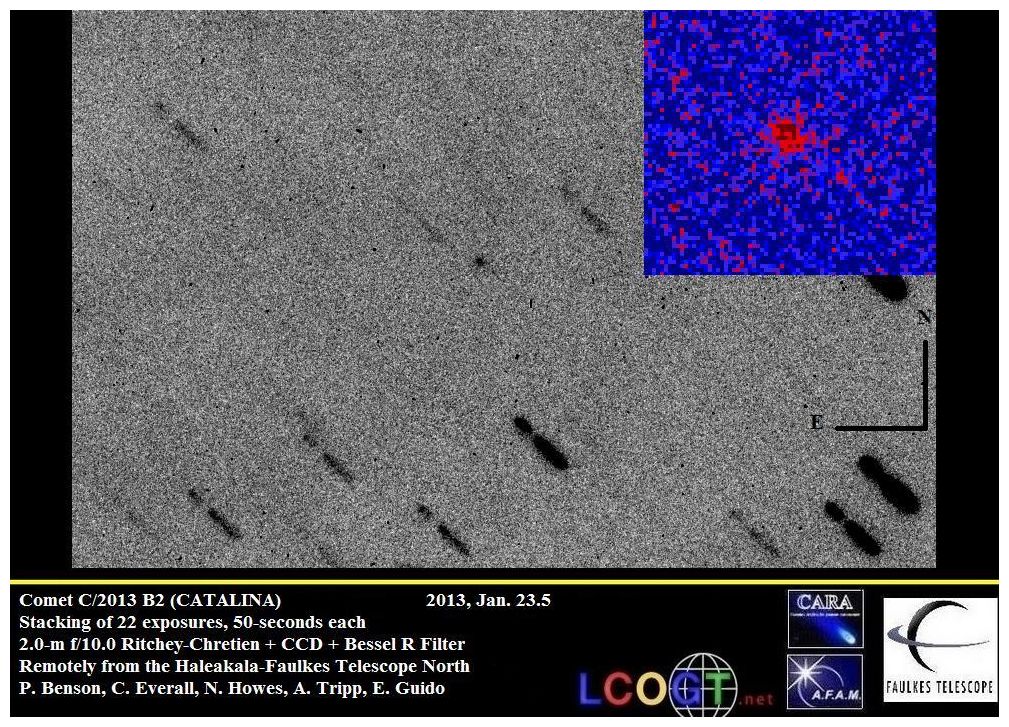
We performed follow-up measurements of this object, while it was still on the neocp. Stacking of 22 R-filtered exposures, 50-sec each, obtained remotely, from the Haleakala-Faulkes Telescope North on 2013, Jan. 23.5, through a 2.0-m f/10.0 Ritchey-Chretien + CCD, shows that this object appears slightly diffuse compared to the nearby field stars of similar brightness and elongated toward PA 220.

Our confirmation image:
Comet C/2013 B2
© Remanzacco Observatory/Philip Benson/Chris Everall
M.P.E.C. 2013-B84 assigns the following preliminary parabolic orbital elements to comet C/2013 B2: T 2013 June 30.59; e= 1.0; Peri. = 156.14; q = 3.75; Incl.= 43.56.

Robot

Humanoid-stye robots will prepare hamburgers, eliminate fast food jobs

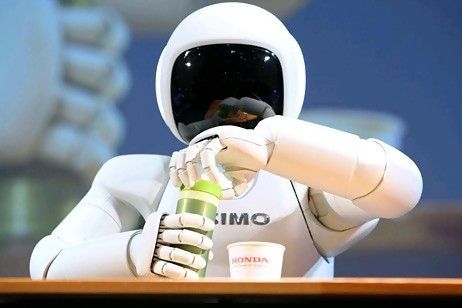
honda asimo
© HondaHonda Asimo Humanoid Robot
California's Silicon Valley is in the throes of giving birth to its next world-changing technology - robotics.

Start-up companies are scrambling to develop humanoid-stye robots to cater for a growing demand from both businesses and consumers.

Silicon Valley Robotics, which represents 40 organisations, reports a boom in robotics start-ups in San Francisco in addition to more established companies elsewhere in the area concentrating on industrial robotics.

The start-up robot firm Momentum Machines is one. Funded by San Francisco's Lemnos Labs, it has developed a robot designed to take the place of humans in burger restaurants. Its creators believe their patty-flipping Alpha robot could save the fast-food industry in the United States about US$9 billion (Dh33.05bn) a year. Designed to entirely replace two to three full-time kitchen staff, it can grill a beef patty, layer it with lettuce, tomatoes, pickles and onions, put it in a bun, and wrap it up to go - no less than 360 times an hour. Momentum believes kitchen robots are not only more cost-effective than human staff, they are also more hygienic.

Chalkboard

Brits develop train cars that can resist terrorist bombings

Image
© AFP PhotoA test bomb is set off inside a reinforced train outside London
Researchers said Wednesday they have developed train carriages that can reduce deaths and injuries in terror attacks by using plastic-coated windows and measures to prevent flying debris.

The New Rail research centre at Newcastle University analysed the carriages hit in the July 7, 2005 attacks on the London Underground and conducted a test explosion on a decommissioned carriage to study the impact on its structure.

The three-year SecureMetro project focused on containing the blast impact and reducing debris, which is the main cause of death and injury in such explosions and an obstacle for the emergency services trying to reach injured passengers.

The researchers on the EU-funded project said the solutions they developed were relatively cheap to implement.

Wolf

Archaeologists uncover new fox species in South Africa

Image
© AFP Photo
Archaeologists digging outside Johannesburg have unearthed a fossilised species of previously unknown fox, which they hope will help flesh out the evolutionary journey of modern canines.

The new species - named Vulpes Skinneri after South African ecologist John Skinner - is thought to have lived about two million years ago.

The discovery was made at an unassuming hole-in-the-ground site named Malapa, which has proven a treasure trove for archaeologists, palaeontologists and other scientific rock hounds.

Five years ago, fossils belonging to a new species of hominid were discovered at the same location.

The latest find was announced in the journal Transactions of the Royal Society of South Africa.

Bulb

British scientists announce breakthrough in turning DNA into data storage

Image
© AFP Photo
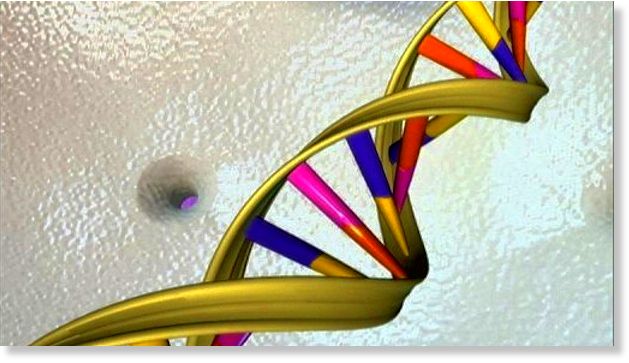
Scientists in Britain on Wednesday announced a breakthrough in the quest to turn DNA into a revolutionary form of data storage.

A speck of man-made DNA can hold mountains of data that can be freeze-dried, shipped and stored, potentially for thousands of years, they said.

The contents are "read" by sequencing the DNA - as is routinely done today, in genetic fingerprinting and so on - and turning it back into computer code.

"We already know that DNA is a robust way to store information because we can extract it from bones of woolly mammoths, which date back tens of thousands of years, and make sense of it," said Nick Goldman of the European Bioinformatics Institute (EBI) in Cambridge.

Che Guevara

Guess who? Japanese scientists launch face recognition-blocking glasses

Image
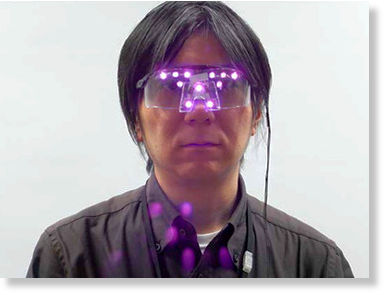
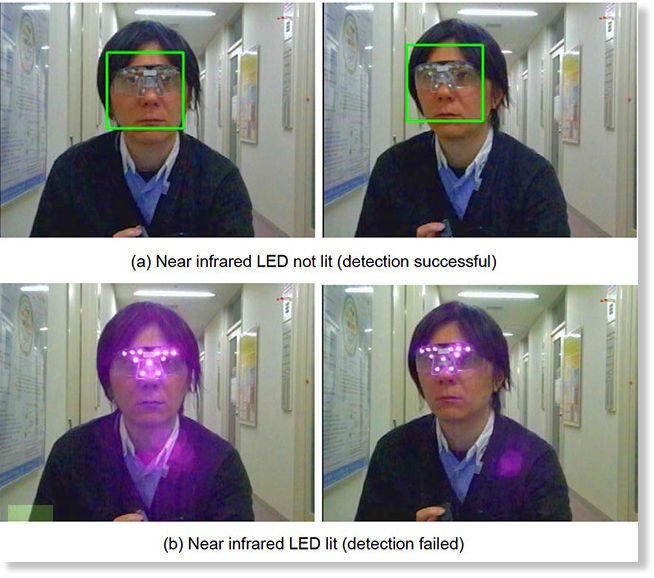
© Image from press release of The National Institute of Informatics, JapanThe glasses stymie facial recognition software with infrared LED light.
Those concerned with online privacy may soon get another weapon to defend it. Two Japanese scientists have designed glasses that confuse face recognition technology without affecting one's vision.

An associate professor at Tokyo's national Institute of Informatics, Isao Echizen, together with Professor Seiichi Gohshi from Kogakuin University, have created a pair of glasses preventing internet search engines, social networks and other services using face recognition technology from identifying photos of a wearer.

The device is equipped with near-infrared light sources which distort the features of one who wears the glasses for cameras and at the same time do not affect his or her vision.

The glasses are powered by a battery placed in the wearer's pocket. But the researchers say they are working on an improved version of their 'privacy visor' which would not need a separate battery.

Image

Display

Facebook's Graph Search tool causes increasing privacy concerns

Image
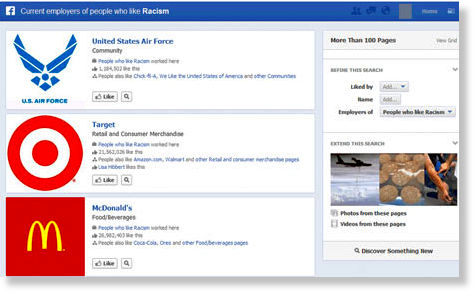
© Screengrab from actualfacebookgraphsearches.tumblr.com
New blog aims to show how those who share photos, personal information and 'likes' on Facebook could see privacy invaded.

Privacy concerns are mounting around Facebook's recently announced search tool, after it was used to unearth lists of people related to supporters of the outlawed Chinese group Falun Gong and companies employing self-declared racists.

Graph Search, Facebook's answer to Google's search engine, was launched last week by founder Mark Zuckerberg, who promised it would help people find friends who share their interests. Critics argued it could be also be used to unearth compromising information on Facebook's 1 billion members.

In a blog launched on Wednesday, a series of controversial search results have been made public, showing the extent to which those who share photos, personal information and "likes" on Facebook could have their privacy invaded.

House

Dutch architect to build house with 3D printer

Image
© AFP PhotoA handout computer generated image shows a house designed by Dutch architecture practice Universe Architecture
A Dutch architect has designed a house "with no beginning or end" to be built using the world's largest 3D printer, harnessing technology that may one day be used to print houses on the moon.

Janjaap Ruijssenaars, 39, of Universe Architecture in Amsterdam, wants to print a Mobius strip-shaped building with around 1,100 square metres (12,000 square feet) of floor space using the massive D-Shape printer.

The printer, designed by Italian Enrico Dini, can print up to almost a six-metre-by-six-metre square (20-foot-by-20-foot), using a computer to add layers 5-10 mm (a quarter to half an inch) thick.

Ruijssenaars says the building could serve as a home or a museum and would have parts usually made from concrete printed using broken up rocks and an emulsion binding, while steel and glass would provide the facade.

"It's our ambition to have the first printed house, this printer has made art or objects for sea defences, but this is the first time to build something that can be lived in," he told AFP.

Beaker

Japanese researchers grow kidney tissue from stem cells

Image
© AFP Photo
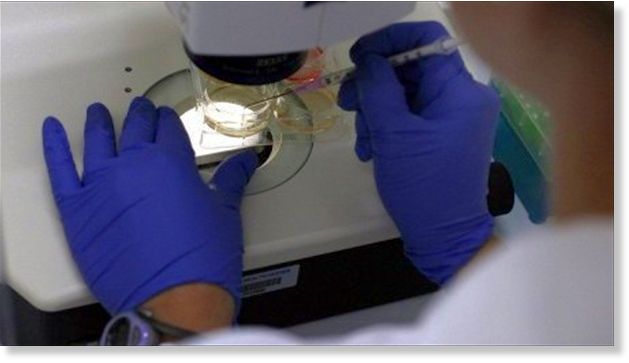
Researchers in Japan said Wednesday they have succeeded in growing human kidney tissue from stem cells for the first time in a potential breakthrough for millions with damaged organs who are dependent on dialysis.

Kidneys have a complex structure that is not easily repaired once damaged, but the latest findings put scientists on the road to helping a diseased or distressed organ fix itself.

Kenji Osafune of Kyoto University said his team had managed to take stem cells - the "blank slates" capable of being programmed to become any kind of cell in the body - and nudge them specifically in the direction of kidney tissue.

"It was a very significant step," he told AFP.

Alarm Clock

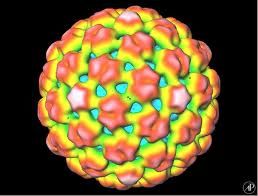
Regulators discover a hidden viral gene in commercial GMO crops

Cauliflower Mosaic Virus
© UnknownCauliflower Mosaic Virus
How should a regulatory agency announce they have discovered something potentially very important about the safety of products they have been approving for over twenty years?

In the course of analysis to identify potential allergens in GMO crops, the European Food Safety Authority (EFSA) has belatedly discovered that the most common genetic regulatory sequence in commercial GMOs also encodes a significant fragment of a viral gene (Podevin and du Jardin 2012). This finding has serious ramifications for crop biotechnology and its regulation, but possibly even greater ones for consumers and farmers. This is because there are clear indications that this viral gene (called Gene VI) might not be safe for human consumption. It also may disturb the normal functioning of crops, including their natural pest resistance.

What Podevin and du Jardin discovered is that of the 86 different transgenic events (unique insertions of foreign DNA) commercialized to-date in the United States 54 contain portions of Gene VI within them. They include any with a widely used gene regulatory sequence called the CaMV 35S promoter (from the cauliflower mosaic virus; CaMV). Among the affected transgenic events are some of the most widely grown GMOs, including Roundup Ready soybeans (40-3-2) and MON810 maize. They include the controversial NK603 maize recently reported as causing tumors in rats (Seralini et al. 2012).

The researchers themselves concluded that the presence of segments of Gene VI "might result in unintended phenotypic changes". They reached this conclusion because similar fragments of Gene VI have already been shown to be active on their own (e.g. De Tapia et al. 1993). In other words, the EFSA researchers were unable to rule out a hazard to public health or the environment.

In general, viral genes expressed in plants raise both agronomic and human health concerns (reviewed in Latham and Wilson 2008). This is because many viral genes function to disable their host in order to facilitate pathogen invasion. Often, this is achieved by incapacitating specific anti-pathogen defenses. Incorporating such genes could clearly lead to undesirable and unexpected outcomes in agriculture. Furthermore, viruses that infect plants are often not that different from viruses that infect humans. For example, sometimes the genes of human and plant viruses are interchangeable, while on other occasions inserting plant viral fragments as transgenes has caused the genetically altered plant to become susceptible to an animal virus (Dasgupta et al. 2001). Thus, in various ways, inserting viral genes accidentally into crop plants and the food supply confers a significant potential for harm.