Science & TechnologyS


Comet 2

New comet discovered: C/2013 P2 (PANSTARRS)

Cbet nr. 3621, issued on 2013, August 07, announces the discovery of an apparently asteroidal object (discovery magnitude ~19.5) by professional survey F51 Pan-STARRS 1 (Haleakala) on CCD images obtained with 1.8-m Ritchey-Chretien on August 04, 2013 (pre-discovery Pan-STARRS1 observations from July 26 were found later by P. Veres).

After posting on the Minor Planet Center's NEOCP webpage, this apparently asteroidal object as been found to show cometary features by astrometric observers elsewhere (including our team). The new comet has been designated C/2013 P2 (PANSTARRS).

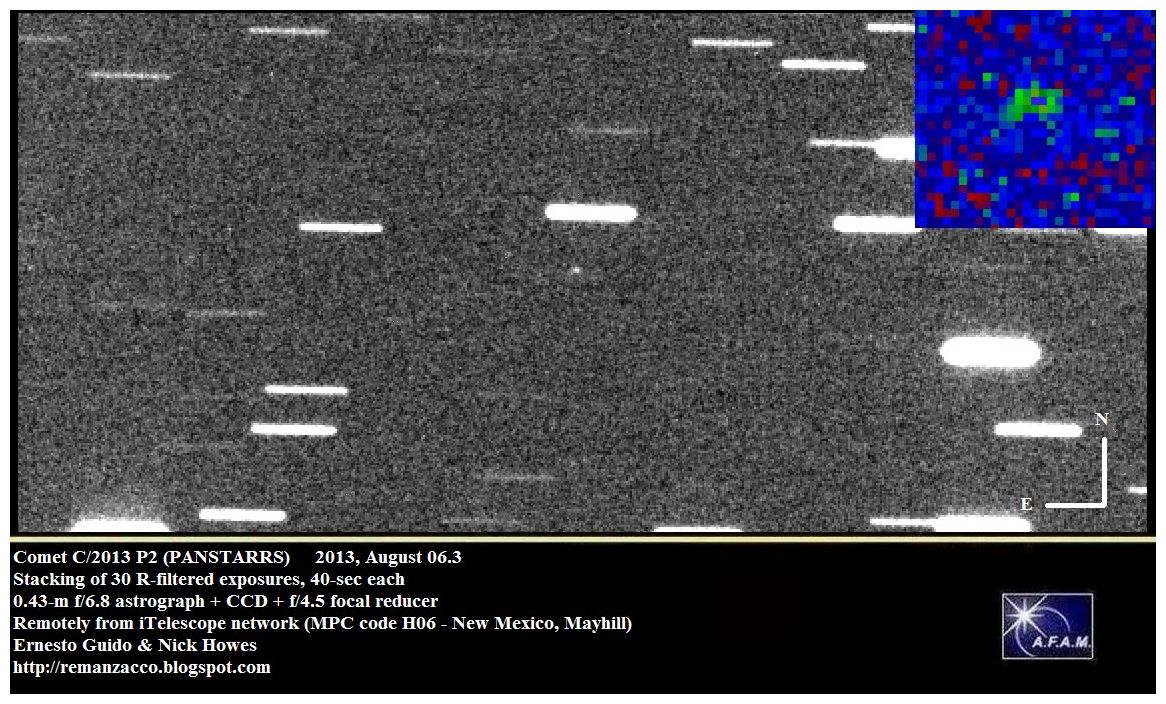
We performed follow-up measurements of this object, while it was still on the neocp. Stacking of 30 R-filtered exposures, 40-sec each, obtained remotely from iTelescope network (MPC code H06, New Mexico) on 2013, August 06.3, through a 0.43-m f/6.8 astrograph + CCD + f/4.5 focal reducer, shows that this object is a comet: coma about 5" in diameter elongated in PA 120.

Below you can see our image.
C/2013 P2
© Remanzacco Observatory
M.P.E.C. 2013-P42 assigns the following preliminary parabolic orbital elements to comet C/2013 P2: T 2014 Feb. 17.50; e= 1.0; Peri. = 105.19; q = 2.83; Incl.= 125.54

Comet

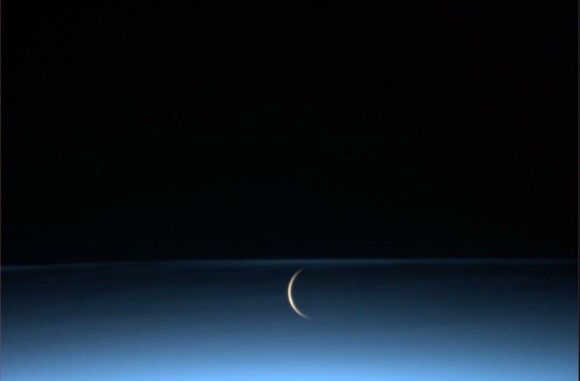
Comet dust veil: Stunning image of crescent Moon appearing through noctilucent clouds

Image
© NASA/ASI/ESA. Via Luca Parmitano on TwitterThe Moon rises surrounded by noctilucent clouds, as seen from the International Space Station.

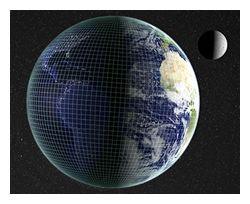
Recently, Italian astronaut Luca Parmitano spent a "night flight" in the Cupola of the International Space Station in hopes of capturing night-time images of his home country from space. But he saw so much more, including this incredible image of the crescent Moon rising among bright blue noctilucent clouds. These wispy and mysterious clouds appear in Earth's mesosphere - a region extending from 30 to 53 miles (48-85 km) high in the atmosphere - at twilight, usually in early summer. They can be seen from Earth's northern hemisphere and, obviously, are visible from space too.

You can read about Parmitano's night flight and see more of the images he took at his Volare blog. At the close of his image-taking night flight he says, "It's late, and tomorrow will be a long day. With those lights still filling my eyes, I slowly close the seven windows and cross the Station to return to my sleeping pod. Not even dreams could replace the beautiful reality that revolves, oblivious, beneath us."

Find out more about the science of noctilucent clouds here in our recent article by Bob King.

Info

Neptune's strange new moon is first found in a decade

New Moon
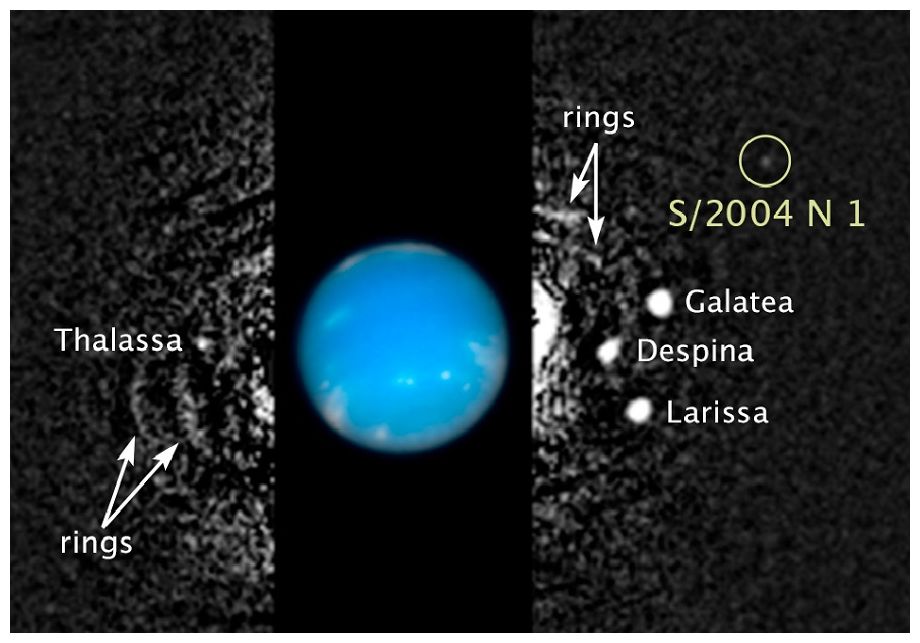
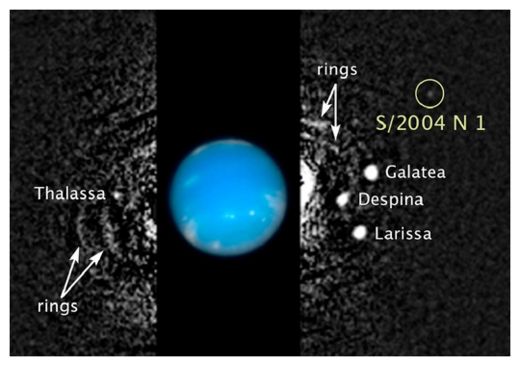
© NASA/ESA/M. Showalter/SETI InstituteHubble's composite picture of blue-hued Neptune, its rings and five of its 14 known moons.
Neptune has a new moon, and its existence is an enigma. The object, known for now as S/2004 N1, is the first Neptunian moon to be found in a decade. Its diminutive size raises questions as to how it survived the chaos thought to have created the giant planet's other moons.

The faint moon was discovered in archived images from the Hubble Space Telescope. Mark Showalter of the SETI Institute in Mountain View, California, was poring over pictures of Neptune taken in 2009 to study segments of its rings.

The rings around our outermost planet are too faint to see without taking very long-exposure pictures. However, the rings orbit so fast that taking one long shot would smear them across the frame. Showalter and colleagues gathered multiple shorter-exposure images and developed a technique to digitally rewind the orbits to the same point in time. Then they could stack several images on top of each other to reveal details of the rings.

"I got nice pictures of the arcs, which was my main purpose, but I also got this little extra dot that I was not expecting to see," says Showalter.

Stacking eight to 10 images together allowed the moon to show up plain as day, he says. When he went back and repeated the process using Hubble pictures taken in 2004, the moon was still there and moving as expected.

Meteor

Visitor from outer space to be hauled out of Russian lake

Image
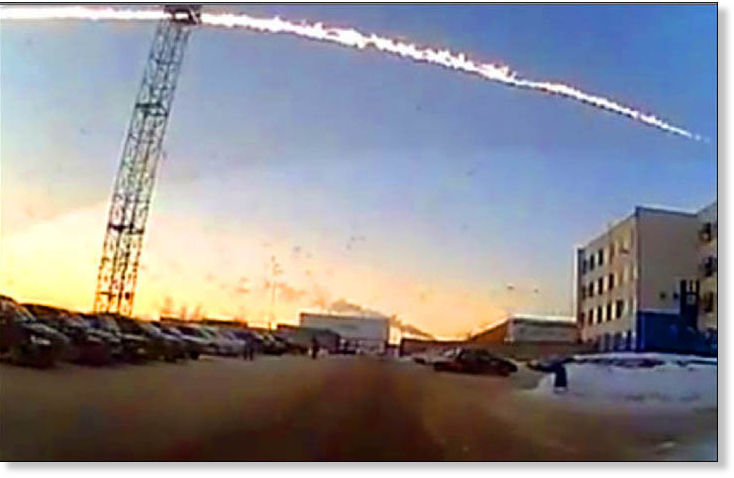
© The Siberian TimesA large lump of meteorite - perhaps the biggest - is reported resting in silt some 50 metres from the spot it made an icy hole in the murky lake.
Now sizeable chunks of this cosmic guest are to be pulled out of Lake Chebarkul, in Chelyabinsk region, where they fell in February this year. They will give scientists a special insight into the space rock that so suddenly and dramatically struck Western Siberia.

A large lump of meteorite - perhaps the biggest - is reported resting in silt some 50 metres from the spot it made an icy hole in the murky lake.

'The operation will be held in the muddy waters of the lake in conditions of zero visibility,' reported Itar-Tass, citing Alexander Galich, the regional minister of radiation and ecological security.

Sun

The sun is about to have a flipping magnetic field reversal

We've been watching the progress on the WUWT solar reference page in this plot from Dr. Leif Svalgaard:

Sun Magnetic Reversal
© www.leif.orgSolar Polar Fields - Mt. Wilson and Wilcox Combined -1966 to Present.
Now, NASA has decided to call the flip (see video below). Something big is about to happen on the sun. According to measurements from NASA-supported observatories, the sun's vast magnetic field is about to flip.

"It looks like we're no more than 3 to 4 months away from a complete field reversal," says solar physicist Todd Hoeksema of Stanford University. "This change will have ripple effects throughout the solar system."

Galaxy

Back from the dead: Jupiter's gravitational pull breathes life into 'graveyard' of comets that burned out millions of years ago

  • Scientists believe that they have discovered a region of formerly dead comets in the asteroid belt lying between Mars and Jupiter
  • It is thought that Jupiter's gravitational pull brings dormant comets closer to the sun, which in turn reignites them and brings them 'back to life'
  • Image
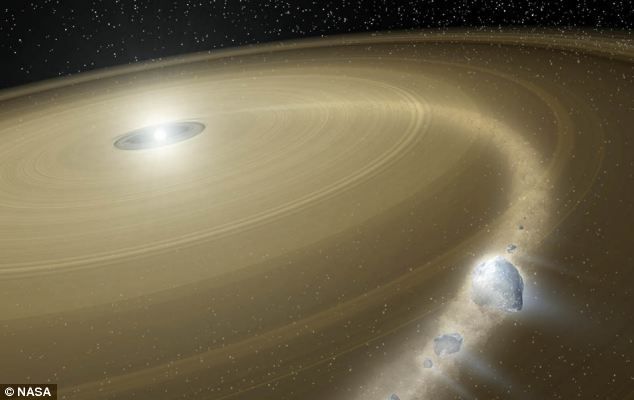
    A number of comets in the asteroid belt between Mars and Jupiter have come back to life after being dormant. The findings contradict the long-standing view that the main asteroid belt was once populated by thousands of comets which ultimately burned out as they aged
    A 'graveyard of comets' has been found by astronomers in the asteroid belt between Mars and Jupiter.

    And, to the surprise of astronomers, a number of comets in this graveyard have come back to life after being dormant for what could have been thousands or even millions of years.

    The findings, by a Colombian team, contradict the long-standing view that the main asteroid belt was once populated by thousands of comets which ultimately burned out as they aged.

    Info

    Huge deep-sea glow worm called the 'Unicorn of the Sea' grows to size of two double-decker buses

    Aussie divers have captured rare images of a creature dubbed the unicorn of the sea in the depths of the ocean.

    The Pyrostremma spinosum, or pyrosome, sea creature is so rare it was dubbed the unicorn and can grow up to 30 metres long - the equivalent of two double-decker buses laid end-to-end.

    Its hollow, translucent, cylindrical body is made up of thousands of tiny clones called zooids that pull water through its tubes and feed on plankton before pushing the filtered water back out.


    The zooids are each connected by tissue and move as one inside the pyrosome's tube structure and each zooid is a few millimetres in size.

    Also called a sea squirt, the pyrosomes are classed as pelagic, which means they are free-swimming and live in open water rather than near land.

    Info

    Earth's core affects length of day

    Length of Day
    © Domain-BResearchers studied the variations and fluctuations in the length of day over a one to 10-year period between 1962 and 2012.

    Research at the University of Liverpool has found that variations in the length of day over periods of between one and 10 years are caused by processes in the Earth's core.

    The Earth rotates once per day, but the length of this day varies. A year, 300 million years ago, lasted about 450 days and a day would last about 21 hours.

    As a result of the slowing down of the Earth's rotation the length of day has increased.

    The rotation of the earth on its axis, however, is affected by a number of other factors - for example, the force of the wind against mountain ranges changes the length of the day by plus or minus a millisecond over a period of a year.

    Professor Richard Holme, from the School of Environmental Sciences, studied the variations and fluctuations in the length of day over a one to 10 year period between 1962 and 2012.

    The study took account of the effects on the Earth's rotation of atmospheric and oceanic processes to produce a model of the variations in the length of day on time scales longer than a year.

    Info

    Crater of 'extinction meteor' discovered?

    Impact Crater
    © The Asian Age
    Researchers claim to have discovered the elusive impact crater of the meteor that triggered the biggest extinction ever, around 252.3 million years ago.

    While the idea that an impact caused the Permian extinction has been around for a while, what's been missing is a suitable crater to confirm it, researchers said.

    Researcher Eric Tohver from the University of Western Australia believe he has found the impact crater which reveals though the trigger was the same, the details are significantly different.

    In 2012, Tohver redated an impact structure that straddles the border of the states of Mato Grosso and Goias in Brazil, called the Araguainha crater, to 254.7m years.

    Previous estimates had suggested Araguainha was 10m years younger, but Tohver has put it within geological distance of the extinction date.
    The Chicxulub crater in Mexico, is 180km in diameter while the Araguainha is 40 kilometres across and was thought to be too small to have caused the chain reaction which brought about such mass extinction.

    Magic Wand

    Study reveals potential role of 'love hormone' oxytocin in brain function

    Findings of NYU Langone researchers may have relevance in autism-spectrum disorder.

    In a loud, crowded restaurant, having the ability to focus on the people and conversation at your own table is critical. Nerve cells in the brain face similar challenges in separating wanted messages from background chatter. A key element in this process appears to be oxytocin, typically known as the "love hormone" for its role in promoting social and parental bonding.

    In a study appearing online August 4 in Nature, NYU Langone Medical Center researchers decipher how oxytocin, acting as a neurohormone in the brain, not only reduces background noise, but more importantly, increases the strength of desired signals. These findings may be relevant to autism, which affects one in 88 children in the United States.

    "Oxytocin has a remarkable effect on the passage of information through the brain," says Richard W. Tsien, DPhil, the Druckenmiller Professor of Neuroscience and director of the Neuroscience Institute at NYU Langone Medical Center. "It not only quiets background activity, but also increases the accuracy of stimulated impulse firing. Our experiments show how the activity of brain circuits can be sharpened, and hint at how this re-tuning of brain circuits might go awry in conditions like autism."

    Children and adults with autism-spectrum disorder (ASD) struggle with recognizing the emotions of others and are easily distracted by extraneous features of their environment. Previous studies have shown that children with autism have lower levels of oxytocin, and mutations in the oxytocin receptor gene predispose people to autism. Recent brain recordings from people with ASD show impairments in the transmission of even simple sensory signals.