As the Russia-Ukraine war enters a new phase, former Swiss intelligence officer, senior United Nations official, and NATO advisor Jacques Baud analyzes the conflict and argues that the US and its allies are exploiting Ukraine in a longstanding campaign to bleed its Russian neighbor.
Guest: Jacques Baud. Former intelligence officer with the Swiss Strategic Intelligence Service who has served in a number of senior security and advisory positions at NATO, the United Nations, and with the Swiss military.
Western nations have failed in their attempts to destabilize the Russian economy with sanctions, Russian President Vladimir Putin said at a government meeting on economic issues on Monday.
"The situation is stabilizing, the ruble exchange rate has returned to the levels of the first half of February and is supported by a strong balance of payments... Foreign cash is returning to the country's banking system, and the volume of deposits by citizens is growing. As for the consumer market, after a short rush to buy a number of goods... retail demand has returned to normal. Commodity stocks in retail chains are recovering."
Overall, he noted that sanctions have failed to break the country's economy:
"The goal [of sanctions] was to quickly undermine the financial and economic situation in our country, provoke a panic in the markets, trigger a collapse of the banking system and a large-scale shortage of goods in stores. But this policy has failed - the economic blitzkrieg has run aground."
Meanwhile, according to Putin, the sanctions have backfired on the countries that introduced them, namely the US and the EU, leading to a spike in inflation and unemployment in these countries, a worsening of the standard of living of its citizens, and devaluation of their savings.
Comment: While the economic situation in Russia could have been much worse, there are positive changes in the works:
The Russian economy is entering a period of major adjustments to cope with the impact of the sanctions placed on Moscow by the US and its allies, Elvira Nabiullina, the head of the country's central bank, said speaking to the State Duma on Monday.
"Our economy is entering a difficult period of structural changes associated with sanctions. As I said, sanctions primarily affected the financial market, but now they will begin to increasingly affect the economy."
Russia still has reserves to support the economy, but they won't be able to sustain it much longer, especially after roughly half of them were frozen abroad by sanctions. She said:
"The period when the economy can live on reserves is over. And already in the second - beginning of the third quarter, we will enter a period of structural transformation and the search for new business models."
While Russia still has the opportunity to use about half of its reserves (around $300 billion), these consist largely of gold, yuan, and IMF drawing rights, which is of no help in managing the situation with the currency on the domestic market.
The official praised the measures that Russia has already introduced to support the economy amid sanctions, including switching to its own financial messaging system, SPFS, after the country was cut off from SWIFT in March.
"When the threat of disconnection from SWIFT first appeared in 2014, we developed the SPFS, which operates according to the SWIFT standards. Foreign participants interested in working with Russian partners can join and are already joining it. At the moment, 52 foreign organizations from 12 countries have joined the SPFS."
Nabiullina stressed that sanctions cut off most of the Russian economy from settlements in reserve currencies, the US dollar and the euro, which made it crucial for Russia and partners to develop payments in national currencies.
"We are not starting from scratch here either. We have already launched and developed such bilateral projects with a number of countries. Now we are negotiating with partners in different countries in order to normalize the situation with payments as soon as possible."
The 20% rate introduced last month resulted in a rapid deceleration of the inflation jump that occurred in March, which enabled the regulator to reduce the rate to 17%.
"We will not try to lower [inflation] by drastic measures. This would prevent businesses from adapting... and we definitely need to cope with a period of adaptation."
There is an untold story involving Bird Flu, gain of function research, the Gates foundation, and Ukrainian biolabs -- and it is time to tell it. As hundreds of millions of birds are killed due to Bird Flu "PCR outbreaks," Europe is warning of chicken and egg shortages, and many states have now outright banned the sale of chicks to the public. The largest egg producer in the US has culled birds and fired its workers. In this Ice Age Farmer exclusive, Christian breaks down the sordid story of this virus, and asks: will weaponized H5N1 be the next human pandemic?
Joseph Mercola mercola.com Wed, 13 Apr 2022 00:00 UTC
Technocracy is the proverbial operating system for the "superclass," a centralized global elite that is working toward securing the exclusive ownership of all the world's assets, reducing the rest of us to indebted serfs.
While the plans for a NWO based on technocracy, i.e., The Great Reset and the Fourth Industrial Revolution, are clearly outlined on websites like that of the World Economic Forum (WEF), and world leaders are using these terms on a regular basis, when people point out the nefarious meaning of these terms, they're typically dismissed as loony conspiracy theorists.1
But the NWO is no conspiracy theory. It's not even theory. It's a fact, and details of the plan are publicly available for anyone willing to look at them. As noted by Russell Brand in the featured video, the way you stay in power is by discrediting the opposition. Calling the opposition crackpot is the oldest trick in the book.
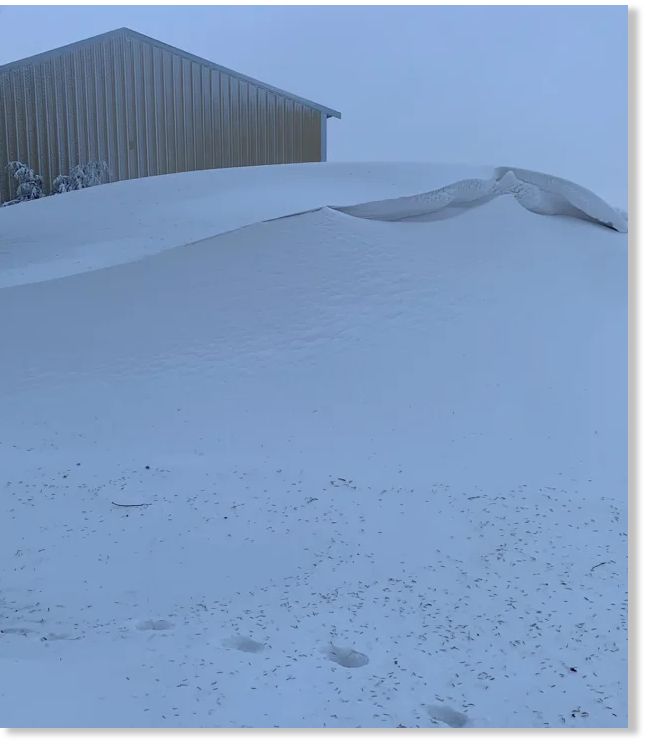
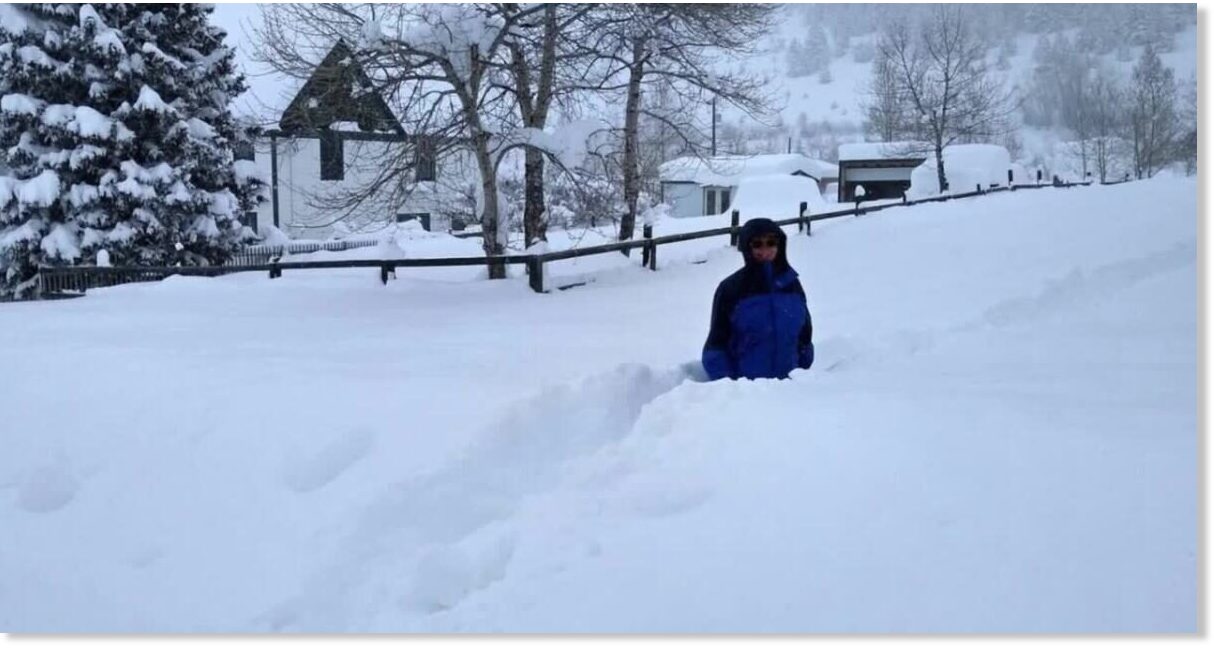
Hundreds of miles of roads were shut down, ranchers and their animals faced brutal conditions — and will see more tough weather ahead.
Meanwhile, snowdrifts in some spots were estimated to be higher than 10 feet in some places.
Sheep managed to find higher ground from being buried by a snowdrift on April 12 in Molt, Montana.
These sheep are built for snow but not for wind. All sheep are alive and accounted for.
The sun was out and shining Wednesday morning in Molt, Montana — a stark contrast to the blizzard conditions that had kept Sara Hollenbeck busy on her ranch, working to keep the wind and snow from burying her sheep.
Richard Davies Floodlist Mon, 11 Apr 2022 12:54 UTC
Heavy rainfall has caused flooding and mudslides in KwaZulu-Natal in South Africa. One fatality has been reported.
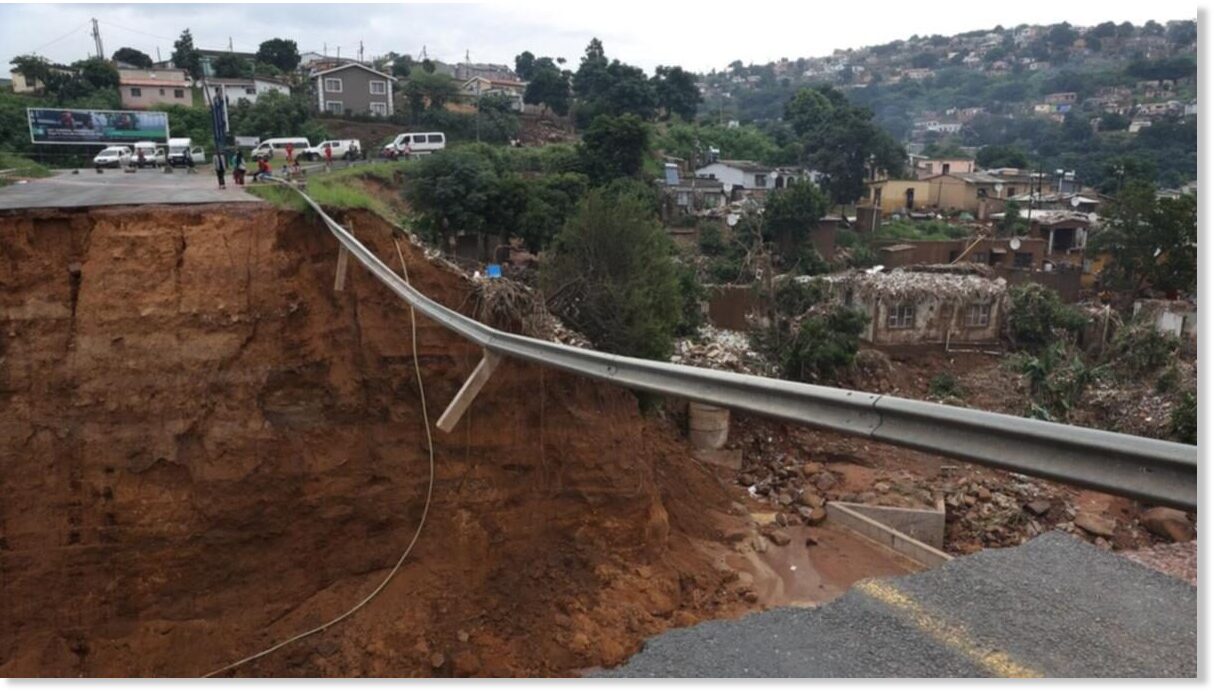
According to South African Police Service (SAPS), a man died after rain triggered a mudslide in Umlazi township, located south-west of Durban, on 10 April 2022. Several dwellings are thought to have been buried or damaged and search teams were deployed to the area.
According to the KwaZulu-Natal's Cooperative Governance and Traditional Affairs Department (KZN COGTA), disaster management teams have responded to a number of other incidents, including mudslides in KwaDukuza and flooding in Ladysmith. There were also reports of flooding in coastal areas including Kingsburgh.
Durban recorded 91 mm of rain in 24 hours to 11 April 2022. As of 11 April warnings were in place for flooding and further heavy rain.
Dozens killed in South Africa floods and mudslides following rainstorms
The death toll from floods and mudslides after rainstorms struck the South African port city of Durban and surrounding areas in KwaZulu-Natal province has climbed to 59, authorities said on Tuesday.
The country's meteorologists forecasted more "extreme" rains on the way Tuesday night accompanied by "widespread flooding".
"Many people lost their lives with Ethekwini (Durban metro) alone reporting 45 so far," while in iLembe district "more than 14 are reported to have tragically lost their lives," the provincial government said in a statement.
It said the disaster "wreaked untold havoc and unleashed massive damage to lives and infrastructure" affecting all races and social classes from rural areas, townships to luxury estates.
President Cyril Ramaphosa is due to visit the affected area on Wednesday.
"This is a tragic toll of the force of nature and this situation calls for an effective response by government," said Ramaphosa.
Days of driving rain flooded several areas, tore houses apart and ravaged infrastructure across the southeastern city, while landslides forced train services to be suspended.
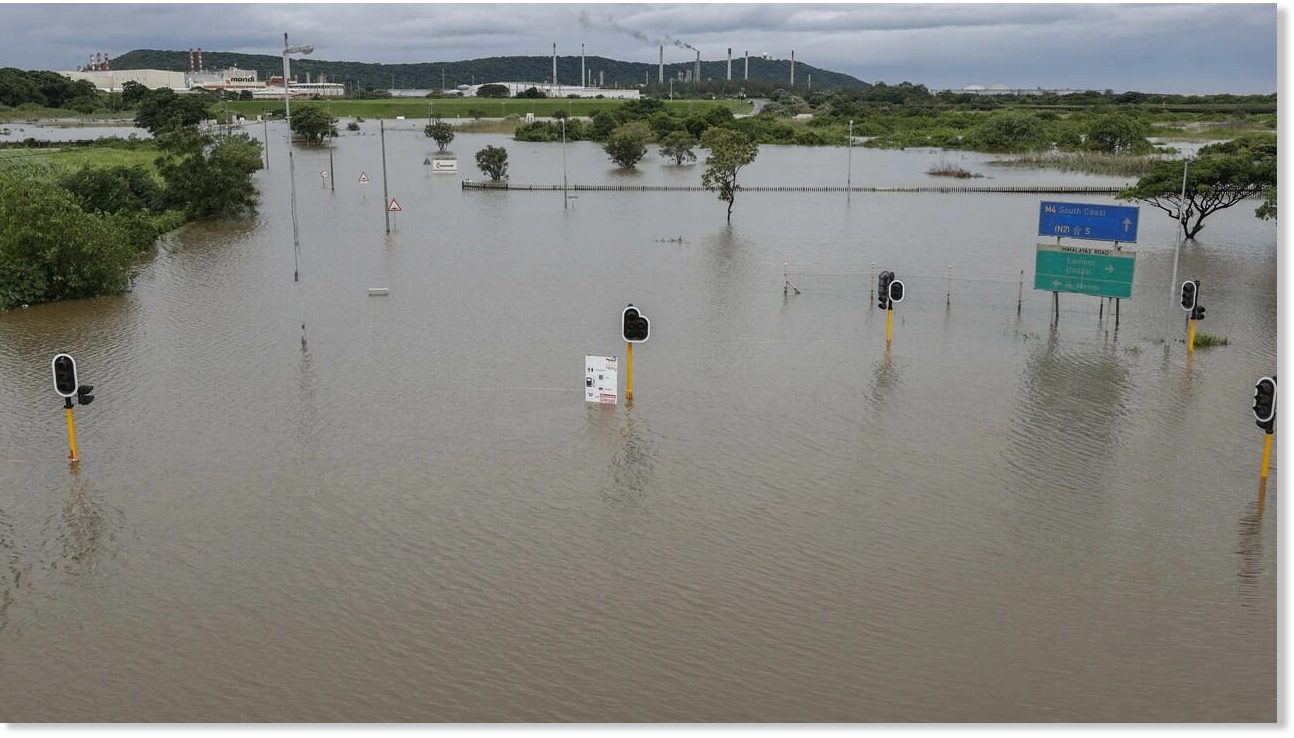
The rains have flooded city highways to such depths that only the tops of traffic lights poked out, resembling submarine periscopes.
Torrents tore several bridges apart, submerged cars and collapsed houses. A fuel tank was floating in the sea after being tossed off the road.
Several stacked shipping containers fell like dominoes and lay strewn on a yard, while some spilled over into a main road in the city, one of southern Africa's largest regional gateways to the sea.
Global shipping firm Maersk suspended its operations in Durban on Tuesday due to the floods.
"At around 3:00 am (0100 GMT), I felt the truck shaking and I thought maybe someone bumped it and when I tried to open the curtain I saw the water level... was very high," said truck driver Mthunzi Ngcobo.
Trapped students and teachers airlifted to safety
The disaster management department in KwaZulu-Natal province, of which Durban is the largest city, urged people to stay at home and ordered those residing in low-lying areas to move to higher ground.
More than 2,000 houses and 4,000 "informal" homes, or shacks, have been damaged, provincial premier Sihle Zikalala, told journalists.
Rescue operations, aided by the military, are underway to evacuate people trapped in affected areas.
Fifty-two secondary students and teachers who were marooned at a Durban secondary school, were successfully airlifted to safety following "a long traumatic night, trapped", education authorities said.
More than 140 schools have been affected by the flooding.
Durban mayor Mxolisi Kaunda earlier said that power stations had been flooded and water supplies disrupted -- and that even graveyards had not been spared the devastation.
The city had only just recovered from deadly riots last July in which shopping malls were looted and warehouses set on fire, in South Africa's worst unrest since the end of apartheid.
There have been reports of looting, with TV footage showing people stealing from cargo containers.
The provincial government condemned "reports of the looting of containers" during the flooding, calling on police to ensure that property was protected.
South Africa flooding death toll rises to at least 259
Prolonged rains and flooding in South Africa have claimed the lives of at least 259 people, rising from estimates of around 45 people on Tuesday.
Local officials report severe rainfall has damaged the port, major highways and surrounding areas in KwaZulu-Natal province, on the east coast of the country.
South Africa's military had been deployed to Durban and the surrounding eThekwini metropolitan area on Tuesday to assist with rescue operations as residents flee flooded areas.
Some people have been swept away by surging waters, say officials.
Durban port, the largest and busiest shipping terminal in sub-Saharan Africa, has been inundated with floodwaters that carried away shipping containers and left them in a jumbled pile.
Authorities are providing shelter for several hundred people whose homes and possessions were washed away by the floods.
Technicians are working to restore electricity to areas where power has been knocked out.
Emergency services have for several days been responding to urgent calls for help from people stuck in their houses but the number was beginning to decrease, emergency services spokesman Robert McKenzie said on Tuesday.
AFP reports:
South Africa floods: deadliest storm on record kills over 250 people
Devastating floods have killed 259 people in the South African city of Durban and surrounding areas, a senior government official said on Wednesday, after hillsides were washed away, homes collapsed and more people were still feared missing.
The heaviest rains in 60 years pummelled Durban's municipality, eThekwini in Zulu. According to an AFP tally, the storm is the deadliest on record in South Africa.
"At the moment the confirmed figures of people that have perished during this disaster is 259, across the KwaZulu-Natal (KZN) province," Nonala Ndlovu, spokesperson for the provincial disaster management department, told AFP.
The South African president, Cyril Ramaphosa, has described the floods as a "catastrophe" and a "calamity".
"Bridges have collapsed. Roads have collapsed. People have died ... this is a catastrophe of enormous proportions," he said, addressing a local community after inspecting the damage from the floods.
The search for missing persons is still going on, said Ramaphosa, promising to "spare nothing" in dealing with the disaster.
"This disaster is part of climate change. We no longer can postpone what we need to do ... to deal with climate change.
"It is here, and our disaster management capability needs to be at a higher level."
Earlier the provincial health chief Nomagugu Simelane-Zulu had expressed concern about the huge death toll, telling eNCA television that "mortuaries are under a bit of pressure, however we are coping".
The United Methodist Church in the township of Clermont was reduced to a pile of rubble. Four children from a local family died when a wall collapsed on them.
Other homes hung precariously to the hillside, miraculously still intact after much of the ground underneath them washed away in mudslides.
The storm forced sub-Saharan Africa's most important port to halt operations, as a main access road suffered heavy damage.
Shipping containers were tossed about, washed into mountains of metal.
Sections of other roads were washed away, leaving behind gashes in the earth bigger than large trucks.
"We see such tragedies hitting other countries like Mozambique, Zimbabwe, but now we are the affected ones," Ramaphosa said as he met with grieving families near the ruins of the church.
South Africa's neighbours suffer such natural disasters from tropical storms almost every year, but Africa's most industrialised country is largely shielded from the storms that form over the Indian Ocean.
These rains were not tropical, but rather caused by a weather system called a cutoff low that had brought rain and cold weather to much of the country.
When storms reached the warmer and more humid climate in Durban's KZN province, even more rain poured down.
"Some parts on KZN have received more than 450mm (18 in) in the last 48 hours," said Dipuo Tawana, a forecaster at the national weather service - nearly half of Durban's annual rainfall of 1,009mm.
Rain continued in parts of the city on Wednesday afternoon, and a flood warning was issued for the neighbouring province of Eastern Cape.
Durban had barely recovered from deadly riots last July which claimed more than 350 lives, in South Africa's worst unrest since the end of apartheid.
The national police force deployed 300 extra officers to the region, as the air force sent planes to help with the rescue operations.
Days of driving rain flooded several areas, smashed houses and ravaged infrastructure across the city, while landslides forced train services to be suspended across the province.
The rains flooded highways to such depths that only the tops of traffic lights poked out, resembling submarine periscopes.
Torrents tore several bridges apart, submerged cars and collapsed houses. A fuel tanker floated at sea after being swept off the road.
More than 6,000 homes were damaged.
After TV footage showed people stealing from shipping containers, the provincial government condemned "reports of the looting of containers" during the flooding.
Southern parts of the country are bearing the brunt of the climate crisis - suffering recurrent and worsening torrential rains and flooding.
Heavy rains and flooding have killed at least 341 people in South Africa's eastern KwaZulu-Natal province, including the city of Durban, and more rainstorms are forecast in the coming days.
The death toll is expected to rise as scores of people, including whole families, are missing, officials said Thursday.
The persistent rains have wreaked havoc in the province, destroying homes, collapsing buildings and washing away major roads.
The damage to Durban and the surrounding eThekwini metropolitan area is estimated at $52 million, eThekwini Mayor Mxolosi Kaunda said Thursday.
At least 120 schools have been flooded, causing damage estimated at more than $26 million and bringing officials to temporarily close all schools in the province.
At least 18 students and one teacher from various schools have died in the floods, Education Minister Angie Motshekga said.
"This is a catastrophe and the damage is unprecedented. What is even more worrying is that more rain is expected in the same areas that are already affected," Motshekga said in a statement issued Thursday.
Police used stun grenades to disperse residents in the Reservoir Hills areas of Durban who were protesting what they said was the lack of official assistance, according to South African media reports.
The South African National Defense Force has deployed troops to assist with rescue and mop-up operations.
The floods have knocked out water and electricity to large parts of Durban and the surrounding eThekwini metropolitan area and it will take at least a week to restore those services, according to officials.
President Cyril Ramaphosa visited is convening an emergency Cabinet meeting to declare the floods a national disaster so that funds can be released to help repair the damage. He visited several areas hit by the floods and mudslides on Wednesday.
Fourteen crocodiles that were swept away from a farm in the Tongaat area north of Durban have been recaptured, according to wildlife officials.
DEATH TOLL REACHES 395 IN KWAZULU-NATAL'S DEVASTATING FLOODS
The death toll from the devastating floods in KwaZulu-Natal has risen to 395.
The number has been confirmed by Cooperative Governance MEC Sipho Hlomuka in a statement released a short while ago.
Search operations have been intensified in the province where dozens of people are still missing five days after the disaster struck.
The death toll from the floods currently stands at 395 with many people still missing. More than 40,000 people have been affected and efforts to restore power, and access to drinking water were expected to yield results on Friday.
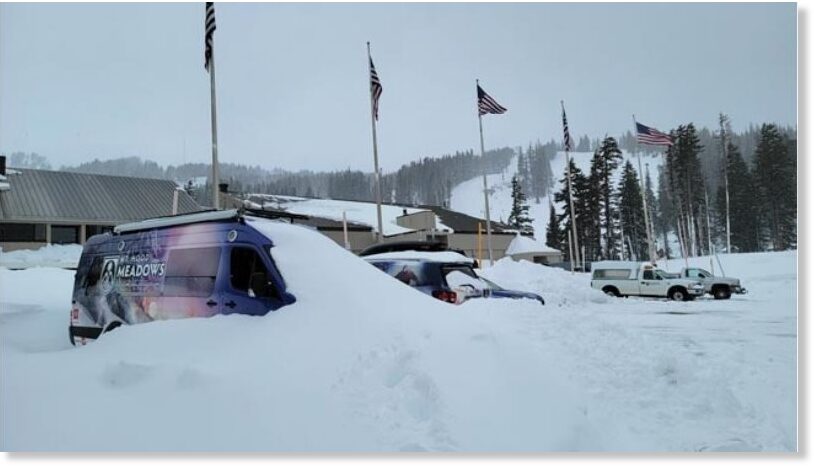
Not only did this April storm take many by surprise in the Portland metro area, but it also dumped several feet of snow on Mt. Hood.
Ski resorts are seeing some of the best late season conditions on record.
Mt. Hood Meadows got more than six feet of snow in just five days.
"To have over a foot of snow, over a foot of snow, and our temperatures have been in the teens which means that it's just constantly building and building. People are just loving the powder," Dave Tragethon, VP of Sales & Marketing at Mt. Hood Meadows said. "We're seeing a turn out that is probably three times the amount that we'd normally see in the middle of the week because the powder is bringing out everyone to enjoy it -- it's great for us."
Heavy snow closes roads as Pony reports more than 3 feet of snow
This spring storm has brought heavy winds and snow to Jefferson County forcing many motorists to get stuck on the side of the road and road crews to work overtime to try to keep these roadways as clear as possible.
"This is the kind of storm we're supposed to have in February and, no, I was in for a total surprise, total shock," said Whitehall resident Gretchen Ressler.
Like many motorists caught in the storm that started Monday evening, Gretchen Ressler got stuck in the snow on the pass at Cardwell.
"It just slid right off the road and into the ditch and the snow was horizontal, it was pitch black and all I could see was snow, so I had to leave the car there overnight," said Ressler.
Experienced truckers were also surprised by this storm.
"This one is a good one, this one is going to be, you know, we'll remember this one for a long time," said Billings trucker Rod Albaugh.
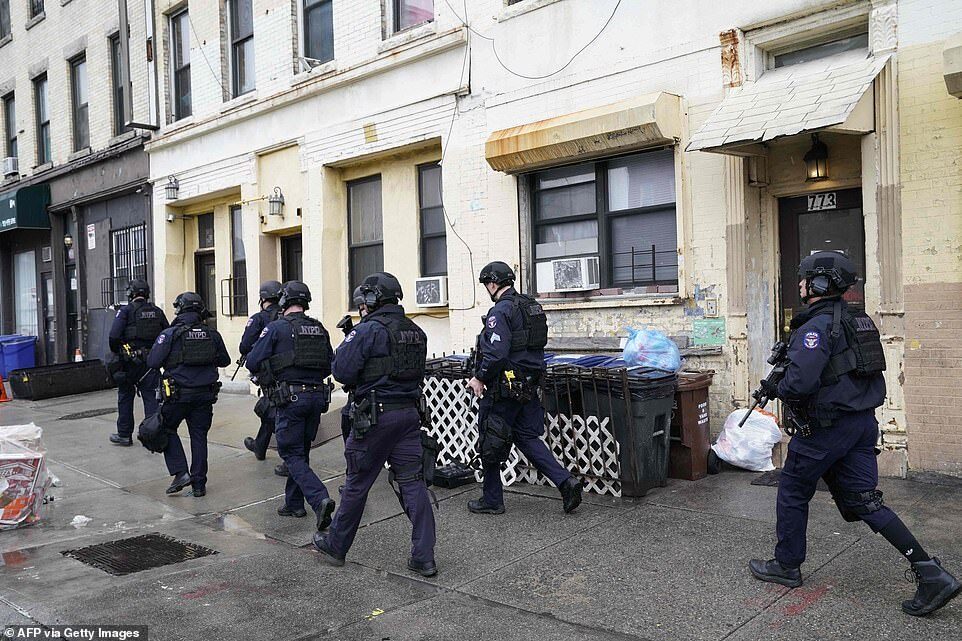
Members of the New York Police Department patrol the streets after at least 13 people were injured during a rush-hour shooting at a subway station in the New York borough of Brooklyn on April 12, 2022
Several people have been shot during rush hour in Brooklyn, according to the New York Police Department. Suspicious devices were also reportedly found.
At least 10 people were shot at the 36th Street subway station in Sunset Park during rush hour in Brooklyn on Tuesday morning, local media and law enforcement sources have reported. A total of 16 were reported injured. One of the victims was found at 25th Street, the next station on the line, according to WABC.
At least four suspicious devices were also reportedly found at the 36th Street station.
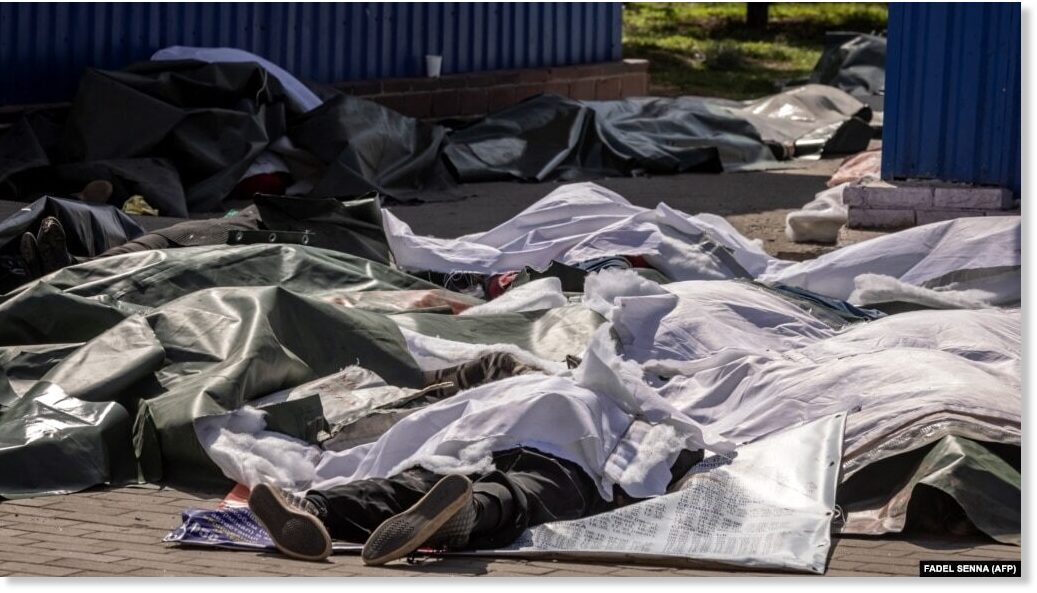
Bodies are covered with plastic sheets after a rocket attack on April 8 at a train station in Kramatorsk on April 8.
Thirty-nine people have been killed and more than 100 wounded in a Russian missile strike on a railway station in eastern Ukraine in what President Volodymyr Zelenskiy said was a deliberate attack on civilians.
Comment: The propaganda is immediate and unequivocal. It is also mere assertion. Things aren't so cut-and-dried.
Ukraine's state railway company said two Russian rockets struck the station on April 8 in Kramatorsk, which was being used to evacuate civilians from areas that are expected to come under heavy attack as Moscow redirects its war efforts to focus on eastern areas where the separatists it has backed since 2014 have been fighting Ukrainian troops.
"Lacking the strength and courage to stand up to us on the battlefield, they are cynically destroying the civilian population," Zelenskiy said in a statement. "This is an evil that has no limits. And if it is not punished, it will never stop."
Comment: Zelensky is a war criminal. The evil of the Ukrainian regime seemingly has no limits, and if not punished, will never stop. After all, the Ukrainian military has been deliberately killing its own civilians for 8 years. The fascist contingent sees Ukraine's Russian speakers as subhuman. It deliberately fired a Tochka-U into downtown Donetsk just weeks ago. It seems it did the same again, this time in Kramatorsk. To put it plainly: Ukrainian military butchers its own citizens, then blames Russia.
Zelenskiy later said in a video address to Finland's parliament that Europe cannot offer a "partial response" to Russia and its aggression "because freedom will not survive if we leave the channels of tyranny."
Video and images posted on social media showed dozens of dead civilians next to backpacks and suitcases they were carrying with them.
Ukrainian officials, including Pavlo Kyrylenko, head of the Donetsk Regional Military Administration, said at least four children were among the dead.
Comment: For videos and pictures, see South Front. Ukrainian officials first claimed the missile was an Iskander (i.e. Russian). But when photos of an unexploded portion of one of the missiles turned up, and it was obviously a Tochka-U, Zelensky changed his tune.
Since Russia uses Iskanders, not Tochka-U's, anti-Russian analysts are trying to claim that Russia has and uses Tochkas, citing video evidence of said missiles in a military convoy in Belarus from sometime this year. (Belarus does have Tochkas, and they were launched during joint military exercises in Belarus in February.) The fact remains that Russia itself does not officially have any Tochkas in its arsenal, and there is no evidence they have used any Tochkas in Ukraine. See Gleb Bazov's Twitter thread on the missile strike.
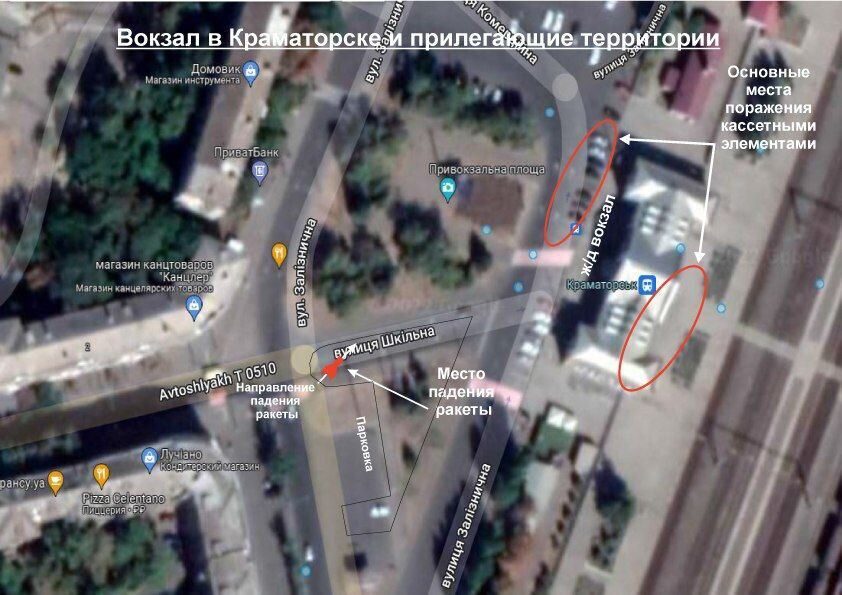
The trajectory appears to have been from the Southwest. This is what the Russian MOD has to say:
⚡️Russian Defence Ministry denies statements made by Kiev regime about an alleged missile attack on the railway station in Kramatorsk, Donetsk Region
▫️All statements by representatives of the Kiev nationalist regime about an alleged missile attack by Russia on the railway station in Kramatorsk city on April 8 are a provocation and are absolutely untrue.
▫️The Russian Armed Forces did not have or plan to carry out any firing missions in Kramatorsk city on April 8.
▫️We emphasize in particular that Tochka-U tactical missiles, the wreckage of which was found near the Kramatorsk railway station and published by eyewitnesses, are used by Ukrainian Armed Forces only.
▫️On March 14, 2022, a similar Tochka-U missile of Division of 19th Separate Missile Brigade of the Ukrainian Armed Forces struck the centre of Donetsk, killing 17 people on the spot and injuring another 36 civilians.
▫️Please note, all photos published by Kiev from "Union Courage 2022" exercise show non-Russian missile systems.
▫️Tochka-U tactical missiles whose wreckage was found near Kramatorsk railway station are used only by the Ukrainian Armed Forces.
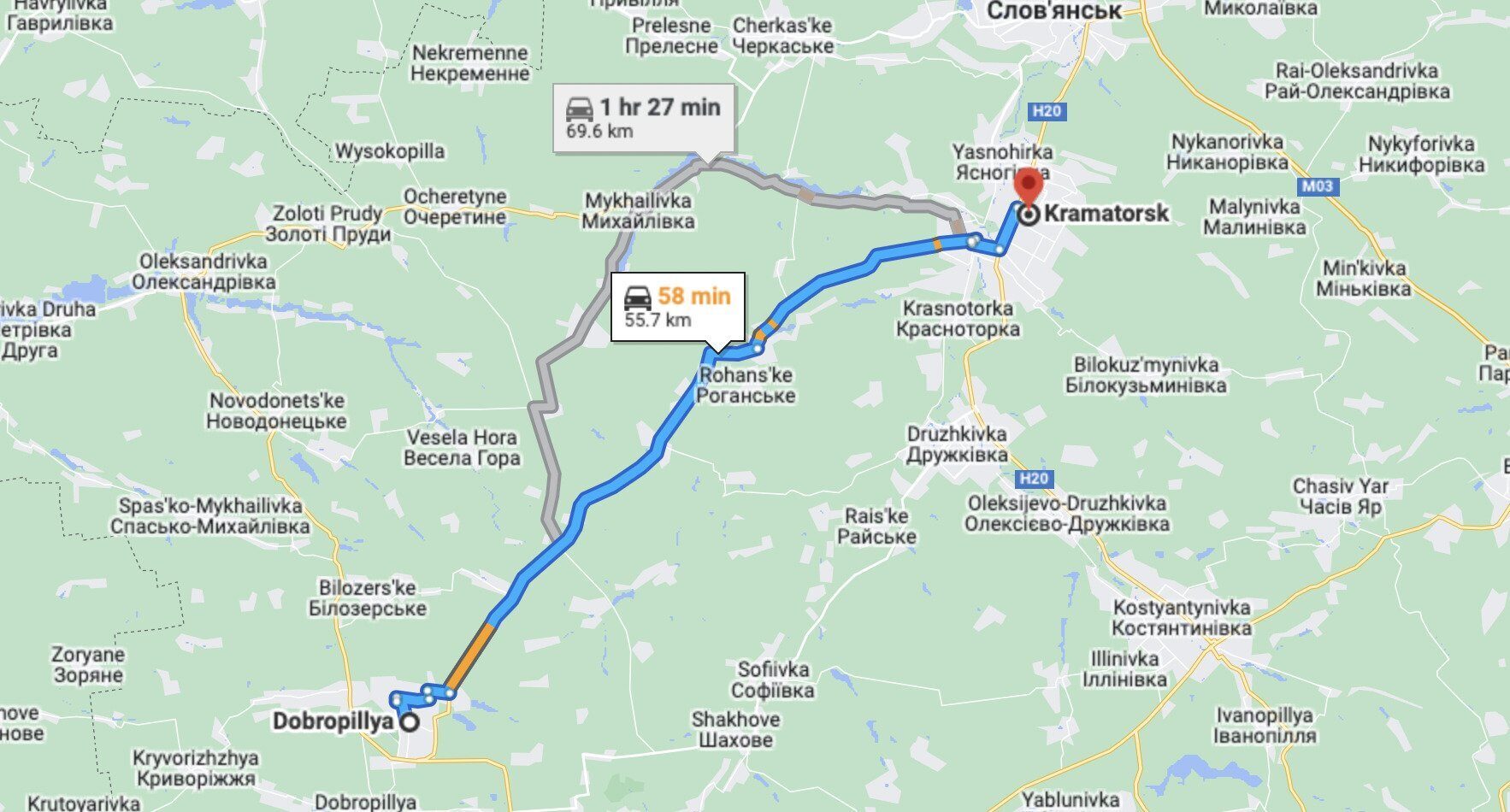
▫️According to clarified information, the strike on Kramatorsk railway station was carried out by missile division of the Ukrainian armed forces from area of Dobropol'e, 45 kilometres south-west of the city.
Google map of the distance:
▫️The aim of Kiev regime's strike on the railway station in Kramatorsk was to disrupt the mass exit of residents from the city in order to use them as a "human shield" to defend Ukrainian armed forces positions, as in many other Ukrainian population centres.
❗️Today, the Ukrainian Armed Forces struck Kramatorsk railway station with Tochka-U tactical missile.
▫️Tochka-U tactical missile, the wreckage of which was found near Kramatorsk railway station, is only used by the Ukrainian Armed Forces.
▫️I would like to point out that the maximum range of Tochka-U missile is 120 km. The warhead weighs 482kg and contains 20 fragmentation warheads, each 7.5kg, forming around 16,000 fragments.
▫️An analysis of the engagement radius of the warhead, as well as the characteristic position of Tochka-U missile's tail section, clearly confirm that it was launched from a south-western direction away from Kramatorsk.
▫️According to intelligence reports, one of the divisions of the 19th Missile Brigade armed with Tochka-U missile systems at the time of the strike on Kramatorsk was located near Dobropol'e in Donetsk Region, 45 km south-west of Kramatorsk.
▫️This area is still under the full control of the Ukrainian military grouping troops in Donbass.
❗️I would like to stress that the Ukrainian Armed Forces still possess a significant arsenal of Tochka-U missiles.
▫️Before the start of the special military operation, the Kiev regime had 20 Tochka-U missile systems with 2 launchers each.
▫️During the special military operation, 8 Ukrainian Tochka-U rocket launchers and around 90 per cent of the missiles at the arsenals were destroyed.
▫️Nevertheless, the threat by the Kiev regime of continued provocations and missile attacks on populated areas with civilians remains high.
⚡️⚡️ Foreign Ministry statement on Ukraine's strike at Kramatorsk.
On April 8, the Ukrainian Armed Forces (UAF) committed yet another war crime by striking a railway station in Kiev-controlled Kramatorsk with a Tochka-U tactical missile.
Dozens were killed and over a hundred injured.
🕯 We convey our deep condolences to the families and friends of the deceased.
🚫 The choice of the target was not random - the Kiev regime is striving to maximise the number of civilian victims.
Their murders in Donbass have become standard practice for Ukrainian armed units in the past eight years. By cynically killing civilians in cold blood, Kiev is trying to blame Russia for its own crimes in order to discredit Moscow's special military operation to defend the DPR and the LPR.
* * *
❗️ We urge the international community to objectively evaluate the crimes committed by Ukrainian units, to stop supplying them with arms and prompt Kiev to renounce its unacceptable methods of hostility.
Pro-Ukrainian sources claim the missiles were launched from Shakhtars'k, approximately 100 km to the southeast of Kramatorsk, in the DPR. They cite this video as proof, showing the launch of two missiles. (Rybar responds by observing that the video was filmed at 9:22, whereas the missile landed at around 10:30. If the device was set to GMT+2, the missile still should have reached Kramatorsk in 2 minutes, not 8. Certain signatures also suggest the missiles filmed are not Tochkas but air-defense missiles.)
UPDATE: See these two telegram links (one, two). The serial number almost certainly suggests the Tochka in question was from Ukraine's arsenal. Combined with the most likely trajectory, it's all but certain that Ukraine launched this attack on on the evacuating civilians in Kramatorsk:
Serial number of the missile, that hit Kramatorsk is Ш91579. It suggests, that Kramatorsk was shelled by Ukrainian military.
Previous Ukrainian Tochka-U missiles with similar serial numbers that hit Donbass and territories under Russian control:
1. 04.09.2014 Khartsyzsk (Ш915622);
2. 02.02.2015 Alchevsk (Ш91565);
3., 4., 5. с 13.02.2015 Logvinovo (Ш91566, Ш915527, Ш915328),
Recently:
6. до 19.03.2022 Berdiansk under Russian control (Ш915611);
7. до 17.03.2022 Melitopol under Russian control (Ш915516).
And cherry on top:
blurring of the serial number on the photo published by the National police of Ukraine - Tochka-U missile, that fell 11.03.2022 in Avdeyevka on Ukrainian controlled territory.














Comment: Also check out SOTT radio's: NewsReal: Shanghai Lockdown - Moskva Hit - Escalation in Ukraine?