
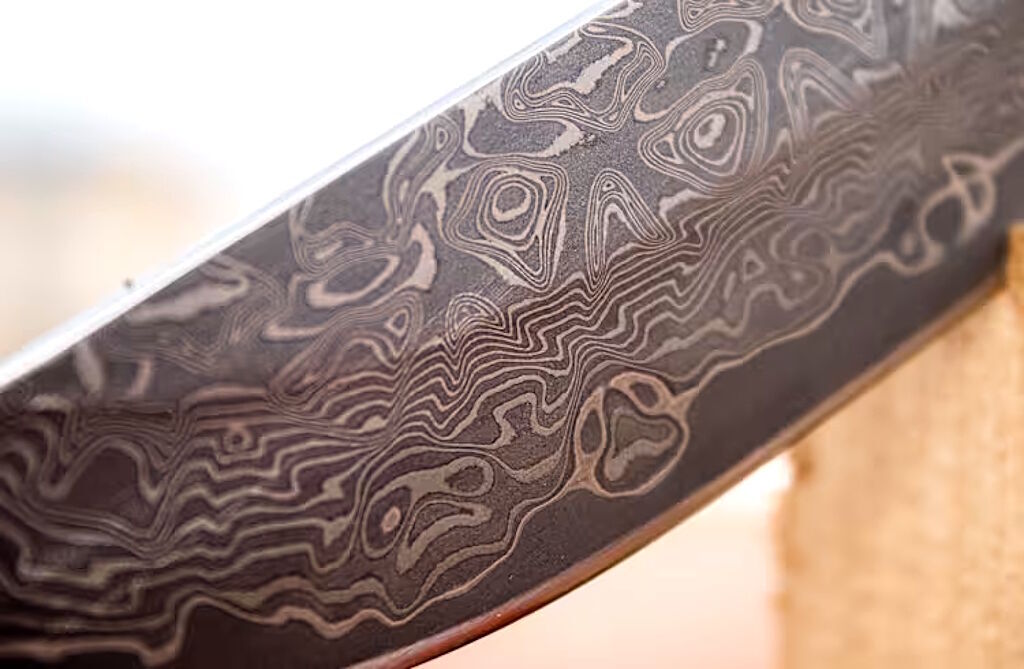
© iStock / Getty Images PlusDamascus steel blade.
When Crusaders and pilgrims returned to Europe in the Middle Ages, they spoke of the fearsome weapons wielded by their Muslim adversaries — especially their swords. Over time, Europeans named the mysterious metal from which these blades were forged: Damascus steel, after the ancient Syrian city.
Damascus steel swords, it was said, were sharper and harder, yet lighter and swifter, than the heavy Crusader blades. For centuries, the secret of their construction remained a mystery.
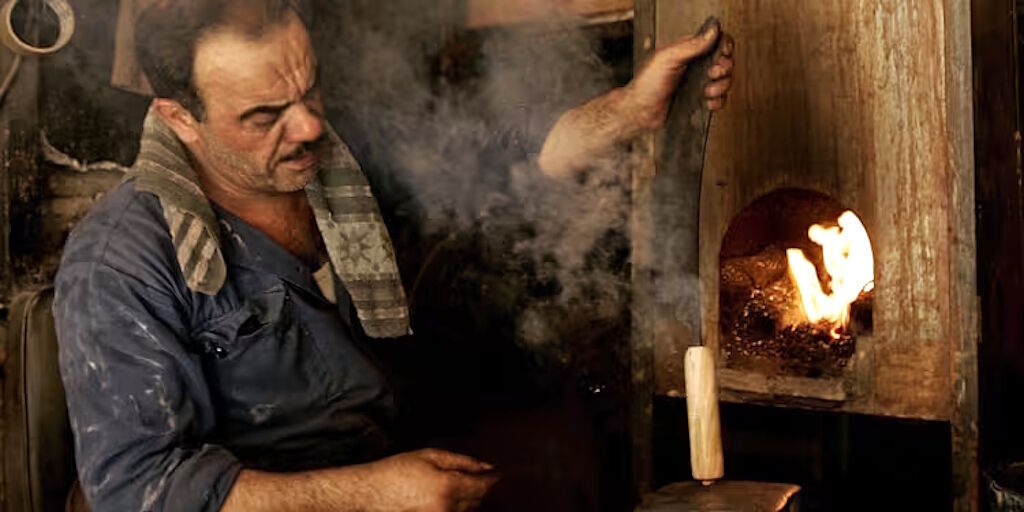
© Joseph EID/AFP via Getty ImagesA Syrian blacksmith in the city of Damascus.
Damascus steel was indeed forged into fine swords by artisans in the Syrian city, but they forged them from special steel imported from afar, noted Persian scholar Abu al-Rayhan al-Biruni, who lived at the turn of the 10th and 11th centuries. "The best steel is that which comes from India," he wrote in Kitab al-Jamahir, a treatise on minerals. "It is called shaburqan and is brought in the form of cakes [ingots]." The very hard shaburqan was melted with softer steels and this hybrid was used to forge swords in Damascus and other Muslim cities.
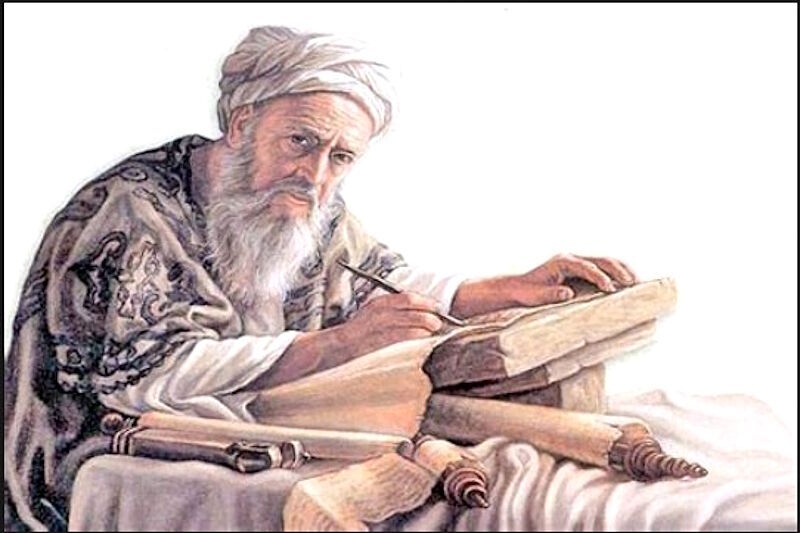
A depiction of Persian polymath Abu al-Rayhan al-Biruni who lived during the Islamic Golden Age, around 973 to 1050 AD. He made significant contributions to various fields, including astronomy, mathematics, anthropology, and history
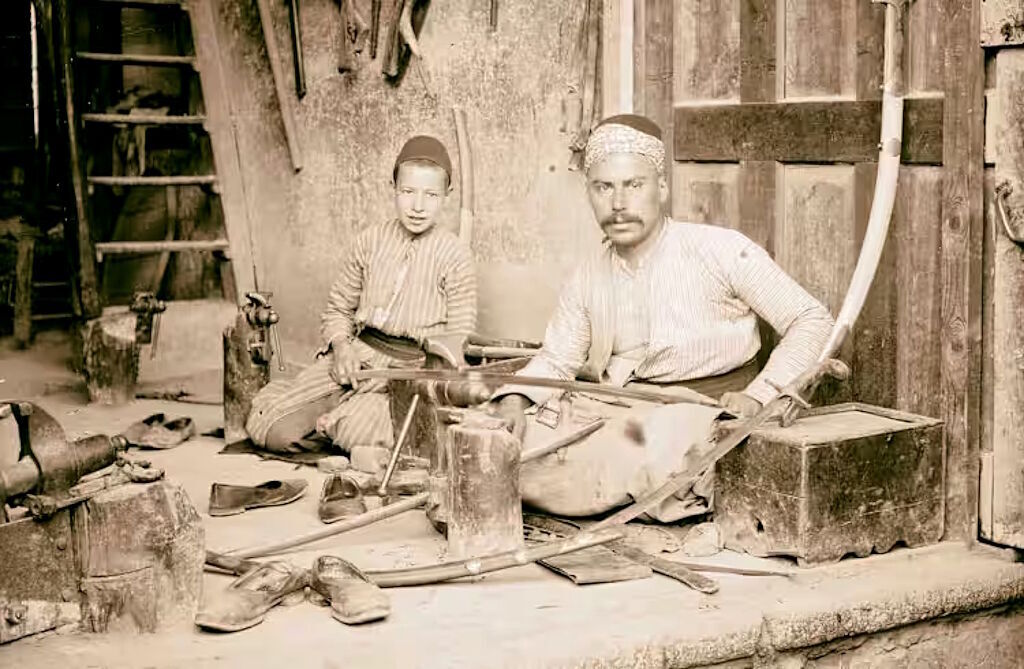
© Sepia Times/Universal Images Group via Getty ImagesDamascene swordmaker and boy, 1900.
Production of fine swords made of Damascus steel gradually declined over the following centuries, in part because Middle Eastern trade with India was disrupted by European colonial powers. Additionally, the English ruling over India suppressed the ancient practice so iron ores could be used for other purposes.
At the same time, the nature of warfare was changing and even the finest swords were increasingly eclipsed by muskets and pistols. By the 19th century, knowledge of how to make wootz steel was largely forgotten, and the legend of Damascus steel became a myth. Very few artifacts remained to show that it had ever existed.
That's not the end of the story of Damascus steel, however. Interest in this ancient "super-metal" has revived since the 1980s with a series of scientific studies that examined the ancient practice. Researchers found that impurities like the metal vanadium were key ingredients that contributed to the steel's distinctive appearance.
Recreating a Medieval Marvel
"It is only now, thanks to a partnership between science and art, that the veil has been lifted from this mystery," writes Iowa State University metallurgist John Verhoeven. One analysis of historic blades made of wootz steel found their hardness was partly due to carbon nanotubes and nanowires, inadvertently created by the ancient smiths in India during the creation process.
Additional research suggests the ancient way of creating wootz steel may be better for the environment than common processes for making high-carbon steels today. "Normally, high-strength steels must be 'aged' in massive industrial furnaces for hours or even days to reach their full strength," explains materials scientist Dierke Raabe, the director of Germany's Max Planck Institute for Sustainable Materials.
Raabe and his colleagues make modern facsimiles of Damascus steel with a laser and "additive manufacturing" — 3D printing — to replicate the laborious process of repeatedly folding and hammering the metal as traditional bladesmiths once did. The result is a hard, layered steel that requires far less power than conventional modern methods. "This process does all that hardening," Raabe says. "We skip the massive energy bill."






There must be one out there that still has the knowledge passed down over the centuries. It takes more then learning what it is composed of one must learn the art of how they were made.