OF THE
TIMES
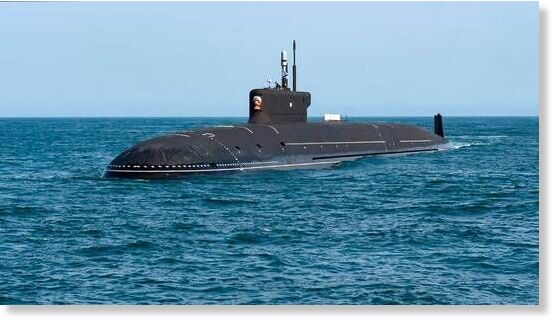
Poseidon Nuclear Drone Submarines Russia is advancing its deployment of the Poseidon nuclear-powered underwater drone, with the first sea trials of the weapon system scheduled for summer 2023, conducted from the specialized submarine K-329 Belgorod. The Belgorod, a nuclear-powered vessel and the world's second-largest submarine, is specifically designed to carry and launch Poseidon drones, which are nuclear-powered, autonomous underwater vehicles capable of delivering a massive nuclear warhead. As of August 2025, the Belgorod is confirmed to be in service with the Russian Navy, fulfilling its role in Moscow's underwater nuclear deterrence strategy. Poseidon Drone Specifications and Capabilities: The Poseidon, also known as Status-6 or Kanyon, is a nuclear-powered, autonomous underwater vehicle designed to travel at speeds of up to 100 knots (185 km/h), with a range of approximately 10,000 kilometers and the ability to operate at depths of up to 1,000 meters. It is reported to be 20 meters long, 1.8 meters in diameter, and weigh 100 tons. The drone is capable of carrying a nuclear warhead, potentially with a yield of several megatons, and is designed to generate a devastating tsunami upon detonation near a coastal target. Its nuclear reactor provides it with an almost unlimited range, allowing it to traverse oceans autonomously. Carrier Submarines: The primary carrier for the Poseidon is the K-329 Belgorod, a modified Oscar-II-class submarine, which is the first of four specialized submarines being built to carry the drone. The Belgorod is uniquely equipped with a ventral bay to carry the Poseidon and can also deploy a smaller, nuclear-powered deep-diving submarine, the Losharik, for specialized missions. The other three submarines are projected to be variants of the Borei-class ballistic missile submarine, known as Project 09851 Khabarovsk, which are also being outfitted to carry the Poseidon. The Russian Navy plans to deploy a total of 16 Poseidon drones on combat duty, with the four specialized submarines serving as their primary launch platforms.Odds are if these submarine "drones" have proven themselves sea worthy, then the numbers at the end of the above copied "ai info" are underestimating the actual number out there - and imagine this - all they other sort of underwater vessels there may be.
Is the artic ice reducing year by year or just typical summer variations?Either way if you have vessels that can "push through" ice it makes no difference Jason - it makes no difference either way.
Two Japsers in play now. Deal with it.