
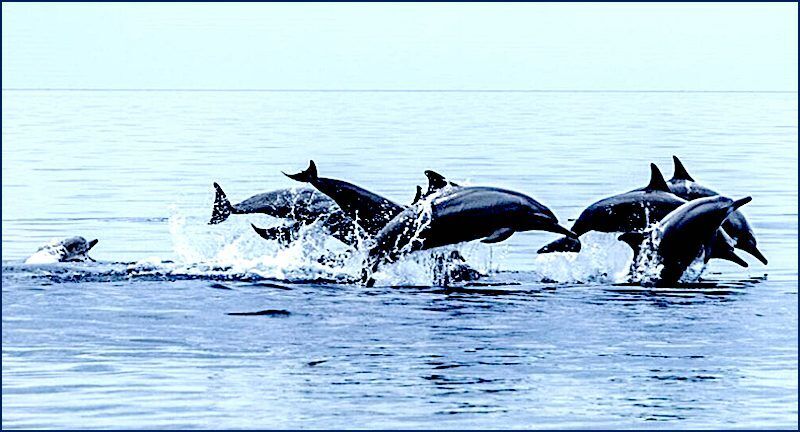
© unknownDolphins
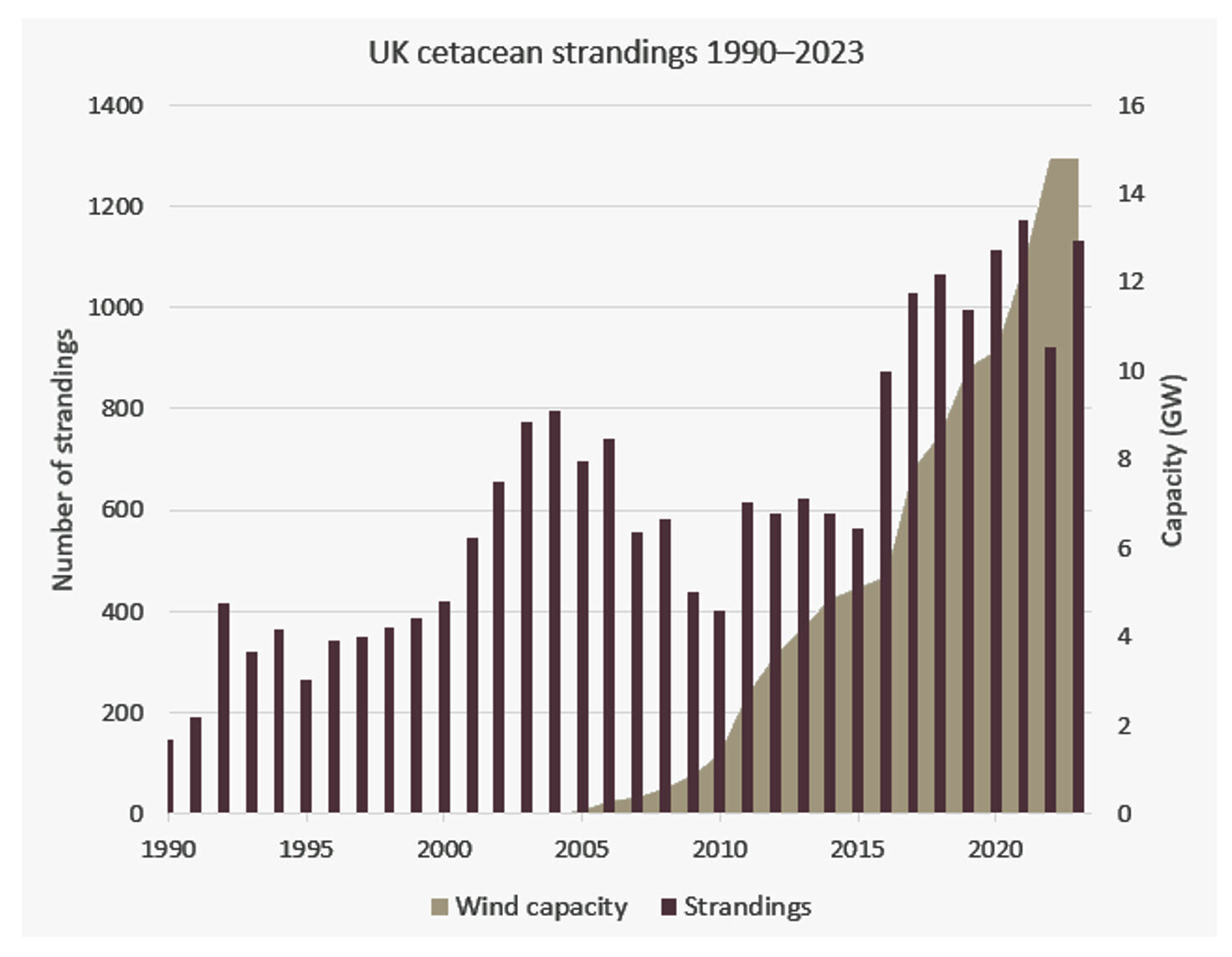
Andrew Montford of Net Zero Watch has updated his graph on the stranding of U.K. cetaceans and compared it to the rise of offshore wind capacity.
The Daily Sceptic has reported in the past about the mounting casualties of whales stranded off the north eastern coast of the United States in the wake of massive offshore windfarm construction. There have been around 300 fatalities in the last five years, and many suggest the extensive sonar soundings, pile driving and heavy concentrated vessel traffic is causing havoc with aquatic feeding, breeding and migration up and down the coast.
The latest U.K. stranding figures have been reported to Ascobans, a UN environmental conservation body for cetaceans in the NE Atlantic. Commenting on the "shocking" figures, the environmental writer and campaigner Jason Endfield called them
"A wake-up call to those planning to further industrialise our seas in the name of renewable energy, and especially offshore wind farms. It made no sense to increase ocean noise to levels that are 'literally unbearable' for marine mammals."The great cover-up of this environmental disaster continues with massive industrial parks being erected around the coasts of many countries. In the U.K., the incoming Labour government is committed to a massive expansion with the Mad Miliband spraying around billions of pounds in additional subsidies to boost an industry that would not exist in a free market.
To the fore in blowing smoke over the issue is Greenpeace USA's senior oceans campaigner Arlo Hemphill who claims there is "no evidence whatsoever" connecting wind turbines to whale deaths. "It's just a cynical disinformation campaign," says another Greenpeace spokesman. The mainstream media often goes along with this narrative as shown by recent tweets from Agence France-Presse reporter Manon Jacob. He dismissed the focus on wind farms as a red herring "when offshore wind remains thus far marginal in the U.S. and scientific evidence of large marine mammal deaths is lacking". This is the same Jacob who wrote a recent 'fact check' of the Daily Sceptic that was so bad and misleading it should feature in future journalism schools as an example of how not to criticise well-sourced material.
The investigative science journalist Jo Nova has a different take on the matter:
"Researchers have known since at least 2013 that pile drivers were permanently deafening porpoises, leaving them presumably to die miserable deaths wandering blindly through dark or murky seas. Where were all the professors of marine science, paid by the public to know these things, and where was the BBC? Fifty years ago, environmentalists would have raised hell about a thousand dead whales and dolphins. Now they are part of the cover-up. They don't want to draw attention to the blubber on the beach in case people start asking hard questions."There are however some signs that the 'nothing to see here, guv' line is starting to crack. A recent essay in Watts Up With That? suggested that an impact statement from the U.S. Bureau of Ocean Energy Management (BOEM) had finally acknowledged the harm caused by offshore wind farms. Examining leases off the New Jersey and New York coast covering over 488,000 acres, the BOEM hints that these developments are not entirely benign "despite being repeatedly framed as environmentally friendly solutions to the climate crisis". Marine mammals, sea turtles, birds and fish could suffer due to noise, habitat displacement and changes in migration patterns, it is said. Even bats, says WUWT?, which are not typically associated with offshore environments, could be affected.
The essay noted:
"This latest BOEM work may signal a more cautious approach, perhaps influenced by increasing legal challenges, public backlash, and even emerging scientific research indicating that wind turbines are not as harmless as once believed."







Comment: See also: