
© WBRZ/Youtube
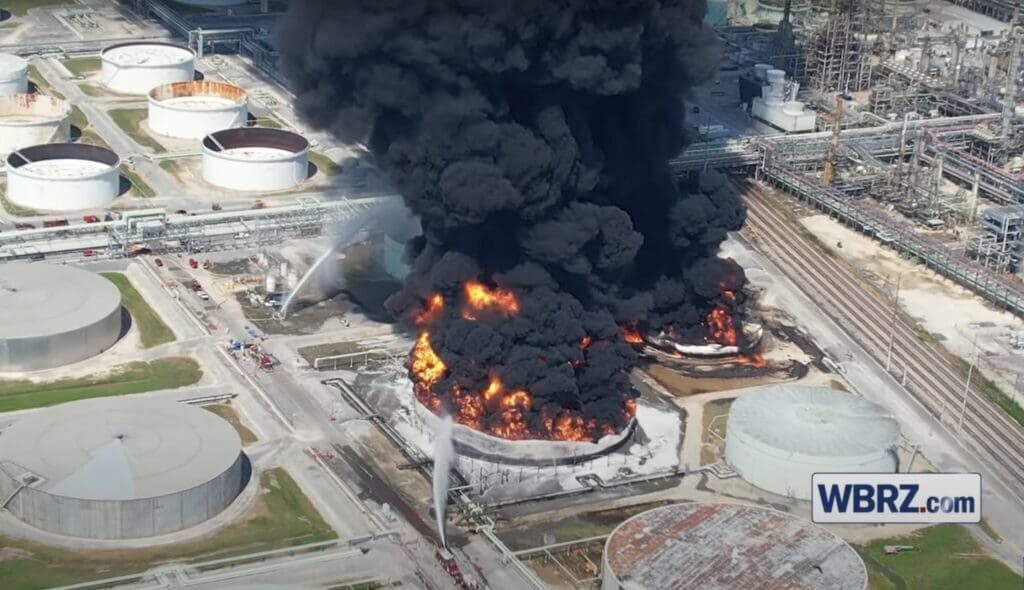
The fire broke out around 8:30 a.m. at the Marathon Petroleum facility in Garyville, situated about 30 miles northwest of New Orleans, according to WBRZ.
Officials from St. John the Baptist Parish reported that the incident involved a naphtha release and a fire at one of the refinery's storage tanks. Naphtha is a flammable and toxic kind of raw petrol or gasoline distilled from crude oil and a raw material for the chemical industry, which is often used in soaps and varnishes.
St. John Parish President Jaclyn Hotard declared an emergency soon after the incident was reported, and an evacuation order was swiftly enacted for residents within a two-mile radius of the blaze. That order was lifted by 2:20 p.m., after emergency crews managed to bring the fire under control and limit it to two damaged storage tanks.
WATCH:
Bloomberg reported:
Diesel futures surged to a seven-month high in New York after Marathon Petroleum Corp. said it was shutting the third largest US oil refinery following a blaze at a storage tank.
Diesel rose 5% while gasoline futures jumped about 4%. The outage threatens to deplete already below-average distillates stockpiles at a time when US demand for the fuel is set to rise going into the harvest and heating seasons.
Garyville, located on the Mississippi River between New Orleans and Baton Rouge, produces about 265,000 barrels a day of gasoline, or about 3% total US consumption. It also makes about 230,000 barrels per day of diesel, according to Andy Lipow, president of Lipow Oil Associates in Houston. The refinery has a crude processing capacity of 596,000 barrels a day.
The Louisiana Department of Environmental Quality "is conducting monitoring in the community adjacent to the site and all readings are nondetect," according to spokesperson Gregory Langley.
The Environmental Protection Agency said it has deployed a federal coordinator to the site to oversee the response and provide technical support, including emergency response air monitoring in downwind communities. A firefighter is being evaluated for heat stress and two storage tanks have been damaged, according to Marathon spokesperson.










Comment: What with all the fires at food and energy plants, alongside the blatant attempts to shut down farmers, and hinder the transport of goods under guise of the green agenda, it's reasonable to suspect that there's a concerted effort by some nefarious forces to disrupt supply chains to such an extent that, ultimately, will lead to deadly food and energy shortages: