

© Mahfouz Abu Turk / APA Images.Palestinian child at destroyed house after the municipality workers demolish their house in the east Jerusalem neighborhood of Tzur Baher, Tuesday, Oct. 27. 2009. This was not an image from the New York Times article North focuses on in this piece.
Reporters David Halbfinger and Adam Rasgon looked closely at the lives of 6 West Bank Palestinians, and photographers Dan Balilty and Samar Hazboun provided 9 humane photographs. The article opened by describing how Muhammad Sandouka, a 42-year-old construction worker, built his home in occupied East Jerusalem — and then had to demolish it himself after Israeli authorities ordered him to raze it to "improve views of the Old City for tourists." Israeli said it would charge him $10,000 for expenses if he didn't tear his home down himself. There's a painful photo of him standing amid its rubble.
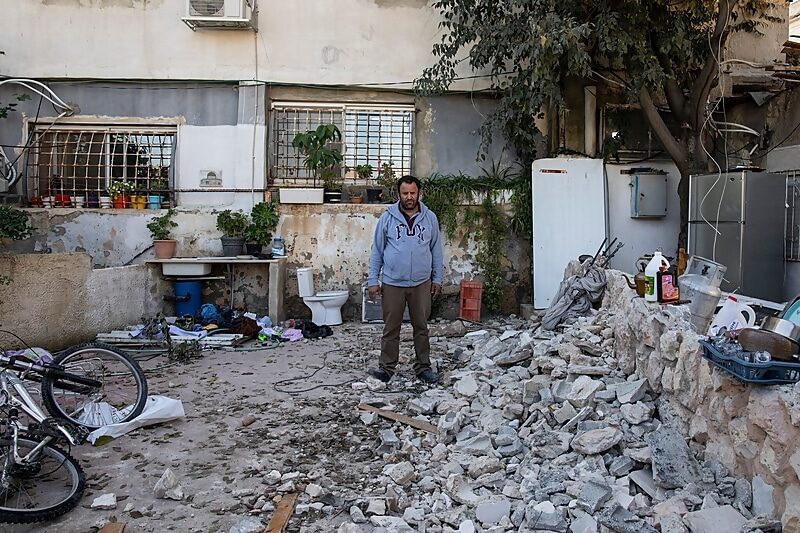
© Dan Balilty for The New York TimesMohammed Sandouka amid the ruins of his home in East Jerusalem.
David Halbfinger, the lead reporter for the article, is the now-departed Jerusalem bureau chief, and he never covered Israel's occupation with this kind of honesty and depth when he was stationed there. Why the Times allowed him to write this report now may remain a mystery, but a valuable and detailed article that just appeared in Slate suggests some answers. Aymann Ismail, a staff writer at the online publication, got reporters and stringers in Israel/Palestine to talk to him anonymously about how their work is censored or distorted.
Ismail found that there are several answers. Simple anti-Palestinian prejudice is one explanation. "Layla," who had contacts in the New York Times opinion section, was shocked to find out about "the sheer racism and dehumanization from rank-and-file opinion editors when talking about Palestinians."
"Omar," another anonymous reporter at a different newspaper, covered Israel's 2014 assault on Gaza:
To Omar, when a statement came from the Israel Defense Forces, senior editors at the paper treated it as fact. When Omar recorded a statement from an eyewitness on the ground that contradicted the Israeli military's account, he said the top editors called it unreliable.The Slate account describes fear and bias among higher-level editors. Omar again:
We have the world's best editors, who were really sincere about their desire to be truthful in the reporting on what's happening. And then we had another tier of editor above them who were more mindful of the tone of the media organization, and dictated a lot of the tone.Unless David Halbfinger and Times editors come clean, we may never know why he had to wait until he left Israel/Palestine to get this valuable account in print. But Layla says the overall atmosphere is changing for the better, and here's her intriguing explanation:
The collective political consciousness has shifted largely because of Black Lives Matter. . . Last summer, our newsrooms as a reflection of a larger society had to take a hard look at state violence, how we perceive it, how we cover it, in a way we haven't done before.







Talk about desperation. BLM are losing support everywhere so they are now saviours of Palestine.
Thanks for the laugh before bed.