
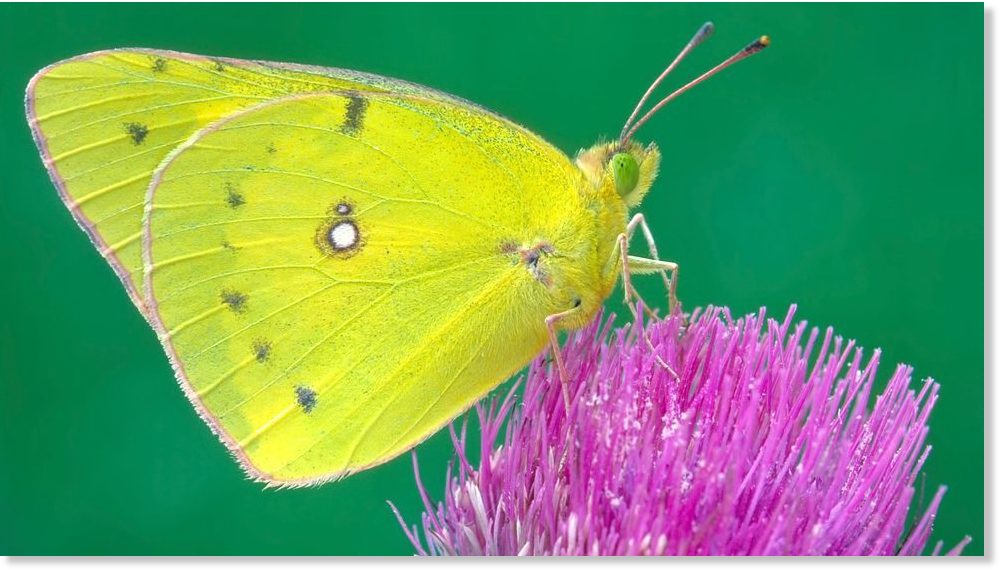
© Mike ThomasThis undated photo provided by Michael Thomas in April 2020 shows a clouded sulphur butterfly in Cromwell, Conn.
From bees and other pollinators crucial to the world's food supply to butterflies that beautify places, the bugs are disappearing at a rate of just under 1% a year, with lots of variation from place to place, according to a study in Thursday's journal Science.
That's a tinier population decline than found by some smaller localized studies, which had triggered fears of a so-called insect apocalypse. But it still adds up to something "awfully alarming," said entomologist Roel van Klink of the German Centre for Integrative Biology, the study's lead author.
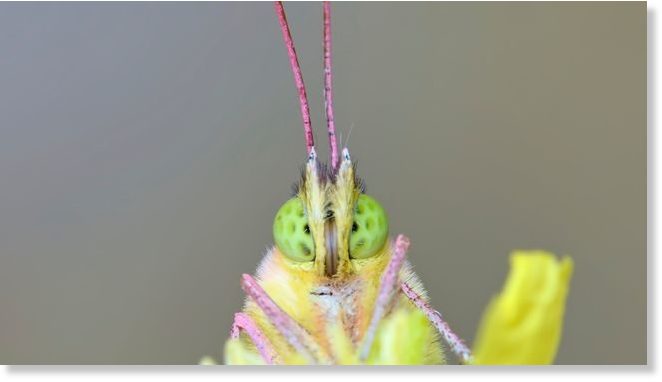
© Michael ThomasThis September 2019 photo provided by Michael Thomas shows a clouded sulphur butterfly in Deering, N.H.
Insect declines are worst in North America, especially the Midwestern United States, and in parts of Europe, but the drop appears to be leveling off in the U.S. in recent years, said the study that pulled together earlier research on more than 10,000 species with data from 1,676 locations.
The Midwest lost 4% of its bugs a year. The big global losses seem to be around urban and suburban areas and croplands, where bugs are losing their food and habitat, van Klink said.
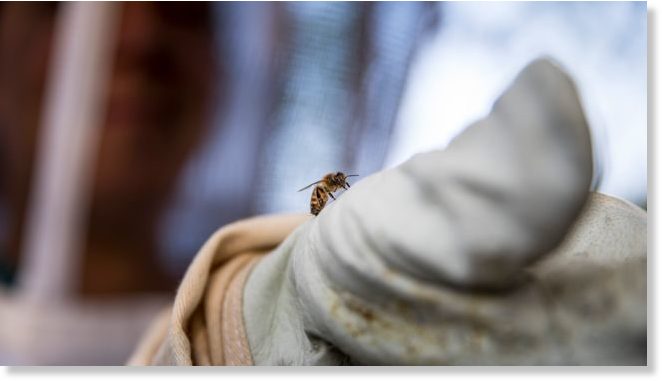
© Andrew HarnikBeekeeper Erin Gleeson looks at a honey bee that landed on her glove, Monday, April 20, 2020, in Washington. From bees and other pollinators that are crucial to the world’s food supply to butterflies that make places a bit more pretty, land-dwelling bugs are disappearing at a rate of just under 1% a year, according to a study in Thursday, April 23, 2020 edition of the journal Science.
Some outside scientists said the results made sense, but worried that the study lacked research and data from some large areas, such as the tropics and Africa.
Co-author Ann Swengel, a citizen scientist who's tracked butterflies for more than 30 years, recalled that when driving around Wisconsin a few decades ago, she would "look out in a field and you'd see all these Sulphur butterflies around. I can't think of the last time that I've seen that."
The study detailed quite different losses from place to place and from decade to decade. That tells scientists that "we're not looking for a single stressor or we're not looking a global phenomenon that is stressing insects in the same way," said University of Connecticut insect expert David Wagner, who wasn't part of the study. What's happening, he said, is "absolutely intolerable."
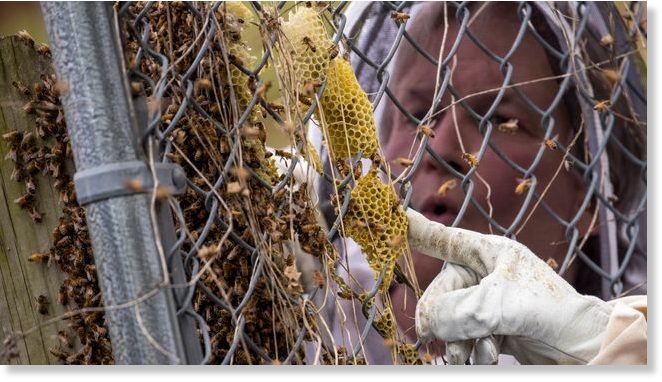
© Andrew HarnikBeekeeper Sean Kennedy inspects a swarm of honey bees, Monday, April 20, 2020, in Washington. From bees and other pollinators that are crucial to the world’s food supply to butterflies that make places a bit more pretty, land-dwelling bugs are disappearing at a rate of just under 1% a year, according to a study in Thursday, April 23, 2020 edition of the journal Science.
While land bugs were dwindling, freshwater insects, such as mayflies, dragonflies and mosquitoes, are increasing at more than 1% a year, the study found. That's faster than land bugs were disappearing. But those thriving freshwater insects are a tiny percentage of bugs in the world.
That improvement of freshwater species, likely because rivers and streams got cleaner, shows hope, scientists said.
Swengel said she saw another sign of hope on a cloudy day last year in Wisconsin: she and her husband counted 3,848 monarchs, reflecting recent local efforts to improve habitat for the colorful migrating butterfly.
"It was absolutely magnificent," she said. "It's not too late."
Source: AP






Destruction of Mother Earth is done under the mask of progress. What progress? F35 fighter jet progress?? LOLZ