
© Getty Images / pi_vit
On Wednesday, Russian President Vladimir Putin made his first direct appeal to the nation since the beginning of the coronavirus pandemic. This was Putin's most somber address to the Russians in his two decades in power, with the Russian leader essentially admitting that the country faces a grave economic crisis due to the spreading coronavirus disease and an imminent global recession.
In a televised address, Putin called on the population to stay home for safety and mandated national paid leave for all non-essential workers until April 5. However, the main emphasis of his speech was on financial and fiscal measures to sustain ordinary people's livelihoods and help small and medium-sized businesses survive the crisis. The measures focus on providing additional safety nets for families with children, people who go on sick leave and those who could lose jobs. For example, the minimal unemployment benefit will be increased from 8,000 to 12,000 rubles a month. Putin announced tax and credit holidays for small and medium enterprises for the next six months and promised permanent reduction of some taxes on SMEs.
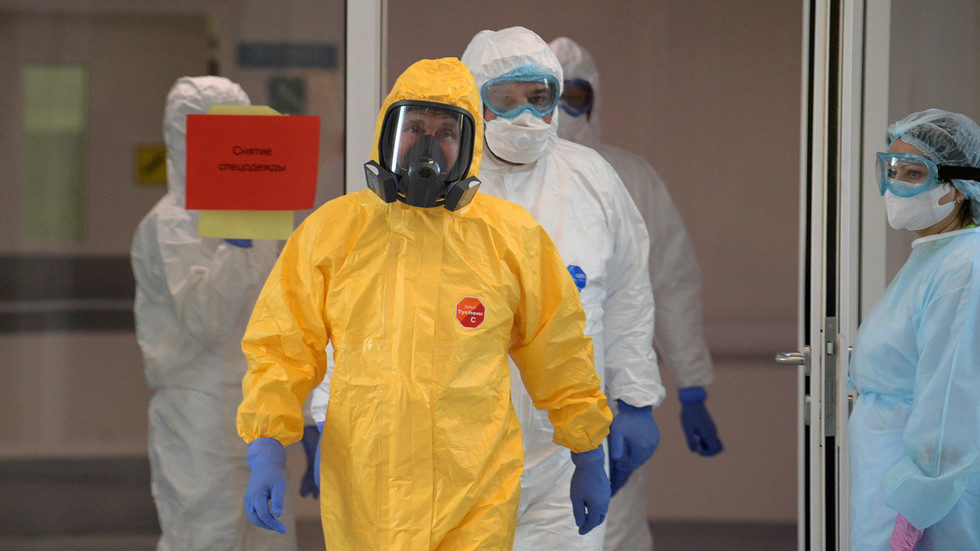
© Sputnik/Alexey Druzhinin/Kremlin via REUTERSVladimir Putin in hospital for patients infected with coronavirus disease on outskirts of Moscow, Russia
In his address Putin also announced an indefinite postponement, until the epidemic is over, of a constitutional plebiscite. The vote on a package of constitutional amendments was initially slated for April 22. If approved, the constitutional reform would allow Putin to rule the country until 2036. Putin insists the proposed constitutional amendments remain important despite the coronavirus situation. However, one has to wonder whether he actually believes himself on this. Initiated just a couple of months ago with the intention to consolidate Putin's state, the Kremlin's constitutional changes have now become largely irrelevant. Putin's future, and the future of the political system he created in Russia, will now hinge upon how he steers Russia through this perfect storm. In the short term, Putin looks relatively safe. He will be helped by the rally-around-the-flag effect, similar to the one that is now driving up the ratings of Donald Trump. The longer-term impact of the coronavirus crisis for Russia's future is much more uncertain. One particular risk for Putin is that the Kremlin's emergency measures to tax the well-off will alienate from him the moneyed classes while failing to appreciably support the ordinary people and small businesses. That said, even under such huge stress, Putin's Russia may prove more resilient than many in the West expect. The words attributed to Winston Churchill are worth recalling here: "Russia is never as strong as she looks; Russia is never as weak as she looks."
Artyom Lukin is an associate professor of international relations at Far Eastern Federal University in Vladivostok, Russia. Follow him on Twitter @ArtyomLukin





Comment: Russia is behaving like a proper global citizen, not slacking on other fronts, nor neglecting other countries in need: