RTMon, 03 Feb 2020 18:41 UTC
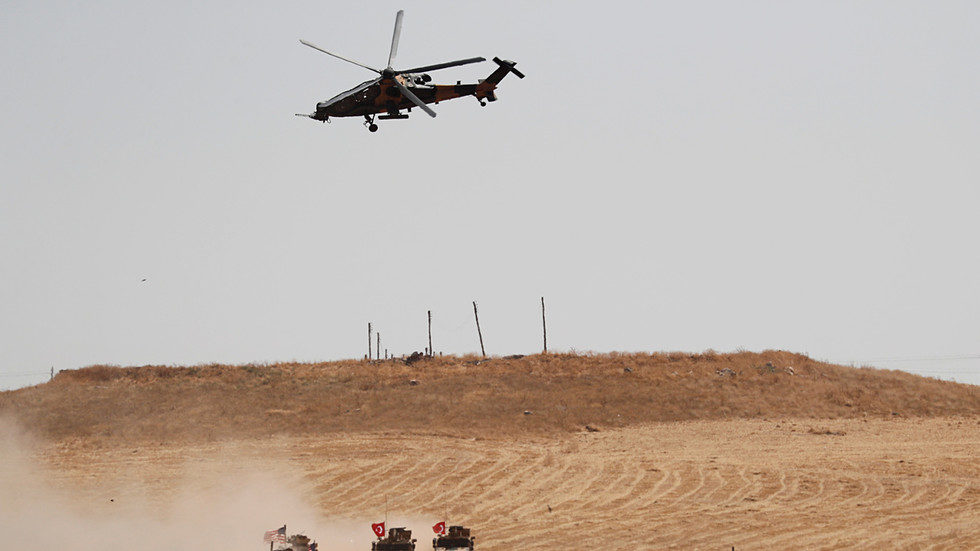
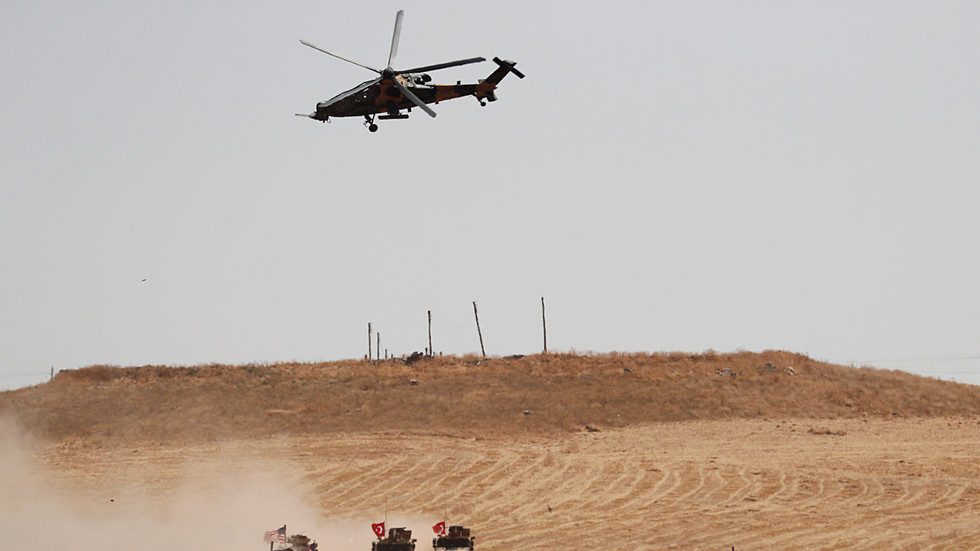
© Reuters/Murad Sezer/FileA Turkish military helicopter flies over as Turkish and U.S. troops return from a joint U.S.-Turkey patrol in northern Syria, as it is pictured from near the Turkish town of Akcakale, Turkey, September 8, 2019.
Ankara has claimed that six Turkish soldiers were killed and several others injured after they came under heavy shelling in the rebel-held province of Idlib, while blaming Syrian Army forces for the attack.
In a statement on Monday, the Turkish Defense Ministry said that its forces came under
"intense artillery fire" in the northwest Syrian province. It initially said four troops were killed and nine injured, including one seriously. The death toll was later updated to six.
The ministry said that the Turkish forces retaliated by destroying unspecified targets in the region. It also claimed that Ankara had warned Damascus in advance that its military reinforcements were moving to the area, which is the only opposition stronghold left in the war-ravaged country.
The incident comes shortly after a large Turkish military convoy - consisting of some 50 armored vehicles, trucks carrying tanks, and armored personnel carriers - was reported to have entered Idlib through Kafr Loosen crossing, purportedly to monitor a ceasefire from one of the observation posts.Video of the convoy embarking on its journey towards Idlib has been
shared by Turkish media.
Earlier, Turkish President Recep Tayyip Erdogan warned that all options, "including using military force," were on the table over the Syrian Army offensive against militants in Idlib province. He claimed that such attacks cause an influx of migrants into Turkey.There is a designated
"de-escalation" zone in the Idlib governorate, agreed by Russia, Turkey and Iran under the so-called Astana process.
Ankara, which has a lot of influence over many of the anti-government fighters in Idlib, is supposed to ensure that they maintain a ceasefire.In practice, the fighting there never fully stopped. Some jihadist groups in Idlib don't appear to have any intention of de-escalating the conflict, and have been launching regular attacks on Syrian Army forces. They even tried on many occasions to cause damage to the Russian airbase in Khmeimim. Damascus' response so far has been to slowly encroach on militant territory, a process that Turkey believes to be threatening its interests.
Comment: As usual, there is more to the story. Turkey initiated
hostilities by crossing into Idlib, presumably to covertly support its terrorist proxies, as Syria has been steadily pushing the headchopping occupiers north towards the Turkish border.
The news comes after earlier this week Turkish President Recep Tayyip Erdogan accused Damascus of violating a ceasefire in the region and warned that Ankara may launch a military offensive unless the operation there is "quickly halted".
Syria launched a new military operation in the area on 19 December and managed to seize several cities in the province before striking a ceasefire that began on 12 January. The terrorists, however, continued their attacks, killing at least 40 Syrian servicemen and injuring 80 others last week, prompting Damascus to resume the offensive.
Turkey also failed to notify the Russian coordination center of their position, although they
denied it, saying they
had informed Russia. Given Turkey's spotty record for truthful statements, it's more likely Russia's version is correct, unless Turkey considers video posted on social media sufficient notice.
A shelling incident in Syria in which Ankara said six of its soldiers were killed may have been caused by the failure of the Turkish side to warn about the movement of their convoy, the Russian military said.
"Units of the Turkish military conducted movement within the Idlib de-escalation zone during the nighttime from February 2 to February 3 without informing the Russian side and came under fire by the Syrian government troops, which were targeting terrorists west of Saraqib," the Russian center for Syrian reconciliation said on Monday.
Nevertheless, Erdogan made
threats of retaliation for the shelling. Various unsubstantiated reports were made of Turkish airstrikes on Syrian positions. The Russian coordination center
denied the attacks occurred, but backed up Turkey's assertion of 'constant contact' with the coordination center.
[T]he Russian military has stated that Turkish aircraft didn't breach the Syrian border, adding that it didn't register any strikes on Syrian government forces' positions.
Kremlin spokesman Dmitry Peskov has commented on the attack on Turkish troops, saying that Russian President Vladimir Putin and his Turkish counterpart, Recep Tayyip Erdogan, did not hold a phone conversation, though "the Russian and Turkish military are in constant contact".




Comment: As usual, there is more to the story. Turkey initiated hostilities by crossing into Idlib, presumably to covertly support its terrorist proxies, as Syria has been steadily pushing the headchopping occupiers north towards the Turkish border. Turkey also failed to notify the Russian coordination center of their position, although they denied it, saying they had informed Russia. Given Turkey's spotty record for truthful statements, it's more likely Russia's version is correct, unless Turkey considers video posted on social media sufficient notice. Nevertheless, Erdogan made threats of retaliation for the shelling. Various unsubstantiated reports were made of Turkish airstrikes on Syrian positions. The Russian coordination center denied the attacks occurred, but backed up Turkey's assertion of 'constant contact' with the coordination center.