Kayla Tausche, Jacob Pramuk
CNBCWed, 15 May 2019 10:18 UTC
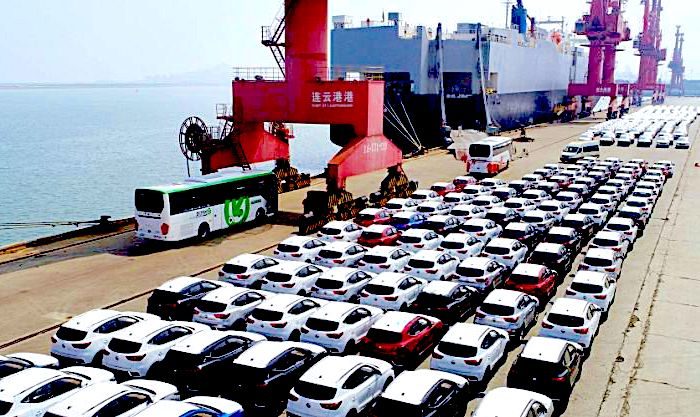
© Yahoo News
four sources told CNBC.
The White House faces a Saturday deadline to decide whether to slap duties on car and auto part imports
over national security concerns. After Saturday, the administration would have another 180 days to come to a decision as long as it is negotiating with its counterparts.
President
Donald Trump sees the tariffs as a way to gain leverage over trading partners such as the European Union and Japan during ongoing talks. But the president
risks sparking fresh global trade clashes if he goes through with car duties. The European Union, for example, has already prepared a list of
retaliatory duties to implement if Trump targets autos.Stocks
gained back their their losses Wednesday following news of the administration's plans, which were confirmed by a source briefed on the talks, an administration official and two foreign officials. Shares of automakers
such as Ford and General Motors jumped.
The delay comes as the White House tries to strike a potential trade deal with China to end an escalating conflict. The world's two largest economies increased tariffs on one another in recent days, amplifying a fight that has rattled financial markets and threatened to drag on the global economy.
Trump is mulling whether to use
a national security justification to slap tariffs as high as 25% on cars. In February, the Commerce Department delivered a report to the president saying that he could justify duties citing a national security threat. He also used the rationale to put tariffs on steel and aluminum imports.
Lawmakers from both major parties have pushed Trump not to move forward with the auto duties. Republicans and Democrats on Capitol Hill have previously criticized the national security grounds used to imposing duties on goods from allies such as Canada.
U.S. automakers have also opposed the potential tariffs. When the Commerce Department gave Trump its report in February, the industry group Alliance of Automobile Manufacturers said "imposing tariffs on imported vehicles and parts would be a mistake, with significant negative consequences" for the auto industry and its employees.
Comment: Additional response from Sarah Huckabee Sanders:
Trump ordered US Trade Representative Robert Lighthizer to seek agreements to "address the threatened impairment" of national security from auto imports, stressing that the White House may opt to move forward with tariffs during the potential negotiations with Tokyo and Brussels. White House press secretary Sarah Huckabee Sanders said in a statement:
"United States defense and military superiority depend on the competitiveness of our automobile industry and the research and development that industry generates. The negotiation process will be led by US Trade Representative Robert Lighthizer and, if agreements are not reached within 180 days, the president will determine whether and what further action needs to be taken."
Meanwhile, some
changes for steel, aluminum and the litigation in WTO:
The US and Canada have agreed to remove steel and aluminum tariffs and vowed to align against those, who sell "unfairly subsidized" metals at "dumped prices" as part of a new agreement between neighbors.
The US will lift the 25 percent tariff on steel imports and 10 percent tariff on aluminum President Donald Trump imposed against Canada back in late May 2018 while Canada will, in turn, remove all retaliatory tariffs it levied against the American goods, the statement said, adding that all the tariffs will be gone in two days. ... They also agreed to create a special monitoring mechanism to promptly detect import "surges."
A similar deal was struck with Mexico, President Donald Trump said in a speech on Friday.
Canada's Prime Minister Justin Trudeau called the tariffs the biggest obstacle to the ratification of the United States-Mexico-Canada Agreement (USMCA), which is expected to supersede the previous deal between the three nations known as the North American Free Trade Agreement (NAFTA). USMCA was signed back in November 2018 but has not yet been ratified.






Comment: Additional response from Sarah Huckabee Sanders:
Meanwhile, some changes for steel, aluminum and the litigation in WTO: