
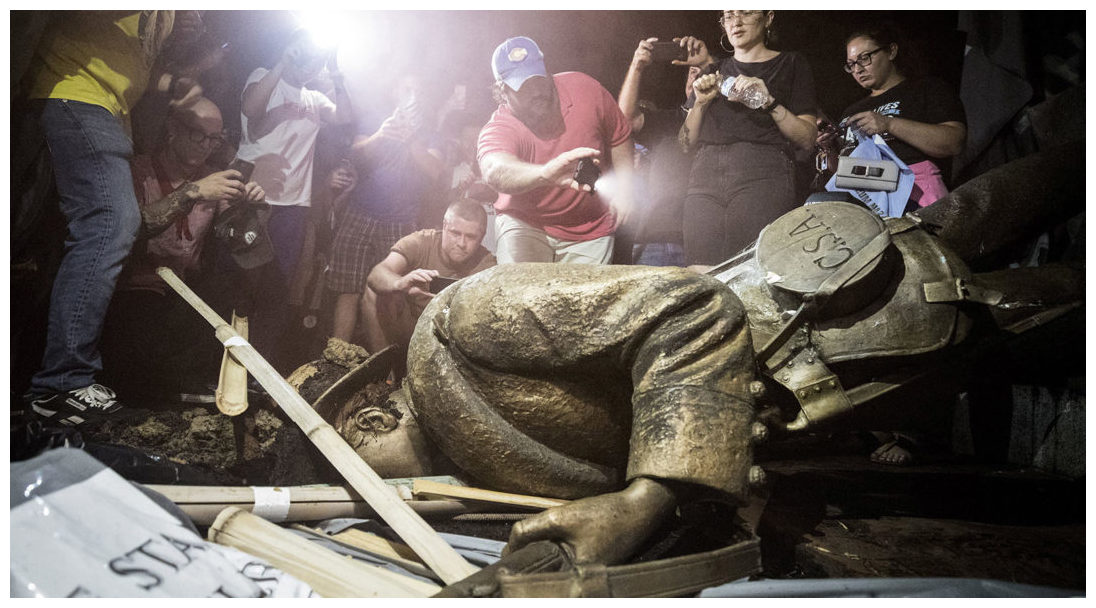
© Julia Wall/Getty ImagesIn 2018, a group of protestors pulled down Silent Sam, a Confederate statue that had long sat on the University of North Carolina campus.
Archaeology is often assumed to be limited to the realm of the ancients. However, the point of archaeology is not to dig up static moments in time from long ago but to use material items to track the ebbs and flows of human culture: to show how things change, how values change. We build statues, then later deface or demolish them. We create symbols, then alter their meanings. Some argue vehemently that monuments, such as Confederate statues, should be left in place-that their part in history should not be "erased." But change is not an erasure of history; it is a part of it.
The swastika is a case in point. In the late 1800s, the life's ambition of German businessman and self-appointed archaeologist Heinrich Schliemann was to prove that cities named in Homer's The Iliad were real-that the kings, princes, places, and battles of the Greek poem were more than just stories. In his excavations, using methods that would be considered destructive plundering by today's standards, Schliemann excavated a site on the coast of Turkey that he identified as the ancient city of Troy. He discovered over a thousand variations of crosses with arms that extended to right angles, or swirls. He named them after the Sanskrit word svastika, meaning well-being.
Schliemann's famed expeditions propelled the symbol into Western pop culture. In the early 1900s, the Coca-Cola company used the swastika on their products as a sign of well-being, housing developments sprang up with names like Swastika Acres (a name that until recently existed on housing deeds in a subdivision of Cherry Hills Village in the Denver metro area), and the Boston Braves baseball team wore it on their hats for good luck in a 1914 game against the Brooklyn Dodgers.
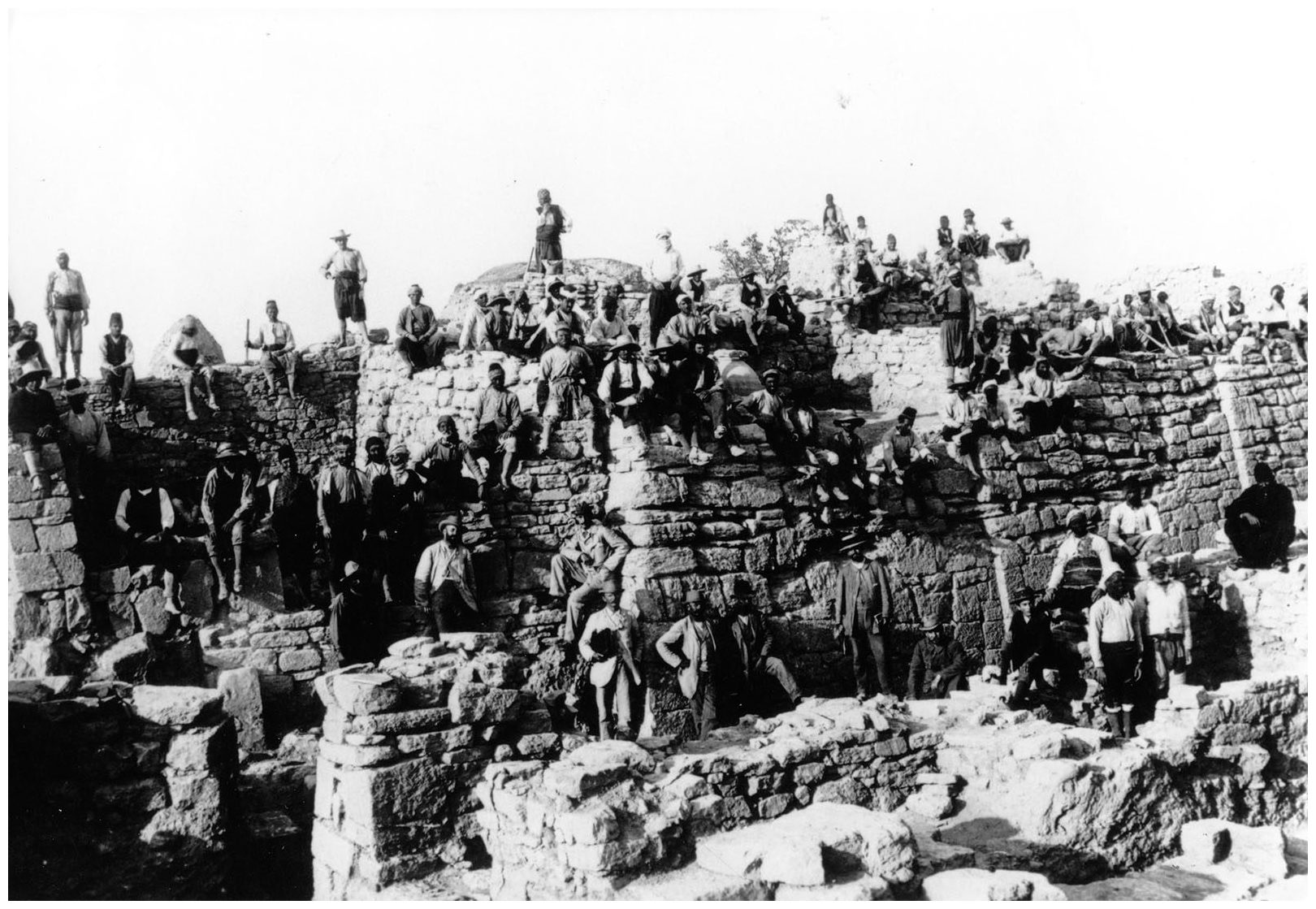
© ullstein bild/Getty ImagesAn undated photo shows self-appointed archaeologist Heinrich Schliemann among excavators who unearthed the suspected site of the ancient city of Troy.
People give symbols meaning, and as cultures change, so do the representations of that culture. Archaeologically, the swastika has been found in Europe, Asia, Africa, and the Americas, most often representing the cyclical and the positive: sun cycles, well-being, good fortune, auspiciousness, and consciousness. In 2019, we recognize the swastika as a symbol of hate and oppression-a symbol that is sadly being used ever more often in the era of Donald Trump's U.S. presidency. To prevent further harm, my community acted quickly to remove the one spray-painted on our local school.
Perhaps the most famously controversial example of the use of symbols in recent years in the U.S. is in relation to Confederate statues and flags-including heated, deadly protests surrounding the statue of Confederate Gen. Robert E. Lee in Charlottesville, Virginia. Activists who associate these symbols with slavery, racism, and white supremacy forcefully call for their removal, while other impassioned citizens fight to keep them in place as markers of history and Southern pride. Officials in some locations, including at the University of Texas and in St. Louis, have moved such statues away from public spaces to museums, where their complex histories can be put into proper context. The city of Gainesville, Florida, moved a Confederate statue to a cemetery. Many other cities have chosen to leave statues, place names, and monuments unchanged. Each of these choices reflects local cultural identity and values.
None of these suggest a new phenomenon. Names and monuments moved, etched away, or defiled, but not forgotten: The stories of such changes not only linger in modern cities but fill volumes of archaeology books on my university office shelf.
Consider one of the most striking examples from those volumes: ancient Egypt. During the reign of Egyptian Pharaoh Amenhotep IV from 1353 B.C. to 1336 B.C., there was a drastic religious change from the polytheistic worship of many gods to a religion focused on worshiping the god Aten. Leaders banned the worship of idols and closed temples. Amenhotep IV moved the capital city of Egypt from Thebes to a new city called Akhetaten (the horizon of the Aten) and incorporated "Aten" into his own name, Akhenaten, and the names of his family, including his son and heir Tutankhaten (living image of Aten).
This drastic change was hard on the Egyptian economy and shifted the pharaoh's focus away from domestic and foreign affairs, threatening the stability of Egypt. Thus, after Akhenaten's death, Tutankhaten and his advisers reversed his father's religious revolution, restoring the god Amun to a position of chief importance among many gods and moving the capital city back to Thebes. He changed his name too: Tutankhaten became Tutankhamun (known today as King Tut). The city of Akhetaten was destroyed, statues of Akhenaten were buried, and his name was etched away-all of which can be seen in the archaeological record.
In a similar vein, statues throughout France were beheaded during the 16th-century Wars of Religion and the 1789 Revolution-still standing headless today, centuries later. Communist-era statues in Sofia, Bulgaria, were graffitied after the fall of communism. The persistence of these defiled figures demonstrates that restoration was not a cultural priority; instead, they have been preserved as symbols of "people power" and the strength of revolutionaries.
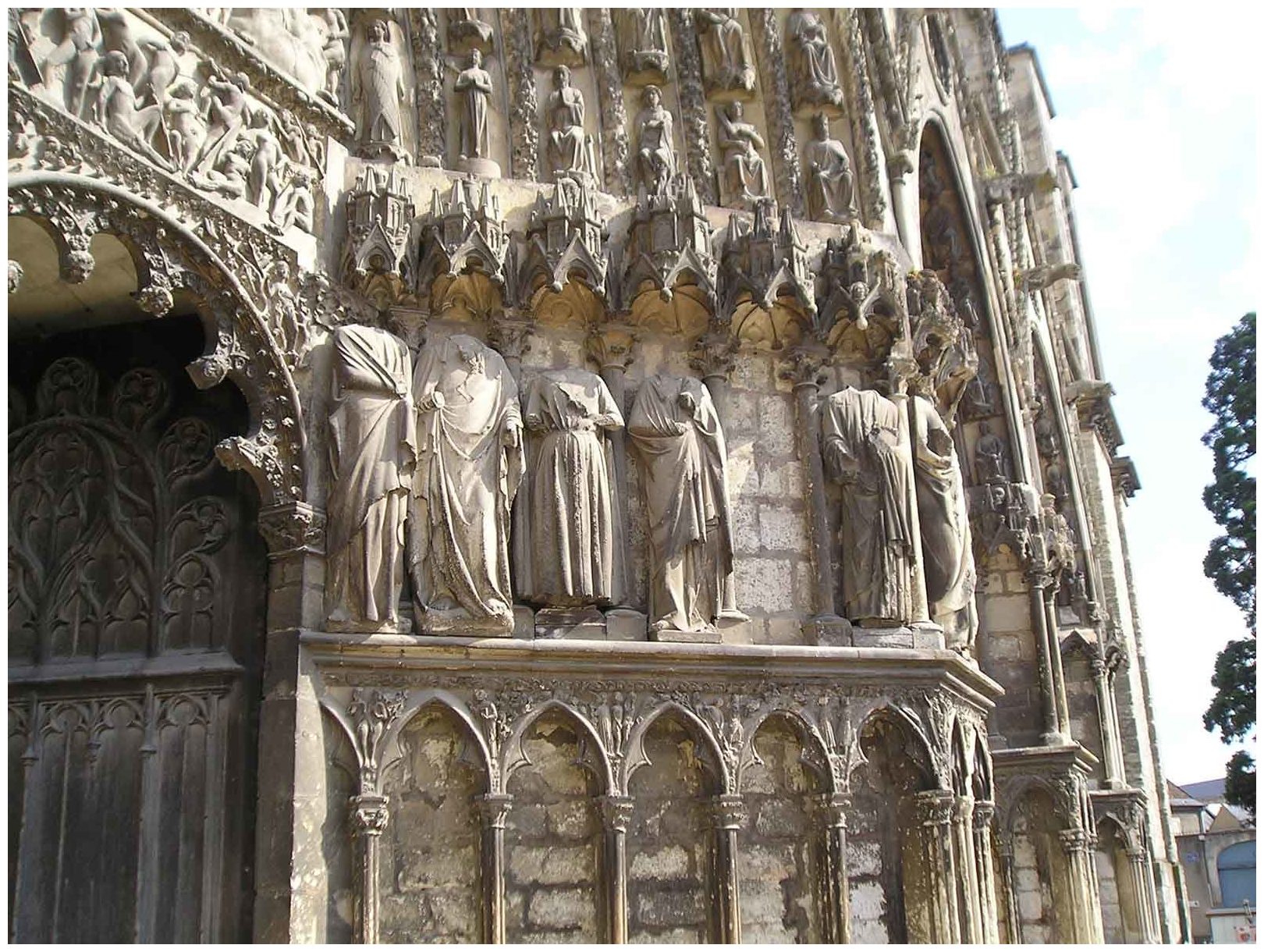
© Jamie HodgkinsStatues stand with their heads removed at the Cathédrale Saint-Étienne de Bourges, France.
We are likely in the midst of such an upheaval in the United States. After Trump was elected in the fall of 2016, some of the largest protests in American history have raised issues related to inequality, environmental health, education, and violence. Communities across the country are grappling with their values and identity.
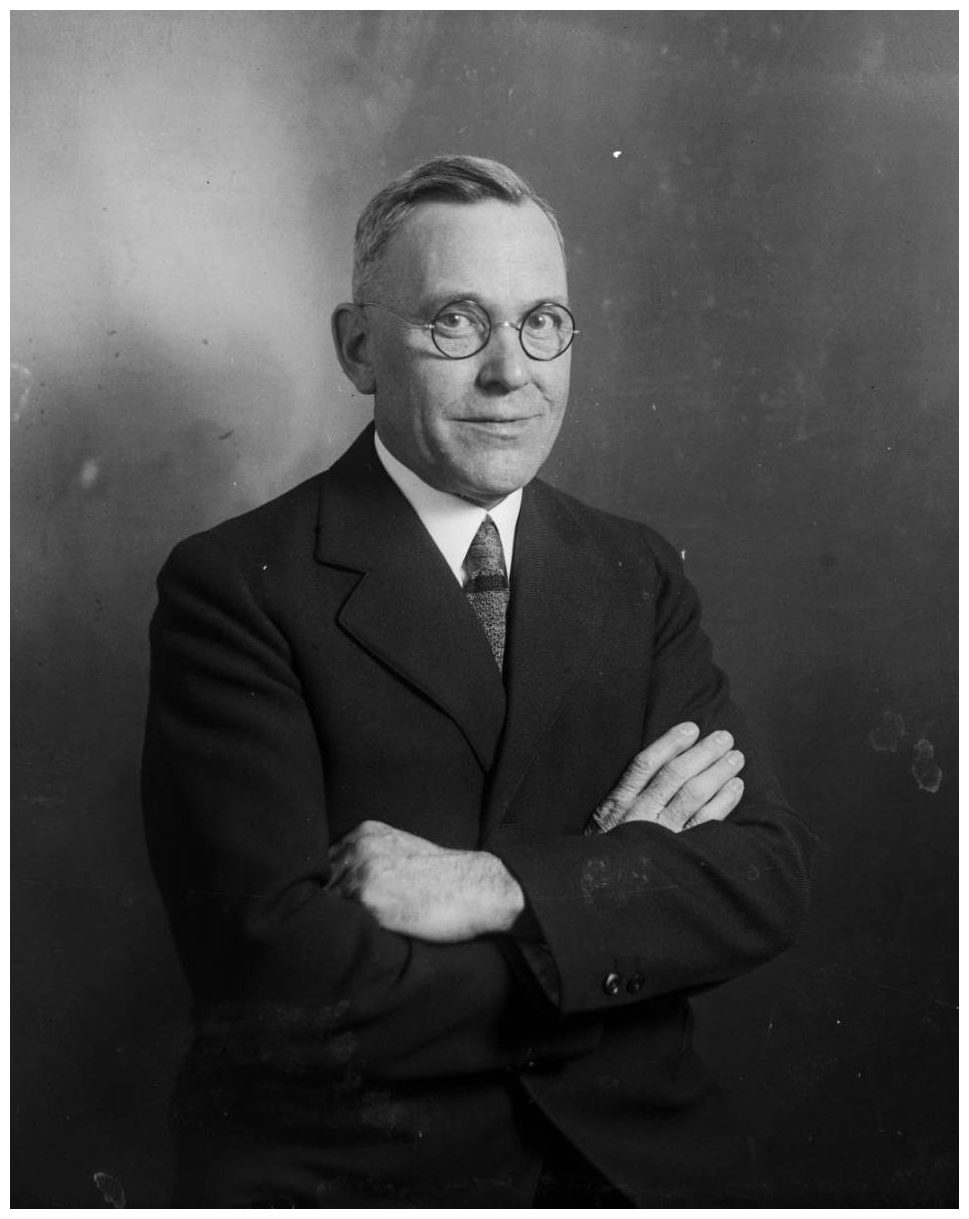
© Harry Mellon Rhoads/Wikimedia CommonsA portrait of Benjamin F. Stapleton, who served five terms as the mayor of Denver.
The developer advertised the Klansman's name across the city, over the airwaves, on billboards, and in flyers-invading many homes that were once subject to the discriminatory policies in place during Stapleton's time as mayor. In 2015, the local branch of Black Lives Matter initiated a petition to change the name. The community is now gripped by a question: Should they invest in the maintenance of a name chosen for them by the developer or invest in change?
In the course of this debate, concerns have been expressed about the cost of change and about "erasing history." But if these are the neighborhood's main concerns, then why did the same community come together to erase the swastika from our school? A school is a center of learning, and a swastika is a powerful historical symbol. Why was the swastika not framed and used to educate children about the past? The answer is obvious. The mere suggestion of preserving the swastika was offensive. It was painted as an act of violence-to incite fear. It has no place in our community and was appropriately erased. No one has argued that history was deleted in this instance.
Future archaeologists will find and interpret our community's symbols to understand the values of our time. Perhaps thinking about the deep mark our actions will leave on the future historical record will hammer home the importance of the signs, names, statues, and symbols that we allow to persist in our society. We should ask what these cultural symbols say about our identity or our comfort with past ideologies. And if we don't like the answer, then we should invest in a change.
Removing symbols that have a dark history doesn't erase past wrongs, but it does acknowledge those harms and open the door for a better future: concepts that are understood by our local middle schoolers who have pushed to remove the name Stapleton from their school. Perhaps in this case, our future generation can influence the past.
Jamie Hodgkins is an assistant professor of anthropology at the University of Colorado, Denver.






*Exaggeration for effect.
RC