Murad Gazdiev
RTTue, 24 Apr 2018 10:42 UTC
If countless Russia-bashing pieces don't help you get the big picture of the lingering Skripal saga, a report by RT's Murad Gazdiev may. He scrutinized the major slipups in the UK government's (and their pundits') narrative.
It is
"highly likely" that Russia deployed a deadly weapons-grade toxin to poison former double agent Sergei Skripal. Porton Down, the UK's leading chemical research lab, says there is "no doubt" the toxin was Novichok-class nerve agent developed by the Soviet Union. And Russia surely did it, because the very word 'Novichok' is Russian for
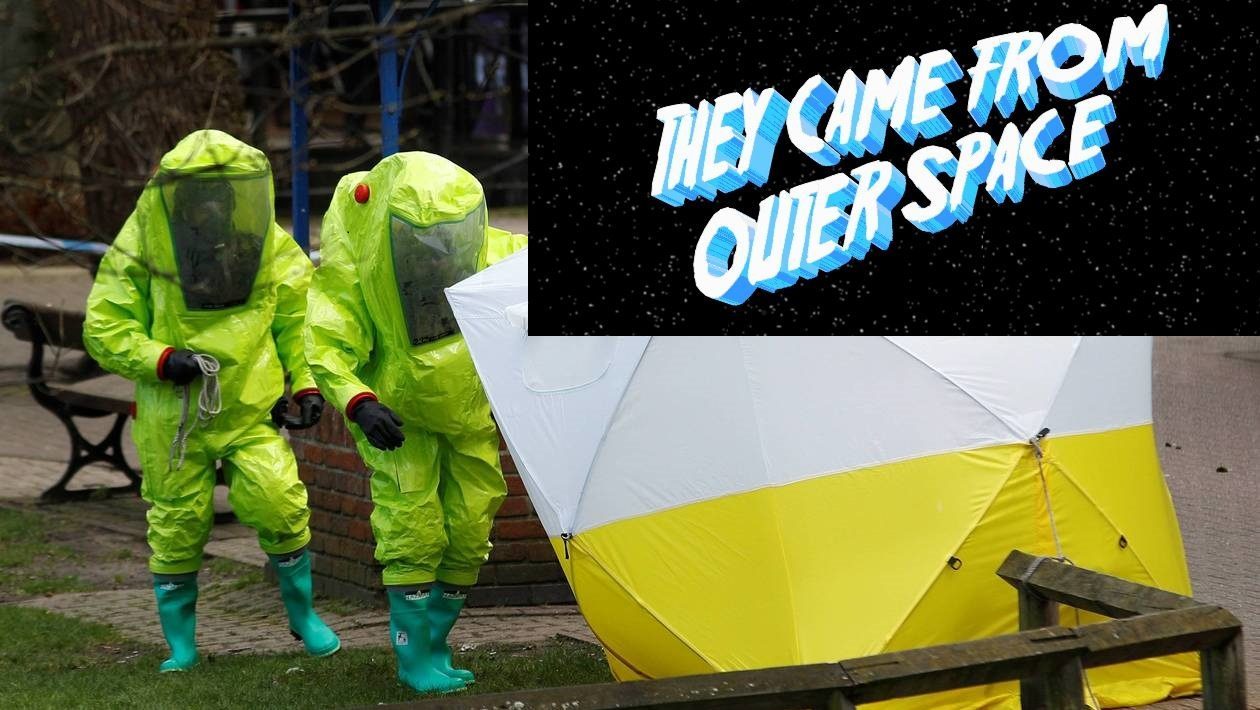
'newcomer.'RT's Murad Gazdiev examines the stunning discrepancies that emanate from the Skripal case, as the blame game against Moscow continues.
The report includes commentary from renowned chemical weapon experts, both Russian and Western-based, who told RT the formula of Novichok-class agents is actually an open secret as any - yes, you heard it right - laboratory in the world may produce the same substance with the same degree of purity. Moreover, the pace at which the UK authorities identified the poison used on the Skripals raises even more questions.
Watch RT's report in full here:
Comment: Given that it wasn't Russia, suspicions naturally fell on the British security services. But the choice of location for poisoning the Skripals is highly odd - Salisbury, home of British chemical weapons manufacturing for a little over a century. Why would the British paint a target over themselves in this way?
Combined with the British government's utterly bizarre handling of this incident - while being utterly convinced that this was done to them 'from without' - we are led to suspect a 'third force' was behind this.
As former British Ambassador to Uzbekistan Craig Murray
wrote one week after the incident in early March:
Israel has the nerve agents. Israel has Mossad, which is extremely skilled at foreign assassinations. Theresa May claimed Russian propensity to assassinate abroad as a specific reason to believe Russia did it. Well, Mossad has an even greater propensity to assassinate abroad. And while I am struggling to see a Russian motive for damaging its own international reputation so grievously, Israel has a clear motivation for damaging the Russian reputation so grievously. Russian action in Syria has undermined the Israeli position in Syria and Lebanon in a fundamental way, and Israel has every motive for damaging Russia's international position by an attack aiming to leave the blame on Russia.







Comment: Given that it wasn't Russia, suspicions naturally fell on the British security services. But the choice of location for poisoning the Skripals is highly odd - Salisbury, home of British chemical weapons manufacturing for a little over a century. Why would the British paint a target over themselves in this way?
Combined with the British government's utterly bizarre handling of this incident - while being utterly convinced that this was done to them 'from without' - we are led to suspect a 'third force' was behind this.
As former British Ambassador to Uzbekistan Craig Murray wrote one week after the incident in early March: