
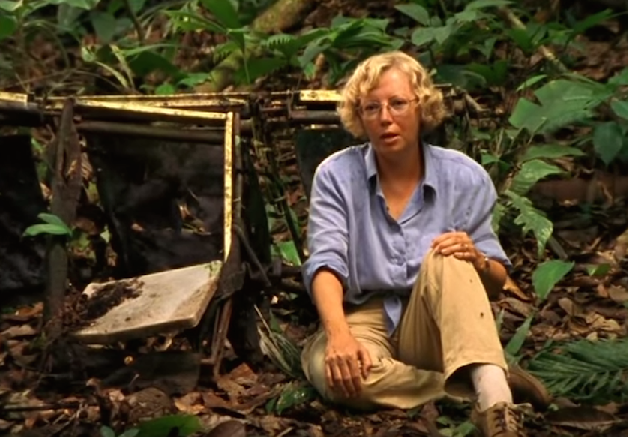
© Wings of Hope/YoutubeKoepcke in Werner Herzog's 2000 documentary Wings of Hope, sitting next to the same kind of seat row she woke up under after falling 10,000 feet into the jungle.
Everyone on board died that night except for Koepcke, who was believed to be dead before she reappeared after trekking through the jungle for 11 days.
In a 2010 interview with Vice News and a 2000 German documentary about her story, Koepcke goes over what happened during those days that changed her life.
Seat 19F
Koepcke and her mother boarded a plane to Pucallpa on Christmas Eve 1971 to celebrate Christmas with her father in an outpost in the middle of the Amazon forest where her parents both worked. While they were happy to catch the flight out before Christmas, mixed feelings about the airline's bad reputation — two planes had crashed recently — plagued them as well.
In the documentary directed by Werner Herzog, a grown-up Koepcke flies out to the jungle with her husband and the film crew. She sits in the same seat, 19F, near the window, as she did in 1971.
"I have, since that time, lost my trust in planes and pilots, I listen to every sound and am nervous every time I fly," she told the filmmakers.
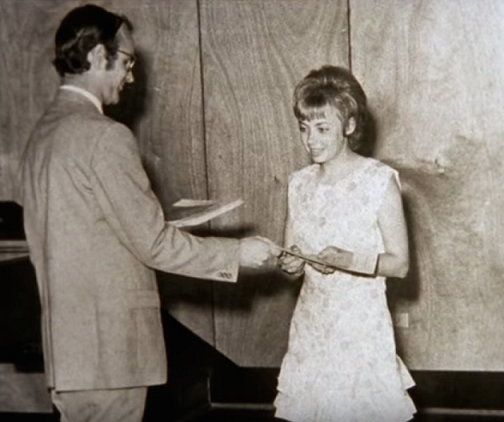
© Wings of Hope/YoutubeStill from Werner Herzog's 2000 documentary Wings of Hope, here is a 17-year-old Juliane Koepcke getting her high school degree from the German Gymnasium in Lima one day before the crash on December 23, 1971.
She started noticing that something was wrong, however, when her mother became nervous about the clouds getting darker and darker and the turbulence more vigorous.
"It was really scary. We flew into pitch-black clouds that were stroking the plane as if they were alive," Koepcke recounted in the documentary.
Then, suddenly, the plane was in the middle of a big storm with constant thunder and lightning. At some point, Koepcke saw a lightning strike hit one of the motors, and her mother then screamed, "Now it's over."
She describes what followed as a blur but remembers some scenes.
"I remember the plane going straight down, and the motor making a lot of noise, and people screaming," Koepcke told Herzog. "And then suddenly I was outside of the plane. I was falling head down with the seat belt pressing my stomach so much I couldn't breathe. In that moment I knew exactly what had happened but did not have the time to be scared because I fainted."
Regaining consciousness wasn't easy. Koepcke had a large concussion, and the capillaries in her eyes had popped because of the pressure inside and outside the plane. She had just fallen over 10,000 feet out of the sky. She remembers, however, she wasn't in any pain.
First, even though Koepcke woke up underneath her seat, she had to have landed on top of it. In the documentary, she offers three explanations for how she survived what easily could have been a deadly fall.
1. During storms, sometimes heavy winds blow upward, which may have slowed down her fall.
2. She may have been attached to one end of the seat and, not unlike a maple seed, swirled down instead of a falling in a straight line.
3. The dense tangle of lianas covering the trees cushioned the final moments of her fall.
It's probably a combination of all three explanations, according to Koepcke.
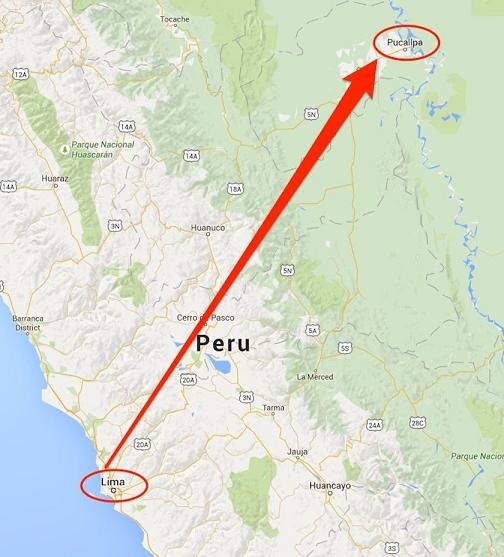
© Google Maps/SkitchKoepcke was supposed to fly from Lima to Pucallpa on the evening of December 23, 1971.
It took her half a day before she could walk. The first thing she tried to do was find her mother, and she searched the same place multiple times but couldn't see or hear anything.
'I knew ... they wouldn't continue looking for me'
Born to German parents in Lima in 1954, Koepcke spent a lot of her time in the Amazon forest. Her father, a zoologist, and her mother, an ornithologist, worked out of a research outpost in the middle of the forest. Koepcke had lived with her parents for a year and a half before the crash and therefore knew a lot about the inner-workings of its ecosystem — knowledge that would eventually save her.
Once she was able to walk, Koepcke eventually found a stream and started following it. She remembered her father telling her to follow a stream if she was ever lost in the jungle because it would lead to a bigger one and ultimately to help.
While following it on the fourth day after the crash, Koepcke came across three bodies of people still in their seats. She didn't dare touch the bodies, so she grabbed a stick and poked them. She said in the documentary that one was a woman, and Koepcke wanted to know whether it was her mother. It wasn't.
Afterward she started seeing rescue planes and tried but failed to draw their attention to her.
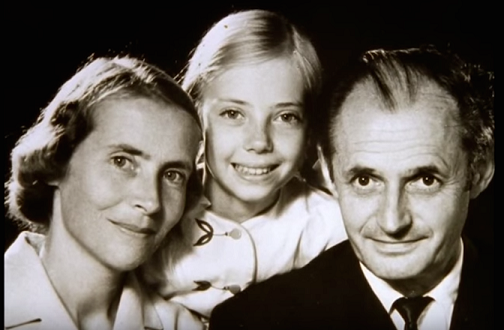
© Wings of Hope/YoutubeStill from Werner Herzog's 'Wings of Hope', here a young Juliane Koepcke smiles at the camera surrounded by her mother, Maria Koepcke who died on December 24 1971 and her father Hans-Wilhelm Koepcke who died on November 21, 2000.
After a while she stopped seeing or hearing them. "I knew that I was truly on my own, and they wouldn't continue looking for me," she told Vice News.
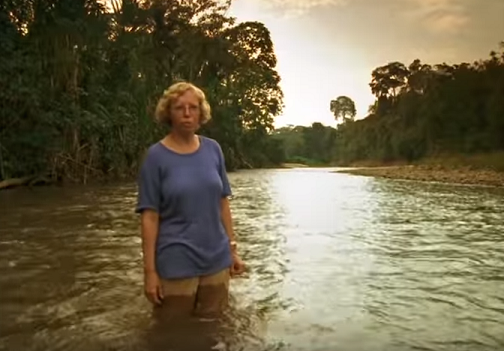
© Wings of Hope/YoutubeStill from Werner Herzog's 2000 documentary 'Wings of Hope', here Juliane Koepcke stands in the middle of the river that she followed for 10 days after the crash.
Koepcke eventually found a hut, without walls, on the ninth day of her trek through the jungle. She decided to spend a night there. The next day — while she was lying there thinking she was going to die — she suddenly heard voices. Three Peruvian men who lived in the hut found her.
"The first man I saw seemed like an angel," Koepcke told Herzog.
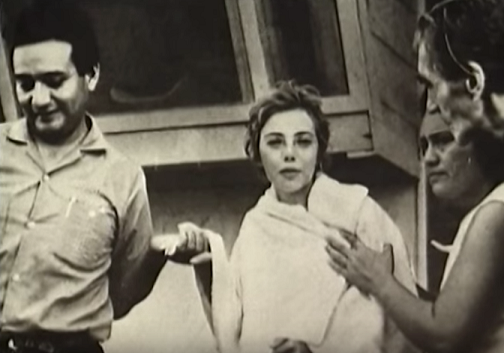
© Wings of Hope/YoutubeStill from Werner Herzog's 2000 documentary 'Wings of Hope', here Juliane Koepcke is pictured days after being found lying under the hut in the middle of the forest after trekking through the jungle for 10 days.
Koepcke eventually moved back to Germany for her studies and where she fully recovered from her injuries.
Coming into contact with her 'destiny'
During the documentary, it was the first time Koepcke came in contact with her 'destiny' and yet she seemed very calm, the narrator noted. She later explained to him that it was part of a shield, a coping mechanism that she had developed to try an lead a normal life and to be able to do that cost her an enormous effort during her whole adult life.
Going back to the crash site with Herzog, however, was almost therapeutic, Koepcke told Vice News.
"It helped me psychologically. That's where I told the whole story to Herzog. I really focused on it, on doing it well, so I didn't really have the time to become upset," she said.
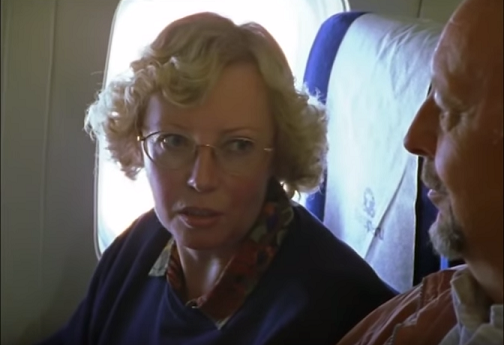
© Wings of Hope/YoutubeStill from Werner Herzog's 2000 documentary 'Wings of Hope', here Juliane Koepcke sits in the plane that will take her closer to the site of the crash than she has been before. She sits in 19F, the same seat that she was sitting on December 24, 1971.
Despite overcoming the experience, nightmares plagued Koepcke for many years. She had one recurring dream where she's walking through the streets of cities. Everything seems normal but suddenly all the faces of people are broken. In another one, a room stores all the butterflies in the world. She said in the documentary it were as if all the planes in the world were safely stored away there and couldn't hurt her anymore.
In the documentary, Koepcke also talks about grieving her mother's death. They had always been close, and it took her a very long time to comprehend that someone who has always been there was now gone forever.
Although Koepcke feels she managed to deal with the extraordinary and dramatic event that shaped her life, there is one thought she told Vice News, that will never leave her.
"The thought—why was I the only survivor?—haunts me. It always will."


Reader Comments
is a VERY common question. Some call it "survivors guilt". Not that this lady felt guilty for surviving, although some who survive things like a terrible war battle do actually feel guilty they lived though the battle, while ethers perished.
Was it a fate that was meant to be? Or just blind amazing "luck"?
To go that long in a jungle environment without a life threatening injury, or disease, etc. is also pretty amazing.
I had forgotten about this story, I am old enough to remember it being in the news.
This lady must have incredible mental reasoning, to be able to cope with it all without some professional help of some sort.
To have only some nightmares is amazing.. most folks would need long therapy and guidance I would think.
Good story, and amazing truth is stranger than fiction sometimes.
Pravdaseeker