
- The finding is only true if someone is sceptical of the speaker to begin with
- The longer they hold eye contact, the more sceptical they will become
- Locking eyes can boost receptiveness if person already agrees with speaker
A new study has shown that - contrary to common belief - locking eyes with someone when the aim is to persuade actually harms the chances of winning them over.
So demanding 'look at me when I talk to you' of someone may not have the desired effect after all
.
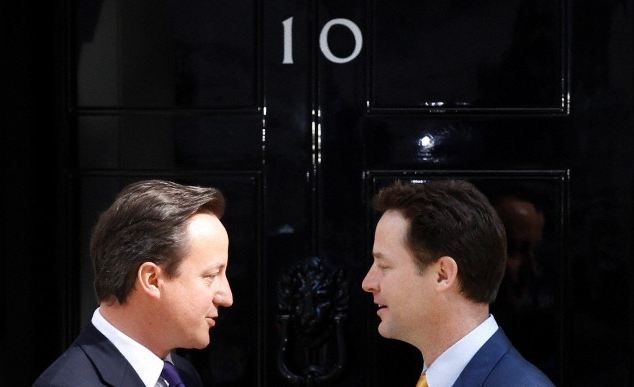
If you want to persuade someone to do your bidding don't look them in the eye, according to new research. Co-lead of the study, Julia Minson said: 'Whether you're a politician or a parent, it might be helpful to keep in mind that trying to maintain eye contact may backfire'
Neurobiologist Dr Frances Chen explained: 'There is a lot of cultural lore about the power of eye contact as an influence tool.
'But our findings show that direct eye contact makes sceptical listeners less likely to change their minds, not more, as previously believed.
'Eye contact is so primal that we think it probably goes along with a whole suite of subconscious physiological changes.'

The longer test subjects spent looking into the speaker's eyes, the less persuaded they were by their argument
Her team used cutting-edge eye-tracking technology to monitor how long participants looked straight into the eyes of someone speaking on a video, then measured how far their attitudes on controversial issues had shifted.
They found that the longer they spent looking into the speaker's eyes, the less persuaded they were by their argument.
The only time extended eye contact boosted receptiveness among the participants was when they already agreed with the speaker's take on the subject.

The only time extended eye contact boosted receptiveness among the participants was when they already agreed with the speaker's take on the subject
Like the first test, those who looked into the speaker's eyes the whole time were less receptive and less open to interaction with people who agreed with opposing arguments.
Co-lead of the study, Julia Minson of the Harvard Kennedy School of Government, explained that their study, which is published in the journal Psychological Science, showed that making eye contact with someone can drastically alter the outcome of an altercation.
She added: 'Whether you're a politician or a parent, it might be helpful to keep in mind that trying to maintain eye contact may backfire if you're trying to convince someone who has a different set of beliefs than you.'



Reader Comments
to our Newsletter