Storms
S


Cloud Lightning

Thunderstorms bring torrential rains, life-threatening flash flooding to Kansas City area

Image
Thunderstorms with torrential rains moved across the Kansas City area early Friday morning causing life-threatening flash flooding.

Emergency crews, especially in the southern part of the metropolitan area, responded to numerous reports of drivers stuck in high water after they drove into water-covered roads.

The drivers became stranded by the fast rising and swift moving waters.

The National Weather Service in Pleasant Hill, Mo., continued a flash flood warning for most of the Kansas City area until 11 a.m. Friday.

The warning is in effect for Johnson, northern Miami and southern Leavenworth County in Kansas and southwestern Lafayette, northwestern Johnson, southern Jackson and northern Cass counties in Missouri.

The National Weather Service said radar indicated at 6 a.m. Friday that thunderstorms with torrential rainfall was moving across the southern Kansas City metropolitan area.

Cloud Lightning

Severe storms exploding Thursday from Oklahoma to Wisconsin

Image
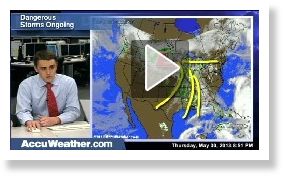
In a week that has produced hundreds of reports of severe weather and over 60 reports of tornadoes, the threat for more damaging storms continues into Thursday night across the Plains and the Midwest.

Update at 4:15 p.m. CDT Thursday: Severe storms are erupting from Wisconsin and Michigan to Oklahoma and Arkansas. Several tornadoes with damage and injuries have been reported in Arkansas. Tornado reports have also come out of Oklahoma. Follow the latest information in our live blog.

The threat of severe storms extends over a large area from North Texas northward into Wisconsin and Minnesota, including Minneapolis, Des Moines, Omaha, Wichita and Oklahoma City. The greatest threat for tornadoes will extend from northern Missouri southwestward into northeastern Oklahoma, including Kansas City, Springfield, Mo., and Tulsa, Okla.

The risk of strong to severe storms has expanded rapidly eastward late Thursday and includes Milwaukee, Chicago, St. Louis and Little Rock.

Cloud Lightning

'Rare' tornado hits Milan, leaves utter disaster in its wake

Image
A tornado struck in northeastern Milan, Italy, on Wednesday, and you don't need a translator to understand the reactions of those who captured the amateur footage posted above, while riding in a vehicle alongside the twister.

The dramatic mobile phone footage shows the funnel of the tornado tearing through an industrial area in Cavenago, around 27km from Milan on Wednesday morning

The video shot from the nearby A4 highway shows the swirling mass of air filling with debris.

"It's destroying all the roofs," a man off camera says.

"No it's not possible... this is really crazy... I've never seen anything like this."


Comment: Somebody should have been reading the Signs:

May 4th, 2013: Massive Italy tornado caught on tape, leaves trail of destruction


Comment: True, tornadoes in northern Italy are generally very rare, but in the last few years there have been many:

Tornado slams into Italian steel plant - video


Ice Cube

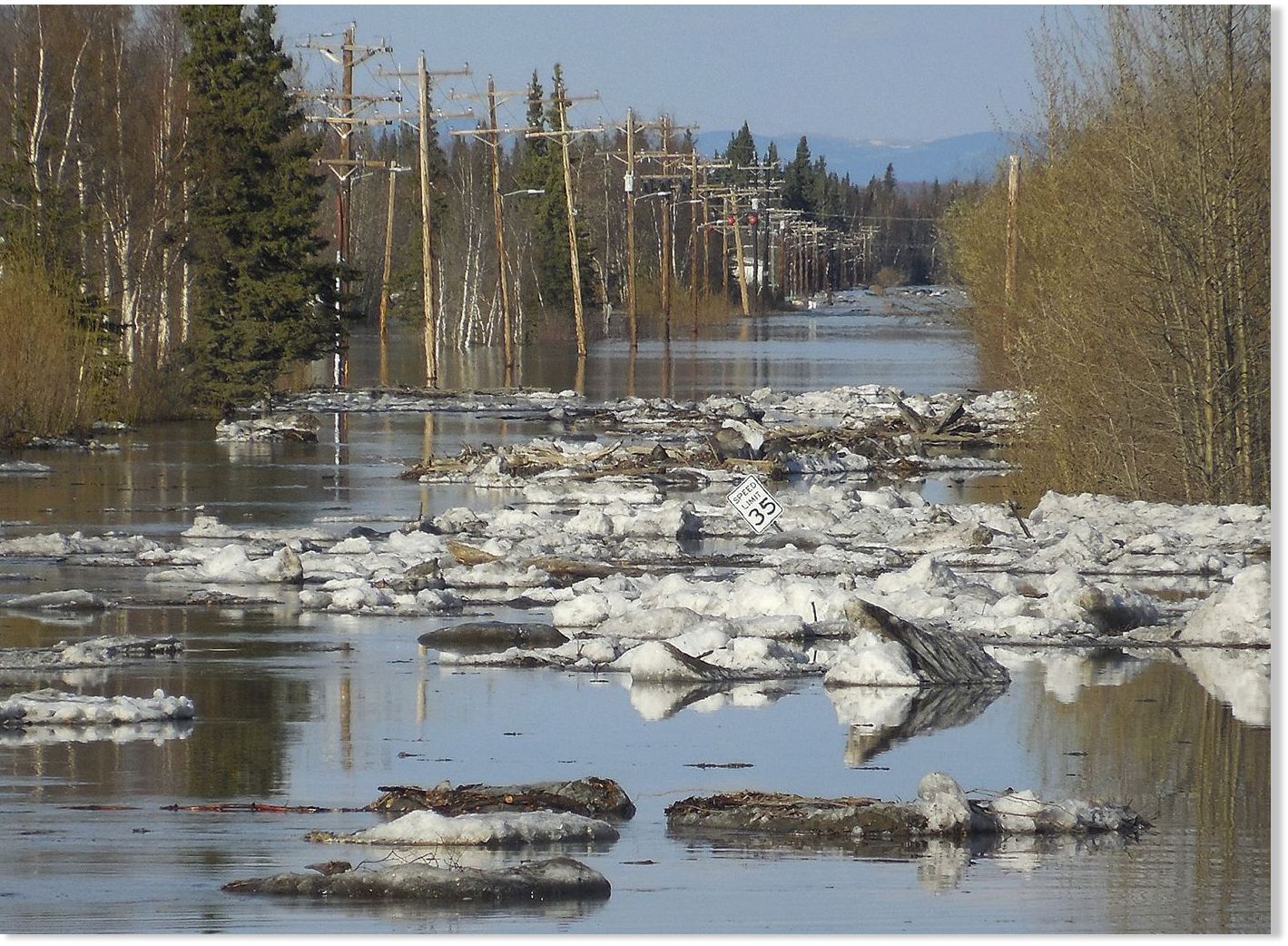
River ice jam causes major flooding in Alaska interior

The National Guard has helped evacuate residents from a small community in Alaska's interior where a river ice jam caused major flooding, washing out roads and submerging homes and other buildings. State officials estimate several hundred people have left the town of Galena, which remained mostly underwater Tuesday with the Yukon River ice jam firmly in place, the Fairbanks Daily News-Miner reported.
Image
In this May 27, 2013 photo released by the National Weather Service, ice and water cover the roads in Galena, Alaska.
National Weather Service meteorologist Christopher Cox said 90 percent of the community's roads were flooded, and many buildings had 7 feet of water in them. Some of the people who were displaced said they escaped in rafts battered by ice chunks and floating debris.

After rising floodwaters breached a wall protecting the Galena airport, the National Guard flew in to evacuate any remaining residents who wanted to leave the community of nearly 500, the Anchorage Daily News reported.

Evacuee Shane Edwin stepped off a flight to Fairbanks on Tuesday afternoon and described the scene he left behind as "a whole bunch of chaos." "The roads are all gone," he said. "The houses are flipped over. It's just trashed. I couldn't grab anything, not even my ID. The water came so fast."

Additional images

Cloud Precipitation

Tropical storm Barbara nears hurricane strength near Mexican coast

Tropical Storm Barbara gained strength on its approach to Mexico's southern coast, the U.S. National Hurricane Center said on Wednesday. The center reported that the storm was nearing hurricane strength with maximum sustained winds of 65 miles (105 km) per hour and was located about 70 miles (112 km) south of the port of Salina Cruz in southern Oaxaca state.
Image
Salina Cruz is home to Mexican state oil monopoly Pemex's largest refinery. Barbara churned northeast at about eight miles per hour, and is expected to swing through the Isthmus of Tehuantepec, Mexico's narrowest point, once it makes landfall later on Wednesday.

The center issued a hurricane warning from Oaxaca's Puerto Angel to Barra de Tonala, and a tropical storm warming from Barra de Tonala to Boca de Pijijiapan in Chiapas state.

Barbara is forecast to reach hurricane strength before it hits Mexico's southern coast, the center added.

Between 4 and 12 inches (10 to 30 cm) of rain is expected over eastern Oaxaca through western Chiapas once Barbara reaches land, along with a storm surge of between 3 to 5 feet (1 to 1.5 meters) above normal tide levels.

Snowman

Are we in for a 'year without Summer'? Memorial Day weekend snowfall smashes 1816 record

snow
© Youtube
"The last time we had snow this late (Memorial Day weekend) was back in 1816 - the year without the summer," says reader Kenneth Lund. "And that was only 1 inch of snow. Here we're talking 34 inches !"

"Even though 1816 happened in early June, this event in 2013 was far more significant. You could subtract maybe 15 inches if it had happened on June 6th - but even then it would still be unprecedented - still over a foot at least. (considering that it was 11 days later in the season)

To figure out how unusual this weekend's snowfall was, Weather Underground had to go back to 1816, the infamous 'Year without Summer.'
In 1815, Mt. Tambora of Indonesia exploded with such strength (the greatest volcanic eruption in perhaps the past 60,000 years) that the entire northern hemisphere was encircled with ash. By the summer of 1816 freak cold waves and snow enveloped much of North America, Europe, and Asia, along with snowfall in the eastern U.S. and and Canada.

Between June 6th and June 8th accumulating snow was observed as far south as the Catskills in New York (where one inch was reported) and highlands of central and northwest Pennsylvania. Snowflakes were seen at sea level as far south as ten miles north of tidewater on the Hudson River just above New York City."

The deepest accumulations were reported in the mountains of Vermont where snowfalls of 12-18" were measured at 1,000-3,000' elevations (Cabot, Vermont with an elevation of 1,300' reported 18" although it isn't clear if this was a level or drift measurement). Quebec City in Canada reported 12" on level with drifts up to two feet deep.

Bizarro Earth

Landslide kills seven in Hidalgo State, central Mexico

Seven people have died in a landslide on a road in Mexico's central state of Hidalgo, the federal police say. The deadly incident took place on Sunday, burying a number of cars under mud and trees. Local residents of the nearby town of Tepeji del Rio warned officials that they had noticed the land above the road appeared to be unstable.
Image
Hidalgo governor Jose Francisco Olvera said that the deaths could have been prevented, although assessing the state of the hill when the warning was made would have been difficult because of heavy rainfall. Tepeji del Rio residents say a hailstorm on May 26 also caused at least 22 cars to be dragged into a canyon.

Officials say the hailstorm in Tepeji del Rio caused the deadly landslide late Sunday.

Cloud Precipitation

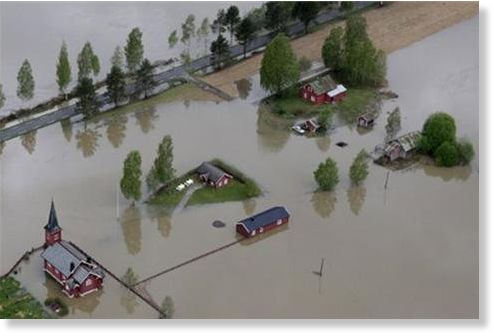
Flooding grips Norway - hundreds evacuated from homes

Flooding has forced hundreds of people to evacuate from their homes in eastern Norway.

The weather has been unsettled across the region over recent weeks, and in just the last couple of days the rain has turned very heavy. Lillehammer reported 64mm of rain on Wednesday, which is more than is expected in the entire month.

Melting snow has also added to the problems.

On 18 and 19 May, the temperatures in Lillehammer soared to 29C. In the surrounding mountains, this sudden rise in temperature caused the snow to suddenly melt.
Image
As the water poured down the mountainside, some of the rivers burst their banks.

One of the worst hit towns was Kvam, which is situated along the Gudbrandsdalslagen River.

Diggers were being used to try and alter the path of the flood water, but work had to be abandoned because the conditions became too hazardous. 250 people had to be evacuated from the town.

Snowflake

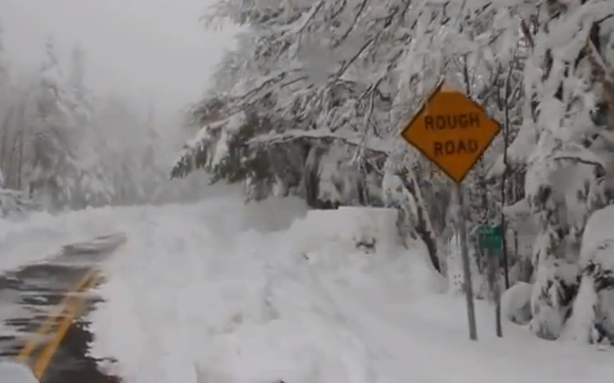
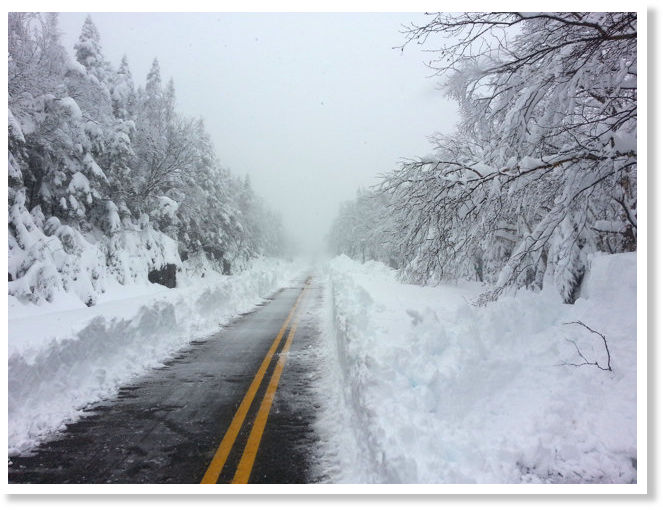
3 feet of snow in upstate New York on Memorial weekend

Image
© AP Photo/courtesy of ORDA/WhitefaceAssociated Press/courtesy of ORDA/Whiteface - This photo provided courtesy of ORDA/Whiteface shows Whiteface Mountain Veterans' Memorial Highway after a heavy snowfall Sunday, May 26, 2013. The late-May storm has dropped three feet of snow on the New York ski mountain near the Vermont boarder. Whiteface Mountain spokesman Jon Lundin says 36 inches of white powder have fallen on the nearly 5,000-foot tall mountain in the Adirondacks, forcing the Olympic Regional Development Authority to close Whiteface Veteran’s Memorial Highway on the backside of the mountain.
A Memorial Day weekend storm has dropped three feet of snow on a New York ski mountain near the Vermont boarder.

Whiteface Mountain spokesman Jon Lundin says 36 inches of white powder has blanketed the nearly 5,000-foot tall mountain in the Adirondacks. That has forced the Olympic Regional Development Authority to close Whiteface Veteran's Memorial Highway on the backside of the mountain.

Cloud Grey

Hurricane season fears as warning satellite fails

Image
The failed satellite, launched by Nasa in 2006, was designed to last 10 years.
A satellite designed to track severe weather in the US, has failed on the eve of the 2013 Atlantic hurricane season.

Experts fear it could not have happened at a worse time. The US National Oceanic and Atmospheric Administration (NOAA) said the satellite, which provides coverage for the entire US eastern seaboard, is relied upon to track hurricanes threatening cities along the coast. The NOAA gave a warning that this year's hurricane season - the first since hurricane Sandy devastated the New York and New Jersey shorelines last October - is likely to be "extremely active".

The Atlantic-Caribbean hurricane season begins this week and lasts for six months. The NOAA has predicted as many as 13 to 20 tropical storms could threaten homes, with half of those likely to strengthen.

The NOAA announced that a spare satellite had been activated while attempts are made to fix the failed one, but added there was currently "no estimate on its return to operations".