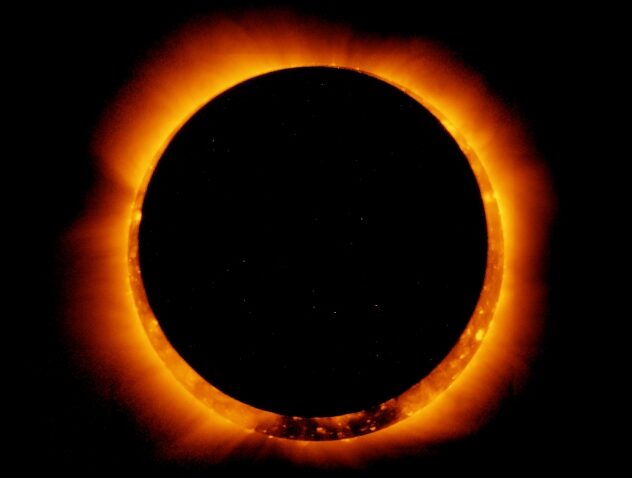
© NASA/Hinode/XRTThe moon passing in front of the sun during an annular solar eclipse on Jan. 4, 2011.
You wake up to a dark, dreary, glum-feeling, Monday-type of morning. For the 547th consecutive day.
Just 18 months prior, you were a hard-working farmer gearing up for another bountiful crop season.
But then the skies went dark.
From early 536 to 537, they stayed dark. Across much of eastern Europe and throughout Asia,
spring turned into summer and fall gave way to winter without a day of sunshine. Like a blackout curtain over the sun, millions of people across the world's most populated countries squinted through dim conditions, breathing in chokingly thick air and losing nearly every crop they were relying on to harvest.
This isn't the plot of a dystopian TV drama or a fantastical "docufiction" production.
This was a harsh reality for the millions of people that lived through that literally dark time or, as some historians have declared, the very worst year ever to be alive.








Comment: It's a shame to see the research trend of 15-20 years ago veer off course away from comets as the likely cause of sudden catastrophic climate change. However, it's good to see that at least some climate science acknowledges that the only climate change worth really worrying about is the sudden, NATURALLY-CAUSED kind.
We get it though. Comets are just too much for people. It's scary to contemplate, and disturbs too many beliefs.