Animals
S


Binoculars

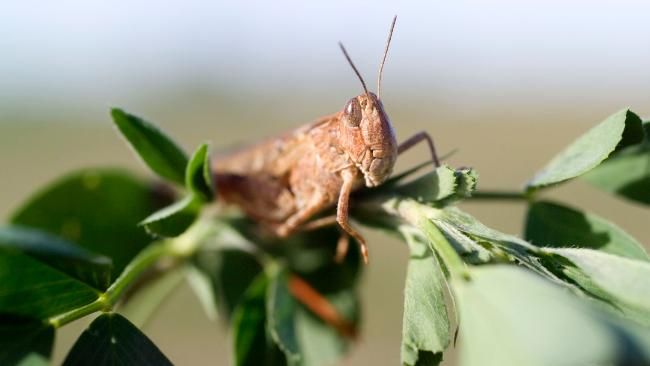
Australia: Locust Bands Found in Northwest New South Wales

Image
© The Daily Telegraph
Surveillance aircraft have captured images of "supersized" bands of locusts in northwestern NSW that are more than three kilometres in length.

NSW Primary Industries Minister Steve Whan has released the footage of the locusts near Walgett, taken during the first aerial surveillance mission of the plague season.

Mr Whan said there were now 102 confirmed locust reports across NSW, with aircraft on Wednesday detecting the insects in 16 locations near Walgett.

"What we've seen from the footage is supersized bands of locusts, more than three kilometres long, eating fodder and crops in northern NSW," Mr Whan told reporters at NSW Parliament on Thursday.

"This has confirmed our prediction that the northwest will be the first front in the battle against the locust plague.

Arrow Down

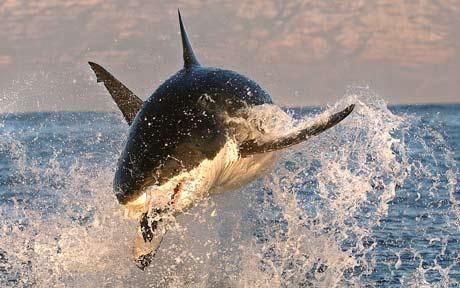
South Africa: Poacher Killed by Great White Shark

Image
© Alfred Weissenegger/Rex FeaturesThe attack took place on Tuesday between Dyer Island and Pearly Beach, east of Cape Town.
A poacher in South Africa has been eaten by a great white shark during an illegal fishing trip.

Khanyisile Momoza, 29, was attacked as he harvested valuable perlemoen shells in the waters near Gansbaai in South Africa.

The fisherman was among a group of 12 poachers who had tried to swim to safety after spotting the shark in shallow waters.

A friend of Mr Momoza, who witnessed the attack, said: "There was screaming and crying. We just swam, we didn't look back.

"We were swimming in a group but he was a bit behind us.

"It jumped out of the water with him and then it took him down."

Igloo

Up to a millions lambs could die as New Zealand freezes over

Image
© TVNZ
Farm lobby group Federated Farmers says this month's spring storm in Southland looks set to cause the agricultural sector greater economic losses than the Canterbury earthquake imposed on farmers, and they want the government to declare it an adverse event.

"Federated Farmers is now working with Agriculture Minister David Carter on a medium scale adverse event declaration," a federation spokesman said tonight.

Such a declaration could give help such as that provided to farmers in recent serious droughts, including funding for a rural support trust to offer financial advice.

Agriculture Minister David Carter will tomorrow visit the small farm the federation's national president, Don Nicolson, and his wife Gail run at Waimatua, southeast of Invercargill, and the farms of Matthew and Vanessa Richards and David and Alana Clarke.

Bizarro Earth

The Oil and the Turtles

Ridley-turtle hatchling
© Gary BraaschRidley-turtle hatchlings head into the Gulf in Tamaulipas, Mexico.
Every year, Rancho Nuevo, 900 miles southwest of the Deepwater Horizon blowout, sees a spectacular phenomenon: the arribada - mass nesting - of the Kemp's ridley sea turtle, which has already neared extinction. This year, thousands of baby ridleys swam off toward a deadly new enemy.

Of all the devastation in the Gulf of Mexico caused by the Deepwater Horizon blowout, no one single species is being directly affected as much as the critically endangered Kemp's ridley sea turtle. Only 8,000 adult females nested in 2009, and the adult males are thought to be even fewer. Those that remain have been hit hard. Most of the surviving juveniles inhabit the waters 20 to 30 miles from shore, feeding and growing in the same currents and gyres that collected the bulk of the four million barrels spewed by the now capped well. There were confirmed reports of ridleys being burned alive in the pools of corralled, concentrated oil that BP had been burning off during the spill.

Cow Skull

US forces drop dead drug-poison killer mice from helicopters

Gloves come off in Pacific jungle conflict

The United States military is waging war in the Pacific on invading jungle snakes - by dropping dead mice stuffed with household headache remedies on them from helicopters.
deadmicehelicopter
© The RegisterIn you go, Fluffy

Stars and Stripes reports on the airborne murine drug-zombie campaign being waged around US bases on the tropical island of Guam. Guam has been plagued since World War II by an invasion of brown tree snakes, which have swarmed through the local jungles eating everything they can catch and wiping out several kinds of bird.

The snakes are thought to have reached Guam aboard military transports, and the US authorities there are concerned that they might travel on by similar means to invade other Pacific islands and devastate more exotic ecosystems. Island life typically has no defence against predators introduced by human activity.

Attention

Speeding Train Kills Seven Elephants in Eastern India

A speeding freight train struck a herd of elephants in a densely forested region in eastern India, killing seven, an official said Thursday.

The herd was crossing the tracks in Banarhat forest in West Bengal state at around midnight Wednesday when the train plowed into it, said Sumita Ghatak, a district forest officer.

"This is the first incident in the state when so many elephants have been killed in a single accident. It is really shocking," Ghatak said.

Outraged wildlife activists said they had complained to railroad authorities many times, asking them to divert trains to other routes or avoid running trains through forests at night.

Animesh Basu, who runs the Himalayan Nature and Adventure Foundation, said conservationists have been urging railways to instruct drivers to slow down while traveling in forest areas.

Arrow Down

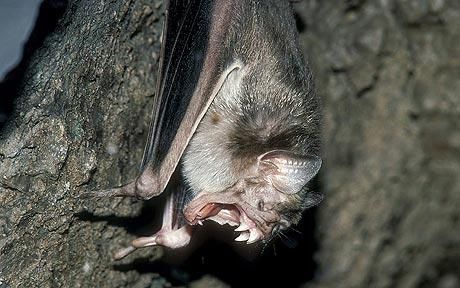
Peru: Vampire Bats Kill Five Children

Image
© PhotoLibraryRabid vampire bats have attacked more than 500 people in Peru's Amazon, killing five children
At least five children living in Peru's northern Amazon jungle region have died after being bitten by rabid vampire bats, the health ministry said on Wednesday.

At least five children living in Peru's northern Amazon jungle region have died after being bitten by rabid vampire bats, the health ministry said on Wednesday.

The victims, all aged between five and 10, were members of the Awajun and Wampis communities living in the province of Condorcanqui, 620 miles north of Lima on the border with Ecuador.

Fernando Borjas, a medical doctor with the health directorate in the regional capital Chachapoyas, said that the rabies outbreak has been going on for several months.

Health authorities have sent teams with vaccines to the remote jungle villages, but after a 15 hour river trip they often arrive too late.

Frog

Three Species of "Extinct" Frogs Rediscovered

Image
© Jos Keilgast/Conservation InternationalHyperolius sankuruensis: Last seen in 1979, a redfrog was rediscovered 186 miles west of where it was first found, in the Democratic Republic of the Congo.
Worldwide search to find 100 frogs that haven't been seen in decades yields results.

A global quest to find several "lost" species of amphibians has rediscovered three species that have not been seen for decades, conservation groups announced.

The so-called Search for the Lost Frogs is attempting to find 100 species of amphibians that had been thought extinct, but that scientists believe may be surviving in small populations.

The three animals that have been rediscovered so far include a Mexican salamander not seen since it was discovered in 1941, a frog from the Ivory Coast (the Mount Nimba Reed Frog) missing since 1967 and another frog from the Democratic Republic of Congo (the Omaniundu Reed Frog) lost since 1979.

"It's pretty extraordinary to think about just how long it has been since these animals were last seen," said search organizer Robin Moore, of Conservation International. "The last time that the Mexican Salamander was seen Glen Miller was one of the world's biggest stars, while the Mount Nimba Reed Frog hasn't been seen since the year the Beatles released Sgt Pepper's Lonely Heart Club Band and the Omaniundu Reed Frog disappeared the year that Sony sold its first-ever Walkman."

Bizarro Earth

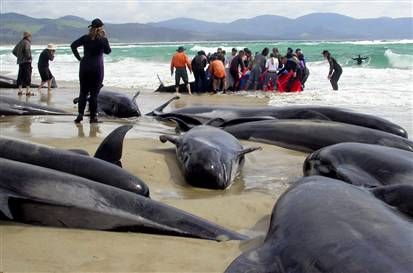
56 Pilot Whales Die After Stranding on New Zealand Beach

Image
© Getty Images58 pilot whales stranded at nearby Karikari Beach in August.
Wellington, New Zealand -- Only 24 of several dozen pilot whales stranded on a remote northern New Zealand beach survived a stormy first night ashore despite rescuers' desperate efforts to save them, officials said Thursday.

Large waves and strong winds lashed Spirits Bay as rescuers struggled to move survivors above the tide-line. It was the second mass beaching in the region in a month.

''As of this morning, there have been 24 live animals moved out of the tide up onto the beach out of harms' way,'' Department of Conservation spokeswoman Caroline Smith said. ''The weather is terrible up there. We have 20 knot winds and 1.5 to 2 meter (5 to 7 foot) swells, so it is not possible to refloat them at Spirits Bay.''

The 80 animals were spread out over a three-mile (five-kilometer) stretch, Smith said. Officials were planning to use big nets to lift the creatures onto the back of trucks, and move them to more sheltered Rarawa Beach, about an hour south, where they will be refloated.

Arrow Down

Kuwait loses 90% of coral reefs in the Arab Gulf

Image
© Kuwait Dive Team
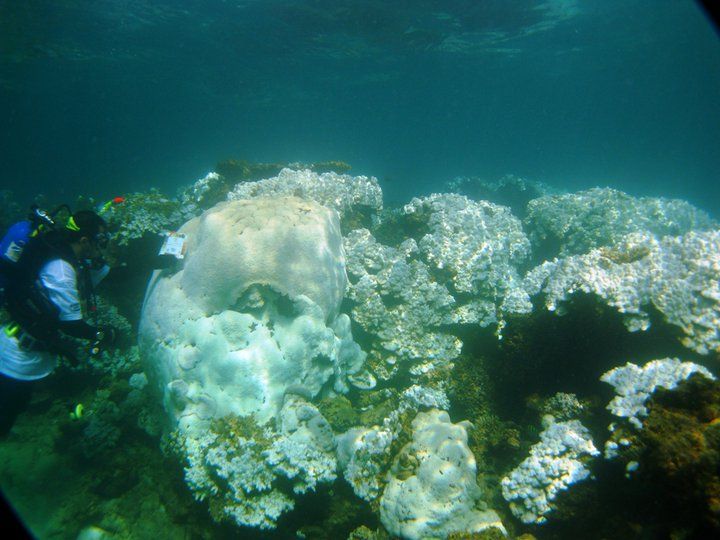
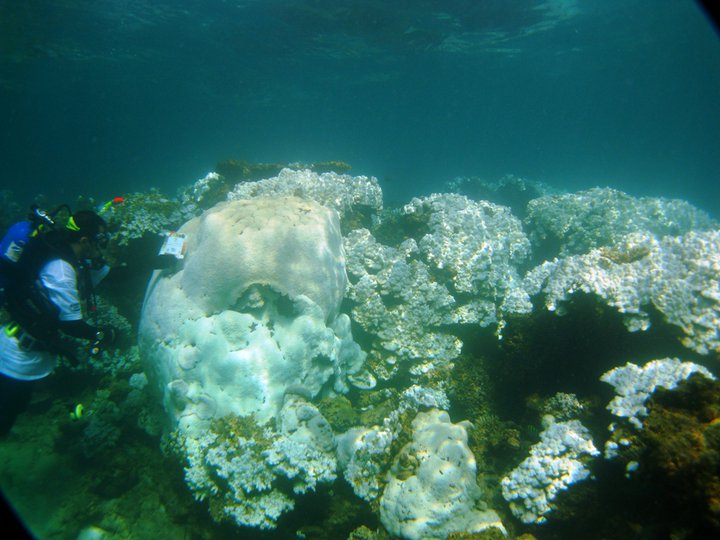
Head of the Kuwait Diving Team Walid Al-Fadhel said in a statement to KUNA, "this requires quick action by the competent authorities to find out the real causes, as well as solutions." He also called on frequent goers to these marine natural sites to refrain from any action that may inflict damage in the reefs or kill the creatures co-existing with them.

The comprehensive survey, conducted by the team, included the major locations of coral reefs 50 miles along the shores and 70 km from the southern coast borders, with depths ranging from 1-13 meters.

The combing covered Um Al-Maradim, Kheiran, Ras Al-Zor, Garouh, Um Diera, Teyler, Kubbar and Oraifjan with the result of 90 percent of "bleaching" of the coral reef.

At the begining of noticing this phenomenon, he added, dead fish were found floating on the water surface, or laying between the corals, yet not anymore.

Al-Fadhel said that the team does not know the causes for this disaster, but it is either a natural or human, which requires the competent authorities, whether global or local, to examine and prepare accurate studies. He noted that the diving team proceeded to contact several local and international companies (interested in this matter) and send the necessary reports with some samples of sites affected for study.