Animals
S


Info

Dolphins Shell Out for a Fish Supper

Smart Dolphin_1
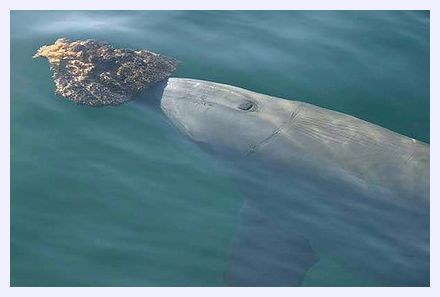
© Simon AllenGone fishing ... a dolphin with a sponge on its head for foraging.
Bottlenose dolphins in Western Australia have invented a clever new trick for catching dinner.

They use their long snouts to lift heavy conch shells to the surface and then shake them about in the hunt for fish that have sought refuge inside.

Simon Allen, a marine biologist at Murdoch University, said dolphins in Shark Bay are renowned for their "remarkable array" of sophisticated behaviours, including using sponges as tools and beaching themselves intentionally in pursuit of fish in shallow waters.

But he and his colleagues were shocked when they first saw a dolphin suddenly appear with a massive conch on its head (image below).

"We nearly fell off the boat. It looked like a unicorn," he said. "It was a fantastic wildlife encounter."

They thought the dolphin might have been using the shell as a toy or been showing off to its fellow cetaceans.

Question

Mystery Blooms on Walden Pond


Concord - Gwen Acton thought the dime-sized translucent pods she saw on her Sunday swim in Walden Pond were strange, beautiful seeds that had drifted down to the water surface from some flowering plant.

But as she cut through the water in a crawl stroke Monday she noticed their numbers had ballooned. She saw them everywhere. And they were pulsating.

"I said to myself: 'Oh, no. I am surrounded by thousands and thousands of jellyfish,' '' Acton said.

She was.

A deeply mysterious species - freshwater jellies - has bloomed in one of the nation's most visited ponds. The organisms rarely cause health problems in humans, but the discovery has set off a flurry of interest at the New England Aquarium, where scientists have unsuccessfully attempted to breed the elusive creatures.

It is not that the tiny jellyfish are rare; after probably hitching a ride to the United States in the late 1800s on Asian water hyacinth or other ornamental plants, the jelly fish are believed to have spread to lakes and ponds throughout the country because of activities of fishermen and waterfowl.

But because the tiny jellies can lie in a dormant state for years - perhaps decades - and bloom en masse suddenly before disappearing just as quickly, people rarely come across them or do not know what they are looking at when they do. In Massachusetts, where officials began keeping track of the species about five years ago, they have been recorded in about five or six lakes and ponds across the state.

Alarm Clock

US: Lake Michigan's ecosystem facing collapse

piles of washed up zebra and quagga mussel shells
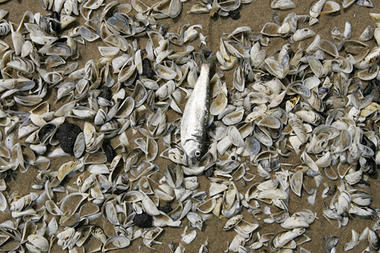
© Newscom/FileVisitors to Harrington Beach State Park in Belgium, WI, must walk past piles of washed up zebra and quagga mussel shells and dead smelt on the shore. The quagga has recently begun eating its way through Lake Michigan's phytoplankton population, threatening to destroy the lake's food web.

An invasive mussel is devouring Lake Michigan's phytoplankton, the basis for the lake's food chain.

An invasive species of mussel called quagga has recently begun eating its way through the phytoplankton population of Lake Michigan, which could have dire effects on the lake's ecosystem, scientists now warn.

A giant ring of phytoplankton (microscopic plants such as algae) was discovered in Lake Michigan in 1998 by Michigan Technological University biologist W. Charles Kerfoot and his research team. The "phytoplankton doughnut" is formed when winter storms kick up nutrient-rich sediment along the southeastern shore of the lake. The disturbed sediments begin circulating in a slow-moving circle with the lake's currents, which provides a massive supply of food for phytoplankton.

Butterfly

Famed Tasmanian devil euthanized after tumor found

Image
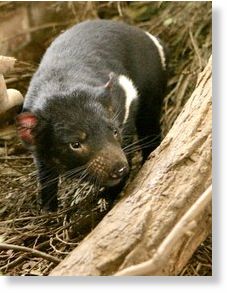
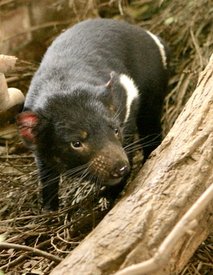
© AP Photo/Rob GriffithIn this Wednesday, May 21, 2008 file photo, a Tasmanian devil searches for food in his enclosure at Taronga Zoo in Sydney, Australia. The Tasmanian devil population has plummeted by 70 percent since Devil Facial Tumor Disease was first discovered in 1996.
A Tasmanian devil named Cedric, once thought to be immune to a contagious facial cancer threatening the iconic creatures with extinction, has been euthanized after succumbing to the disease, researchers said Wednesday.

The death of the devil - previously heralded as a possible key to saving the species - is another blow for scientists struggling to stop the rapid spread of the cancer, which is transmitted when the furry black marsupials bite each other.

"It was very disappointing indeed," said scientist Alex Kreiss of the Menzies Research Institute in Hobart, Tasmania, which has led the studies on Cedric. "It's just made us more determined to keep the research going."

The Tasmanian devil population has plummeted by 70 percent since Devil Facial Tumor Disease was first discovered in 1996. The snarling, fox-sized creatures - made famous by their Looney Tunes cartoon namesake Taz - don't exist in the wild outside Tasmania, an island state south of the Australian mainland.

In 2007, Menzies researchers injected Cedric and his half brother Clinky with facial cancer cells. Clinky developed the disease, but Cedric showed an immune response and grew no tumors - giving researchers hope that he could help them create a vaccine.

But in late 2008, Cedric developed two small facial tumors after being injected with a different strain of the cancer, which causes grotesque facial growths that eventually grow so large, it becomes impossible for the devils to eat. Current estimates suggest the species could be extinct within 25 years due to the prolific spread of the cancer.

Bizarro Earth

Scientists Ponder Dolphin Mystery

Victoria, British Columbia: -- Canadian scientists say they are puzzled why dolphins, which normally stay in offshore waters, are showing up close to shore and in inlets on Vancouver Island.

Dolphins started moving closer to land in the mid-1980s but the reason is still unknown, researchers said. It could have been a result of a food shortage or changing water temperatures.

"They just keep increasing," Echo Bay, British Columbia, resident Billy Proctor told the Vancouver Sun. "I guess their population is probably exploding because there's tons of babies everywhere. I don't think they're supposed to be here."

Proctor said he sees hundreds of them daily hanging out close to shore.

Bug

Possible Breakthrough in Breeding Parasite-Resistant Bee


A British beekeeper says he may have discovered a strain of honey bee immune to a parasite that has been gradually wiping out populations of the vital insect worldwide.

Scientists have been trying to find a way to fight the pesticide-resistant Varroa mite.

But now a retired heating engineer who spent 18 years searching for a mite-resistant breed may have found a breakthrough.

Ron Hoskins, 79, from Swindon in southern England, says he has managed to isolate and breed a strain of bees which "groom" one another, removing the mites.

Binoculars

South Africa: Drunk Baboons Plague Cape Town's Exclusive Suburbs

Image
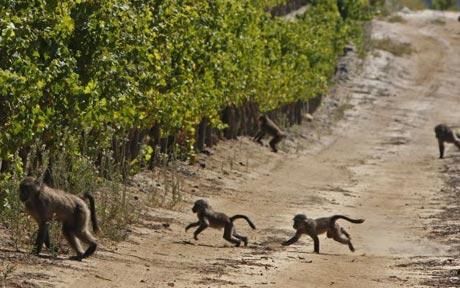
© AP PhotoEach day, dozens of Cape Baboons gather to strip the ancient vines
The sun is setting over South Africa's oldest vineyard and the last of the wine-tasting tourists are climbing onto their buses. But one large family group has no intention of leaving - and there is little the management can do about it.

Groot Constantia, in the heart of Cape Town's wine country, can deal with inebriated holidaymakers - but it is invading baboons which have developed a taste for its grapes that the wine makers are struggling with.

Each day, dozens of Cape Baboons gather to strip the ancient vines - the sauvignon blanc grapes are a particular favourite - before heading into the mountains to sleep. A few, who sample fallen fruit that has fermented in the sun, pass out and don't make it home.

"They are not just eating our grapes, they are raiding our kitchens and ripping the thatch off the roofs. They are becoming increasingly bold and destructive," said Jean Naude, general manager at the vineyard, which is celebrating its 325th birthday this year. Guards banging sticks and waving plastic snakes have been deployed with only limited success, and not even a blast of a vuvuzela, the plastic horn made famous at the World Cup, seems to frighten them.

Fish

Snow Crabs Found Clustered Around Methane Vents at Bottom of Sea of Japan

Image
© Unknown
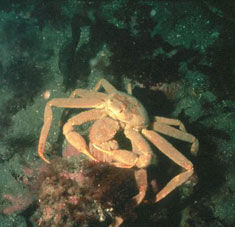
Large clusters of a type of snow crab called benizuwaigani have been discovered around methane vents at the bottom of the Sea of Japan, but scientists are not quite sure why.

Methane may play an important role in the feeding habits of the crab, as microorganisms are known to gather around methane vents to receive nutrients, providing the crabs with a source of food, researchers from the University of Tokyo and other institutes speculated when the finding was announced Wednesday.

Experts believe the Sea of Japan may be home to deposits of methane hydrate, a methane compound with a sherbet-like texture known as "burning ice" for its potential uses as a next-generation fuel source.

"We might be able get some insights on methane hydrate exploration by looking into these crab clusters," said Prof. Ryo Matsumoto of the University of Tokyo.

The research team noted that the sea off Niigata Prefecture is home to both methane deposits and the benizuwaigani crab. Using an underwater robot called Tsuna Sando, the group photographed 12 locations of 800 square meters (2,624.7 square feet) each at the bottom of the sea 30 (18.6 miles) to 40 kilometers (24.85 miles) off Naoetsu Port, a site known as a major benizuwaigani habitat.

Fish

Cold Empties Bolivian Rivers of Fish

Image
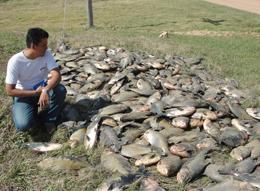
© Never TejerinaThe San Julián fish farm in the Santa Cruz department of Bolivia lost 15 tonnes of pacú fish in the extreme cold.
Antarctic cold snap kills millions of aquatic animals in the Amazon.

With high Andean peaks and a humid tropical forest, Bolivia is a country of ecological extremes. But during the Southern Hemisphere's recent winter, unusually low temperatures in part of the country's tropical region hit freshwater species hard, killing an estimated 6 million fish and thousands of alligators, turtles and river dolphins.

Scientists who have visited the affected rivers say the event is the biggest ecological disaster Bolivia has known, and, as an example of a sudden climatic change wreaking havoc on wildlife, it is unprecedented in recorded history.

Bizarro Earth

Thousands of Dead Fish Reported at Mouth of Mississippi

Waves wash oil onto the beach in May 2010 near the south pass of the Mississippi River into the Gulf
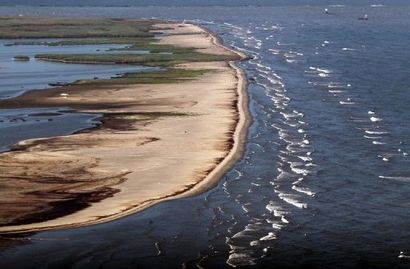
© John Moore/Agence France-Presse/Getty ImagesWaves wash oil onto the beach in May 2010 near the south pass of the Mississippi River into the Gulf of Mexico. Thousands of fish have turned up dead at the mouth of Mississippi River, prompting authorities to check whether oil was the cause of mass death, local media reports said Monday.
Thousands of fish have turned up dead at the mouth of Mississippi River, prompting authorities to check whether oil was the cause of mass death, local media reports said Monday.

The fish were found Sunday floating on the surface of the water and collected in booms that had been deployed to contain oil that leaked from the BP spill in the Gulf of Mexico, the Times-Picayune reported.

"By our estimates there were thousands, and I'm talking about 5,000 to 15,000 dead fish," St Bernard Parish President Craig Taffaro was quoted as saying in a statement.

He said crabs, sting rays, eel, drum, speckled trout and red fish were among the species that turned up dead.