Comets


Comet 2

Comet Halley - Close encounters of the cometary kind

Halley's Comet
© Malaga Bay
Researchers trawling through the dusty corners of the Academic Archives primarily have to rely upon serendipity to provide them with break-through information.

However, when serendipity strikes the results can be startling.

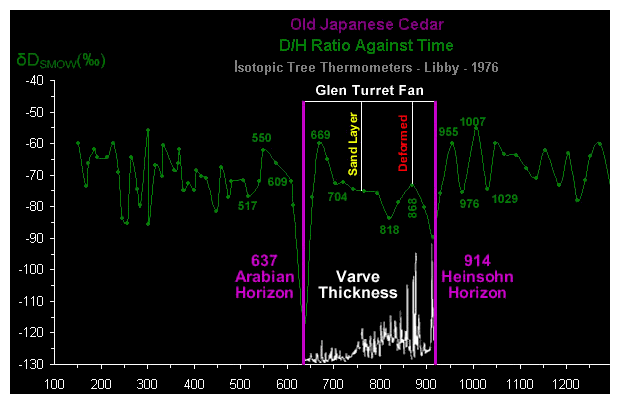
Such was the case a few weeks ago when the Glen Turret Fan chronology neatly slid into place between the Arabian Horizon and the Heinsohn Horizon in the Old Japanese Cedar Tree chronology.
The Glen Turret Fan in upper Glen Roy contains 276 annual sedimentary layers that are coincidentally close to the 277 years between the Arabian Horizon of 637 CE and the Heinsohn Horizon of 914 CE i.e. the Heinsohn Sandwich.
...
The unexplained arrival of the Sand Bed in the Glen Turret Fan [upper Glen Roy] in 759 CE coincidentally echoes:

a) the unexplained Smothering of Samarra in sand
b) the unexplained Covering of Cologne in sand
c) the unexplained Clear Black Horizons in sand across Southern England and Scotland
d) the unexplained Sandy Sludge Layers in the Greenland Ice Cores...

See: The Fold Up Beds of Glen Roy
Old Japanese Cedar Tree chronology
© Malaga Bay
And then serendipity struck again in form of Comet Halley.

Comet Halley has several remarkable aspects.
Comet 2

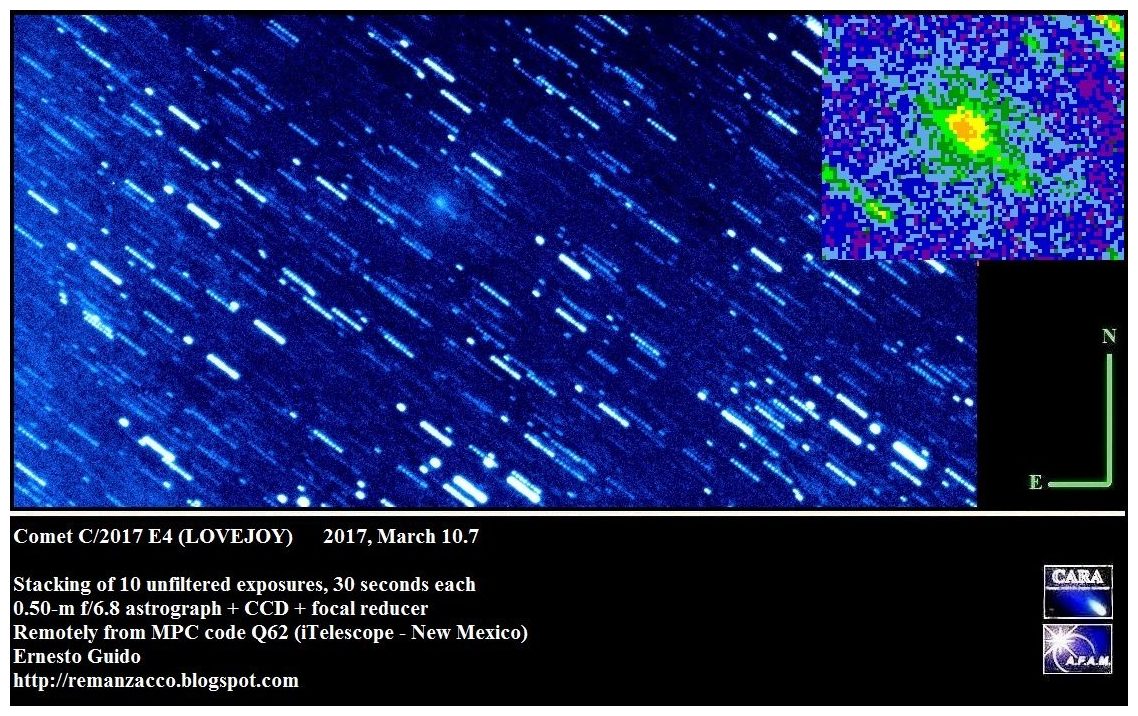
New Comet: C/2017 E4 (LOVEJOY)

CBET nr. 4373, issued on 2017, March 13, announces the discovery of a comet (magnitude ~15) by Terry James Lovejoy on three CCD 8-s exposures taken five minutes apart starting on Mar. 9.684 UT with a Celestron C14 reflector operating at f/1.9 (+ QHY9 camera). The new comet has been designated C/2017 E4 (LOVEJOY).

I performed follow-up measurements of this object, while it was still on the neocp. Stacking of 10 unfiltered exposures, 30 seconds each, obtained remotely on 2017, March 10.7 from Q62 (iTelescope network) through a 0.50-m f/6.8 astrograph + CCD + focal reducer, shows that this object is a comet with a diffuse coma nearly 15 arcsec in diameter.

My confirmation image (click on it for a bigger version)
Comet Lovejoy C/2017
© Remanzacco Blogspot

Comet 2

New Comet: C/2017 E1 (Borisov)

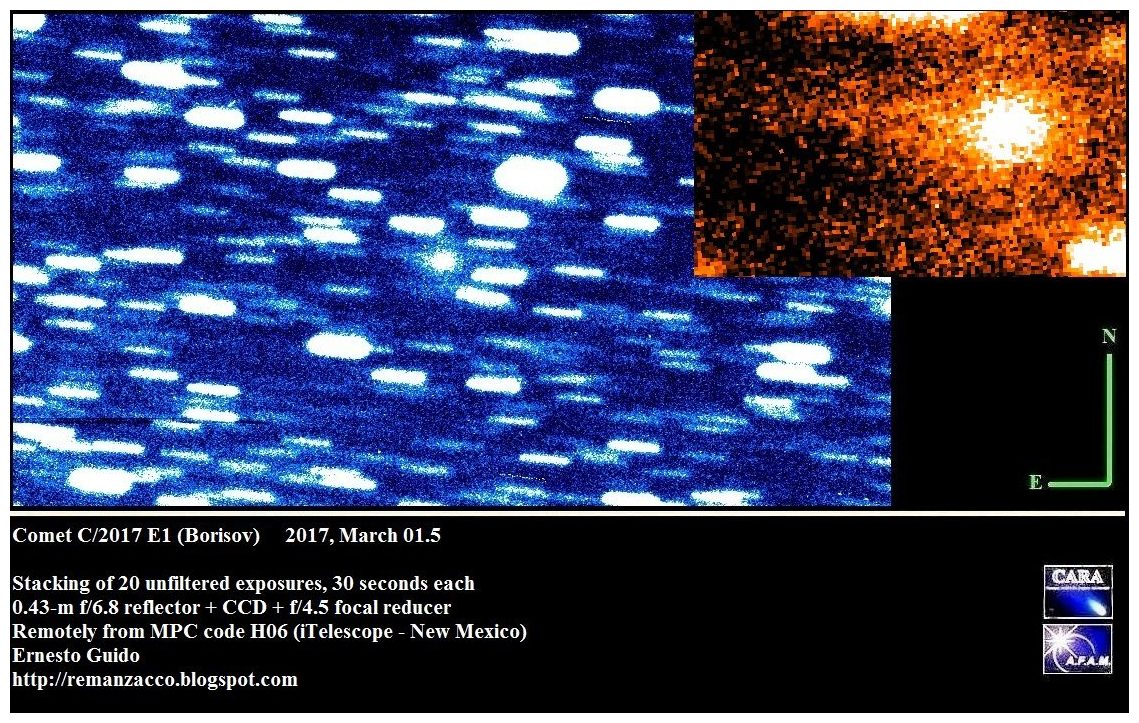
CBET nr. 4369, issued on 2017, March 04, announces the discovery of a comet (magnitude ~17) by Gennadii Vladimirovich Borisov on three unfiltered 120-s exposures obtained on Mar. 1.10 UT with a 0.4-m f/2.3 astrograph at the "Mobil Astronomical Robotics Genon" Observatory (MARGO) near Nauchnij. The new comet has been designated C/2017 E1 (Borisov).

I performed follow-up measurements of this object, while it was still on the neocp. Stacking of 20 unfiltered exposures, 30 seconds each, obtained remotely on 2017, March 1.5 from H06 (iTelescope network) through a 0.43-m f/6.8 reflector + CCD + f/4.5 focal reducer, shows that this object is a comet with a diffuse coma nearly 30 arcsec in diameter.

My confirmation image (click on it for a bigger version)
Comet Borisov
© Remanzacco Blog
M.P.E.C. 2017-E42 assigns the following preliminary parabolic orbital elements to comet C/2017 E1: T 2017 Apr. 9.8; e= 1.0; Peri. = 151.90; q = 0.90; Incl.= 14.54

Fireball

Loud boom and reports of fireball sighting over Texas

Meteor over Abilene
© KTXS 12 ABC
Abilene - Many people reported to KTXS that they saw a fireball moving across the sky Sunday evening just before 9 p.m. Most of the reports came from an area from Abilene to Snyder.

People in the Snyder region also reported hearing a boom like that of a transformer failing or a sonic boom that a jet might create.

Based on the reports, it appears that something fell from the sky and got close enough to the ground that the sonic boom it created was audible to people on the ground in parts of our area. However, we have not received any reports of anything crashing to the ground.

The object could have been man-made space debris like a piece from a spent rocket. But we have not heard of any of these reentries from NASA or our military. More likely it was a piece of "rock" wandering around in our solar system that fell into our atmosphere.

As the object falls deeper into our atmosphere friction with air molecules increases and heats the object. This creates the streak of light in the sky. Most of the time the falling object burns up before hitting the ground.Since the falling object is likely traveling at several thousand miles per hour, it creates a sonic boom. If it is close enough to the ground, we may hear it.

Checking for a possible noise maker, the USGS earthquake site indicates no measured earthquakes in the state of Texas Sunday or Sunday evening.


Comment: Footage of the meteor was also captured by a police officer in Weatherford, Texas.


Fireball 4

Meteor fireball sighted over South Island, New Zealand

Otago Meteor
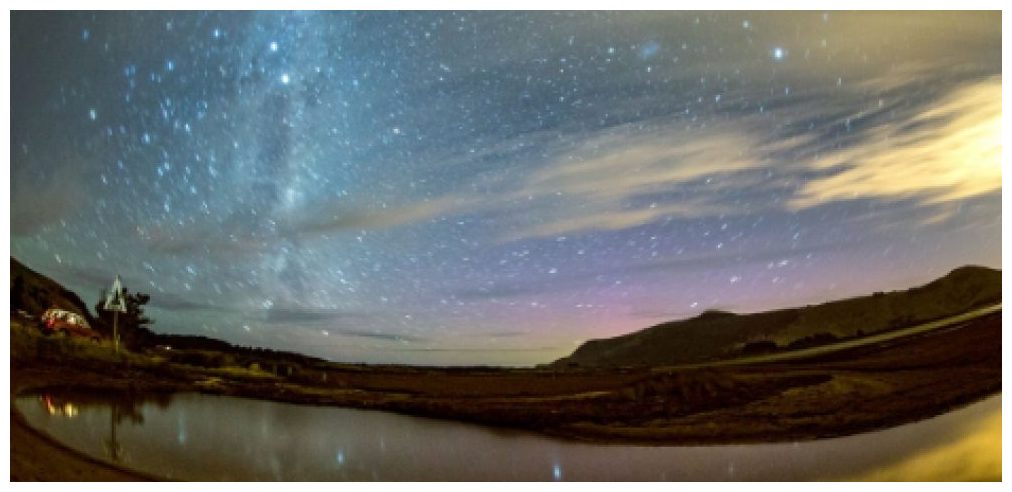
© Photo Twitter (@iangriffin)Clear skies around the country allowed for sightings of what may have been a meteor (not pictured) last night.
Reports of a bright light shooting across the skies last night have come in from around the country, including Dunedin.

ODT Online submitter Peter Simkins relates looking out of his window in Broad Bay towards Port Chalmers and seeing a ''yellow streak of light plummeting to earth''.

Other sightings have come in from in Blenheim, Porirua, Lake Ferry, Martinborough and New Plymouth.

Some people posted on social media about seeing the sky light up, while others described the light as being green in colour. Fairfax is this morning reporting that it may have been may be a Russian cargo rocket re-entering the earth's atmosphere.

One woman posted on Facebook that she saw the light in Lower Hutt.

"Yup saw it clearly in Lower Hutt. It was huge and the tail colorful."

The Herald was unable to contact an expert to comment on the sighting tonight, but a person at the University of Canterbury's Mt John Observatory said descriptions provided indicated people had seen a meteor.

According to Nasa, small chunks of rock and debris in space are called meteoroids.

They become meteors, or shooting stars, when they fall through a planet's atmosphere; leaving a bright trail as they are heated to incandescence by the friction of the atmosphere. Pieces that survive the journey and hit the ground are called meteorites.

Fireball 2

Bright meteor fireball lights up sky in Southern Alabama

Alabama Fireball
© NASAThe reports of sound indicate that it penetrated fairly low into the atmosphere before fragmenting, perhaps as low as 14 miles in altitude.
Local 15 has confirmed with NASA that a bright meteor was seen just after 9 p.m. Saturday.

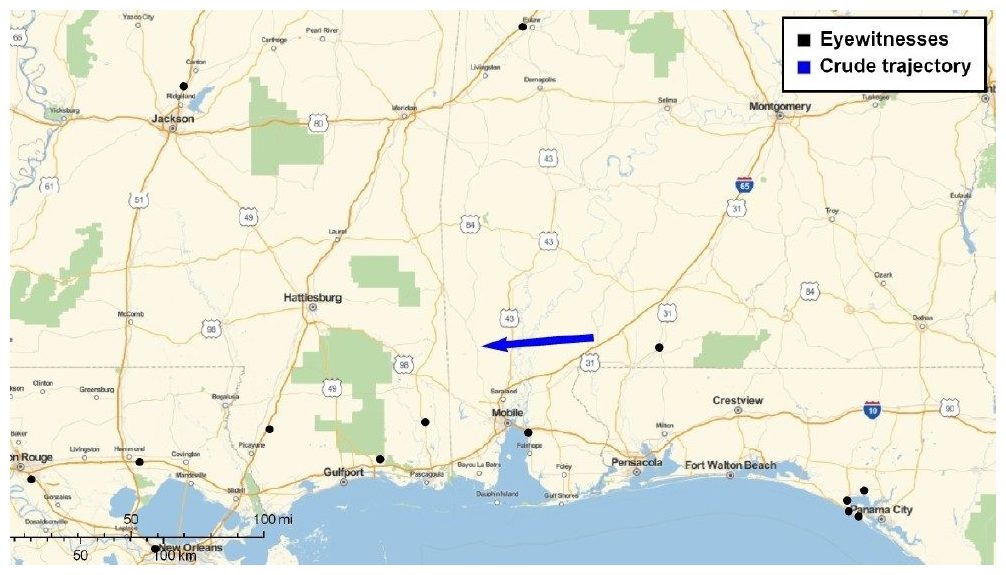
Saturday night reports began circulating on social media about a large fireball in the sky and a loud boom. Residents in Southern Alabama reported that they heard a loud boom that shook their homes. NASA says that the fireball first appeared to the Northeast of Mobile and moved west at about 56,000 miles per hour.

The average brightness is that of the Full Moon, leading experts to believe that it was probably about a foot or two in diameter. Using eyewitness reports and a software tool to derive a ground track NASA was able to conclude that the best reports indicate the meteor broke apart above U.S. 43, just North of Mobile.

The reports of sound indicate that it penetrated fairly low into the atmosphere before fragmenting, perhaps as low as 14 miles in altitude.

Comment: This meteor was also reported in western Florida.


Fireball

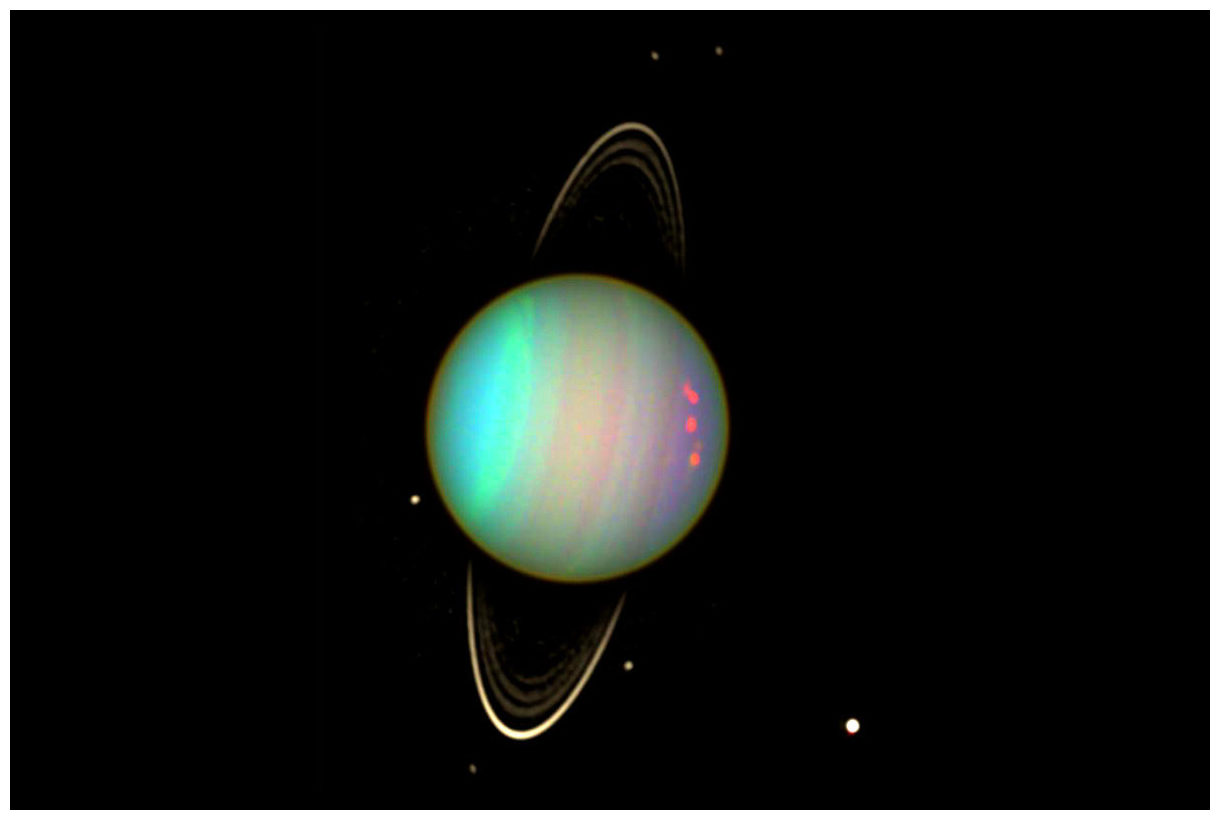
Rare asteroid discovered along the orbit of Uranus

Asteroid orbiting Uranus
© NASA/Erich Karkoschka (Univ. Arizona)Now with added Trojans.
A rare Trojan asteroid of Uranus has been found, following the same orbit as the planet. Its existence implies there could be many more of these companion asteroids, and that they are more common than we thought.

A Trojan asteroid orbits the sun 60 degrees ahead of or behind a planet. Jupiter and Neptune have numerous Trojans, many of which have been in place for billions of years. These primordial rocks hold information about the solar system's birth, and NASA has just announced plans to visit several of them in the 2020s and 2030s.

But Saturn and Uranus live in a rougher neighbourhood: the giant planets on either side of them yank Trojans away through their gravitational pull. So Saturn has no known Trojan, and Uranus had only one.

In July, though, astronomers reported a new asteroid, named 2014 YX49, that shares Uranus's orbital period of 84 years. Now computer simulations of the solar system by brothers Carlos and Raul de la Fuente Marcos at the Complutense University of Madrid, Spain, indicate the asteroid is a Uranus Trojan. The simulations show that the asteroid has maintained its position ahead of Uranus for thousands of years.

"It is bigger, probably twice as big as the first one," says Carlos. The new asteroid is brighter than the first, but its exact size depends on how much light its surface reflects. If it reflects half the sunlight striking it, it's 40 kilometres across; if it reflects 5 per cent, its diameter is 120 kilometres.

Telescope

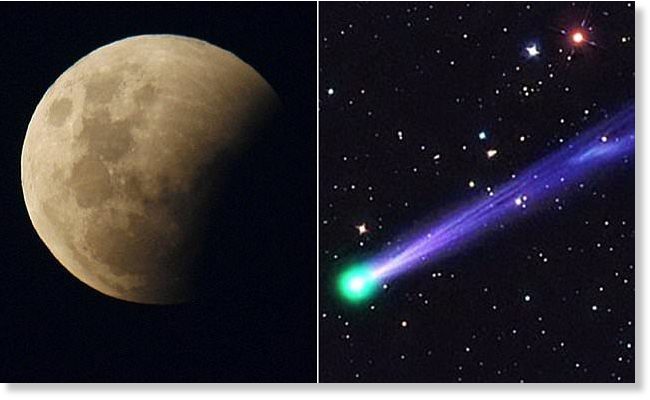
Look up tonight! Stunning 'Snow moon' eclipse and a mysterious green comet are set to appear in the night sky

comet and full moon
© NASA Jet Propulsion Lab/California Institute of TechnologyAlong with the lunar eclipse, Comet 45P will make its closest approach to Earth this weekend. The comet makes its way back to the inner solar system roughly every 5 years, and has a bright bluish-green 'head'
It's almost time to get your binoculars at the ready, as this evening looks set to offer some stunning astronomical events to viewers around the world. A lunar eclipse is forecast to appear on a snow moon - a full moon that occurs in February - casting a shadow across the lunar surface.

And just a few hours later, Comet 45P - also known as the New Year comet - will make its closest approach to the Earth.

The full event will be live streamed on Slooh, who will be filming the skies from the Canary Islands.

An eclipse of the moon occurs when the sun, Earth and moon line up, with Earth in the middle.

This alignment causes the Earth's shadow to fall on the moon, creating a lunar eclipse.

Info

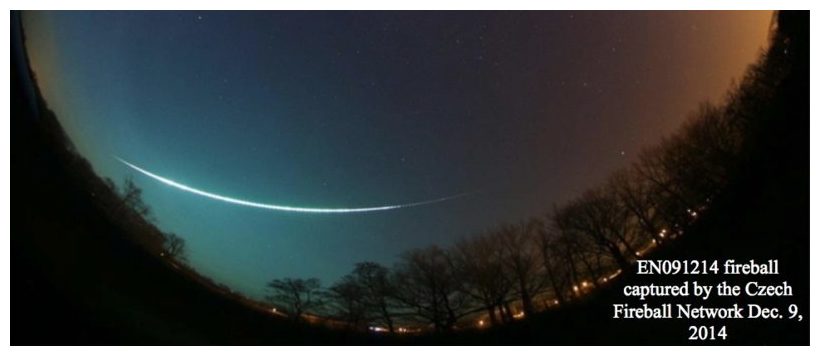
Cause of noises made by meteors found

Fireball Sound
© Spalding et. al./Scientific Reports
Bright, flaring meteors are sometimes accompanied by faint noises. What's strange about these popping, sizzling, rustling, and hissing sounds are that they reportedly occur almost instantly to earthly onlookers. This makes little sense, as meteors are as far as sixty miles away from viewers on the ground, so any sound they make should take several minutes be heard. What's going on? Do meteors somehow defy the laws of physics?

Researcher Richard Spalding and several of his colleagues at Sandia National Laboratories recently set out to study this strange phenomenon, and in a study just published to the journal Scientific Reports, they announce that the sounds are likely created through light.

Meteor fireballs sometimes pulse with light many times brighter than the full Moon, and these blasts can briefly heat the surfaces of objects many miles away. Such sudden temperature changes can actually create sound.

"We suggest that each pulse of light can heat the surfaces of natural dielectric transducers," Spalding and his colleagues write. "The surfaces rapidly warm and conduct heat into the nearby air, generating pressure waves. A succession of light-pulse-produced pressure waves can then manifest as sound to a nearby observer."

Comet 2

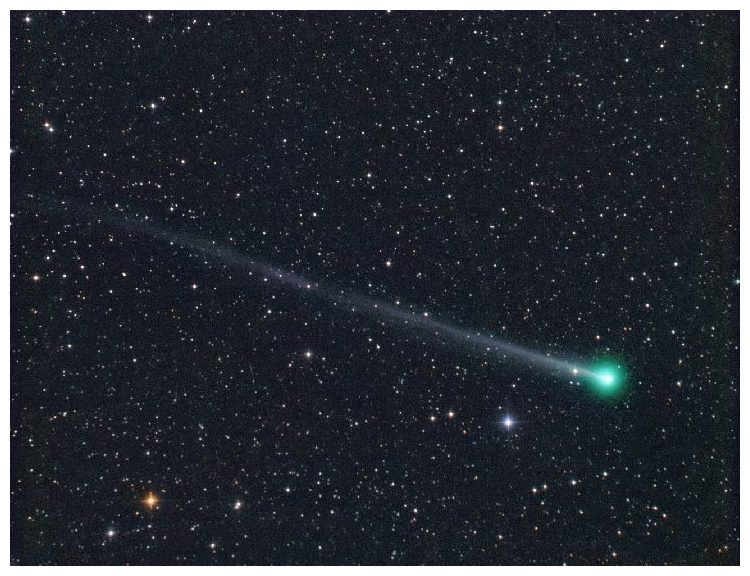
Comet 45P approaches Earth - Closest approach on Feb. 11th

45P Honda-Mrkos-Pajdusakova
© Michael Jäger
A small comet named "45P/Honda-Mrkos-Pajdusakova" (45P for short) is approaching Earth. At closest approach on Feb. 11th, the comet will be 7.4 million miles from our planet, visible in binoculars and small telescopes. This is what it looks like (image on the left).

Michael Jäger of Stixendorf, Austria, took the picture on Dec. 31, 2016, just as the comet was swinging around the sun en route to Earth. Since then 45P's icy nucleus has been heated by solar radiation, causing it to spew brightening jets of gas into the comet's green atmosphere. Why green? Because the comet's vaporizing nucleus emits diatomic carbon, C2, a gas which glows green in the near-vacuum of space.

According to the Minor Planet Center, this is the 8th closest pass of any comet in the modern era (since ~1950, when modern technology started being used to study comets). It will only be 31 times farther from Earth than the Moon.

Interestingly, 45P made an even closer approach on its previous orbit (23 lunar distances), so it is also on the list as the 5th closest.

Proximity makes the comet bright despite its small size. Forecasters say 45P could be on the verge of naked eye visibility (6th magnitude) when it emerges into the pre-dawn sky later this week. The best time to look is during the dark hours before sunrise between Feb 9th and 12th. The comet will be racing through the constellation Hercules high in the eastern sky. Sky maps: Feb. 9, 10, 11, 12.

Got a great picture? First, submit it to Spaceweather.com. Next, send it to the Planetary Science Institute, which is collecting amateur images to help professional researchers study Comet 45P. More resources: 3D Orbit, Ephemeris.