Volcanoes
S


Alarm Clock

Bariloche (Argentina) and Southern Chile on Alert After Volcano Eruption

CHilean Volcano Puyehue
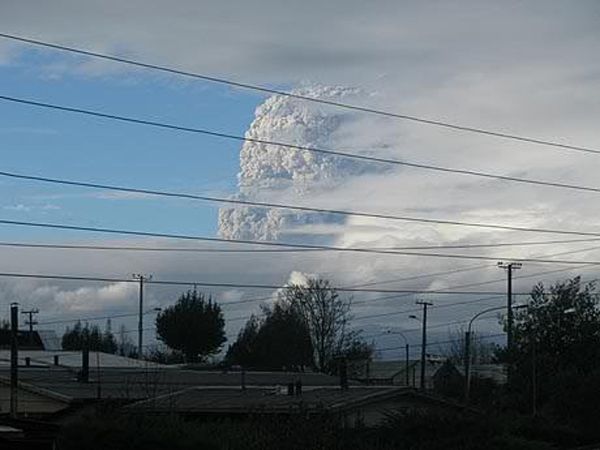
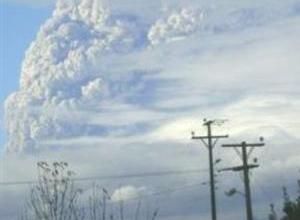
© Constanza YañezThe Puyehue volcano eruption, as seen from the Chilean side.
The entire city of San Carlos de Bariloche turned dark as ash spewed by the nearby Chilean volcano Puyehue began falling all over town. Meanwhile, the Civil Defence Municipal Board called an emergency meeting to decide on how to proceed.

Authorities told the population to remain calm, to keep their water reserves and to remain home at all times in order to avoid the falling ash. In case of an emergency, officials have suggested the use of face masks in order to avoid it.

As an orange alert was declared, authorities shut down the airport.

Earlier, five quakes ranging between 4.6 and 4.8 in the Richter scale had been registered in the south of the Neuquén province, while a few kilometres away, across the border with Chile, some 600 people were evacuated due to the sudden eruption.

Attention

Chile's Puyehue volcano explodes, unleashing massive ash cloud

Puyehue Volcano Chile
A huge plume of smoke and ash from Puyehue volcano that is visible from Entre Lagos. The neighbors of that community have spotted the onset of eruptive activity conducted by the Sernageomin. The government issued an emergency Red Alert for the area surrounding the volcano. 600 people have been evacuated so far.

Bizarro Earth

Mexico's Popocatepetl Volcano Blasts Tower of Ash

Mexico Volcano
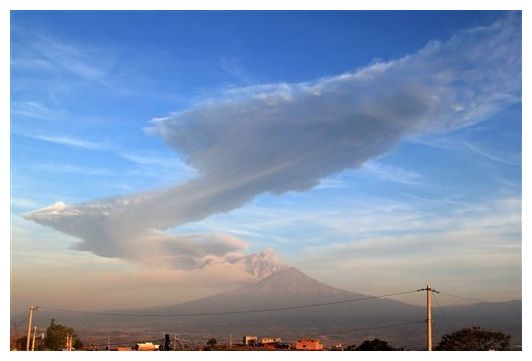
© STR / AP PhotoA large plume of ash rises from the Popocatepetl volcano as seen from the highway to Atlixco, Mexico early Friday June 3, 2011. The 17,886-foot (5,450-meter) mountain shot a blast of ash about 2 miles (3 kilometers) above its crater but there is no report of threat to populated areas.
Mexico City -- The Popocatepetl volcano that towers over Mexico City began rumbling again Friday, shooting a blast of ash about 2 miles (3 kilometers) above its crater at dawn.

The ash cloud drifted first to the west and then turned back east toward the city of Puebla, Mexico's national disaster prevention agency said.

The 17,886-foot (5,450-meter) mountain shook for several minutes before the ash burst out.

The agency urged people to stay at least 7 miles (12 kilometers) from the crater, which is about 40 miles (65 kilometers) southeast of Mexico's capital.

Puebla state civil defense Director Jesus Morales told a local television station that the cloud "has a high ash content, but it doesn't represent a risk."

"A little ash could fall in Puebla city," he said.

Both Morales and federal civil defense coordinator Laura Gurza warned residents in the region that they shouldn't wet down any ash that falls before sweeping it away.

Bizarro Earth

Vanuatu Officials Raise Alert Level Over Mt Yasur Volcano

Mt.Yasur
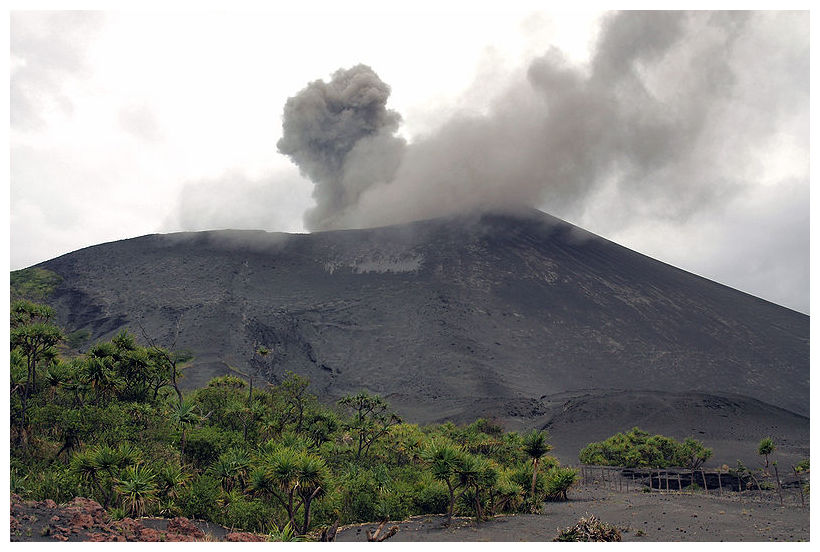
© Rolf Cosar / Wikimedia CommonsEruption of Yasur, 18 October 2006
Vanuatu's department of geohazards has closed access to the Mt Yasur volcano on Tanna Island, after a lift in volcanic activity from the beginning of this year.

A geohazards team investigated the volcano earlier this week and says there were strong explosions and emissions from all three active vents.

They have lifted the hazard rating to level 3, which closes access to the volcano.

The officials say there's significant ash fall on nearby villages but there are currently no plans to evacuate the inhabitants.

Source: Radio New Zealand International (RNZI)

Bizarro Earth

Indonesia Volcano Sees Rising Activities

Dieng Volcano
© VIVAnews / Adrozen Ahmad Dieng volcano.
Chief of Geological Disaster Mitigation and Volcanology Agency, Surono, said Dieng Mountain in Central Java has seen increasing activities in the past few days as poisonous gas starts spewing into the air.

The Indonesian Red Cross has evacuated inhabitants living in four villages of Sumberejo, Serang, Kaliputih and Simbung. This causes tourists to avoid coming to the area.

A staff at a homestay in Dieng said, "Some cancellations are indeed made. Tourists called off visits after being informed of the volcanic activities," said Dwiyono who, like many Indonesians, uses one name.

He believed tourist attractions in Dieng are still secure since the Timbang Crater, which produces carbon dioxide, is located 12 kilometers away from the said spots.

Bizarro Earth

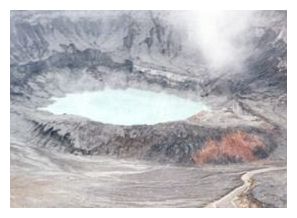
Activity Increases At Costa Rica's Poas Volcano

Poas Volcano
© Inside Costa RicaPoas volcano.
Activity at the Volcano Poas is increasing rapidly, while at the same time drying up the lagoon, say experts, a team of geologists and volcanologists from the seismological network of the Universidad de Costa Rica (UCR)

The team visited the colossus on Wednesday where the recorded 18 "phreatic eruptions" in a three hour period, when normal is 1 or 2 per day.

The temperature of the crater is also increasing, which is causing the lagoon to dry up and possibly disappear.

Experts warn that this could bring more acid rain and ash in the area around the volcano.

However, the activity of Poas is not a danger to tourists and the national park will continue open.

A phreatic eruption, also called a phreatic explosion or ultravulcanian eruption, occurs when rising magma makes contact with ground or surface water.

The extreme temperature of the magma (anywhere from 600 to 1,170 °C (1,112 to 2,138 °F)) causes near-instantaneous evaporation to steam resulting in an explosion of steam, water, ash, rock, and volcanic bombs.

Bizarro Earth

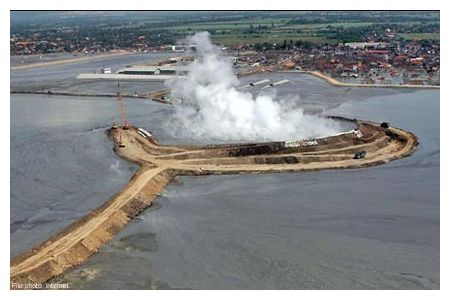
Five Years On, Indonesia's Mud Volcano Still Erupting

Lusi
© AFP
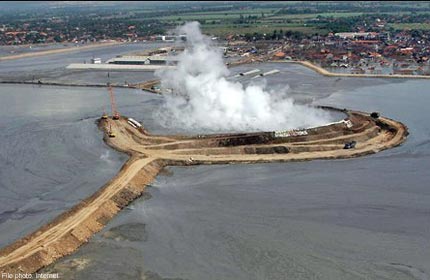
Porong - "Lusi" the mud volcano is slowing down five years after it engulfed fields, homes and factories in a heavily populated part of Indonesia, but experts say the danger may last for decades.

Almost every minute another jet of thick, boiling, foul liquid shoots into the sky followed by a white cloud of vapour, adding to the vast lake of mud which now covers more than 700 hectares (1,730 acres) of Java island's Sidoarjo district.

"My whole life is buried here. I've lost everything: my house and the warung (streetside food stall) I opened just before the disaster," said Harwati, a 35-year-old widow and mother-of-two who now guides tourists around the disaster zone.

"Since then, life has been really hard. It's difficult to find a job."

She is one of some 40,000 people who have been forced out of their homes by the inexorable ooze, which appeared without warning on May 29, 2006 in the middle of a rice field.

Gradually, the mud has swallowed 12 villages, 30 factories, dozens of shops and a busy highway near the country's second largest city of Surabaya. Twelve people have been killed, but many more lives have been wrecked.

As the mud continues to flow, a row over its cause also festers with some experts and victims accusing a local gas drilling company of sparking the torrent - an allegation it denies.

Bizarro Earth

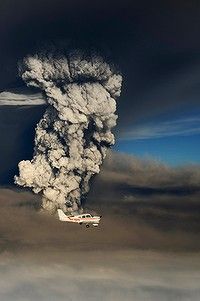
Iceland: Volcano grounds 500 flights but plume shrinking

Image
© ReutersA plane flies past smoke plume from the eruption of the Grimsvotn volcano, under the Vatnajokull glacier in southeast Iceland.
Reykjavik - Activity at Iceland's erupting volcano has slowed significantly and its ash plume, which has dropped to a fraction of its 20 kilometre peak, could disappear by the weekend, experts said on Tuesday.

The plume of ash from Grimsvotn, located in the southeast of Iceland at the heart of its largest glacier, Vatnajoekull, had fallen to two kilometers on Tuesday evening, according to an Icelandic crisis management official.

The column "is decreasing now and the height of the plume is around two kilometers so it's dramatically decreased," Thorir Hrafnsson, a spokesman for Iceland's crisis management agency, told AFP.

"If it behaves like earlier eruptions, hopefully it will be over by the weekend," he said, while stressing "it's very hard to guess."

At an altitude of just two kilometres, the plume "will not be dangerous for air traffic," Hrafnsson said, acknowledging that ash still in the air from the initial blast could continue to cause problems.

Bizarro Earth

US: Volcano, Power Failure Vex Weekend Air Travelers

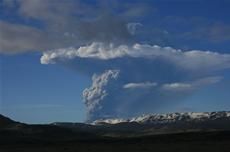
Grimsvotn volcano
© Halldora Kristen Unnarsdottir / APGrimsvotn volcano
Just one year after a volcanic eruption decimated the air travel network across Europe for nearly a month, another volcano in Iceland has decided to erupt. Will this new eruption bring European air travel to its knees again? The Los Angeles Times reports that Iceland's airports were closed Sunday and trans-Atlantic flights were being diverted around that country's airspace. Last year it was the Eyjafjallajokull volcano and now it is a volcano with another unpronounceable name, the Grimsvotn volcano, which is spewing ashes into the atmosphere. At this time the air travel disruption is only impacting flights over Iceland, but the disruption could expand at any time.

Cloud Lightning

Here we go again: Icelandic volcano ash could enter UK airspace, forecasters warn

Image
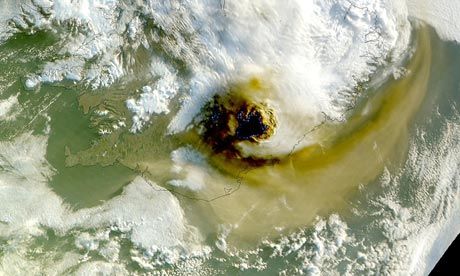
© AFP/Getty ImagesAn image released by Nasa on Sunday shows smoke billowing from the Grimsvotn, Iceland's most active volcano.
Ash from an erupting Icelandic volcano that has already grounded planes locally could enter UK airspace by Tuesday, forecasters have warned.

The Grimsvotn volcano began erupting on Sunday, causing flights to be cancelled at Iceland's main Keflavik airport after it sent a plume of ash smoke and steam 12 miles into the air.

However experts said the eruption was unlikely to have the dramatic impact that the Eyjafjallajökull volcano had in April last year, when flights were cancelled over the UK and much of Europe for several days.

Paul Mott, forecaster at Meteogroup, said ash from the volcano could potentially reach the UK by Tuesday.

Comment: This eruption may well merit caution, but remember that we've been here before and been bamboozled before:

'Ashteria' is a Pretext to Shut Down International Air Travel