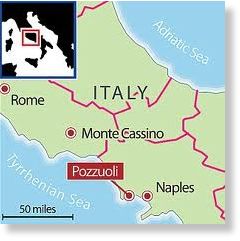
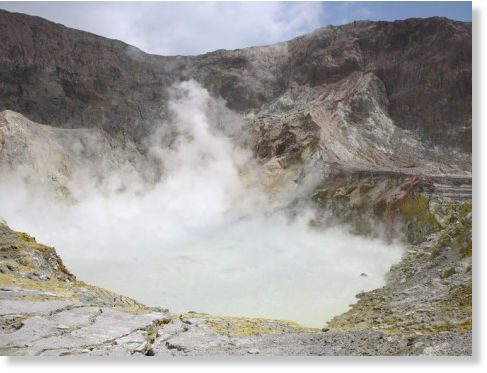
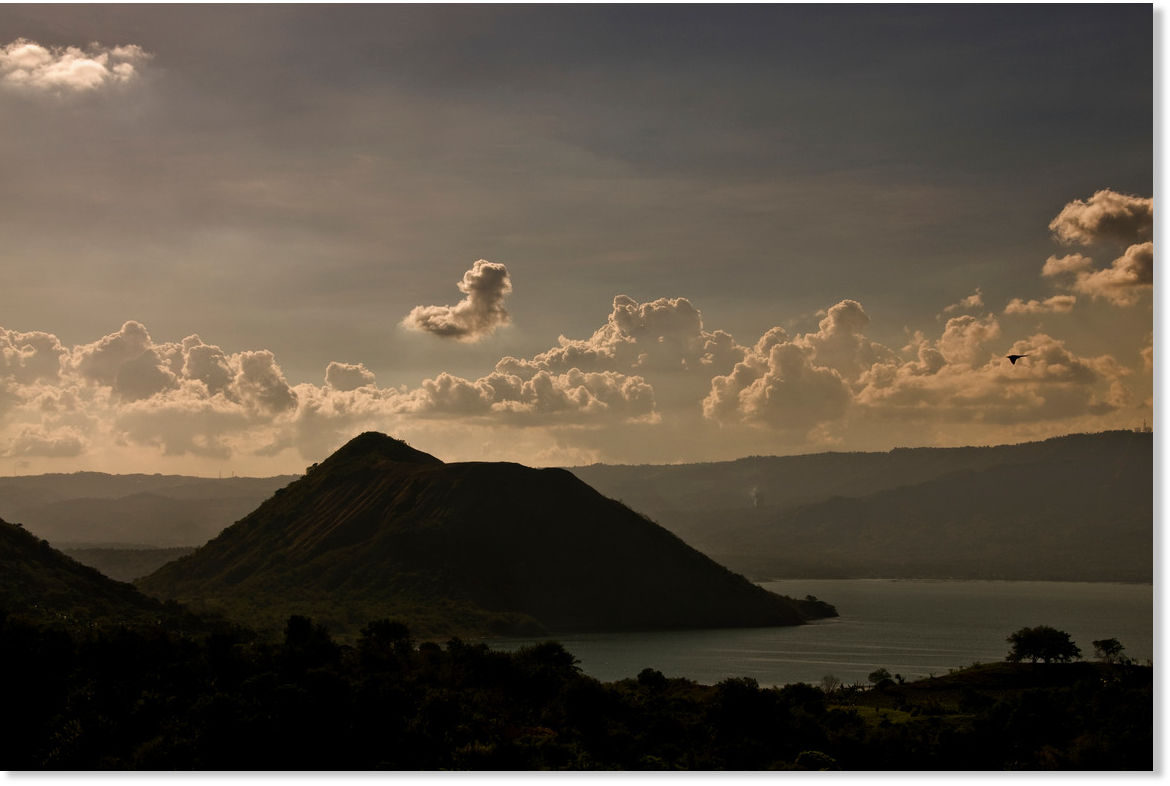
A restive supervolcano west of Naples is raising nervousness in the local Italian population. The ground of the Campi Flegrei "burning fields," also known as the Phlegraean Fields, has risen more in recent weeks than it has in a long time. This does not necessary indicate a heightened risk of an eruption, however, said Thomas Wiersberg, a scientific drilling expert for the German Research Centre for Geosciences (GFZ) in Potsdam. The Phlegraean Fields are a large caldera, or volcanic crater, lying mostly underwater off the Italian coast. The caldera is thought to have been formed by a massive eruption some 35,000 to 40,000 years ago. The last major eruption in the fields of boiling mud and sulphurous steam holes, one of a few dozen super volcanoes worldwide, occurred in 1538.
Wiersberg is part of an international research team that began drilling into the ground not far from the caldera last summer to monitor possible early warning signs of an eruption. The team has drilled a pilot hole to a depth of 500 meters but no data has been gathered yet, Wiersberg said in an interview with dpa. Italy's Department of Civil Protection recently raised the alert level for the Phlegraean Fields, where Wiersberg said the ground was rising by about three centimeters a month. There are concerns that a magma chamber under the fields, presumably connected to the one under Mount Vesuvius, east of Naples, is filling up, the rising pressure possibly heightening the danger of an eruption.