Volcanoes
S


Chalkboard

Mathematician claims one in 500 chance of extinction next year

Earth
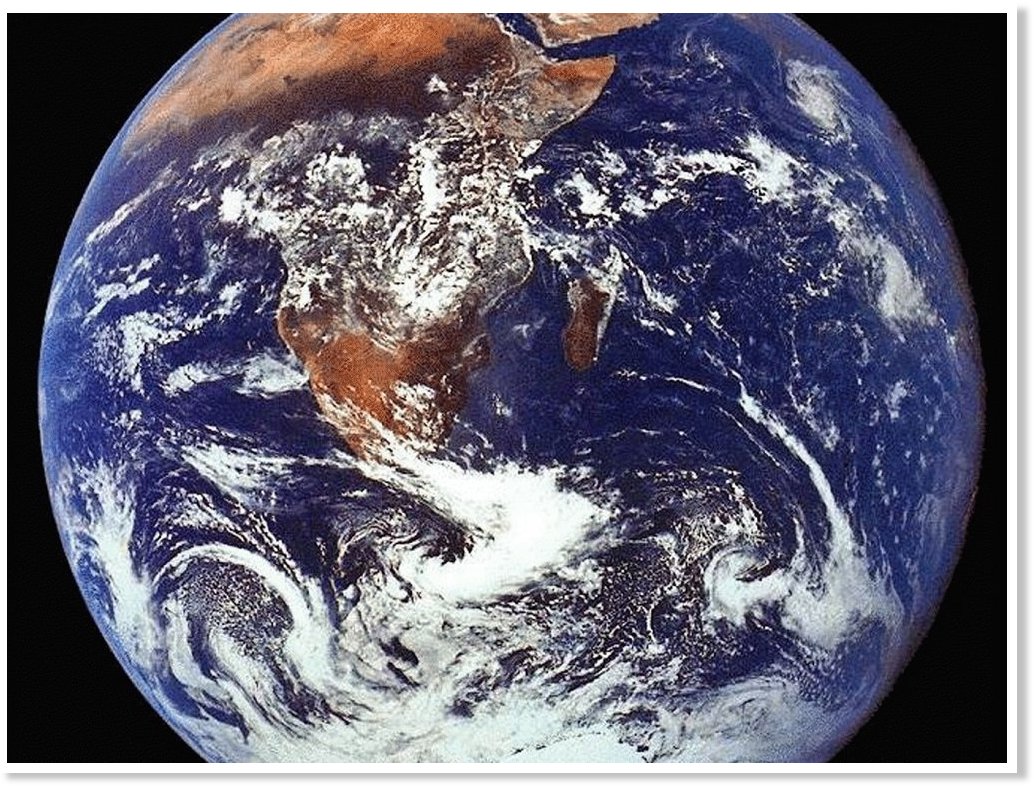
© NASAThe calculation is based on the Doomsday Argument.
The human race faces a one in 500 chance of extinction in the next year, an expert mathematician has claimed.

Dr Fergus Simpson, a mathematician at the University of Barcelona's Institute of Cosmos Sciences, said there was a 0.2 per cent chance of a "global catastrophe" occurring in any given year over the course of the 21st Century.

The calculation is based on the Doomsday Argument, which it is claimed can predict the number of future members of the human species given an estimate of the total number of humans born so far.

"Our key conclusion is that the annual risk of global catastrophe currently exceeds 0.2 per cent," Dr Simpson wrote in an academic paper called Apocalypse Now? Reviving the Doomsday Argument, accessed through Cornell University's online library.

"In a year when Leicester City FC were crowned Premier League champions, we are reminded that events of this rarity can prove challenging to anticipate, yet they should not be ignored," he added.

According to Dr Simpson's calculations, around 100 billion people have already been born and a similar number will be born in the future before the human race expires.

He estimated there was a 13 per cent chance humanity would fail to see out the 21st Century.

This is a more optimistic conclusion than previous studies, with British Astronomer Royal Sir Martin Rees suggesting there was a 50 per cent probability of human extinction by the year 2100 in his 2003 book Our Final Hour.

Arrow Up

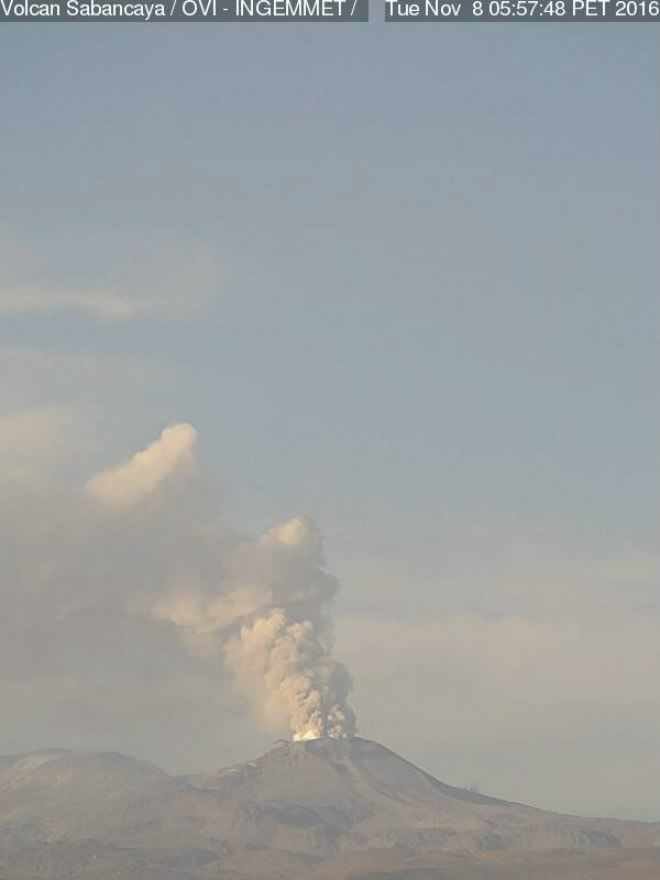
Peru's Sabancaya volcano erupts again with record 3 km high ash cloud

Sabancaya volcano eruption
Peru's Sabancaya volcano erupted again on Friday, spewing an ash cloud that reached a record height of some 3,000 metres.

The new activity came just hours after a flurry of small explosions at the volcano.

Six small explosions shook the earth around the Sabancaya volcano in southern Peru on Friday morning.

The 6,000-metre volcano Sabancaya, which means "tongue of fire" in Quechua, has been in seismic activity for 18 years, when it had an eruptive period that has since continued with various intensities.

It sits atop the South America tectonic plate, which forces magma to the surface when it clashes with the neighbouring Nazca plate.


Comment: Last week Sabancaya volcano erupted for the first time in 18 years


Arrow Up

Peru's Sabancaya volcano erupts for the first time in 18 years

sabancaya volcano erupts in Peru
The Sabancaya volcano in Peru exploded twice (Nov. 6th and Nov. 7th). This is the first eruptions in 18 years for Sabancaya. These two explosions follow a period of seismic unrest that began in 2013. You bet these eruptions are worrying!

The Sabancaya exploded two times. The first eruption occurred at 8:40 pm on Sunday and the second at 8:43 am on Monday.

Ash and gases were emitted and rose up to 1'500 meters above the summit. The plume of gas and ash expanded in the area. An alert was issued for the authorities to take emergency measures to protect populations located near the volcano.

Ash fall was reported in communities situated within a radius of 5km around the volcanic peak. The alert level remains at yellow for now but the situation is to monitor.

Lahar warning have been issued.


Bizarro Earth

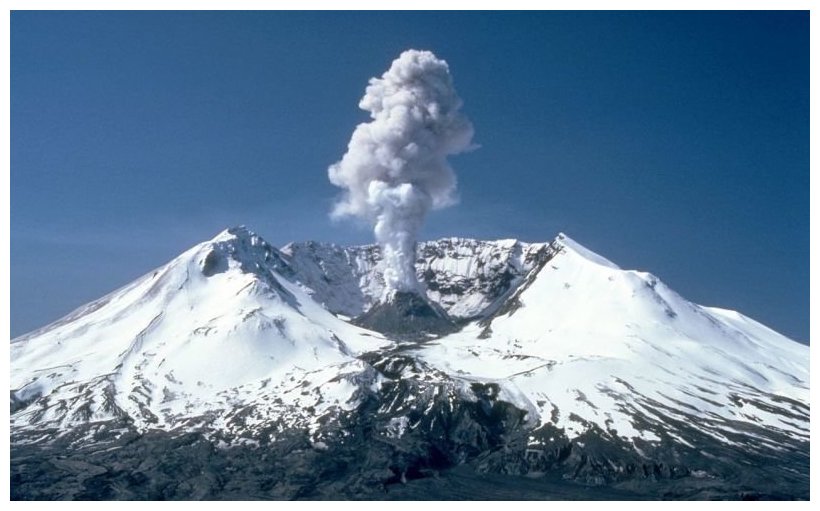
Mount St Helens is getting weirder

Mt. Saint Helens
© Wikimedia CommonsA plume of steam and ash billowing out of Mt. Saint Helens in 1982, two years after the most destructive eruption in US history.
Picture a volcanic eruption: fiery lava and smoke billowing skyward as a towering mountain empties its over-pressurized belly of a hot meal. At least, that's how most of us think it works. So you can imagine volcanologists' surprise when they discovered that Mount St. Helens, which was responsible for the deadliest eruption in US history, is actually cold inside.

Apparently, it's stealing its fire from somewhere else.

Mount St. Helens is one of the most active volcanoes of the Cascade Arc, a string of eruptive mountains that runs parallel to the Cascadia subduction zone from northern California to British Columbia. It's also one of the strangest. Most major volcanoes of the Cascade Arc sit neatly along a north-south line, where the wedging of the Juan de Fuca tectonic plate beneath the North American plate forces hot mantle material to rise. Mount St. Helens, however, lies to the west, in a geologically quiescent region called the forearc wedge.

"We don't have a good explanation for why that's the case," said Steve Hansen, a geoscientist at the University of New Mexico in Albuquerque.

Seeking answers, Hansen recently led a seismic mapping survey of Mount St. Helens. In the summer of 2014, his team deployed thousands of sensors to measure motion in the ground around the volcano. Then, they drilled nearly two dozen holes, packed the holes full of explosives, triggered a handful of minor quakes, and watched as seismic waves bounced around beneath the mountain. "We're looking at what seismic energy propagates off in the subsurface," Hansen explained. "It's a bit like a CAT scan."

Arrow Up

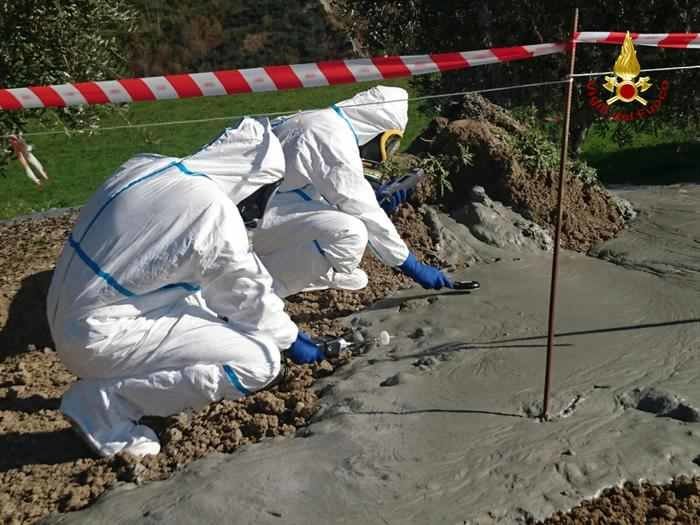
Mysterious 'mud volcano' forms after recent earthquakes in Italy

Italy mud volcano in Santa Vittoria
A mysterious mud volcano formed out of nowhere and erupted in Santa Vittoria, Italy after the recent M6.6 earthquake that destroyed parts of Italy.

The rare geological phenomenon has unexpectedly emerged from the deep Earth interior.

The mud crater has suddenly appeared this week in a field in Santa Vittoria, Matenano, Italy, and has been bubbling mud since then.

The crater is spitting clay material out of the ground.

The mud volcano is now being surveyed by officials who study the possible threats of such a weird phenomenon on the nearby residents.


Arrow Up

Indonesia's Mount Sinabung erupts again

Sinabung eruption Nov 2106
© Youtube/AFP (screen capture)
Mount Sinabung on Sumatra island erupts again. The volcano roared back to life in 2010 for the first time in 400 years and erupted once more in 2013, it has remained highly active since.


Arrow Up

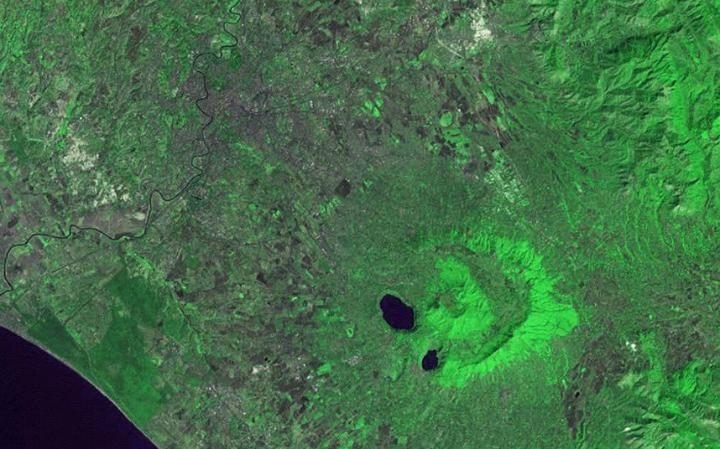
Dormant volcano near Rome slowly reawakening say scientists

Alban Hills volcano near Rome
The Alban Hills volcanic district enters an eruptive phase every 31,000 years or so
The string of earthquakes that hit central Italy over the past two months has sparked fears that the country's capital may be at risk of a "big one" herself.

The series of tremors, all followed by powerful aftershocks, proved the final straw for a number of important architectural landmarks, including the Abbey of Sant-Eutizio in Umbria, and damaged several churches and buildings in the heart of Rome, including the Colosseum

Whilst scientists say there is no risk that Rome will be hit by a "big one", something different may be threatening the Eternal City: a dormant volcano.

Situated on Rome's doorstep, the volcano is showing signs of activity which, combined with the seismic history of the area, would indicate it is slowly reactivating, an international team of scientist said.

While in geological times the eruption would be imminent, it's far away on a human scale, about a thousand years, and there isn't currently any cause for worry.

Chambers located between 5km and 10km under the residential areas of Ariccia, Castel Gandolfo, Albano and other "Roman castles" are filling up with magma and the ground is rising 2-3mm per year, the scientists said in the study, published on Geophysical Research Letters in July.

Arrow Up

Enormous dome discovered in central Andes result of an injection of magma from below

Uturuncu Volcano
© sunsinger/Shutterstock.comUturuncu Volcano.
An enormous dome has been discovered growing in the Central Andes above the world's largest active magma store.

Found in the Altiplano-Puna Plateau - the second highest plateau on the planet - the dome stretches more than a kilometre high (3,280 feet), making it 172 metres taller than the world's tallest building in Dubai. Researchers say this massive structure is the result of an injection of magma from below.

"The dome is the Earth's response to having this huge low-density magma chamber pumped into the crust," says one of the team, Noah Finnegan from the University of California, Santa Cruz.

How did we all miss a massive dome of Earth rising a kilometre above the surface?

It just so happens to be hidden within the Altiplano-Puna Plateau - a high, dry region, littered with volcanoes, that extends for some 2,000 km along the Central Andes, with an average height of 4,000 metres.

The Central Andes constitutes an even larger plateau, encompassing southern Ecuador, northwestern Bolivia, and most of Peru. Together, the Central Andes, Southern Andes, and Patagonia make up the Andes, the longest continental mountain range in the world.

Attention

Turrialba volcano's spectacular early morning eruption filmed in Costa Rica

Volcanic ash
After many days of small but constant emissions of ash and gases, Costa Rica's Turrialba Volcano, located southeast of the capital city, had a spectacular eruption early this morning.

The event was captured on a home video at 5:25 a.m. by Jesús Edu Jimal from his home in Turrialba.

Some beautiful photos of the eruption, which could be seen from many locales due to the clear weather, were also posted on the National University's Volcanology and Seismology Research Institute Facebook page (Ovsicori-UNA).

Winds blowing southeasterly, as reported by Ovsicori, mean that the ash is not directly affecting the capital city at the moment.


Attention

Alert level raised for Cleveland volcano in Alaska after explosion detected

Cleveland volcano
© Flickr/ NASA's Marshall Space Flight Center
Scientists raised the alert level for a remote Aleutian volcano on Monday after an explosion was detected on the mountain and heard by residents of a tiny village some 45 miles (72 km) away, a monitoring website said.

Cleveland Volcano, a 5,676-foot (1,730-metre) peak on the uninhabited Chuginadak Island, about 940 miles (1,504 km) southwest of Anchorage, was raised to orange from yellow by the Alaska Volcano Observatory.

The orange code, the second-highest on the scale, is issued when a volcano is "exhibiting heightened or escalating unrest with increased potential of eruption," according to the observatory. A red code is issued when an eruption is imminent or under way.

The observatory said that an explosion was detected on Cleveland by both infrasound and seismic data and heard by residents of Nikolski, a settlement of less than 50 people on Umnak Island about 45 miles (72 km) to the east.

Infrasound instruments measure air pressure around the volcano.

Scientists said that cloudy weather obscured Cleveland's peak in satellite images but that no evidence of an eruption cloud had been detected at a height of 28,000 feet (8,534.4 meters).