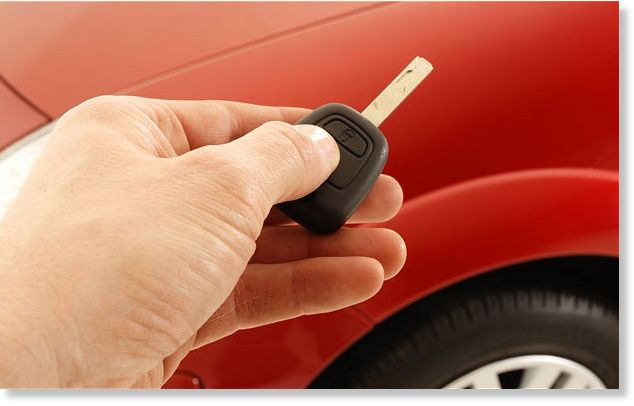
© AlamyThe Smiths were baffled when their car's remote-control door locks refused to work
Families in Kingsclere on the Hampshire-Berkshire border, spent much of the festive season without heating after the failure of household systems which rely on digital technology.
One family, the Smiths, were baffled when their heating, shower, doorbell and even their car's remote-control door locks refused to work.
They then discovered similar problems were being experienced by their neighbours.
Chris Smith, whose wife's birthday on Christmas Eve was ruined by the systems failure, spent more than £250 trying to fix the heating and shower but neither worked until late on Dec 27.
A spokesman for Ofcom, which oversees radio communications, said: "Often these problems can be caused by a video sender that transmits a television signal to other sets in the house. They are not the source of all the problems but in a lot of cases interference is tracked down to those devices."