Health & WellnessS


Life Preserver

PEA (Palmitoylethanolamide) as Supplement: Gaining in Popularity, And For Good Reason

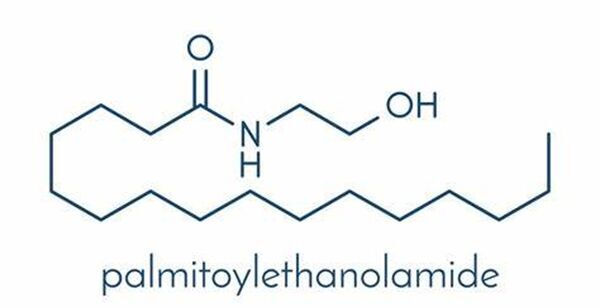
PEA supplement chemical structure
I recently received a recommendation from a lab with a simplified process for dealing with the massive numbers of patients with allergy problems nowadays: there aren't enough allergologists and pneumologists to evaluate everyone, so just go ahead and send them to the lab.

The estimate for overall allergic disease prevalence in the Western world in the 1960s was roughly 1 to 10% of the population, depending on your parameters, primarily driven by hay fever and allergic rhinitis, with asthma just beginning its epidemic rise and food allergies barely on the radar. Today, by contrast, 30% have at least one allergy, illustrating the dramatic shift over the past six decades. The statistics are skyrocketing, and it's thought one in two will be affected by 2050.

So what happened? There's very good literature from mainstream sources, and with fascinating details for those who love molecular biology. For me the upshot, if you'll excuse the pun, is that COVID-19 happened. We can't blame it all on COVID, but that's because it was only the latest, loudest, example of its kind. There was already the precedent of suspected cross-contamination in vaccine programs and chronic latent infections (i.e., Gulf War Syndrome and post-infectious Chronic Fatigue Syndrome/fibromyalgia) in the past leading to the exact same problems before the COVID-19 era.

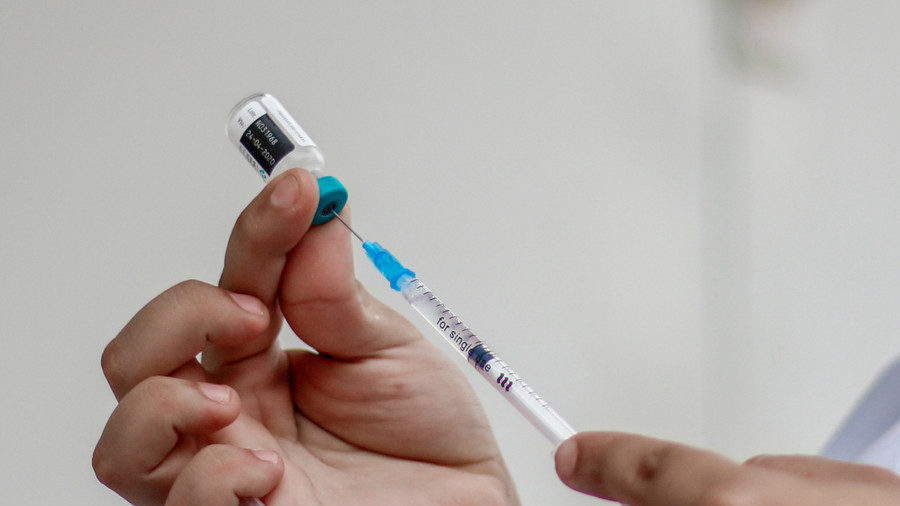
Syringe

Babies are being given and dying from a vaccine that was created for sexually active adults

Baby and vaccine
© Unknown
For decades, the hepatitis B vaccine has been presented to parents as a routine and unquestioned part of newborn care in the United States.

But critics of the vaccine schedule are increasingly challenging the origins of the shot, arguing that the vaccine was never originally intended for healthy infants and that its expansion into universal newborn use was driven more by pharmaceutical economics than public health necessity.

The hepatitis B vaccine was first developed in the early 1980s for adults considered at high risk of infection, including intravenous drug users, individuals with multiple sexual partners, sex workers, and healthcare workers exposed to blood.

Hepatitis B is primarily spread through blood and bodily fluids, and early public-health campaigns focused heavily on adult transmission risk factors.

According to vaccine critics, healthy newborn babies were not the original target population for the vaccine. They argue that when adoption among adults failed to meet expectations, federal agencies shifted strategy toward universal childhood vaccination.

Brain

Global mental disorders have nearly doubled since 1990, now affecting 1.2 billion people worldwide

mental disorders
© Neuroscience NewsMental disorders and disability
Global mental disorders have nearly doubled since 1990, now affecting 1.2 billion people worldwide
  • Mental disorders are now the leading cause of years lived with disability globally, accounting for more than 17% of all disability worldwide.
  • The highest mental disorder burden is observed among individuals aged 15-19 and women of all ages, driven largely by anxiety and depressive disorders.
  • Mental disorder burden varies widely across countries, with some of the highest levels observed in high-income regions such as Australasia and Western Europe.
SEATTLE, Wash. - May 21, 2026 - Nearly 1.2 billion people worldwide are living with a mental disorder, nearly double the number recorded in 1990. According to a new study, this stark rise has placed mental disorders as the leading cause of disability globally, surpassing cardiovascular disease, cancer, and musculoskeletal conditions.

The study, led by researchers at the Institute for Health Metrics and Evaluation (IHME) in collaboration with partners at the University of Queensland and published in The Lancet, identified that mental disorders disproportionately impact people aged 15-19 and women. It examined the prevalence and burden of mental disorders across both sexes, 25 age groups, 21 regions, and 204 countries and territories from 1990 to 2023, making it the most comprehensive analysis of mental disorder burden to date.

The study assessed 12 mental disorders, with anxiety disorders and major depressive disorder (MDD) ranking 11th and 15th, respectively, in burden among 304 diseases and injuries worldwide.

Attention

Tick-Borne Alpha-Gal Syndrome incidence skyrocketed 9,800% in the U.S. since 2013

Tick-induced meat allergy incidence jumped 301% since 2021 alone, demanding an urgent investigation into past and present tick-related research and biowarfare programs.

alpha gal syndrome
Alpha-gal syndrome (AGS) — the tick-borne allergy that turns red meat, pork, and sometimes dairy into an anaphylaxis risk — is no longer rare.

A new study presented at the American College of Gastroenterology 2025 Annual Scientific Meeting delivers the clearest picture yet: the incidence of alpha-gal syndrome has exploded among Americans.

Comment: By the time they claimed it was a moral obligation to release genetically engineering ticks to spread meat allergies, it was a done deal.


Bizarro Earth

Lunatics have taken charge of the asylum: Peer-reviewed paper says genetically engineering ticks to spread meat allergies is "morally obligatory"

blood suckers
This is absolutely absurd.

A recent peer-reviewed paper titled, Beneficial Bloodsucking, argues that alpha-gal syndrome — the tick-borne condition that can make people allergic to red meat — should be treated as a form of "moral bioenhancement."

The authors (Western Michigan University professors) argue that because they believe eating meat is morally wrong, intentionally spreading a meat allergy using CRISPR-edited ticks could make people more "virtuous" by forcing them away from mammalian meat.

Comment: Bioweapons, for your own good.

CDC says up to 450,000 in U.S. have red meat allergies due to alpha-gal syndrome spread by ticks


Network

Unregulated wireless 5G rollout under HR 2289 would be catastrophic for human health and the environment

5Gtowers
© Unknown
The purpose of HR 2289, currently being considered in the U.S. Congress, is to remove all local control over the rollout of 5G cell towers. There are many reasons that unregulated 5G (which stands for 5th generation), will bring devastation. It will greatly increase the risk of out of control fires, and cause very adverse health impacts, for which there is extensive documentation.

Overloading Utility Poles Causes High Risk of Wildfires

Unless you have been paying very close attention to the rollout of these small cells (short for cell towers), you may not be aware that they can allow for small-refrigerator-size cabinets of heavy equipment, filled with highly flammable material (diesel or propane fuel, or lithium batteries), to be hung perilously from utility poles — or placed on the ground — closely spaced throughout our neighborhoods. In news reports of a wildfire sweeping through Santa Rosa, California, it was noted that propane generators were exploding everywhere.

Comment: Who says Americans are enamored with this tech? Only those promoting it and getting rich.
"The fact that 5G massively increases radiation exposure is also why the telecom sector has lobbied various governments — such as Brussels, Switzerland and Italy — to relax their radiation limits, because they will not be able to roll out 5G as planned otherwise."

Now years into the 5G rollout, exposure levels "exceed 1 million microwatts per square meter in peak values — which is far above what is known to cause harmful effects in terms of sleep disturbances, headache, dizziness, tinnitus, heart arrhythmia, and fatigue."

"The symptoms were already described some 50-40 years ago as the microwave syndrome or radio frequency illness. it is necessary that any risk assessment be performed by scientists that have no ties to the telecom sector or telecom-affiliated corporations.


Arrow Down

Hantavirus - A pandemic treaty 'wake up call'?

Hantavirus
© Off-Guardian Org
The Hantavirus outbreak keeps on going. The case count is up to 11, with 9 *ahem* "confirmed" by PCR test.

The French government is isolating their five cruise ship passengers, and anybody those five people may have talked to, and they are worried the virus may have mutated.

A Dutch hospital is "racing" to "curb the spread" after a "protocol breach".

The spectre of "asymptomatic cases" is suddenly looming, and some "experts" are warning it might be more contagious than previously thought.

The WHO Director General is warning we should prepare for more cases.

For reference sake, hantaviruses are endemic in much of the world, and - according to the most recent literature review on the subject - it is very unlikely it can spread person to person:
The balance of the evidence does not support the claim of human-to-human transmission of ANDV
(You might want to download a PDF copy of this paper, before it disappears from the internet.)

There was actually markedly bigger hantavirus outbreak a few years ago, involving over 30 cases and 11 deaths. You didn't hear about it much.

So why all the panic now?

It is nonsense, with all the unmistakable hallmarks of nonsense.

Like the daring parachute drop from the British army to get vital supplies to a "suspected" case on the deserted island of Tristan de Cunha in the middle of the Atlantic ocean.

That's a Covid-era story if ever there was one.

So, is this the oft-predicted "next pandemic"? Well, not yet.

The WHO says the risk to the public is still very low and there is "no sign of [a] larger outbreak".

From the beginning they have been repeatedly saying "this is not another Covid".

So, then...why is everyone talking about it?

Let's go digging for clues.

Attention

New research finds almost all plant-based meat alternatives contain mycotoxins

plant based meat substitutes mycotoxins
© Raquel Torrijos, Octavian Augustin Mihalache, et alMycotoxins were found at higher levels in the plant-based meat alternatives.
New research into plant-based food and drinks has found a prevalence of mycotoxins — naturally occurring poisonous compounds produced by fungi — in hundreds of vegetarian and vegan products. A total of 212 plant-based meat alternatives (PMBAs) and plant-based beverages (PBBs) from UK shelves were tested — and all of them contained at least one of 19 mycotoxins, with multiple products containing more than one.

The study, led by the University of Parma in Italy and co-authored by Cranfield University, tested a broad spectrum of products readily available to UK consumers, such as burgers, vegetarian chicken pieces, vegan sausages, oat-, almond- and soy-based milks.

The study, "Mycotoxin contamination in plant-based beverages and meat alternatives: A survey of the UK market," is published in Food Control.

Pills

Why Ivermectin and Hydroxychloroquine could work for Hantavirus

WHO on Hanta
Click here to watch the video

As the WHO downplays ivermectin for hantavirus, the underlying science and preclinical data tell a very different story.

who contributors

Biohazard

Is this Hantavirus a bioweapon?

dna hanta virus
The WHO, Big Pharma, and the other bad actors behind the Covid catastrophe are at it again.

At this writing, they're churning out industrial-strength fear porn regarding an alleged outbreak of Hantavirus infections aboard a small cruise ship, the MV Hondius. If all this gives you flashbacks to the Diamond Princess cruise ship incident from the early days of Covid, you're not alone.

But before we all hide in our closets (again) until Moderna and friends save us (again) with another toxic gene-therapy pseudo-vaccine (which of course, they and about a dozen other Big Pharma profiteers have been working on for years), let's take a moment to consider the pathogen in question - Hantavirus.