Health & WellnessS


Attention

MERS virus mutation confirmed in South Korea

MERS in South Korea
© Kim Hong-Ji / Reuters
A mutation of the Middle East Respiratory Syndrome (MERS) virus, which has killed dozens during its South Korean outbreak, could have created a more potent and contagious stain, scientists have revealed.

After testing the bodily fluids of eight people infected with MERS, the Korea Centers for Disease Control and Prevention (KCDC) discovered that the virus had genetically mutated compared to previous cases reported in the world. In particular, the mutation resulted in a spike of glycoprotein, the element that is responsible for infiltrating human cells and proliferating.

The virus was first identified in humans in 2012 in Saudi Arabia and by February 2015 the global death toll had reached 385. MERS comes from the same family of viruses as SARS. Although it is more deadly, it is not as contagious, and there is currently no guaranteed cure or vaccine.

Since the outbreak of the virus in South Korea was first confirmed on May 20 last year, more than 15,000 have undergone isolation and incubation periods for possible infection. Before Seoul declared the country to be MERS free on December 23, the virus claimed the lives of 38 people. Overall, 187 people were infected.

But while potential danger of the new strain becoming more contagious exists, KCDC said that they cannot determine if the mutation indeed altered the way the virus spread.

"All we know for certain is that a mutation occurred, with more detailed analysis needed to see what affect it had on the spread," the agency said according to Yonhap. To better understand the possible threat, more tests are being conducted on clinical specimens from 32 people.

"There is a need to focus the country's research capability on finding the reason for the change," Paik Soon-young, a professor of microbiology at the Catholic University of Korea, told Yonhap. He stressed that research into the spike glycoprotein mutation is important to explain why the MERS disease spread so quickly in South Korea.

For now the disease no longer poses a threat in South Korea, but authorities continue to carefully monitor developments and said that they are ready to take immediate action if required.

Comment: The World Health Organization (WHO) announced this week that four more cases of Middle East Respiratory Coronavirus (MERS-CoV) have been reported in Saudi Arabia. Oman has recently reported it's seventh MERS-CoV case. See also:


Ambulance

Health authorities on alert as Zika virus becomes more virulent and is spreading quickly

mosquito, zika
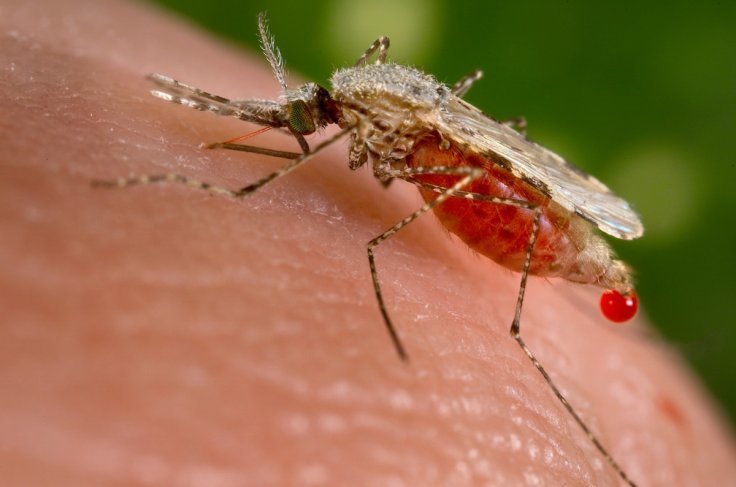
Virologists have been expressing concern about Zika virus for a couple of years now, but it's only with its arrival in Puerto Rico during the holiday season that it has really started to make the news.

Some of the headlines have focused on the apparent association between Zika infection in pregnant women and the birth of babies with small brains - a condition known as microcephaly. This association is still largely circumstantial, but if true would be extremely alarming. Zika has also apparently changed its behaviour in other ways, spreading faster, spreading sexually, and also lumbering some survivors with the nasty post-viral Guillain-Barré Syndrome which at its worst can lead to partial temporary paralysis.

Based on previous experience, Zika would have seemed an unlikely candidate for the next big global virus scare. Discovered in macaque monkeys in 1947 in Uganda's Zika forest, it was nearly a decade later that the first human case was detected. Spread by mosquito bite, Zika was mild compared to other members of the flavivirus family, which includes the feared yellow fever, dengue fever and West Nile virus. Nobody was known to have died as a result of Zika infection, and clinical interest was so low that scarcely more than a dozen confirmed cases were described in the medical literature. A brief high fever, a rash, some joint pain and in the worst cases a bit of headache and nausea - Zika was barely worse than a dose of flu.

Comment: Zika virus: Public health alerts in South America and Caribbean as fears illness may cause birth deformities


Apple Green

Best of the Web: Putin announces Russia will become leading exporter of GMO-free foods

russian woman holding apples
Russia's babushka farmers - they kicked Napoleon's and Hitler's asses, and now intend to do the same to Monsanto
Russia is to become the world's 'leading exporter' of non-GMO foods that are based on 'ecologically clean' production.

Putin is not a fan of Monsanto or bioengineered anything, which is why, in a new address to the Russian Parliament last Thursday, he proudly outlined his plan to make Russia the world's 'leading exporter' of non-GMO foods that are based on 'ecologically clean' production.

The Russian president harshly criticized food production in the United States, stating that Western food producers are no longer offering high quality, healthy, and ecologically clean food.

Comment: Another smart move by Putin: since GMOs are damaging to health and to the environment, carriers of US imperialism, and made by Monsanto (one of the most evil companies on the planet), he's taking out three birds with one stone. Not only that, but since people have been becoming increasingly aware of this reality, they've been voting with their dollars and demanding alternatives, and now Russia will be positioned to meet that increasing demand. It's a win-win-win situation for everyone (except Monsanto).

See more:


Bacon n Eggs

Low-fat is dead, long live saturated fats and us!

After seven decades of bad nutritional advice, let a new era of balanced and healthy eating begin.
RIP low fat
RIP low fat
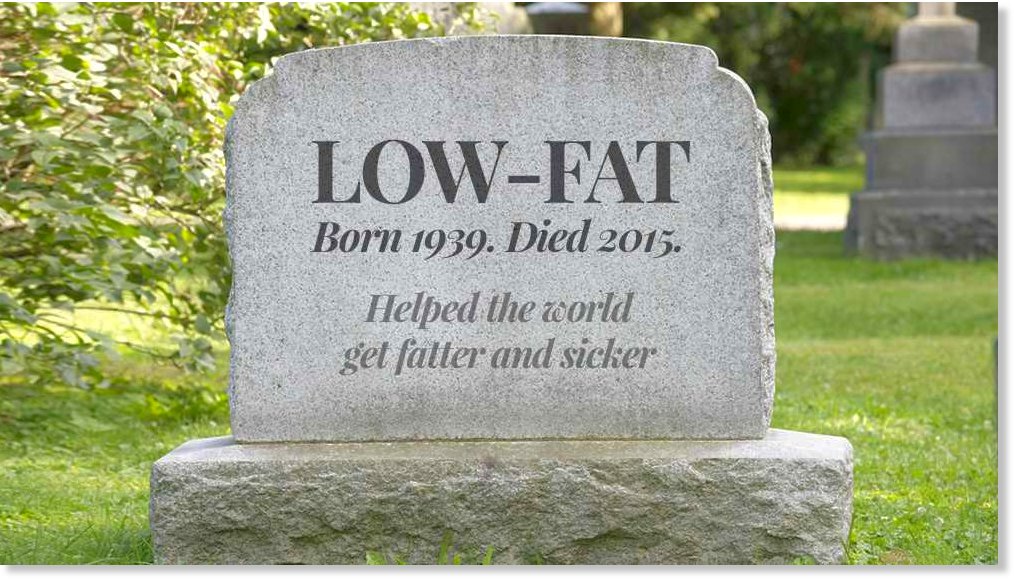
The year 2015 may someday be found on a historical timeline of dietary fads as the year Low-Fat finally died. Which particular day will be celebrated is, of course, up to Hallmark, who will promote cute traditional and e-cards with sayings like: "Eat Fat to Get Slim."

The actual day may have been when a carefully constructed comment, almost an aside in the 2015 USDA nutrition guidelines, removed the upper limit on dietary fat with the claim, "Reducing total fat (which really means replacing total fat with overall carbohydrates) does not lower cardiovascular disease risk," adding that people should be "optimizing types of dietary fat and not reducing total fat."

Or, the particular day could have been when that most mainstream of traditional medical journals, The Journal of the American Medical Association, printed a comment about the new recommendations as it "tacitly acknowledges the lack of convincing evidence to recommend low-fat, high-carbohydrate diets for the general public in the prevention or treatment of any major health outcome, including heart disease, stroke, cancer, diabetes, or obesity."

The JAMA article's author, Dr. Dariush Mozaffarian, dean of Tufts University's Friedman School of Nutrition, wrote, "We really need to sing it from the rooftops that the low-fat diet concept is dead, there are no health benefits to it."

Comment: The following articles are packed with information about the health benefits of a high-fat diet, in case you or your loved ones still harbor any traces of that fat-phobia mentioned above:


Dollars

Conflicts of interest in the medical field: New law aims to expose Big Pharma influence on physicians

medical liars
It is no secret that the medical field is heavily influenced by the pharmaceutical industry. For many decades, health care professionals and pharmaceutical companies have enjoyed cozy financial relationships.1 Pharmaceuticals continuously interact with medical doctors (MDs) and Doctors of Osteopathy (DOs), the two types of physicians who are licensed for prescribe drugs in the U.S. in order to persuade them to promote and prescribe drugs and vaccines to patients. Physicians are then compensated in many forms for promoting patient use of pharmaceutical products.

Big Pharma funds medical education programs for physicians and then pitches new drugs to them. Pharma pays doctors for promotional speaking engagements and provides them with free drug samples and free meals, etc.2 To get an idea of the extent of these financial ties, the pharmaceutical industry paid physicians and hospitals at least $3.5 billion during only the last five months of 2013.3

Comment: Warning: Medical Experts Are Now Working for Drug Companies


Info

Drug laws are the problem - not drugs

brain
The war-on-drugs has been one of the biggest policy failures of modern society. It amplifies drug-related problems and doesn't recognize that altered states of consciousness play a perfectly natural role within the human experience.

It is clear that many governments of the world have failed to truly accept some extremely important facts around dealing with the substances that make their way through our communities.

Comment: Surgeon General is speaking up for the first time ever about the violent failure of the drug war


Video

Documentary: The Disappearing Male

Disappearing Males
The Disappearing Male is about one of the most important, and least publicized, issues facing the human species: the toxic threat to the male reproductive system.

The last few decades have seen steady and dramatic increases in the incidence of boys and young men suffering from genital deformities, low sperm count, sperm abnormalities and testicular cancer.

At the same time, boys are now far more at risk of suffering from ADHD, autism, Tourette's syndrome, cerebral palsy, and dyslexia.

The Disappearing Male takes a close and disturbing look at what many doctors and researchers now suspect are responsible for many of these problems: a class of common chemicals that are ubiquitous in our world.

Found in everything from shampoo, sunglasses, meat and dairy products, carpet, cosmetics and baby bottles, they are called "hormone mimicking" or "endocrine disrupting" chemicals and they may be starting to damage the most basic building blocks of human development.

Comment: Read more about chemical threats creating endocrine disruption:


Take 2

The greatest medical controversy of our time: Vaccines, are they safe & effective?

vaccine debate
This virtual debate presents two opposing views of the safety and efficacy of vaccines. The film is a pilot for a larger project to educate the public about the vaccine controversy.

Biochemist and pharmacy professor Dr. Boyd Haley disputes the claims of vaccine inventor/spokesperson Dr. Paul Offit point by point.

Dr. Offit says vaccines are safe and effective.

Dr. Haley says they are not.

Dr. Offit argues that Vaccines are all that stand between us and a plague of infectious disease; that while admittedly, a few of us are injected by vaccines; the vast majority are protected by them.

Dr. Haley argues that vaccines are not very effective at all. And that our childhood vaccine program has been responsible for disabling an entire generation of children.

Comment: Read the following articles to learn more about Dr. Offit and why he is such an avid supporter of vaccines:
Vaccine Advocate Says Children Can Receive 10,000 Vaccines at Once
An example of, let's call it lunacy, from high places in the vaccine industry, Dr. Paul Offit once publicly remarked that children can safely receive 100,000 vaccines at once. He later changed that to 10,000. Unfortunately, this leading pediatrician who holds influential University and Clinical positions has media clout and has been interviewed often.

He has written publications refuting vaccination dangers and condemning those who refuse vaccinations for their children, even to the point of encouraging pediatricians to not provide care for children not vaccinated.


Life Preserver

Iodine deficiency - an old epidemic is back

Iodine
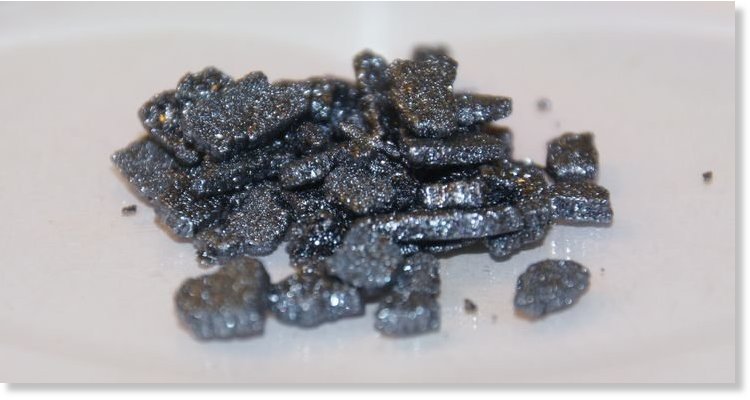
Iodine crystals
One of the main roles for the mineral iodine is to help manufacture thyroid hormones. And once upon a time in America - especially in the Great Lakes region - there were many cases of goiter, an enlarged thyroid gland caused by iodine deficiency. The iodine/goiter story had a happy ending, however, when manufacturers began adding iodine to salt ("iodized salt"). After that, goiters in the U.S. mostly disappeared.

But the iodine story turns out to have an epilogue. A new epidemic of iodine deficiency has occurred. And it's bringing a lot more than goiters with it.

Comment: See the following articles for more information:


Monkey Wrench

Mainstream media blackout: Physicians in France join growing list of doctors who question vaccine safety

France vaccine opt out
There have been a number of articles floating around the internet claiming that France is opting out of vaccines. I could not find a credible source to back up this information, however, and from what I've examined, it does not seem to hold true. There is, nevertheless a demonstrably harsh resistance to vaccines among the general population and a significant portion of their doctors, as noted in a recent study published in 2015 that goes into more detail.

Before going into detail about France and vaccines, it's important to note the following prior to reading:
Questioning vaccine safety can be met with sharp criticism in return, despite the fact that a number of countries have a very limited vaccine schedule compared to the Western world. Critics also seem to ignore the fact that many scientists and doctors around the world are presenting information and publishing papers (in reputable, peer-reviewed journals) which outline the science behind these concerns. On the other hand, we have a number of doctors and scientists publishing papers in the same journals which completely support the mass administration of vaccines. It remains a divisive issue to be sure.