A new study in mice demonstrates that manipulating the microbiome can influence the extent of brain damage caused by a stroke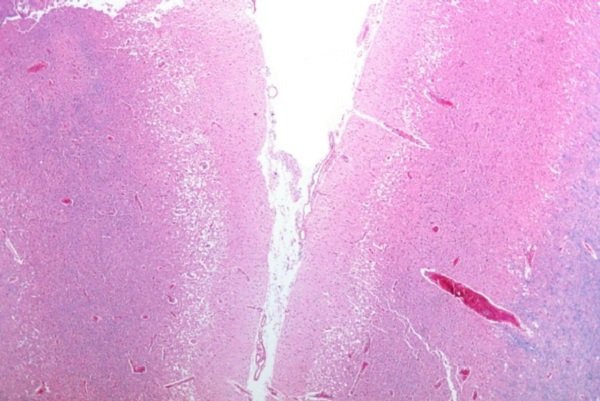
© Nephron/Wikimedia CommonsMicrograph showing cortical pseudolaminar necrosis, a finding seen in strokes on medical imaging and at autopsy.
The bacteria that inhabit our guts have become key players for neuroscientists. A growing body of research links them to a wide array of mental and neurological disorders—from anxiety and depression to schizophrenia and Alzheimer's disease. Now a
study in mice published this week in
Nature Medicine suggests that striking the right microbial balance could cause changes in the immune system that significantly reduce brain damage after a stroke—the second leading cause of both death and disability for people around the globe.
Experts have known for some time that stroke severity is influenced by the presence of two types of cell, found abundantly within the intestine, that calibrate immune responses: Regulatory T cells have a beneficial inflammatory effect, protecting an individual from stroke. But gamma delta T cells produce a cytokine that causes harmful inflammation after a stroke.
A team of researchers at Weill Cornell Medical College and Memorial Sloan Kettering Cancer Center set about investigating whether they could tilt the balance of these cells in the favor of beneficial cells by tinkering with the body's bacterial residents. To do so, they bred two colonies of mice: One group's intestinal flora was resistant to antibiotics whereas the other's gut bacteria was vulnerable to treatment. As a result, when given a combination of antibiotics over the course of two weeks, only the latter's microbiota underwent change. The researchers then obstructed the cerebral arteries of the mice, inducing an
ischemic stroke (the most common type). They found that subsequent brain damage was 60 percent smaller in the drug-susceptible mice than it was in the other group.














Comment: Dr. Bernard Dalbergue, a former pharmaceutical industry physician with Gardasil manufacturer Merck predicted that this vaccine will become one of the biggest medical scandals of all time. Not only is the costly vaccine worthless, (and the manufacturers knew this), but it has either killed or destroyed the lives of many previously healthy young women.