Health & WellnessS


Bacon n Eggs

5 genetic mutations that can be helped by adopting a paleo diet

genetic mutation
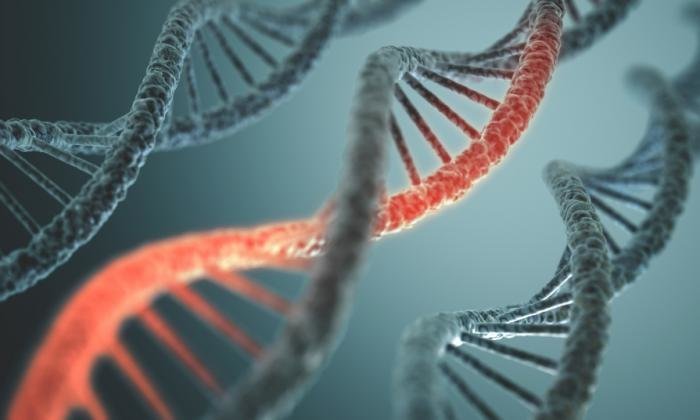
As I mentioned earlier this year, our personal ancestry can help determine how we respond to certain dietary, behavior, exercise, and lifestyle patterns. The big question remaining is this: does going Primal mesh with some of the more common polymorphisms? Yes. The Primal Blueprint is a living document. Its foundation rests on pre-agricultural human evolution, but by remaining flexible and offering ample room for personalization, it acknowledges the fact that evolution has continued to occur.

Let's take a look at five genetic mutations and how the Primal way of eating, living, and moving can help mitigate their downsides.
Comment: Whether you suspect you have one of these genetic mutations or not, adopting a paleo diet can provide numerous health benefits by getting the nutrients that your body needs, while avoiding the toxins and inflammatory foods that damage your body.


Hearts

Magic Mycellum: The healing power of mushrooms

mushrooms
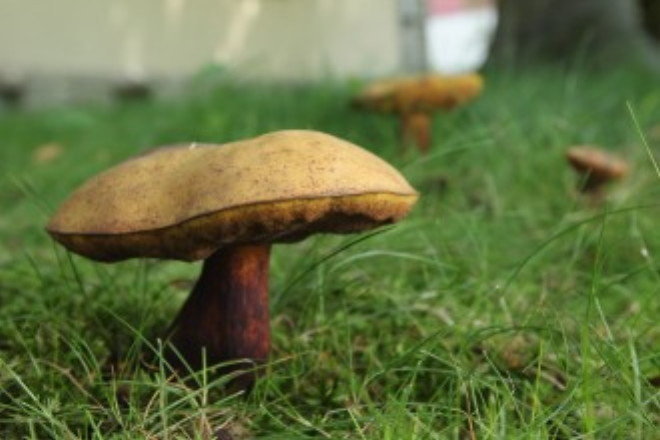
There is, perhaps, no other food source surrounded by such magic and mystery as mushrooms. In the videos embedded below, leading mycologist Paul Stamets offers a glimpse into some of the roles medicinal mushrooms play in health, such as activating your immune system, naturally fight flu viruses and other diseases, and potentially fighting cancer. Mushrooms may even help to save our environment by restoring habitat that's been devastated by pollution, and creating sustainable fuel.

Mushrooms are actually the fruit of mycelium, which is a "filamentous, cobweb-like cellular network." As Stamets explained:1 "The cobwebby mycelium exudes enormous suites of enzymes, antimicrobial agents, antiviral compounds, as it grows in the ground beneath our feet and in the forests around us. Mycelium is the cellular foundation of our food webs, creating the rich soils so necessary for life.

"Mycelium is a digestive membrane that also destroys many environmental toxic wastes, and has spawned a new science - called 'Mycoremediation'... Partnering with mycelium improves environmental health - outside and inside our body."

When mycelium produces its fruits, the resulting mushrooms last only a few days, which adds to the excitement for wild mushroom hunters.

Health

Coconut oil -- that's some really good stuff

coconut oil
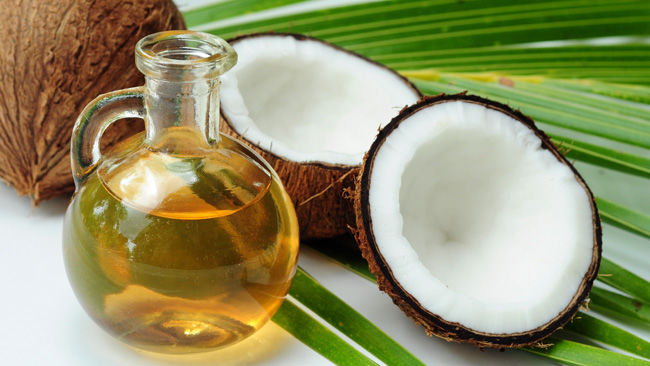
Well, why not mention something that can help you out on a daily basis? Yes, Coconut oil is some really good stuff! Its uses and benefits are tremendous. The books that have been written about it are too numerous to count, but we are going to skim over a few of the basics to give you some knowledge about it. Coconut oil is taken from the meat of the mature coconut, and technically it is an edible oil. It has a shelf life of around 6 months to a year if kept at a temperature of 75 degrees Fahrenheit or below, and it is not prone to any kind of rancidity or spoilage.

There are two types of it, virgin and refined. The latter is usually used for cooking or other applications and doesn't even remotely taste akin to a coconut. It is the former, the virgin coconut oil that you are looking for regarding consumption. The primary difference between the two types lies in the extraction method; although each method involves pressing, the refined also adds heat to extract the oil. When this is done, a host of impurities come out into the oil that lead it to be further refined.

Comment: For more on the benefits of coconut oil see:


Health

1 in 5 people will be obese by 2025, says WHO

burger king line
© Finbarr O'Reilly / Reuters
In the most wide-ranging population weight study ever performed, researchers found that 266 million men and 375 million women were obese worldwide in 2014, and that these figures will get rapidly worse over the next decade.

With help from the UN-backed World Health Organisation (WHO), Imperial College London used more than 700 researchers to collect the weight of more than 20 million people, for a study that is to be published in The Lancet medical journal.

They found that obesity in men has more than trebled from 3.2 percent in 1975, to 10.8 percent in 2014. In women, it has more than doubled from 6.4 to 14.9 percent. Graphs show that the process is accelerating since the turn of the millennium, and by 2025, 18 percent of men and 21 percent of women will be obese. A 6'00" person weighing over 104 kg would be considered obese, using the WHO-prescribed body mass index table.

Comment: Toxins may also play a part in the worldwide surge in obesity.


Health

Injections of high dose vitamin C shown to annihilate cancer

high dose vitamin C
Groundbreaking new research on the cancer-fighting potential of vitamin C has made the pages of the peer-reviewed journal Science Translational Medicine. A team of researchers from the University of Kansas reportedly tested the effects of vitamin C given in high doses intravenously on a group of human subjects and found that it effectively eradicates cancer cells while leaving healthy cells intact.

Building upon earlier research pioneered in the 1970s by the late Linus Pauling, a chemist from Oregon State University who today is recognized as the world's foremost proponent of therapeutic vitamin C, the new research involved injecting high doses of vitamin C into human ovarian cells. The tests were conducted in vitro in a lab, as well as directly in both mice and a group of 22 human subjects.

Comment: Dr. Linus Pauling: Revising his work on vitamin C
Follow up research now evidences three vital roles that vitamin C plays in the fight against cancer. Firstly, it inhibits tumour growth by regulating proper cell tissue integrity, secondly it greatly enhances the immune system when ingested in sufficient quantities, and finally it has cytotoxic properties, which means that, in combination with other natural substances, it can kill cancer cells without damaging the healthy ones. In other words it acts as a kind of non-toxic chemotherapy.

Final proof that Linus Pauling was right after all is slowly coming, but in the meantime and despite the continuing efforts of much of the medical establishment to the contrary, we should be insisting that anyone either embarking upon or currently undergoing a course of cancer therapy should at the very least be offered a course of substantial doses of vitamin C alongside whatever other treatment they are being offered.
Health

Infants born prematurely show less interest in others, are at more risk for autism

babies born prematurely
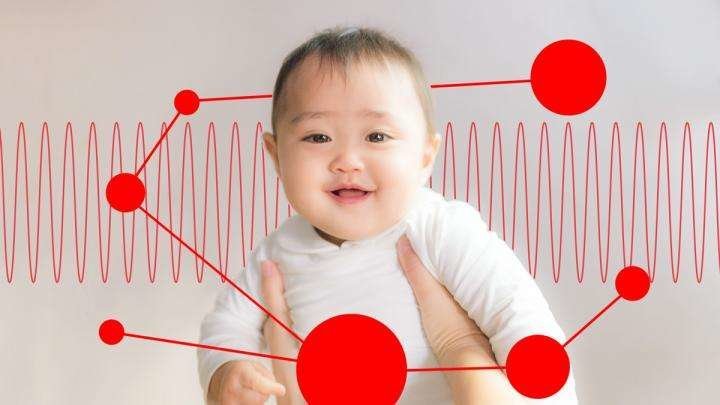
© Eiri Ono/Kyoto University Japanese researchers found evidence that babies born prematurely are less interested in other people compared to infants born full-term, when tested at 6 and 12 months of age. The study adds further insight into recent reports about the links between premature birth and autism.
Attention to other people is a fundamental role for social cognitive development in the early stages of life. However, infants born prematurely show a different attentional pattern.

In a new study, a Kyoto University team found evidence that such babies are less interested in other people compared to infants born full-term, when tested at 6 and 12 months of age. This new study brings light to the links between premature birth, development of social communication skills, and ultimately autism.

Recent studies illustrate that infants born prematurely are at more risk of autism.

"Autism occurs from a mix of genetic and environmental factors. Preterm infants get a tremendous amount of stress in the early days of birth, because the environment is profoundly different from that of the womb," says Masako Myowa-Yamakoshi, who heads the team. "This make them much more prone to developmental difficulties, even if they seem perfectly fine when they leave the hospital."

Comment:

The brain, interrupted

Pre-term births are extremely common. According to WHO statistics from 2012, more than one in 10 babies are born prematurely each year. Other studies have also shown that many pre-term babies have neuro-developmental problems, and the effects seem to continue into adulthood with many having moderate to severe cognitive deficits, short attention spans, and as a group they tend to underachieve academically and career-wise.

Toxic exposure & preterm births: "Insidious, invisible" impacts on baby health

Scientific evidence is emerging that particulate matter, lead and other pollutants - especially in combination may play a role in the approximately 15 million babies born preterm every year around the world, and can have grave effects on pregnancy and a child's development.


Eye 1

FDA sued over approval of genetically engineered salmon

salmon
© Lucas Jackson / Reuters
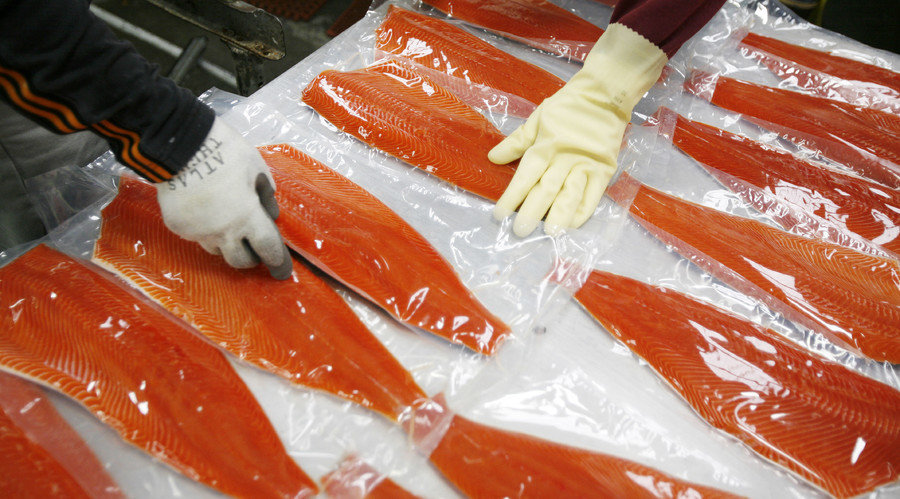
The US Food and Drug Administration is being sued by a coalition of environmental, fishing and consumer groups for its approval of genetically engineered salmon - the first such animal to ever be sold for commercial consumption.

The lawsuit announced Thursday challenges the FDA's power to approve the salmon, which can be grown twice as quickly as natural salmon. The plaintiffs, represented by the Center for Food Safety and by Earthjustice, argue that the agency doesn't have the power to approve and regulate genetically engineered (GE) animals as "animal drugs" under federal law.

"Those provisions were meant to ensure the safety of veterinary drugs administered to treat disease in livestock and were not intended to address entirely new [genetically engineered] animals that can pass along their altered genes to the next generation," said Earthjustice.

Comment: See also: Is your food on crack? Salmon test positive for 81 different drugs


SOTT Logo Radio

SOTT Focus: The Health & Wellness Show: Connecting the don'ts, and what you can actually do

Vaxxed
...and the attempted coverup continues...
Today on the Health and Wellness show, we connected the "don'ts" in recent health news, and talked about what you can do to keep your health, wellness, and sanity. Between governmental control on medicine, environmental pollution, vaccines, the state of food, and many other things, we have plenty of issues to battle to keep our heads on straight. However, it is possible to approach the seemingly insane world with rationality and personal responsibility for your own state of health. As always, Zoya joined us with a pet health segment about the absurdity of vegetarian diets for your pet dogs and cats. Tune in weekly on Fridays on the SOTT Radio Network!

Running Time: 01:53:52

Download: MP3


Here's the transcript of the show:

Bacon

Eat more bacon: Study finds vegetarian diet can cause cancer

restaurant food
© AFP
New research may shed light on why vegetarians are almost 40 percent more likely to suffer colorectal cancer than those of the carnivorous persuasion. The study goes beyond an individual's diet though, pointing to a multi-generational factor at work.

A new study from Cornell University found a generation variation - or adaptive allele - that appears in populations who have subsisted on a vegetarian diet for generations. This adaptive allele is believed to have occurred to make it easier for vegetarians to absorb essential fatty acids from plants, but it also leaves them more susceptible to inflammation.

According to the study authored by J. Thomas Brenna, "The mutation, called rs66698963 and found in the FADS2 gene, is an insertion or deletion of a sequence of DNA that regulates the expression of two genes, FADS1 and FADS2. These genes are key to making long chain polyunsaturated fats."

Among the polyunsaturated fats are omega-3s and omega-6s, two important fatty acids that the human body cannot make itself. But research indicates that vegetarians with the adaptive allele who stray from a balanced omega-6 to omega-3 diet are at a higher risk of cancer and heart disease.

Comment: The research here at SOTT has long held that the optimal diet for humans is a diet that is low in carbohydrates and higher in proteins and fats. There is a lot of evidence that points to a high-carb diet being very unhealthy for humans in the long run:


Whistle

Propaganda alert: Are there unintended consequences to calling breast-feeding 'natural'?

Breastfeeding
Breast-feeding: "It's only natural." It's a message women may have seen on Facebook or a state health department website, or heard on the radio, as part of a campaign launched in 2013 by the Department of Health and Human Services.

But, according to a pair of experts, this type of campaign could backfire in a big way. When federal and local health departments use the term "natural" to promote breast-feeding, it could inadvertently fuel concerns over other aspects of health and society that are seen as "unnatural," such as vaccines, genetically modified foods and assisted reproductive technologies, the experts warn.

Comment: Breast-feeding is what 'nature' intended - for the benefit of both mother and child. The fact that articles like the one above are even being written is just insane! The benefits of breastfeeding whether termed 'natural' or not far outweigh any sort of medical or commercial intervention!