Health & WellnessS


Syringe

Is Autism caused by the MMR vaccine?

Autism
© flickr.com
Does the MMR vaccine cause autism? This is the essential question that each parent should ponder prior to injecting their child with the MMR vaccination.

The answer is largely divided between conventional medicine and the holistic community. Evidence supporting the claim that the MMR vaccine causes autism includes parental reports, court case verdicts, multiple research studies and animal research. Deniers of the connection refer to vaccine studies which are considered flawed or biased by those in the holistic health community. [1, 2]

In the end, each person must decide for themselves what to believe.

Comment: Vaccination's Vexed Link to Autism:

Courts quietly confirm MMR Vaccine causes Autism
At the center of the fifteen-year controversy is Dr. Andrew Wakefield of Austin, Texas. It was Dr. Wakefield that first publicized the link between stomach disorders and autism, and taking the findings one step further, the link between stomach disorders, autism and the Measles Mumps Rubella (MMR) vaccine.

For that discovery way back in 1996, and a subsequent research paper published by the doctor in 1998, Andrew Wakefield has found himself the victim of a world-wide smear campaign by drug corporations, governments and media companies.

And while Dr. Wakefield has been persecuted and prosecuted to the extent of being unable to legally practice medicine because of his discovery, he has instead become a best-selling author, the founder of the Strategic Autism Initiative, and the Director of the Autism Media Channel.

But in recent months, courts, governments and vaccine manufacturers have quietly conceded the fact that the Measles Mumps Rubella (MMR) vaccine most likely does cause autism and stomach diseases. Pharmaceutical companies have even gone so far as to pay out massive monetary awards, totaling in the millions, to the victims in an attempt to compensate them for damages and to buy their silence.


Magnify

Gut-brain connection: Researchers find evidence that diet & gut microbes can influence brain inflammation

gut-brain
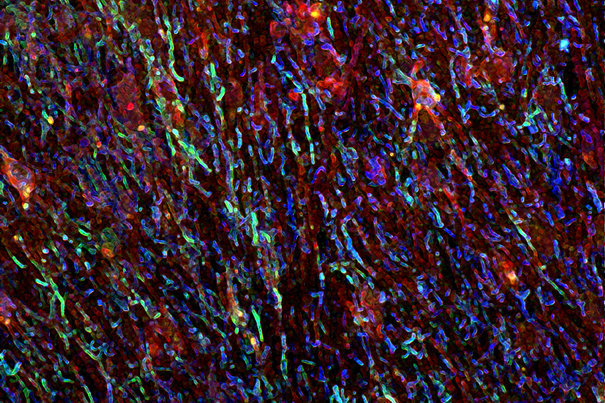
© Jorge Ivan Alvarez/School of Veterinary Medicine, University of Pennsylvania, PhiladelphiaA link between deficits in gut flora and brain inflammation may lead researchers to learn more about its impact on multiple sclerosis. Pictured is immunofluorescence imaging of an active lesion in the brain of an individual with MS.
A team of investigators at Harvard-affiliated Brigham and Women's Hospital (BWH) has found evidence that suggests that bacteria living in the gut may remotely influence the activity of cells in the brain that are involved in controlling inflammation and neurodegeneration.

"For the first time, we've been able to identify that food has some sort of remote control over central nervous system inflammation," said Francisco Quintana, an investigator in the Ann Romney Center for Neurologic Diseases at BWH and corresponding author on the study. "What we eat influences the ability of bacteria in our gut to produce small molecules, some of which are capable of traveling all the way to the brain. This opens up an area that's largely been unknown until now: how the gut controls brain inflammation."

Comment: Why isn't my brain working:


Candle

Holistic doctor/ Professor found stabbed to death in her home, no motive to be found

Dr Rasmussen
The daughter of the Quincy College Professor, who is also a retired holistic doctor, remembers her mother as someone "who wanted other people to succeed," says the Boston Globe.

Dr Rasmussen, who taught classes on the subjects of biology (and nutrition as described below) was stabbed more than thirty times and found dead in her Plymouth home this past week. She was 76 and "a devoted grandmother, and former foster mother to at least 20 kids," said her daughter.

Comment: Our hearts go out to Dr Rasmussen's family and friends.
See also: 2 Doctors walking home, both found dead, one stabbed to death in "safe neighborhood"


Bandaid

'I have to be taller': India's limb-lengthening industry

limb lengthening surgery
Komal never told her friends where she really went for six months last year.

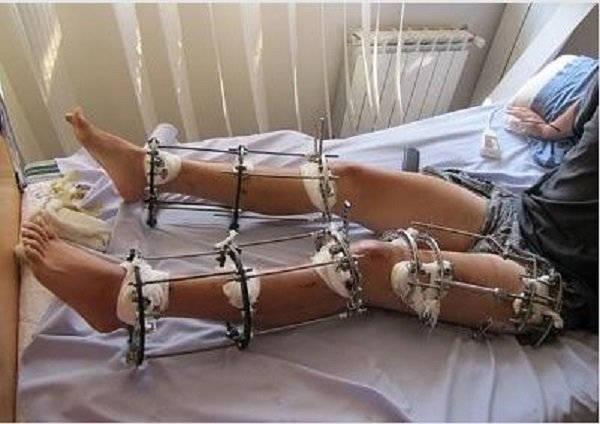
The 24-year-old, from the town of Kota, in western India, went to see Dr Amar Sarin, an orthopaedic surgeon in Delhi, who made her eight centimetres (3in) taller, a procedure which involved breaking the bones in her legs and wearing a brace until she could walk again.

Her parents had to sell the family's ancestral lands so she could get the surgery, but for Komal, the extra height is worth it. "I have so much confidence now," she says. "I was just 4' 6" [137cm]. People used to make fun of me and I couldn't get a job. Now my younger sister is doing it, too."

Comment: How sad that people would subject themselves to radical surgery just to gain a few inches.


Question

Are vaccines priming children for depression?

vaccine overload
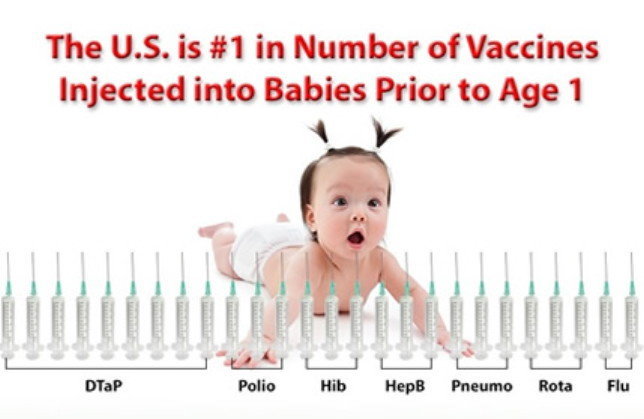
Children currently receive 49 doses of 14 vaccines before the age of six. Experts now claim more than one vaccine within a one-year period may be programming children for depression by creating over overactive immune systems.

Carmine Pariante and his team at King's College London recently found that some people may be more biologically sensitive to triggers for depression, and that this heightened sensitivity could be spotted using a blood test.

"In the future, positively tested children could be immediately exempted from multiple vaccinations due to the known risk factors," said infectious disease specialist Dr. Alla Anosov.

Comment: More information about Polysorbate 80 and how it negatively affects the immune system: A formula for disaster: When vaccine ingredients cross the blood brain barrier
"Pharmaceutical companies utilize polysorbate-80 in their drug manufacturing to help with the transmission of pharmaceuticals across the blood brain barrier, BBB, writes Dr. Palvesky. They understand how protective the BBB is against allowing blood contents to enter the brain, and have found a way to bypass the BBB to enhance drug entry into the brain by attaching the drugs to nano-particles of polysorbate-80. 4,6,7


Cow

Research finds small amounts of human and rat DNA in hamburger meat

burgers
© Eric Thayer / Reuters
Think that burger you're biting into is all-beef? Even if it's advertised that way, there's a small chance that you could ingest substituted ingredients or even contaminants from rats or humans, according to a new study.

A report from the California-based food analytics company Clear Labs sampled 258 hamburger products, including ground beef, frozen patties, fast-food and veggie burgers. Three of the samples had traces of rat DNA, and one was positive for traces of human DNA.

While these results are definitely less than appetizing, it should be noted they amount to a small fraction of the samples being contaminated by a human or rat hair during production.

"The most likely cause is hair, skin, or fingernail that was accidentally mixed in during the manufacturing process," Clear Labs said, referring to the human DNA finding.

Smoking

Flashback Study finds lungs from heavy smokers are safe for transplant

smokers lungs
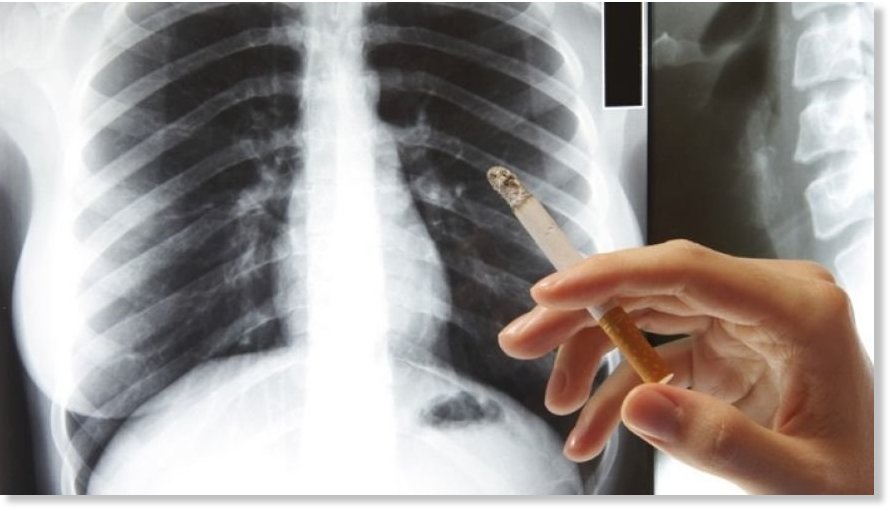
Using lung transplants from heavy smokers may sound like a cruel joke, but a new study finds that organs taken from people who puffed a pack a day for more than 20 years are likely safe.

What's more, the analysis of lung transplant data from the U.S. between 2005 and 2011 confirms what transplant experts say they already know: For some patients on a crowded organ waiting list, lungs from smokers are better than none.

"I think people are grateful just to have a shot at getting lungs," said Dr. Sharven Taghavi, a cardiovascular surgical resident at Temple University Hospital in Philadelphia, who led the new study.

Surprisingly, however, organ recipients who do get smokers' lungs often learn about it only afterward -- if at all, experts say.

"If someone had a transplant and after the transplant they say, 'What can you tell me about the donor?' there are a limited number of characteristics we can tell them," said Dr. Ramsey Hachem, a pulmonologist at Barnes-Jewish Hospital in St. Louis. "We don't do that routinely before."


Health

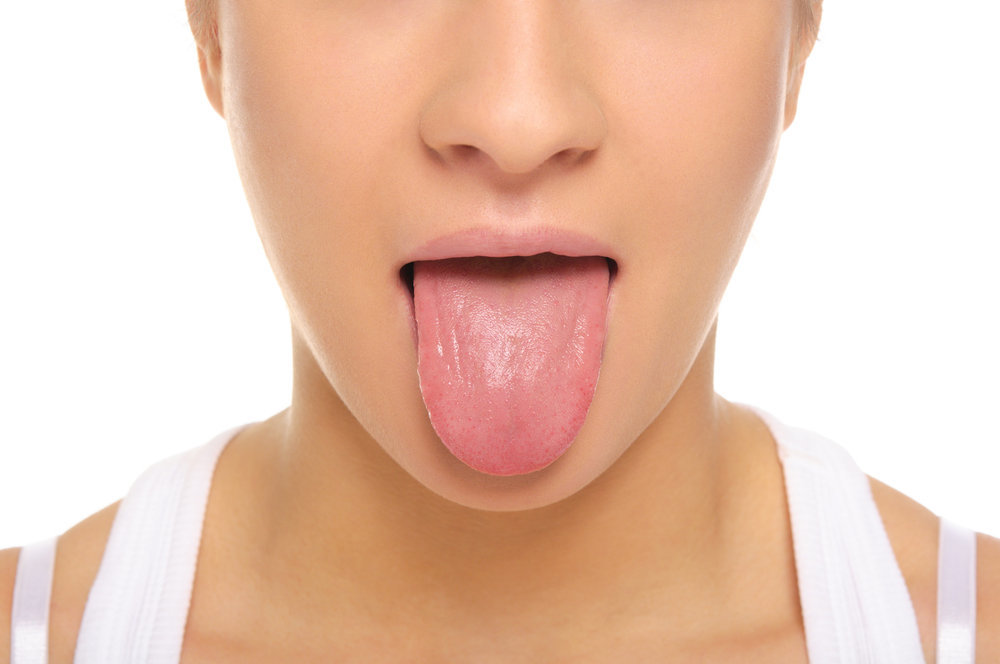
What does your tongue say about your health?

tongue diagnosis
Every person's tongue is unique, with distinct characteristics that reflect their inner health. Ever been to a TCM (Traditional Chinese Medicine) doctor or an acupuncturist and been asked to stick out your tongue? There is a reason for this. TCM believes the tongue is a microcosm of the entire body and will reflect its excesses and deficiencies. The shape, colour, coating, and texture of the tongue can all indicate digestive issues and body imbalances.

The gold standard: A normal healthy tongue is pink in color, has a light white tongue coating on it, and is proportionate in size to the mouth.

So, what can your tongue tell you about your health?

Comment: The state of your tongue can give you clues to your overall health


Cell Phone

Digital interruption: Are our smartphones afflicting us all with symptoms of ADHD?

smart phone addicition
© psychcentral.com
When was the last time you opened your laptop midconversation or brought your desktop computer to the dinner table? Ridiculous, right? But if you are like a large number of Americans, you have done both with your smartphone.

Less than a decade after the introduction of the first iPhone, more people reach for their smartphones first thing in the morning than reach for coffee, a toothbrush or even the partner lying next to them in bed. During the day, with a smartphone in our pocket, we can check our email while spending time with our children just as easily as we can text a friend while at work. And regardless of what we are doing, many of us are bombarded by notifications of new messages, social media posts, breaking news, app updates and more.

Comment: The real Zombie Apocalypse? People check their Smart Phones 85 times a day!


Light Saber

Fighting for naturopathic doctors

natural herbs
Recently an association of four-year trained naturopathic doctors (NDs) in Oregon brought a class action lawsuit against an insurance provider. They allege that the insurance company conducted unlawful and discriminatory practices by arbitrarily denying payments for primary care services provided by NDs.

Following the passage of Obamacare, insurance providers are required to cover one annual physical per year, but some companies are not reimbursing NDs for these services because NDs aren't being recognized by insurance providers as primary care doctors. The lawsuit also alleges that Obamacare actually prohibitsinsurance companies from discriminating against practitioners who are practicing within the scope of their licenses—and Oregon NDs are licensed to practice primary care, prescribe medicines, and order tests for their patients.