Health & WellnessS


Cheeseburger

The globalization of fast food and the rise of worldwide obesity

obese kid
25 years ago a doctor who traveled throughout Central America was amazed at not seeing any fat or obese people. The people looked vibrant and healthy, fast foods had not entered those countries and the people walked and ate 'real food'. Recently upon return, the doctor could hardly find those who were slim and in shape, it was as if the entire culture had changed and the people looked sick and lethargic.

To him, it was a clear indication that processed/fast foods had become a very tragic reality, directed to the young and setting them up for a lifetime pattern of health issues and an early death.

When it comes to globalization of the fast food culture it was American fast food restaurants such as McDonald's, Burger King and Kentucky Fried Chicken who were able to transcend international borders and cultures and eventually find their way into the major cities of Europe, Asia, Africa and South America.

Comment: See also:


Question

What is this petrochemical "vitamin" doing in infant brains?

synthetic vitamin E

Concerning research reveals that the infant brain is capable of absorbing and accumulating synthetic vitamin E. This petrochemical derivative may have significant downstream adverse effects on gene expression, immune function, and even neurodevelopment.


A provocative new study published in the British Journal of Nutrition titled, "The naturally occurring α-tocopherol stereoisomer RRR-α-tocopherol is predominant in the human infant brain," has found that the infant brain preferentially absorbs and accumulates the natural form of vitamin E over the synthetic form, but it does so incompletely.

Attention

People living near fracking sites are more toxic, study shows

Fracking
© Reuters / Shannon Stapleton / Reuters

Many of the toxic chemicals escaping from fracking and natural gas processing sites and storage facilities may be present in much higher concentrations in the bodies of people living or working near such sites, new research has shown.


The study found traces of volatile organic compounds such as benzene and toluene are linked to chronic diseases like cancer and reproductive and developmental disorders.

In a first-of-its-kind study combining air-monitoring methods with new biomonitoring techniques, researchers detected volatile organic compounds (VOCs) released from natural gas operations in Pavillion, Wyoming in the bodies of nearby residents at levels that were as much as 10 times that of the national averages.

Comment: See also:


SOTT Logo Radio

SOTT Focus: The Health & Wellness Show: Your Mama's drama can cause you trauma

trauma
By popular demand, the Health and Wellness crew has re-visited the topic of intergenerational trauma. Can trauma from your ancestors be passed down through DNA? How does your familial and cultural history influence your worldview, personality, fears, phobias and ability to handle stress? Does family trauma mean that we're doomed or can learning ancestral history be a key to personal healing in the present?

Running Time: 01:40:05

Download: MP3


Bacon n Eggs

When it comes to health & longevity: A high-fat diet is best

saturated fat
© all4women.co.zaDemonization of saturated fat based on flawed data
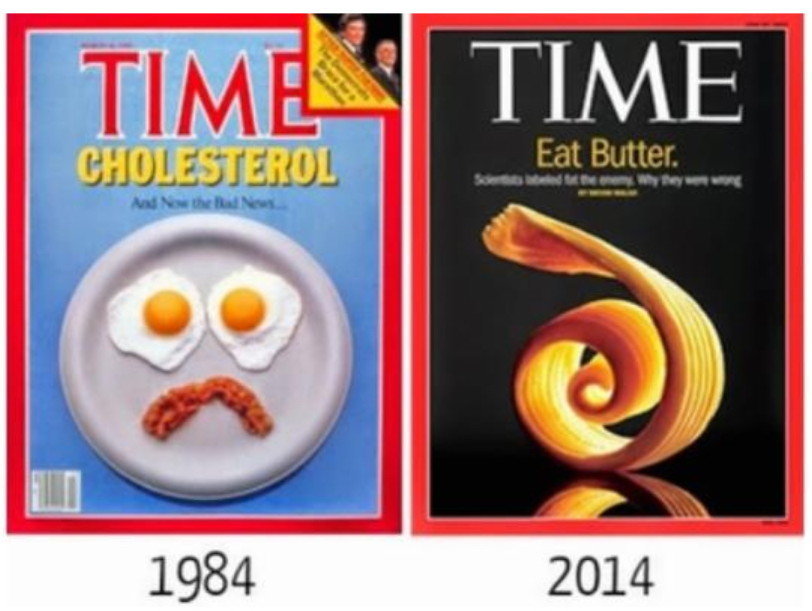
I remember as a teenager in the 80s how low-fat diets were all the rage in the United States. Suddenly, a slew of 'healthy' convenience foods were lining the supermarket aisles — from cookies to snacks and everything in-between. Low-fat cooking was championed and labels suggested reduced-fat products were the holy grail of health — guaranteeing a life free of disease and excess weight. And so it went. People jumped on the low-fat bandwagon and never looked back — that is, until waistlines expanded and general health took a nose dive. After years of low-fat living, people were fatter and more disease ridden than ever before. So what happened?

Besides substituting refined sugar for fat in processed foods — and people consuming more of these foods in general — researchers were stumped as to why low-fat diets were such a dismal failure on the health and obesity front. Observing the traditional French diet — a way of eating notoriously high in fat — and the exceptional health enjoyed by French people in general, the mystery slowly began to unravel. Eventually, acceptance of the notion that low-fat diets promote health was abandoned and the opposite was embraced: high-fat diets are not only healthy, but encourage longevity to boot.

Comment: Why Humans Crave Fat:


Sun

Knowledge protects: Learn to recognize the symptoms of heat stress and exhaustion

heat exhaustion, heat stress
According to the Centers for Disease Control and Prevention (CDC), on average, extreme heat causes 658 deaths in the U.S. each year. This is more than those in tornadoes, hurricanes, floods and lightning combined.1 Sadly, many, if not all, of these deaths are preventable.

Occupational Safety and Health Administration (OSHA) reported 2,630 heat illnesses in 2014. These included all conditions related to overheating, such as rhabdomyolysis, heat cramps, heat exhaustion and heat stroke.2

In a study released by the CDC in 2013, researchers found 7,233 heat-related deaths in the U.S. between 1999 and 2009. This data also indicates the numbers are rising.3

In a two-week period in 2012, excessive heat resulted in 32 deaths over four states in the U.S. This is four times the typical average for those same states for the same two-week period between 1999 and 2009.

Just under 70 percent of deaths happen at home and 91 percent of those homes did not have air conditioning. Most of the people who died were either unmarried or living alone.

Factors Affecting Your Potential Risk for Heat Stress

Factors that affect your risk for suffering heat stress include your environment, your work and rest schedules, and your nutrition and training schedules.4 You are most prone to suffering heat stress if you are elderly, have high blood pressure or work or exercise in a hot environment.5

You might think you can only suffer heat stress when temperatures outside are very warm, but it need only be 57 degrees Fahrenheit (13.8 degrees Celsius) to suffer the effects of heat stress.

Humidity is another environmental factor affecting your body's ability to evaporate sweat, and cool your core temperature. Days of high humidity reduce sweat evaporation, and therefore affect your body's cooling system. Wind speed will help evaporate sweat and cool your body.

Acclimating to extreme heat is important if you plan to spend time outside working. In this process, you physically adjust to the temperature in your outdoor environment. In a healthy person, this can take up to two weeks; a little faster in the heat and slower in the cold.6

Comment: See also:


Gear

Celiac psychosis: Can wheat make you crazy?

celiac psychosis
Maybe you've heard of the books Wheat Belly or Grain Brain. Maybe you've chatted with friends about a NY Times editorial claiming that gluten free is a fad. Maybe you've been raised, as I have, in a cultural consciousness that says, yeah food matters, but not that much.

I'd love to tell you a story I read about in the primary published literature that seems to suggest that yes, gluten is an issue. No it's not a wellness fad. And its elimination may very well be the key to resolving what would otherwise be a chronic and disabling psychiatric condition.


Comment: Back in 2011 The New York Post ran an editorial about the gluten free fad: Propaganda Alert: New York Post - The City's New Psychosis: Gluten!
It shouldn't be surprising that the Post is putting out the pro-gluten propaganda. Considering the new release of Dr. Davis book Wheat Belly. In an Interview with 'Wheat Belly' Author Dr. William Davis he clearly states WHY this sort of propaganda is being spread:
Dr. Davis: The response has been incredible. Within the first 9 days after its release, Wheat Belly made The New York times bestseller list.

Comment: Read more about the Neurological Effects of Gluten:


Cheesecake

Gut microbes: Do they control your food cravings?

gut microbes
Do you experience cravings for particular foods? Recent research on the gut-brain axis suggests that the microbes in your gut could strongly influence your food choices. Read on to learn how your gut microbes can manipulate your behavior and, in turn, how you might manipulate your gut microbes to curb food cravings.

A whopping 97 percent of women and 68 percent of men report experiencing cravings for certain foods (1). Cravings are thought to be a combination of social, cultural, psychological, and physiological factors and are a major barrier to weight loss and optimal health for many individuals (2).

Comment: To learn more about the importance of gut flora and food cravings read the following articles:


Flashlight

The numerous benefits of Himalayan salt lamps

himalayan salt lamp
© suhailinternational.blogspot.com
If you've never heard of Himalayan salt lamps - and most people haven't - you don't know what you're missing in terms of how they can dramatically improve your overall health.

First of all, it's probably best to tell you what Himalayan salt actually is. As noted by Mountain Rose Herbs:

Himalayan Pink salt is one of the purest salts available for culinary, therapeutic and cosmetic uses. This luxurious and delectable salt has beautifully formed crystals which range in color from off-white to a lustrous pink. Himalayan Pink salt is a pure, hand-mined salt that is derived from ancient sea salt deposits, and it is believed to be the purest form of salt available.

Comment: How Himalayan salt lamps are benefcial for better sleep and mental clarity


Info

The brain-gut axis: Mind control, antibiotics & beneficial bacteria

gut bacteria
Most of your body is, well, not human. Single-cell bacteria living in and on your body - mouth, nose, skin, but especially gut - outnumber your human cells by at least three to one, totaling a whooping 100 trillion (1). These bacteria are called microbiomes and together they form your personal microbiota, which has a huge impact on your physical as well as mental health. There's a growing body of research that proves just how beneficial these gut bacteria are.

They may inhabit different ends of your body, but your brain and your gut are engaged in a subtle yet crucial interplay, so much so that the gut is being called by some scientists "the second brain" (2). In other words, an imbalance microbiota doesn't mean just constipation, diarrhea, or irritable bowel syndrome, but can lead to a host of serious mental health issues such as depression, anxiety, stress, autism. More than that, it plays a part in the development of neurodegenerative disorders such as Parkinson's and Alzheimer's disease.

Now that we know that the brain and gut are linked in an essential way, let's get to the bottom of things.

Comment: Additional reasons to pay attention to your body's 'second brain'