Health & WellnessS


Bacon n Eggs

Saturated Fat: Health Food or Health Hindrance?

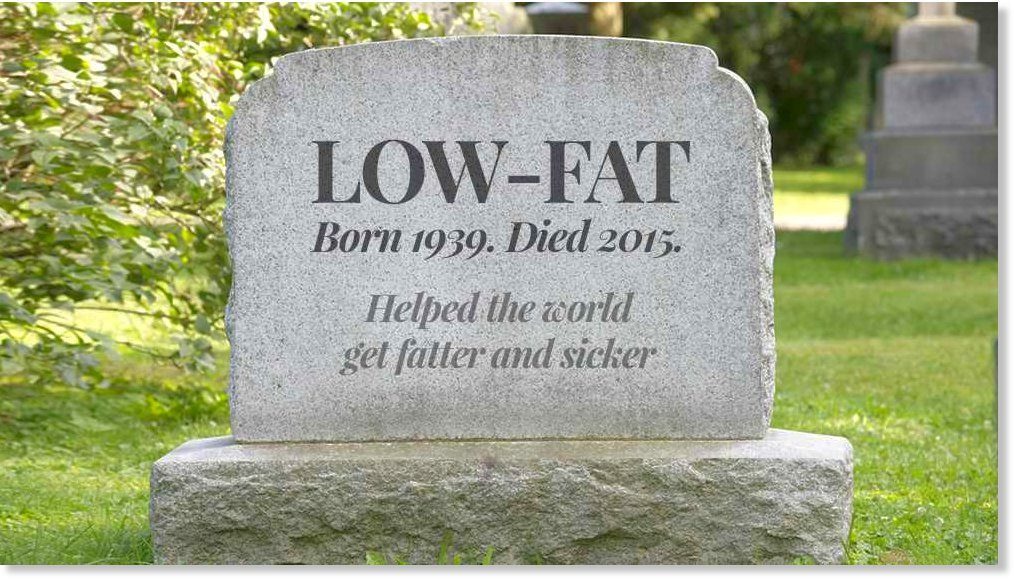
low fat saturated fat
The latest advisory issued by an American Heart Association released report on June 15, 2017 seems to be causing quite a storm of controversy online, as well as generating a lot of confusion in a whole lot of people. I was rather surprised at the number of emails I received from those that had read it expressing concerns about coconut oil, which has otherwise actually enjoyed quite a bit of cause célèbre as a bit of a rock star in health circles in recent years. The AHA article even spurred BBC News one day later, on June 16 to proclaim coconut oil 'as unhealthy as beef fat and butter'. In fact, there was almost what seemed like a carpet bombing of articles and anti-saturated fat propaganda surrounding the AHA advisory, originally published in the journal, Circulation titled, "Dietary Fats and Cardiovascular Disease: A Presidential Advisory From the American Heart Association". The AHA decree offered essentially a reiteration of its own absurdly antiquated recommendation to curb the intake of saturated fats in favor of supposedly "heart healthy" unsaturated/polyunsaturated fats.

The AHA's "new" declaration was so nonsensical and full of errors that there is widespread speculation that all of this must be a hoax. - "Fake News", as it were. - Would that it were so (well, it is and it isn't).

Nonetheless, on the American Heart Association website the following headline was emblazoned: "Advisory: Replacing saturated fat with healthier fat could lower cardiovascular risks"

Wow....really? Is the world STILL flat?

The authors of the article in the journal Circulation stated
"Taking into consideration the totality of the scientific evidence, satisfying rigorous criteria for causality, we conclude strongly that lowering intake of saturated fat and replacing it with unsaturated fats, especially polyunsaturated fats, will lower the incidence of CVD [cardiovascular disease]."
Ummmm yeah. And I've got some swampland in New Jersey to sell you. The nutritionally illiterate AHA really still thinks they can sell this obsolete swill to us? This AHA declaration basically does little more than echo the long-since tired and thoroughly debunked, decades-old failed policy of our USDA government guidelines.


Comment: For another invaluable perspective, see: Nina Teicholz: The Big Fat Surprise! (Video)


Health

Cannabinoids for Autoimmune Disease

cannabinoids
This unjustly demonized plant is about to change the scope of medicine and disease management as we know it.
Historical Maligning of Marijuana

Although legalizing recreational marijuana is a polarizing political issue, the ceremonial and medicinal use of this botanical agent dates back thousands of years (1). Paleobotanical, anthropological, and ethnographic records date the first human interactions with marijuana to 11,000 years ago, in the Holocene era, when human groups in the Eurasian continent used the seeds and stalks as sources of food and fiber, and the resin-laden female flowers within spiritual contexts (2, 3, 4). According to Wei and colleagues (2017), the medicinal actions, as well as the heightened euphoria, modified time perception, intensified sensation, and sense of tranquility produced by consuming the flowers or inhaling their smoke was "intimately woven into religious ritual" (p. 1). Marijuana was likewise used to cement social bonding during weddings, funerals, supernatural rites, and festivals, from cultures ranging to the Scythians inhabiting the Eurasian steppe to the Hindus of the Himalayan mountains (5).

Nonetheless, the plant has been embroiled in a miasma of mythology and its reputation tarnished by its affiliation with counterculture, a segment of the population to which policymakers have harbored historical animus. According to Schafer (1972),
"Many see the drug as fostering a counterculture which conflicts with basic moral precepts as well as with the operating functions of our society....Marihuana becomes more than a drug; it becomes a symbol of the rejection of cherished values" (p. 9).

Comment: Read more about the therapeutic effects of cannabinoids:


Health

Study: Acupuncture safe and effective treatment for relieving pain in emergency room patients

acupuncture
The world's largest randomized controlled trial of the use of acupuncture in emergency departments has found the treatment is a safe and effective alternative to pain-relieving drugs for some patients.

Led by RMIT University in Melbourne, Australia, the study found acupuncture was as effective as pain medicine in providing long-term relief for patients who came to emergency in considerable pain.

But the trial, conducted in the emergency departments of four Melbourne hospitals, showed pain management remains a critical issue, with neither treatment providing adequate immediate relief.

Lead investigator Professor Marc Cohen, from RMIT's School of Health and Biomedical Sciences, said pain was the most common reason people came to emergency, but was often inadequately managed.
"While acupuncture is widely used by practitioners in community settings for treating pain, it is rarely used in hospital emergency departments," Cohen said.

"Emergency nurses and doctors need a variety of pain-relieving options when treating patients, given the concerns around opioids such as morphine, which carry the risk of addiction when used long-term.

"Our study has shown acupuncture is a viable alternative, and would be especially beneficial for patients who are unable to take standard pain-relieving drugs because of other medical conditions.

"But it's clear we need more research overall to develop better medical approaches to pain management, as the study also showed patients initially remained in some pain, no matter what treatment they received."

Comment: Why acupuncture works
With documented use dating back more than 2,500 years, acupuncture is based on the premise that there are more than 2,000 acupuncture points in the human body, which are connected by bioenergetic pathways known as meridians.

According to traditional medicine, it is through these pathways that Qi, or energy, flows, and when the pathway is blocked the disruptions can lead to imbalances and chronic disease.

Acupuncture is proven to impact a number of chronic health conditions, and it may work, in part, by stimulating your central nervous system to release natural chemicals that alter bodily systems, pain and other biological processes.
See also:


Health

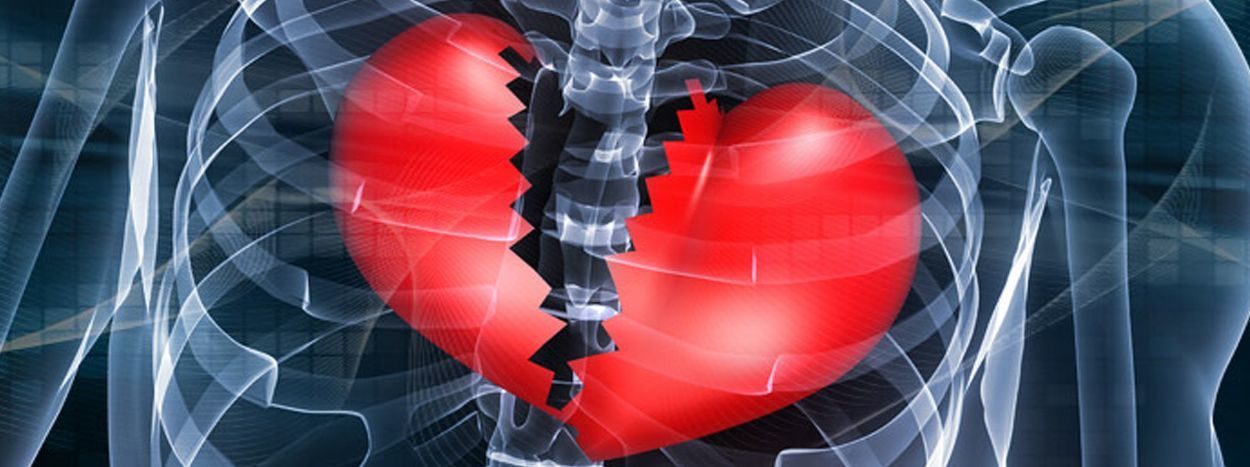
Time doesn't always mend a broken heart: Rare syndrome leaves physical scars that never recover

broken heart syndrome
Songwriters, poets and novelists have long mused over whether time truly heals everything.

Charles Dickens toyed over whether the bitter Miss Haversham would ever recover from being jilted at the altar, and for many historians, Queen Victoria's black dress came to symbolise her irreparable suffering over Prince Albert's death.

But a new study has apparently put their agonising to bed and concluded that not even the clock can always mend a broken heart.

A team of medical researchers from the University of Aberdeen have said that so-called "broken heart syndrome" can leave physical scars that never recover.

British Heart Foundation-funded study followed 52 patients over four months, aged between 28 and 87, who suffered with what is officially known as takotsubo syndrome.

Magnify

Lead in the US food supply: Is it decreasing our IQ?

lead
© vchal/shutterstock.comA baby plays with blocks spelling out one of the most famous formulas in history.
The environmental advocacy group Environmental Defense Fund (EDF) on June 15 released a study about dietary lead exposure, with a focus on food intended for babies and young children.

Using a Federal Drug Administration (FDA) database of food samples, EDF reported some pretty worrying numbers, most remarkably in fruit juice samples intended for children. For example, 89 percent of the baby food grape juice samples had detectable levels of lead in them.

As researchers who served as independent reviewers on the EDF report, we think it raises important concerns about the safety of our food supply. Since EDF primarily focused on exposure (whether lead was detectable or not), we were interested to see if we could get a better sense of the magnitude of risk. Specifically, we examined potential IQ loss and the percentage of samples with high lead concentrations.

Comment: How doctors use vitamin C against lead poisoning
We hear about the hazards of lead. We know that lead poisoning can cause severe mental retardation. Lead has been clearly linked with Alzheimer's disease. We have been told to avoid lead in our homes and in our water, and to clean up lead pollution of our environment. But we have not been told how to remove it from our bodies. Vitamin C megadoses may be the answer.


Cardboard Box

Monsanto's mysterious mouse tumor study resurfaces 34 years later

monsanto mouse
© Philip Oeven / FlickrTissue slides from long-dead lab mice could play a pivotal role in hearings against Monsanto. Jan
Call it the case of the mysterious mouse tumor.

It's been 34 years since Monsanto Co. presented U.S. regulators with a seemingly routine study analyzing the effects the company's best-selling herbicide might have on rodents. Now, that study is once again under the microscope, emerging as a potentially pivotal piece of evidence in litigation brought by hundreds of people who claim Monsanto's weed killer gave them cancer.

This week, tissue slides from long-dead mice in that long-ago research study are being scrutinized by fresh eyes as an expert pathologist employed by lawyers for cancer victims looks for evidence the lawyers hope will help prove a cover-up of the dangers of the weed killer called glyphosate.

Glyphosate, which is the active ingredient in Monsanto's branded Roundup products, is the most widely used herbicide in the world, and is applied broadly in the production of more than 100 food crops, including wheat, corn and soy, as well as on residential lawns, golf courses and school yards.

Cow

Study: Millions of Americans think chocolate milk comes from brown cows

chocolate cow
A chocolate cow
The fact that some people — 16.4 million, to be precise — believe chocolate milk comes directly from a cow's teat is a problem.

Because consumers have the option of picking and choosing from a plethora of goods when they visit the supermarket, few actually consider where their food comes from. This is a conundrum, one that is leading to ignorance pertaining to food cultivation and its use. And, a new survey commissioned by the Innovation Center for US Dairy confirms this.
Reportedly, an astonishing 7 percent of American citizens believe chocolate milk comes directly from a brown cow. In fact, the question "Does chocolate milk come from brown cows?" is the most frequently asked question on the Center's website. Fortunately, a polite response is offered: "Actually, chocolate milk - or any flavored milk for that matter - is white cow's milk with added flavoring and sweeteners," reads the website.

Health

The awful truth about white flour

white flour
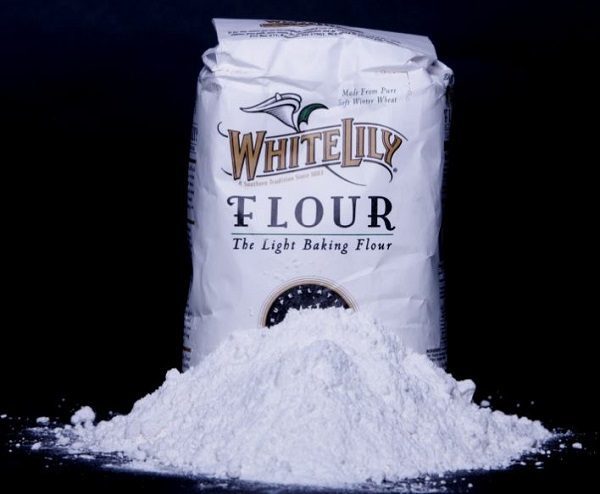
The Federal District Court of Missouri deemed that bleached white flour was unfit for human consumption, in 1910.

Shockingly, the 1st chief of the Food and Drug Administration at the time, H. W. Wiley, said that the law was "halted through the political influence of the flour millers" and "no notice of violations has since been made by the FDA."

Mr. Wiley's book "The History of a Crime Against the Pure Food Law" goes over the case:
These days flour is made from wheat that's exposed to harmful pesticides, insecticides, and fungicides from the minute they are seeded and stored away. Since this time, around 60 various chemicals have been approved by the FDA to bleach white flour.
5 Secrets About White Flour That will Shock You

1. Bleached Flour contains nearly NO nutrients.

White Flour manufacturer's start by removing bran from wheat seed, its 6 outer layers, and the germ that has 76% of minerals and vitamins. 97 percent of the dietary fiber is also gone. This process strips all iron, magnesium, B vitamins, vitamin E, 70% phosphorus and 50% of calcium.

Comment: The Little-Known Secrets about Bleached Flour...


Coffee

Mainstream Tea Bags Contain Illegal Amounts of Deadly Pesticides

Pesticides in tea
We are living in a world where pesticides are common and surround us. Unfortunately, the exposure to these dangerous substances cannot be avoided completely, as we consume foods sprayed with them, use products which contain them, and the soil and air are rich in them.

A recent study has also found that pesticides are also found in some of the most popular tea brands in the world, such as Lipton, Tetley, and Twinings.

Comment: See also:
  • The Japanese tea ceremony: Chado, "the way of tea"
  • Medicinal benefits of tea


Info

Mountain Dew mouth and the U.S.'s insane approach to dental care

Mountain Dew
© Savelov Maksim
Mountain Dew, the carbonated fluorescent-green soda that Willy the Hillbilly declared "will tickle your innards" in a 1966 commercial, has long been a staple of Appalachia. It was officially developed in Knoxville, Tennessee, in the mid-1900s, but it has ties to the wheat and rye distilled by Irish immigrants who settled in the region as coal miners during the previous century. Today, coal has left Appalachia, as have a host of other industries that brought economic opportunity. Mountain Dew, however, remains culturally significant. Sarah Baird, a writer who grew up in Eastern Kentucky, recently wrote about the importance of the drink to her sense of identity, saying, "It's not just a beverage—it's a portable sense of home."

In a region long undergoing a cultural and economic crisis, Appalachia's thirst for Mountain Dew is perhaps the lesser of many evils. Opioid addiction, smoking, chewing tobacco, lack of access to municipal water systems, and the necessary preoccupation with getting food on the table over worrying about nutritional value are also having an enormous effect on people's teeth. The soda is ruining teeth, in an epidemic known as "Mountain Dew-mouth." The acid causes erosion and the sugar abets decay.