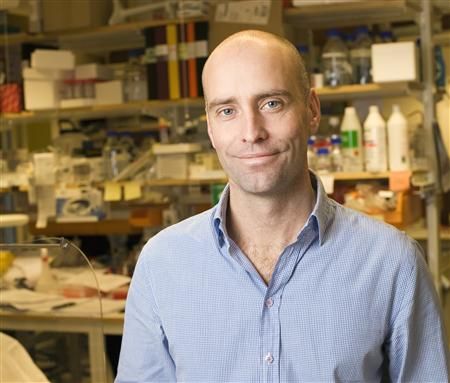
© REUTERS/Camilla Svensk/HandoutJonas Frisén of Sweden's Karolinska Institute in an undated photo.
London-- Scientists said on Thursday they had shown the human body regenerates heart cells at a rate of about one percent a year, a discovery that could one day reduce the need for transplants.
The study of 50 volunteers, using a dating method that detects traces of a carbon isotope left by Cold War nuclear bomb tests, raises the prospect of artificially stimulating the renewal process some day, they reported in the journal Science.
"It would be a way to try and help the heart to some self-help rather than transplanting new cells," Jonas Frisen of Sweden's Karolinska Institute said in a telephone interview.
"Taking advantage of the heart's own capacity to generate new cells either using pharmaceutical compounds or, if it is possible, by exercise or any other environmental factor."