Health & WellnessS


Bug

New Zealand Casino Staff Forced To Wear Flea Collars to Keep Blood Suckers At Bay

Auckland, New Zealand - Workers at the casino in New Zealand's largest city have been forced to wear flea collars to work in a bid to ward off the blood-sucking critters, the New Zealand Herald reported Tuesday.

The alarming report follows news of similar infestations forcing nurses at some Auckland hospitals to adopt a similar course of action in December -- sparking a warning from health authorities against humans wearing the pet collars, which emit toxins.

Employees at SkyCity Casino were spraying themselves with insect repellent and wearing pet flea collars around their ankles to ward off fleas, according to Unite Union national director Mike Treen.

He said staff had been complaining about infestations on the casino floor "for years" and that although the business had been undertaking a cleaning process, "it doesn't seem to be working."

Nuke

Thousands of Nuclear plant workers suffer internal radiation exposure after visiting Fukushima

scanner
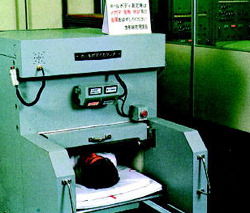
© (Photo courtesy of the Nuclear and Industrial Safety Agency)A photograph shows a whole-body counter.
The government has discovered thousands of cases of workers at nuclear power plants outside Fukushima Prefecture suffering from internal exposure to radiation after they visited the prefecture, the head of the Nuclear and Industrial Safety Agency said.

Most of the workers who had internal exposure to radiation visited Fukushima after the nuclear crisis broke out following the March 11 quake and tsunami, and apparently inhaled radioactive substances scattered by hydrogen explosions at the Fukushima No. 1 Nuclear Power Plant.

The revelation has prompted local municipalities in Fukushima to consider checking residents' internal exposure to radiation.

Roses

US: Connecticut, "Worst Year Yet" for Pollen

Pollen sneeze
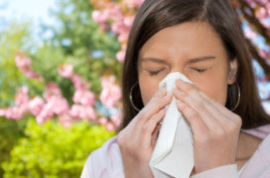
© Paul Petrone
The spring of 2011 has been one of the worse in years for the amount of pollen in the air. That makes it a difficult season for the 35 million Americans who suffer from allergies.

Dr. Kenneth Backman of Allergy & Asthma Care of Fairfield County in Monroe said the spring's overabundance of pollen has worsened the condition for many.

"This year has definitely been very bad," Backman said. "When it warmed up, we had about two weeks where pollen was just off the wall. It was probably the worst I've ever seen. It was the kind of thing where medications weren't even working for people."

Nuke

Nuclear Fallout: You won't hear this on Mainstream News

Nuclear Facts A very clued in professional who will not be bought or intimidated into silence: Dr Helen Caldicott, true to style, tells it as it is. As she sees it, you wont usually hear the truth so listen up.


Comment: For information on how to reduce the risk of toxic exposure please see the following: Gabriela Segura, M.D.: Detoxing After the Gulf Oil Disaster, Detoxify or Die: Natural Radiation Protection Therapies for Coping With the Fallout of the Fukushima Nuclear Meltdown.

There is also the Podcast section here which under the topic of Detoxifying the body there are several Titles; Recommended: GMO Frankenfoods and What You Can Do to Improve Your Health & Toxic World, Toxic Bodies

Outside of Detoxing, there is this important article about Radiation: Fallout Around the Breakfast Table


Info

Carbohydrates and Colorectal Cancer Risk among Chinese in North America

Abstract

Previous studies have analyzed total carbohydrate as a dietary risk factor for colorectal cancer (CRC) but obtained conflicting results, perhaps attributable in part to the embedded potential confounder, fiber. The aim of this study was to analyze the nonfiber ("effective") carbohydrate component (eCarb) separately and to test the hypothesis that effective carbohydrate consumption is directly related to CRC risk. The data (473 cases and 1192 controls) were from a large, multicenter, case-control study of Chinese residing in North America.

Multivariate logistic regression was used to perform a secondary analysis controlling for age; sex; consumption of fat, fiber, calcium, and total kilocalories; body mass (Quetelet's) index; family history; education; and years in North America. Odds ratios (ORs) and 95% confidence intervals (CIs) were calculated to estimate risk among subgroups by sex and cancer site.

Health

Best of the Web: Are your Hormones Making you Miserable?

Image
© Unknown
Are your hormones out of balance?

Does your life feel like a song played badly out of tune?

If so, the problem may have to do with imbalances in your hormones, which are wreaking havoc on your body and mind.

There is one hormone in particular I am going to focus on today, and it could be at the root of your problems.

I will share with you 12 tips you can start using immediately to begin rebalancing your hormones and bring your life back into tune.

Newspaper

US: Local Girl Suffering from Mysterious Illness

Image
© WDRB Fox 41Tabbatha Rhymer
Louisville, Kentucky - A 17-year-old girl is fighting for her life, and doctors don't know what's wrong. After spending months in and out of hospitals, Tabbatha Rhymer came home this week. As she adjusts, friends and even strangers are blessing her with kindness.

At 17, Tabbatha Rhymer should be thinking about prom and the end of another school year, but she has just one wish. "To get better," she whispered softly.

She had a stroke in January and since then, doctors have found lesions on her brain but cannot figure out what is wrong. "The lesion caused the stroke, and the stroke caused the seizures," said her adoptive mother, Juanita Age.

Medicine helps, but she is constantly seizing, and Tabby's mother has to feed her through a tube. "Every time she goes to sleep my husband will say, 'She's fine, she's sleeping.' I'm in here seeing if her heart's still beating."

She's so weak, she hardly has strength to talk. "This has been scary. I feel like I'm gonna die every day," said Tabby.

Question

Is Food Packaging Affecting Your Health?

Image
© ecochildsplay.comFood Packaging is Major Source of Toxic BPA and DEHP Chemical Exposure.
Most of us are genuinely trying to do our best to be healthy -- we buy organic food, try to drink filtered water, include more fruits and vegetables with every meal, the list goes on and on. But what about the plastic our organic vegetables are wrapped in? What about the plastic bottles holding our filtered water? And the microwaveable plastic bag we sometimes use to cook our extra veggies in because it's so easy? While the science is still relatively preliminary at this point, there is a possibility that the packaging surrounding our food may be just as influential on our health as what is inside.

Chemicals like Bisphenol A (BPA), phthalates and PCV (polyvinyl chloride) have all been found in plastic food packaging, the linings of soda cans and canned food. These chemicals, often referred to as endocrine disruptors, do much more than simply help to protect and contain our food. They can mimic our natural hormones, turning on or off the body's native hormone signals to block natural responses or trigger excessive action.

Comment: For a more in depth look at the toxic chemicals found in food packaging and their effects on human health read the following articles:

Food Packaging Harbors Harmful Chemicals
Toxic Glue Used in Supermarket Food Packaging 'Poses Severe Risk to Health'
Chemicals Leach From Packaging
Chemicals in Fast Food Wrappers Show Up in Human Blood
Major Producers to Ditch BPA from Packaging


Info

5 Reasons High Fructose Corn Syrup Will Kill You

Image
© unknown
If you can't convince them, confuse them. - Harry Truman

The current media debate about the benefits (or lack of harm) of high fructose corn syrup (HFCS) in our diet misses the obvious. The average American increased their consumption of HFCS (mostly from sugar sweetened drinks and processed food) from zero to over 60 pounds per person per year. During that time period, obesity rates have more than tripled and diabetes incidence has increased more than seven fold. Not perhaps the only cause, but a fact that cannot be ignored.

Doubt and confusion are the currency of deception, and they sow the seeds of complacency. These are used skillfully through massive print and television advertising campaigns by the Corn Refiners Association's attempt to dispel the "myth" that HFCS is harmful and assert through the opinion of "medical and nutrition experts" that it is no different than cane sugar. It is a "natural" product that is a healthy part of our diet when used in moderation.

Except for one problem. When used in moderation it is a major cause of heart disease, obesity, cancer, dementia, liver failure, tooth decay and more.

Bell

GMO's Should be Banned: Found in 80% of Supermarket Foods


Monsanto may soon be allowed to conduct its own environmental studies. Currently, the USDA is responsible for assessing environmental impacts of new GMO crops, but the agency plans to at least temporarily hand over environmental impact reporting responsibilities to the biotech companies behind GMO crops.

If this isn't the classic example of the fox guarding the hen house I don't know what is.

The two-year pilot program will allow the companies to conduct their own environmental assessments, or alternately outsource the work to contractors. The USDA will retain the final say in determining the safety of crops.

According to Fast Company:
"The USDA won't actually admit that it's bad at performing its duties -- instead, the agency claims that the move will make the environmental reporting process more timely, efficient, and cost-effective ... [But if Monsanto] has a vested interest in getting one of its crops deregulated, why wouldn't it try to fudge the numbers on an environmental review? And why wouldn't its hired contractors do the same?"
You might think that genetically modified organisms (GMOs) don't affect you. But in fact, up to 90 percent of all major U.S. grown crops are grown with genetically engineered seed, and can be used in human and animal foods without any safety testing or labeling.

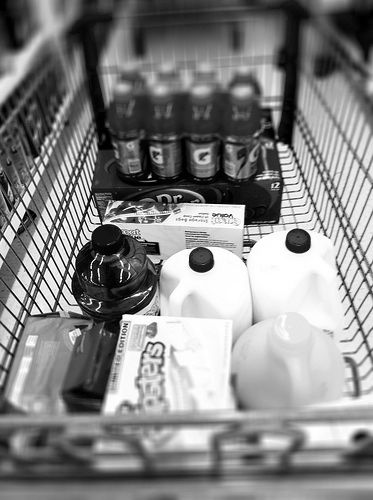
This includes GM corn, soybeans, canola, and sugar beets, which have made their way into approximately 80 percent of current U.S. grocery store items.