Health & WellnessS


Evil Rays

Report Finds Tanning Salons Are Misleading Customers

Indoor Tanning
© redOrbit

A new congressional report accuses tanning salons of misleading their customers to try and gain business.

The probe found that tanning salons are downplaying the risks of tanning in beds, and promoting benefits that do not exist to its younger clients that do not know any better.

The investigation by the U.S. House Energy & Commerce Committee found that nearly all indoor tanning salons contacted denied the known risks of indoor tanning, and four out of five salons claimed it is beneficial to a person's health.

The committee posed as fair-skinned 16-year-old girls, contacting 300 indoor tanning salons throughout the U.S.

They found that 90 percent of the salons told the "girls" that indoor tanning did not pose health risks, and more than half the salons denied that indoor tanning increased the risk of cancer.

The report said that many salons described these statements as "rumors" and "hype", and over three-quarters of salons said it actually is beneficial to the health of a teenage girl.


Cookie

Eating Gluten Increases the Need For Thyroid Hormones

Image
© Unknown
A new study shows Hashimoto's patients with symptomless celiac disease (i.e., no digestive complaints) require 49 percent more T4 to achieve the same TSH levels as non-celiac Hashimoto's patients.

After the patients followed a gluten-free diet for 11 months their TSH levels came down with the same T4 requirement as the non-celiac Hashimoto's patients.

Comment: While the author focuses on Hashimoto's Disease, it has been shown that people in general are affected by gluten and should avoid it. For more information on the dangers of gluten, see these Sott links:

The Hidden Link Between Gluten Intolerance and PMS, Infertility and Miscarriage

Gluten Causes Nerve Damage

Facts you might not know about gluten

The Many Heads of Gluten Sensitivity


Bizarro Earth

FDA's New Claim: "Your Body Is a Drug - and We Have the Authority to Regulate It!"

stem cells
© n/a
In another outrageous power-grab, FDA says your own stem cells are drugs - and stem cell therapy is interstate commerce because it affects the bottom line of FDA-approved drugs in other states!

We wish this were a joke, but it's the US Food and Drug Administration's latest claim in its battle with a Colorado clinic over its Regenexx-SD™ procedure, a non-surgical treatment for people suffering from moderate to severe joint or bone pain using adult stem cells.

The FDA asserts in a court document that it has the right to regulate the Centeno-Schultz Clinic for two reasons:
  • 1. Stem cells are drugs and therefore fall within their jurisdiction. (The clinic argues that stem cell therapy is the practice of medicine and is therefore not within the FDA's jurisdiction!)
  • 2. The clinic is engaging in interstate commerce and is therefore subject to FDA regulation because any part of the machine or procedure that originates outside Colorado becomes interstate commerce once it enters the state. Moreover, interstate commerce is substantially affected because individuals traveling to Colorado to have the Regenexx procedure would "depress the market for out-of-state drugs that are approved by FDA."

Health

Flesh-Eating Bug Spread by Sneezes and Coughs

sneezing man
© PA
Coughing and sneezing on crowded trains and buses can spread deadly flesh-eating superbugs, commuters are being warned.

The bacteria are more virulent than the infamous hospital MRSA, can affect otherwise healthy people and are spreading across Britain.

They can be transmitted through skin-to-skin contact and hugging as well as sneezing and coughing.

One strain, called USA300, can lead to blood poisoning or a form of pneumonia that eats away at lung tissue.

The bacteria are usually resistant to several types of antibiotics and can cause large boils on the skin.

Chris Williams, professor of molecular genetics at the University of Birmingham, said: 'It breaks down tissue. If it gets into your heart, bacteria can get into your bloodstream and take hold of different parts of your body. That could lead to death quite easily.'

Pills

A Million Birth Control Pills Recalled Again. Could the Pill Get You Pregnant?

Image
© unknownThe latest recalled birth control pills.
It's happened again. Just months after a major mix-up in birth control pill packaging, another alarming recall has been issued.

On Wednesday, the drug company Pfizer announced the recall of more than 1 million packets of Lo/Ovral-28 (and the generic Norgestrel/Ethinyl Estradiol) due to a packaging error.

The problem stems from placebo pills that were possibly misplaced in monthly blister packs. So on days when women thought they were taking active hormones they may have been taking sugar pills. The mistake means that an unknown number of women may be at risk of an unplanned pregnancy.

A public statement by Pfizer urged "consumers exposed to affected packaging" to "begin using a non-hormonal form of contraception immediately."

Arrow Up

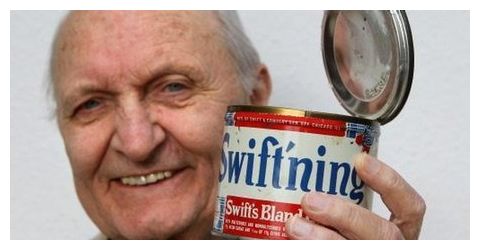
Germany: Pensioner's Post-War Tub of Lard 'Ok to Eat'

Hans Feldmeier
© Agence France-Presse 'I didn't want to throw it away.' Retired chemist Hans Feldmeier explains why he still has a tub of lard in his kitchen 64 years after he first received it.
A German pensioner who had kept a tub of lard in his cupboard for 64 years, took it to authorities who pronounced it very much fit for consumption - if a little tasteless.

Retired chemist Hans Feldmeier, 87, told AFP he had received the pig fat as a student in 1948 near the northern city of Rostock as part of the post-war US aid programme.

Feldmeier said he had been given the tub together with two tins of noodles and some milk.

"I just didn't want to throw it away," he explained.

Finally, after 64 years, he took it to food safety agents and was astonished at their appraisal.

Comment: Praise the lard!


Butterfly

Chlorella: A Superfood That Helps Remove Mercury From Your Tissues in Weeks

Image
Have you noticed that practically every day a new story comes out in the media about the toxic side effects of living in the modern world?

Chemical and heavy metal dangers seem to be lurking everywhere you turn in the 21st century!

Pesticides coat much of our fresh food supply, chemical by-products from manufacturing are routinely dumped into our air and water, and mercury amalgam fillings in your teeth may be releasing mercury into your body with every bite of food you take!

The seafood in our oceans are laden with heavy metals and mercury and pass these poisons up the food chain until potentially massive doses of both wind up on your dinner plate disguised as a healthy meal.

Underground water supplies have been tainted by chemical and pesticide run off from farms, factories and high technology industries.

In fact, acceptable levels of many poisons are allowed to come into your home through your drinking and bathing water, including fluoride, chlorine and low levels of many heavy metals.

It doesn't take much imagination to see that your body too is under attack from environmental pollution every single day.

You can seek to protect yourself and combat this hazard by eating foods that are free of pesticides and chemicals, but you simply cannot entirely remove all sources of toxins from your environment. The damage to our world is just too widespread and pervasive. You have to take it upon yourself to take measures to protect yourself and your family from this toxic world, and one of the best natural sources for moving these toxic materials out of your body is a whole-food based, green algae called chlorella.

Syringe

Why is "Hot Chemo" an Acceptable Cancer Treatment - But IV Vitamin C is "Too Far Out There"?

Image
© ANH-USA
Patients liken hot chemotherapy to "being filleted, disemboweled, and then bathed in hot poison." Best patient care, or merely the biggest moneymaker?

According to the New York Times, hot chemotherapy, which couples extensive abdominal surgery with blasts of heated chemotherapy to the abdominal cavity and its organs, was once a niche procedure used mainly against rare cancers of the appendix. Most academic medical centers shunned it. Now it's being offered to patients to treat more common colorectal or ovarian cancers.

Dr. David P. Ryan, clinical director of the Massachusetts General Hospital Cancer Center, says there is little evidence that it really works and "has almost no basis in science." The treatment is extremely costly, and is something of a desperation move by leading medical centers because the competition for patients and treatments is so intense.

So why is this dangerous, scientifically unsound, and outrageously expensive procedure considered a viable treatment option for cancer patients, when intravenous vitamin C - safe, effective, and far less expensive - is questioned as an adjunct therapy? Why is this common vitamin, administered in high doses intravenously, labeled an unapproved drug by a hostile FDA?

Cheeseburger

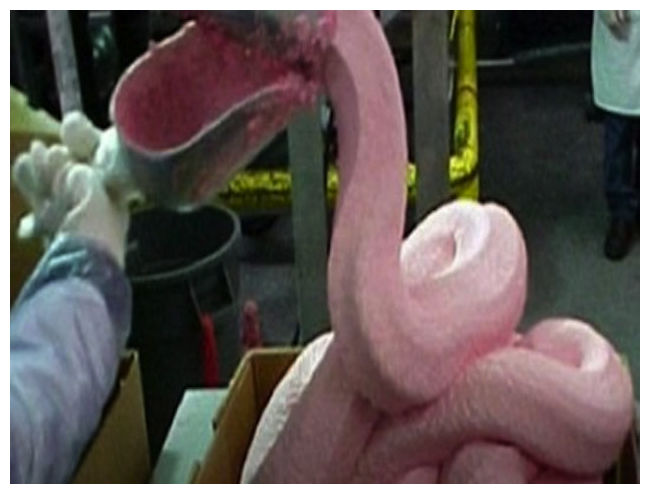
McDonald's Confirms That it's no Longer Using 'Pink Slime' Chemical in Hamburgers

Ammonium hydroxide
© KSDK TVAmmonium hydroxide.

McDonald's announced last week that, as of last August, is has stopped using ammonium hydroxide in the production of its hamburgers. MSNBC reports that the chemical, used in fertilizers, household cleaners and even homemade explosives, was also used to prepare McDonalds' hamburger meat.

And while the announcement is making headlines, you may (or may not) want to know about some other unusual chemicals being used in the production of some of our most-popular foods:

The International Business Times lists some other questionable chemicals showing up in our foods:

Propylene glycol: This chemical is very similar to ethylene glycol, a dangerous anti-freeze. This less-toxic cousin prevents products from becoming too solid. Some ice creams have this ingredient; otherwise you'd be eating ice.

Carmine: Commonly found in red food coloring, this chemical comes from crushed cochineal, small red beetles that burrow into cacti. Husks of the beetle are ground up and forms the basis for red coloring found in foods ranging from cranberry juice to M&Ms.

Shellac: Yes, this chemical used to finish wood products also gives some candies their sheen. It comes from the female Lac beetle.

L-cycsteine: This common dough enhancer comes from hair, feathers, hooves and bristles.

Lanolin (gum base): Next time you chew on gum, remember this. The goopiness of gum comes from lanolin, oils from sheep's wool that is also used for vitamin D3 supplements.

Silicon dioxide: Nothing weird about eating sand, right? This anti-caking agent is found in many foods including shredded cheese and fast food chili.

Cell Phone

Cell Phone-Induced Bodily Harm: How The Bees Can Help

Cell Phone
© GreenMedInfo
Cell phones and the communications infrastructure that makes them possible, are ubiquitous today, making complete avoidance of their radiation next to impossible. Plenty of evidence already exists showing that cell phones emit a type of electromagnetic radiation -- in the microwave range -- capable of adversely affecting a wide range of organs, with the nervous system of those exposed perhaps most sensitive to its adverse effects. Below is a sampling of some of their adverse health effects as demonstrated in the biomedical literature.

Liver Damage Fetal Harm Kidney Damage
Interruption of Sleep Heart Damage Acoustic Neuroma
REM Cycle Disruption Head Tumors

New research indicates that the problems associated with cell phone radiation exposure are far more profound that previously believed. In fact, pregnant women may need to exercise additional caution in order to protect their unborn from adverse neurological effects associated with cell phone radiation exposure.

In a study entitled "The influence of microwave radiation from cellular phone on fetal rat brain," and published in the journal Electromagnetic Biology and Medicine on Jan. 23rd 2012, researchers discovered that pregnant rats exposed to microwave radiation from cellular phones had fetuses whose brains showed signs of harm, as measured by enhanced oxidative stress and altered levels of neurotransmitters.